
Translated material
"You will never tell you about the most terrible"
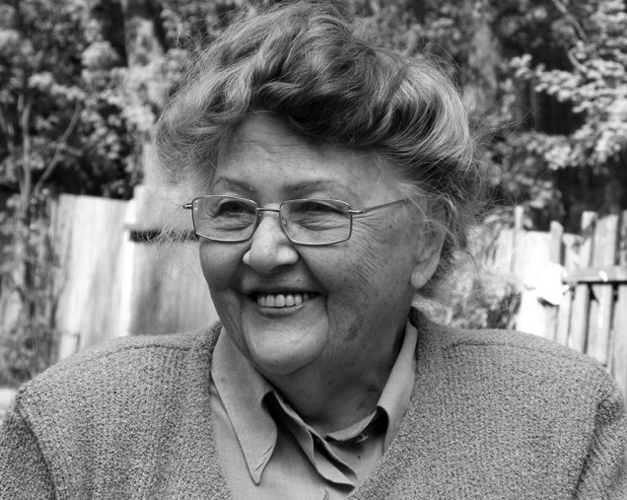
On October 18, in St. Petersburg, at the age of 97, the actress, theater expert and writer Tamara Petkevich, author of the book “Life - Non -Parrier” (1993) died. Colta.ru publishes an interview with Tamara Petkevich, taken by the American researcher of Russian literature, Yakov Klots in 2009.
* * *
The conversation with Tamara Vladislavovna Petkevich cannot be interrupted. Those who read her book will hear her voice, continue to talk to her. This conversation is very personal, because the voice of Tamara Vladislavovna is unmistakably directed at you. Writing this conversation eight years ago, I could not get rid of a bashful feeling that the interview genre is inappropriate, that the recorder needs to be turned off and removed that she answers my naive questions as if not in public, but in a private space, deftly built between her chair under a floor with a green lamp and an interlocutor, who were sitting opposite. Probably, this feeling prevented me from publishing our conversation earlier. But it is amazing that in eight years the conversation seems to be out of the way, as the voice of Tamara Vladislavovna has never been old and the voice of Tamara has never been old.
Jacob Clotz
-Tamara Vladislavovna, your book covers many terrible pages of Russian history: Petrograd from the beginning of the twenties, collectivization, 37th year, war, camps ... Tell me, how historical periods reflect your personal, “internal” history, the history of the author and the heroine of the “boot”? What are the pages of the history and pages of your personal life do not coincide?
- This is a rather difficult question. Because if you take such a dimension as age, then in childhood you do not understand, you still do not feel like an individual. It seems to you that you are fell into life, and everything that happens happens like your personal. Personal history and historical meaning of the period - they are indistinguishable. For example, you can not go to church. Because of this, troubles in adults may arise. Is this historical event or personal? Of course, the child perceives him as personal. We are used to counting the history of personal, when it comes to feelings; Let's say a rush of love. In the meantime, what happened in my life was happening-the 20s, when I saw Petrograd with an empty, sparsely populated city, when mass arrests began in the 37th year, then, of course, for me the personal and historical meanings of those times and events were inseparable. I understand that there are people who manage to live some kind of inner life, remaining virtually unknown to the general events of history. But this is not my case. I was included in everything that happened in our pioneer organization; A reorganization of the school took place before my eyes, not only teachers changed, but also the type of teachers; Komsomol workers with gids, in military tunic, came to school; Sport - all this went a certain pressure on the naked children's consciousness, and we perceived all this directly.
“There are such lines in your book:“ In that night stage, a fantasy woke up from Dzhangigir in me, or a distant hope: “Someday, but I will tell you how now I don’t even know how. Maybe a child, a person who will hear me. Maybe someone else, but I will certainly tell you about what I saw and experienced.” Wasn't that the moment of the birth of the plan to write a book?
- It was not yet a plan, but, of course, an impulse. The birth of an impulse. Because life at that moment seemed violating all the standards and was no longer perceived as normal. She was beyond normal understanding, normal perception. And with this it was necessary to do something, somehow to leave ... Perhaps that is why I used the following expression: "Not that fantasy, or distant hope." I did not understand, but I felt that what was happening to me was subject to comprehension-perhaps at some other age, at another time. And I really did not know how to “tell” myself to “tell”. I understood that I was in some alien world. You see, when you find yourself behind the barbed wire, when you are planted behind bars and you look at the air from there ... It just begins to seem that there, in the will, the air is different, the mass of air itself is perceived differently ... Everything is perceived differently. In any case, I never forgot this sensation.

- Please tell us how the “boot” was created: how many years did you write it? What was the reaction of the first readers of the manuscript - because from the moment it was finished, and before the book was released in 1993, more than a dozen years have passed?
- I wrote at night, because life demanded a certain labor regime. From 10 to 18 hours it was necessary to be at work. There was a house, there was a family. I began to write after returning to Leningrad, that is, somewhere in the 60s. I wrote to the table and never thought that I was writing a book. She just wrote memories that weighed and demanded an independent life. The fact that the book will be made of them was not discussed also because, as you know, everything was prohibited then.
- And how many years after the start of work did you put an end?
- I think in 15 years.
- When did you realize that what you wrote is a book?
- When did you understand? Probably, when the teacher of theater institute Anna Vladimirovna Tamarchenko, whom I gave to read the manuscript, presented a number of questions to her precisely as for the book. She once formed for herself what I wrote, and she, as a reader, wanted logic.
- And what was the reaction of the first readers of the manuscript?
-She was read only by people very close to me plus one or two fellow students from the theater institute. And you know, if you answer completely honestly - not because I am embarrassed, but because I see the meaning in an honest answer, then their perception seemed quite strange to me. They did not perceive what seemed to me the most important. Not that I wanted to convey to people. They were struck, for example, that there was a theater in the camp. How is it - the camp theater? This became some kind of general issue, and I was surprised to myself: why do they not react to the fact that life is broken, that there was no youth? People themselves still did not know what to pay attention to in such books. They themselves did not understand, did not “peel off” from that life, did not crystallize in those who would be able to consciously perceive this. Yes, of course, some words said to me. But then I did not have the feeling that my book was perceived as I wanted when I wrote it.
- And when did this feeling appear? When did you feel that the book was read?
- A few years later. When I began to receive letters from people in whom I suddenly saw how the perception of me as a person who suffered from historical cataclysms changed. Such a rank of perception appeared. Mostly among peers. It turned out to be a darkness-fucked people who were injured by parents. But their parents were silent. I talked with these people. They knew that I had served, I was in exile, in the camp and so on ... But they did not talk about themselves, silent. I could not remain silent-because of my documents, in general, due to all sorts of absurdities in my biography ... That is, I all the time got into trouble, and I had to somehow explain. And people were silent. Then suddenly the moment came, in the 60s, when fear receded a little, kitchens, communication appeared ... Then, in these conversations, the assessments of the book appeared.
- In your book, the historical truth is amazingly combined with literary skill. At the same time, there is absolutely no feeling that you somehow edited your own memory, which for the memoirist is not only the source of the plot, but also probably affects the style. To what extent did the self-editing or “self-censorship” still take place?
-Tvardovsky once answered this question, saying that the Censor lives in each of us. Because a person who has survived the era of fear cannot but control himself. He was “edited” by life itself; She adjusted his consciousness, the kind of behavior - when, for example, he either tells jokes fearlessly and thoughtlessly, or no longer tells, because he was sitting with those who received a deadline for the told joke, and so on. And in the camp, we didn’t even ask each other “why are you sitting for?”, Because every person was so transparent and clean in his own perception that the question itself seemed falsity. Yes, for nothing! Well, for dad, for mom. For the fact that I wrapped a sandwich in the newspaper, and the newspaper was with a portrait of Stalin. There was simply no sense in this matter.
- And what scenes, episodes of those that asked for paper, did you deliberately refuse to include?
-Recently, someone conducted an excursion into the work of Shalamov, who wrote everything , managed to describe all the worst, and this pushed away people. Not everyone understood him, not everyone wanted to understand ... Not everyone has a purely physically found a place in order to place this horror in themselves. Do you understand how much this is connected and how at the same time all these processes occurred? When we are inside our country, within ourselves, inside our own society were not oriented and could not understand. It seemed to many that it was better to be silent. Others - that everything needs to be told. This is the feeling of “wards of measures and weights” - probably this is a very individual feeling, I think so. Not everything can be told not because it is scary or ashamed. Not therefore. If you write a book, and not just share your own memories, then you are already responsible. This process is verified by flair and proceeds depending on the installation of each author separately.
-Do you agree that the most terrible experience simply does not lend itself to the description of the human language, that our language is not able to express the most terrible?
-You know, when they study history, whether it is the times of Ivan the Terrible or Peter, then we also understand that something terrible remains behind the line. You will never tell you about the most terrible. Maybe what I said about flair, about artistic soil, is wrong. But it is necessary, as between Scylla and Haribda, to choose either the measure of absolute truth and only the truth ... After all, the nuance here here is so thin and alive that the feeling of responsibility does not leave. But in order to be responsible, it is necessary, first of all, to answer the question: is it worth telling the whole truth or not worth it? It is worth telling the patient that he is mortally ill, or wait? This is the field of caution in which we are in relation to both close people and people in general. I could not tell you today, now, as it should. At some period of life, it seems: oh, what a pity that I did not say something! In another period - that not, everything is right. How many parents, returning from the camps, have never told anything to their children ...
- Have you read the memories of camp friends that describe the places, events and people familiar to you, you yourself?
- Yes, sure. Many. And the memories of Hella Frisher, and Hawa Volovich. Now her labors are published - the works of a very capable, talented woman. It is amazing that letters written by people, as it were, followed her terrible fate - come to her, already departed, non -existent. And her fate was really so terrible that, having freed, she went to live in the forest and for some time lived there in some kind of shack. I did not want to exist among people. Then this process of returning to life softened, and she returned ... Yes, of course, she read.
- How has your life changed after the book was published in 1993?
-I would answer this way: life has changed a lot, because responses to fate, just pity, just compassion, just participation, just a desire to help something, as if to compensate for something-all this opened people from a party with which I simply did not see them. After all, all these years, from us, former political prisoners, shied away from the plague. And now, when I get responses - the most diverse, but always deeply human - they opened my life, its depth, the depth of nature, mysteries of memory, riddles of consciousness. They opened me a world in which I existed separately, in captivity and in the wild. I opened the volume of the human soul, the volume of opportunities, in the end - the volume of good and evil.
- Is there a canon of the Gulag literature for you? What authors do you consider your teachers? What, in your opinion, is the genre features of literature about the Gulag, in particular - memories and memoirs? And what, in your opinion, the “boot” stands out from this canon, and with what lines does it fit into it?
- No, you know, no teachers. Any handwriting is instructive. Of course, I honor Solzhenitsyn for gigantic work, for courage, because he discovered this problem not with the little things, but allowed to see it from the very roots. Evgenia Ginzburg also did its great work. She was, so to speak, a participant, a communist, that is, a person who was well imagined by power. In any case, it existed in some circles of power. All these things are unique. All these books are absolutely different. Of course, there are some general characteristics of captivity. This is understandable. But they are characteristic not only for our time, but for all time. But we were arrested not only by the intelligentsia, leaders, etc., but also Ivanov Denisovich. There were so many forms, there were so many segments of the population-both the professors, and the people who were sent to the taiga in the 37th year and forced to build their zones there, and they spent their whole lives in laboratories, knew how to think, write, but were not adapted to physical work ... The appetite of the authorities to destroy dissuppying people was so diverse, which, of course, there is something in each case. unique. I remember the unique and perceive more acutely than the general, known and understandable.

-Are there any formal characteristics of camp literature?
- That is?
- For example, the very principle of building a narrative, when the text is divided into areas describing certain periods - so to speak, “stages”? Or what we have already talked about is the non -painting of the worst pages of the experience, their non -circulation on paper?
- There are certainly common features, but they are not interesting. You know, I seem to have described in the book one episode that completely shocked me. Once I arrived in Moscow, when under the 39th administrative article it was still impossible to travel to the capital. There I was invited to one house where the old party workers gathered, who almost the day before they called to the Lenin Library, where they took a separate room and said: “Write your memories, the whole truth!” How happy they were! And from them, who had spent ten years for ten years, I heard that all this was ... the party’s mistake. They literally shouted about this in one voice. So what's more interesting: general or non -it? When a person himself served for so many years and he still wants to idealize ... These women themselves were witnesses of deaths, destruction, what you want. I looked at them, looked at them, and then quietly took my coat and left so that I would never come to this house anymore. It was very scary. What truth can we talk about in this case? Non -canonical things - they discover much more truth about a person.
- Many unforgettable scenes in the “Board” unfold on the railway, at stations, in “Stolypins”; On the way to the north you meet a military echelon moving west, towards the front ... It seems to me that this scene is captured by all hypocrisy, which is overshadowed by Soviet history of the military and post -war period, when Russian soldiers and officers were brought to the camps only because they visited German captivity. The railway is generally the most important highway of Russian literature (not by chance, telling about the construction of the railway in the north, you give a famous poem by Nekrasov). What do you see the power of railway symbols, so to speak, in application to the literature of the Gulag?
-To begin with, the development of the remote corners of the country, the mines in which Uranus and lead, exploration of minerals were mined, samples on the new land or somewhere else, the construction of railways, including-this was done by the hands of prisoners. Even when our “beautiful” literature on the Komsomol construction sites appeared ... After all, we all now know what was behind it. Typically, such construction sites were clean. And the camp in which I was called was called: Sevzheldorlag. Oil and coal, which came from Vorkuta, saved the country during the war. For their transportation, a railway was built. She was literally necessary. But the prisoners built this road.
As for prisoners of war - this, I think, monstrous , scary. When the captured soldiers were put in the camp ... It seems to me that it is simply inhuman, and I will count this way until my last minute. I can’t ... you can imagine anything, but to arrest a soldier who fought and was captured, and for this to be punished even later - this is not worthy of any country. It is also scary because these soldiers most often were completely still boys, absolutely “not tested” by this topic. They hit the wire for some little things. One eighteen -year -old soldier, even in fact, the child, guarded the trophy roots and, without a replacement, fell asleep at the post. He had these roots “spaced”, stolen, and then he answered. Why did he, this child, answered? For what? Why did the military stole soap during the stage, depriving prisoners of the opportunity to observe at least some hygiene?
You mentioned the scene when at one of the stations our stage met with a military echelon. Вдруг, не веря своим ушам, мы услышали, что перед лагерным начальством за нас заступаются солдаты. Начальник конвоя начал их стыдить: «За кого заступаетесь?» Тогда один солдат — наверное, не просто солдат, а командир — крикнул: «Там наши матери и сестры!..» Люди понимали многое. Да, это совершенно трагический эпизод. Я тогда не колотила в стену вагона. Я просто сидела и плакала.
— В лагерном театре началась ваша карьера актрисы. О таких театрах, к сожалению, очень мало известно на Западе, да и в России немного, хотя вы и сказали, что это не кажется вам главным в вашей книге. Расскажите, пожалуйста: чем был ТЭК лично для вас, для других заключенных-зрителей, для истории театра вообще? Из чего состоял репертуар? Может быть, вспомните какой-нибудь эпизод из жизни лагерного театра, не попавший в книгу?
— Вообще это то, на чем нас часто пытались подловить, уличить: как, мол, нам не стыдно выступать в театре. Потому что считалось, что это агиттеатр. Но в театре, в котором была я, в Северожелезнодорожном, никаких подлогов не было.
Лагерное начальство «обменивалось» театрами. Знаете, как раньше обменивались крепостными театрами помещики. Нас посылали в Ухтинский лагерь. Ухтинский лагерь приезжал в наш лагерь. То же — Интинский, Воркутинский... Это все были очень солидные театры в зависимости от того, кто в них попадал и кто был руководителем. Если это был музыкальный театр, как в Воркуте, где блистала Токарская, или если это был Ухтинский театр, которым руководил Эггерт, так эти имена говорят сами за себя. Ходил такой анекдот: приехал из Сибири лагерный театр, замечательный и так далее, и когда спросили, кто им руководит, человек, который о нем рассказывал, ответил: «Да Мейерхольд какой-то». Конечно, это лишь анекдот. Но были имена. Был такой режиссер Паховский. Когда в зоне находились значительные фигуры, художники, тогда там был театр.
А значение театра для заключенных — оно недооценено. Я помню себя сначала в роли заключенной-зрительницы, которая впервые увидела театр на лагерной сцене. Всех созвали в столовую, расставили скамьи, раздернули серые лагерные одеяла, служившие занавесом. Вышли певцы и начали исполнять арию из «Роз-Мари»... Когда я услышала музыку, мне показалось, что я просто умираю — от того, что музыка есть на свете. Оказывается, музыка существует! А потом, когда появились военные песни, такие, как «Темная ночь», «Заветный камень», ложащиеся на живое, на военно-лагерное, на лагерный опыт и военную тему... Люди теряли семьи из-за арестов, а пришла война — и она тоже забирала близких... Эти песни были на разрыв! Просто сидел зал заключенных, в тишине, и выходил заключенный-солист, исполнял эти песни... Это было единение. Избывалось столько накопленного, закрепощенного, запертого в себе самом. Очень трудно описать значение театра, музыки, слова, доказывавшего, что пусть на минутку, но существует возможность гармонии. Это воспринималось как чудо. Люди уходили в свои бараки и засыпали счастливым сном. Вдруг выпадала такая ночь, когда все отходило. Все окружающее казалось бредом, кошмаром, которого не может быть, и снилось что-то хорошее.
— В лагере вам удавалось знакомиться с иностранной литературой. Расскажите: каким образом и в какой период эти книги стали проникать в зону? Чем они были для заключенных? Что именно вы читали?
— Здесь есть неточность. В лагере не было времени читать, потому что люди находились на изнурительных физических работах и чаяли лишь добрести до нар и забыться сном. Переводная литература появилась после моего освобождения. Освободившись, я оставалась на Севере и читала запоем.
— То есть после 1950 года?
- Yes. Она пришла как нечто оглушительное, совершенно новое. Это было откровение. И Зегерс, и Абрахамс... Это было просто сумасшествие, когда, читая и насыщаясь этой литературой, мы узнавали, что в мире, где нет лагерей, тоже есть страшные драмы — расовые, какие угодно. Ты понимал, что жизнь немножко больше, чем твоя собственная судьба. Мир становился гораздо шире. Но вся эта литература была официальной. Это потом появился самиздат. А эта переводная литература была вполне разрешенной. Она была таким глотком воздуха, кислорода.
— А в лагерях были библиотеки или только в тюрьмах?
— В тюрьмах были реквизированные библиотеки. Когда человека арестовывали, у него изымались книги. А в лагерях нет, не было. Во всяком случае, я не помню. Конечно, могли быть сочинения Ленина и Сталина, но не художественная литература.
— Ваша книга — отчасти благодаря немецкому переводу — стала известна за пределами России среди читателей, не владеющих русским. Чего вы ждете от английского перевода , который наконец-то должен выйти в следующем году? [1] Какую долю описанного вами, вам кажется, будет способен воспринять «широкий» иностранный читатель, незнакомый с советской историей или имеющий лишь схематичное, внешнее о ней представление?
— Вы знаете, я думаю, что сейчас, когда столько уже известно по фильмам, по живым рассказам, по послевоенной эмиграции, по отдельным судьбам, — для иностранного читателя моя книга уже не будет открытием. Но какие-то законы бытия будут читаться всегда. В США ведь тоже существовала система всевозможных прослушиваний, подглядываний. Но эта страна вовремя остановилась. Люди не дали дальше проникать в свою личную жизнь. Это вещи, которые остаются актуальными и сегодня. В этом смысле «обмен», каковым отчасти является перевод, нужен и сегодня, всегда. И еще: мои встречи с людьми других стран, с известным вам Эндрю Шарпом. Я вдруг увидела, что иностранец оказывается потрясенным тем, что кто-то мог много лет жить без свободы! Я видела степень этой потрясенности. Когда у тебя спрашивают: «Вы человек вообще или что-то другое, если могли жить без свободы?» — я считаю, что это замечательно во все времена! Все человеческое, наверное, нужно. А непосредственно про лагерь — эта тематика будет присутствовать уже в других категориях. Воля и неволя — темы вечные. Она были всегда.
— Как вам кажется, реакция на английский перевод вашей книги будет похожа на реакцию на немецкий — или восприятие, заложенное отчасти в самих этих языках, будет другим?
— Вы задали принципиальный вопрос. Потому что две страны, пережившие тоталитарные системы, — Германия и Россия, конечно же, видят и понимают друг друга иначе. И когда сегодня ко мне приезжает немецкая молодежь, дети, которые считают себя в чем-то повинными, то это, вообще говоря, хорошие знаки жизни. Они настолько хороши, что думаешь: успеют ли люди проявить все хорошее до апокалипсиса, сумеют ли они в полной мере предъявить свои человеческие возможности? Что касается англоязычного читателя, то тут другое дело. Все-таки английский язык — язык международный и, в общем, главный, такая соединительная ткань культур и народов. Конечно, в этом смысле публикация английского перевода для меня — завидная удача.
— Да, но именно то, что в английском не «зафисирован», что ли, тоталитарный опыт так, как в русском или немецком, создает и непреодолимые барьеры, пробелы, которые приходится либо восполнять комментарием, либо просто заменять или вообще опускать (отпускать?) из оригинала. Как вы относитесь к таким переводческим заменам?
— Отвечу вам так: если переводчик понимает и если он еще и восполняет тот или иной пробел в языке, понимая, о чем идет речь, значит, он выполняет удвоенную и очень нужную работу. Моя благодарность ему, во-первых, за это, за сложность задачи. С другой стороны, как бы это ни прозвучало странно, — ну и слава Богу, что читатель, в языке которого нет нашего ужаса, чего-то не поймет. Слава Богу, что что-то останется непонятным.
14 июля 2009 года
Saint Petersburg
[1] См. также польский перевод «Сапожка»: Jak bučik bez pary… Пер. Anna Mańko. — Lublin: Stowarzyszenie Pisarzy Polskich , 2009.