
Translated material
They will follow strictly
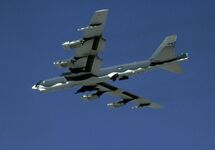
For the first time since 1991, the US Air Force begins to bring strategic B-52 Stratofortress bombers to combat readiness for round-the-clock duty with nuclear weapons. This was stated by US Air Force General David Goldfine, reports the Defense One portal.
“This is another step in ensuring our combat readiness,” the general said. Goldfine and other high-ranking Pentagon officials emphasized that the B-52 duty order has not yet been received, but the preparation is already in anticipation of what it could have received.
The possible setting of bombers to "nuclear duty" is not a reaction to a particular event, the general emphasized. “The world is a dangerous place, and there are guys who openly talk about the use of nuclear weapons. Bipolarity, when there is only the United States and the Soviet Union, there are no more in the world. There are other players with nuclear capabilities,” Goldfine said.
If the corresponding decision is made, several B-52 nuclear bombs will be placed on the Christmas Christmas tree at the Barksdil airbase on the Rozhdestvenskaya Elivebox. Take a prompt if such an order is received.
On October 19, the DPRK threatened to inflict an “unimaginable blow” on American and Japanese ships participating in joint exercises in the yellow sea off the coast of the Korean Peninsula. "The United States itself brought us the goals that we outlined to destroy first of all. Let the United States expect an unimaginable blow to the unimaginable time," the statement of the Central Telegraph Agency of Korea said.
The next day, the director of the CIA Mike Pompeo said that North Korea is quite close to obtaining nuclear weapons . According to him, before the completion of the nuclear program of Pyongyan, the "months" remained. The Director of the CIA admitted that the efforts of American intelligence on the collection of data on North Korean nuclear weapons are far from perfection. Over the past five years, Pyongyang has become much closer to this purpose, and over the next five months it will approach her even more, Pompeo noted.
In January 2016, the American strategic bomber B-52 flew over South Korea after the DPRK’s statement on testing the hydrogen bomb. “This was a demonstration of the firm commitment of the United States to its allies in South Korea and Japan,” said Admiral Harry Harris, commander of Uspacom. He called the DPRK tests "egregious violation of international obligations", and noted that Washington would continue to cooperate with his allies and partners in the region. A similar flight occurred in 2013, when North Korea conducted a third nuclear test. Then the United States sent B-52 and B-2 Spirit bombers to South Korea.