
Translated material
Women rule
The three main chairs in the cabinet of the ministers of Norway first went to the "weak sex"
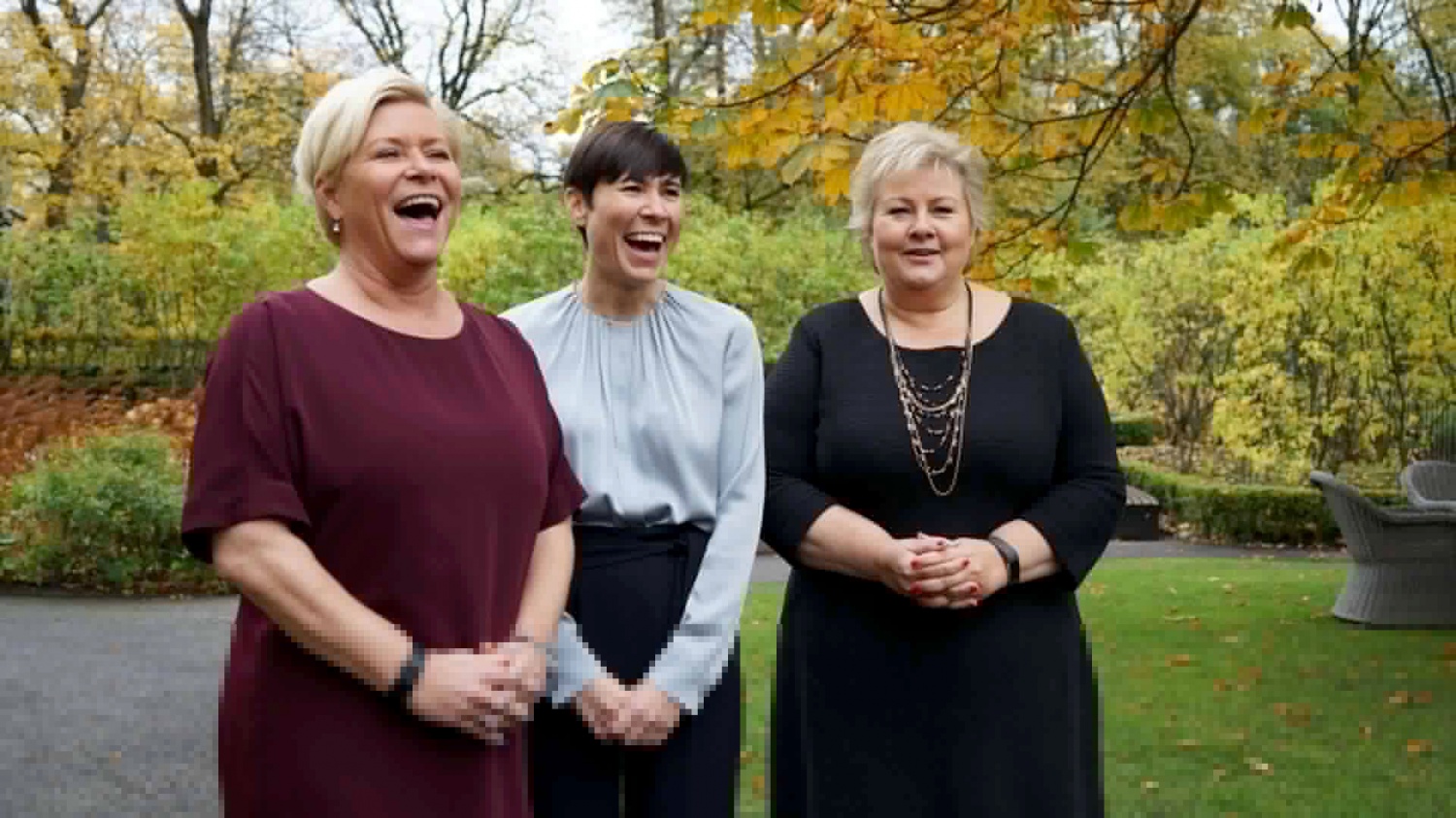
From left to right-Finance Minister Siv Jensen, Minister of Foreign Affairs, INU Marie Ericksen Sureide and Prime Minister Erna Sulberg . Photo: Twitter.com
On October 20, the post of Minister of Foreign Affairs of Norway was occupied by Marie Ericksen Sureide. The trio of the most influential politicians of Norway also includes Prime Minister Erna Sulberg and Finance Minister Siv Jensen, who have been holding their posts since 2013. However, andu Marie is also not a newcomer in the government - she headed the Ministry of Defense for the past four years. But now, since the former Minister of Foreign Affairs of Norwegia Berge Brende accepted the proposal to become the president of the World Economic Forum, and Marie Syreide took his place in the Norwegian Foreign Ministry, thus becoming the first woman in this post in the history of the country. So this unexpected castling has made the moment of appointment to Marie Marie doubly “unique and historical”, which Norwegian and European newspapers are now writing about.
Competence above all
“We are entering the most important page in the history of the Norwegian nation,” said Norway Prime Minister Erna Sulberg, heading the ruling conservative party since 2004. A new alignment in the government-of 19 ministers of the office of 9-women-a coin in its political piggy bank. After all, women's foreign ministers became already in different countries, but not in Norway, known for her egalitarism. In the United States, for example, three times - Madeleine Albright, Condoliza Rice and Hillary Clinton. Even in the Philippines, Erna Sulberg recalled at a press conference on October 20, women held posts equivalent to the Prime Minister, the head of the Ministry of Foreign Affairs and the Minister of Finance. But then she made it clear: she chose Sureide, first of all, because she is competent, and not because she is a woman.
A new alignment in the government-of 19 ministers of the office of 9-women-a coin in its political piggy bank. After all, women's foreign ministers became already in different countries, but not in Norway, known for her egalitarism
Inju Marie Ericksen Sureide - 41 years old, a lawyer by education, for a short time worked as a producer on a small television channel, was elected as a deputy of the city council of Oslo. In 2005 and 2009, she took twice in Storting (Norwegian parliament) as a deputy from a conservative party.
The party leader, 56-year-old Erna Sulberg, has an even more focused career. Despite dyslexia in childhood, she graduated from Bergen University with a degree in sociology and political science. Ern came to the conservative part of Ern. A member of Storting has been elected since 1989.
Grandma's legacy
The third female politician from this magnificent three is Siv Jensen, the leader of the liberal party of progress, now-the third large party of Norway. She is 48 years old, and she’s almost half of them in politics. A graduate of the Norwegian School of Economics, she was able to achieve ministerial portfolios for her batch, creating a law -centric coalition with the conservative party Erna Sulberg, who occupied the prime minister’s chair (in 2013). Jensen himself got the chair of the Minister of Finance. The British press even called Jensen the “Norwegian Margaret Tetcher”, to which Siv responded in the spirit that they say, yes, she will be as stubborn in defending the principles of a market economy.
It is interesting that such a vivid politician as Siv Jensen had no less vivid grandmother - the wir for women's rights Betsy Alexander Kjelsberg (1866–1950). The List of the merits of Betsi is amazing: the first woman in the Council of the Liberal Party, the first woman is a factory inspector (1910–1936), a creator of four feminist organizations, a co-founder of two national associations, who fight for women's rights, including for suffrage, finally, the leader of the Norwegian National Council of Women and the Vice-President of the International Council of Women (1926-1938), which still exists. And still fights for women to control the state along with men.
Jasinda against the queen
In 2017, world policy was replenished with at least four women who occupied the highest state posts. In mid-summer, 42-year-old Ana Brnabich, manager and economist, became the first woman Prime Minister of Serbia. She became the first open lesbian in this post.
In September, the woman for the first time became president of Singapore. The Muslim and the mother of five children, Halima Jacob previously headed the country's parliament. She became the president automatically - the rest of the candidates for this post were not allowed to the elections because they did not meet the requirements.
In September, the Cabinet of Ministers of Peru was headed by an economist, professor Mercedes Araos, who had previously served the posts of the Minister of Foreign Trade and Tourism, Industry, Economics and Finance, and the last year-the second vice president of the country.
The Prime Minister of New Zealand was 37-year-old Jasinda Ardern-the youngest politician for more than 150-year history of the country and the youngest woman in this post
And finally, on October 19, the Prime Minister of New Zealand was 37-year-old Jasinda Ardern-the youngest politician for more than 150-year history of the country and the youngest woman in this post (two more were before her). She headed the ruling Labor Party recently - August 1, 2017 and became so popular in the country in two and a half months that the press “Jasindamania” even appeared in the press. Ardern calls himself an adherent of social democracy and progression, feminist and supporter of the republican form of government. In September, she stated that she would like to spend the debate about the displacement of the monarch - the British Queen Elizabeth of the Second - as the head of the New Zealand state. True, the “Iron Lady” Margaret Thatcher, whose political activity in history also left a special term - thattherism, and Jasinda Arderne would definitely disagree with this.
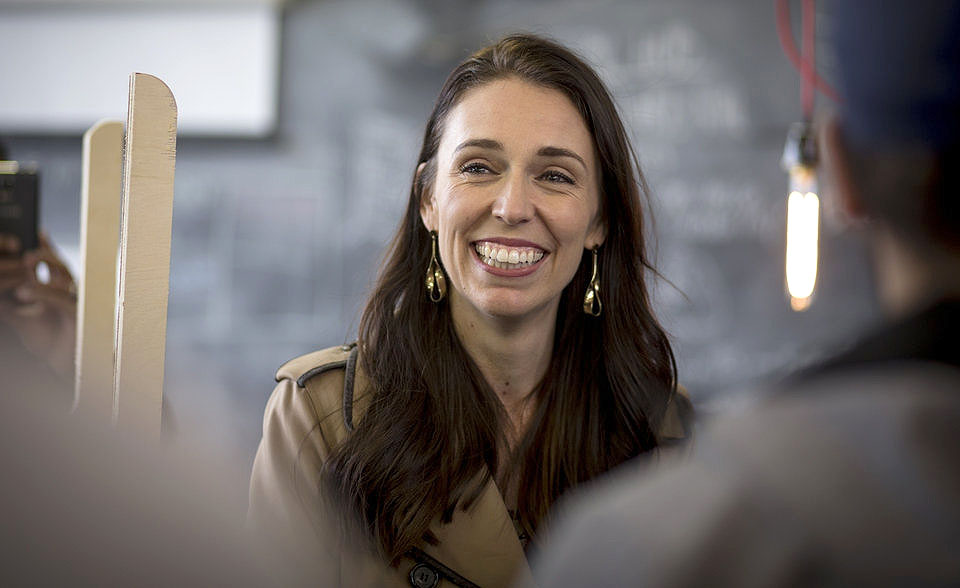
*Prime Minister of New Zealand Jasinda Ardern. *Photo: Dean Purcell
Dossier
Women at the highest posts
Now in the world there are 11 women presidents (Lithuania, Estonia, Singapore, Taiwan, Nepal, Mauritania, the Marshalls of the island, Croatia, Malta, Chile, Liberia), 8 prime ministers (UK, Bangladesh, Namibia, Poland, Serbia, Peru, Norway, New Zealand), one Chancellor (Angel Merkel in V. Germany) and one state council (corresponds to the Prime Minister)-Aun San Su Zhi in Myanmar.