
Translated material
Why is the birth rate falling in Russia?
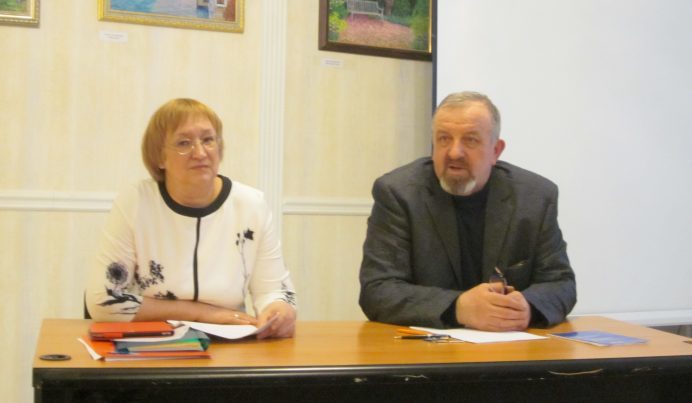

Svetlana Provivskaya,
President of the Public Organization "Right to Life"
"The struggle for a high standard of living will lead to a decrease in the birth rate. This trend is characteristic of all civilized countries oriented to consumer society"
Source: "National News Service" Not a fact of decrease in the birth rate in the world is not associated with the growth of the quality of lifeReducing the birth rate is a trend that has been observed around the world in the past half a century, regardless of which country we are talking about. According to the World Bank, the so -called medium -sided "birth coefficient" (the number of births per thousand inhabitants) in 1963, when the last in time of its peak was marked, was 36.11, and in 2015 - 19.08. Moreover, the indicators both in countries with high incomes and with average or minimal decreased in the end almost equivalent - about 1.5-3 times. And there is not a single country where this indicator has grown.
The main reason, as follows from the same statistics, is a decrease in the level of fertility , that is, the number of births per woman of childbearing age (15–49 years). In the early 1960s, this indicator in the whole world was 5.07, and in 2015-only 2.45. And only in one country did he increase during this time - in the Congo, from 6 to 6.2.
Indicators of Russia - 2.52 and 1.75, respectively. For comparison: the 2015 indicator in Israel is 3.09, France - 2.01, Sweden - 1.9, the USA - 1.84, Australia - 1.83, Norway or Great Britain - 1.8. And these are countries with a much higher standard of living than in Russia. The indicators comparable to Russian were noted, for example, in Denmark or the Netherlands - 1.7. Whereas in the Czech Republic - 1.53, in Germany or Luxembourg - 1.5, in Italy and Hungary - 1.4, in Poland - 1.3. But in general, even the average indicator for 2015 for all 35 OECR countries, that is, the most industrialized countries in the world, are 1.7 - only a little lower than the Russian one.
Svetlana Plavskaya also notes in an interview that "if the regions suffer more from economic instability, then this ideology of consumption society is gaining strength in Moscow and St. Petersburg." What does statistics show ? In 2016, the total number of births in Russia decreased by 2.6%, while it increased only in 7 out of 87 constituent entities of the Federation, and in January-August 2017- only in two . In all other regions, the birth rate continues to decline. If we turn to data in Russia as a whole , then in 2015 1.94 million children were born in the country - this is a little below the 1990 level. In 2016-1.89 million, almost like in 2013.
Russian experts predict that the decline in the birth rate will continue in the country in the coming years (the most pessimistic forecast - until 2031). They use the term “demographic pit”, which reflects, in particular, the smaller, compared with the recent past, the number of women aged 22–28 years: it is on it that most children have the birth of. The “demographic pit” was the result of a sharp decline in the birth rate in the 90s of the last century, which had a whole strip of economic crises. Whereas, for example, the crisis of 2008-2009 on the general dynamics of birth rate in the country practically did not affect .
The current decline in the birth rate in Russia lasts the third year in a row-the last time its growth was celebrated in 2014, that is, in the year of the beginning of the current economic crisis. At the beginning of 2017, employees of the Russian Academy of National Economy and Public Service (RANEPA) conducted a survey on the financial situation of Russian families. And 40% of respondents replied that "they have enough money for food." And Deputy Prime Minister Olga Golodets spoke of a unique phenomenon in the social sphere of Russia-"poverty of the working population." According to her, 4.9 million working Russians (or 7% of the total working population. - RS) have income not exceeding the minimum wage (minimum wage) - about 7500 rubles per month ($ 130). At the same time, Golodets emphasized , the poverty level in Russia may be higher than the statistics indicate, due to the "shadow" sector of the economy.
Evgeny Gontmamer, Deputy Director of the Institute of World Economy and International Relations in Moscow , celebrated in an interview with Gazeta.ru: "People do not just put off the birth of a child for later, they, in principle, feel that foggy prospects are ahead, and do not understand, for example, what their wages will be after a while, where they will work."
It is not yet possible to stimulate the birth rate even at the expense of the federal program "Maternity Capital". It was originally designed for the period from 2007 to 2016, but then extended until the end of 2018. The funds allocated as part of the program to mothers after the birth (adoption) of the second and next child, many families use, for example, to buy housing , but due to the difference in prices for it, this has the same effect in all regions.
The government speaks of the need to stimulate the birth rate, but, as noted by the Vedomosti newspaper in June of this year, the authorities do not yet have a real plan of action. In particular, the possibility of extending the validity of the Maternity Capital program is discussed for another 5 years, but at the same time, the government admits that the causes of the drop in the birth rate are in reducing the incomes of the population. According to the Institute of Social Policy of the Higher School of Economics, only in 2015-2016 they decreased by 12%.