
Translated material
CPC Congress: Results and Prospects
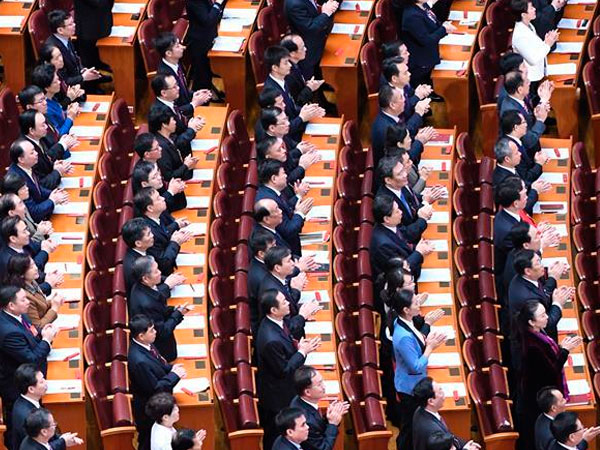
The media discuss the results of the XIX Congress of the Communist Party of China (CCP) and guess about the further development of events. At the congress, a new Central Committee (Central Committee) of the CPC was formed. The next important and informative step will be the formation of the new Politburo of the CPC Central Committee.
The congress, writes BBC with a unanimous vote in support of the introduction of ideas (“thoughts”) in the Constitution) of Xi Jinping, who consistently pulled the power since 2012. The current unanimity means that now any challenge of Xi Jinping will be considered as a challenge to the Communist Party. The specific feature of Xi Jinping is that he claims to be an ideologist on the scale of Mao Zedong. As in the case of Mao Zedong, his ideas in a particular order are included in the Constitution. The considerations of his predecessors were also turned on, but without references to the name. Dan Xiaopin was a kind of exception, but his name appeared in the constitution already posthumously.
The next step, notes the BBC, will be the election of the leaders of the Politburo. Delegates participate in these elections, but their main direction is developed by a party leadership that selects candidates from which you can choose. The president, apparently, will remain Xi Jinping. His first term, the author concludes, was marked by significant successes in the field of modernization and an increase in ambitions in the field of international influence. His rule was also marked by the strengthening of authoritarianism, censorship and disrespect for human rights.
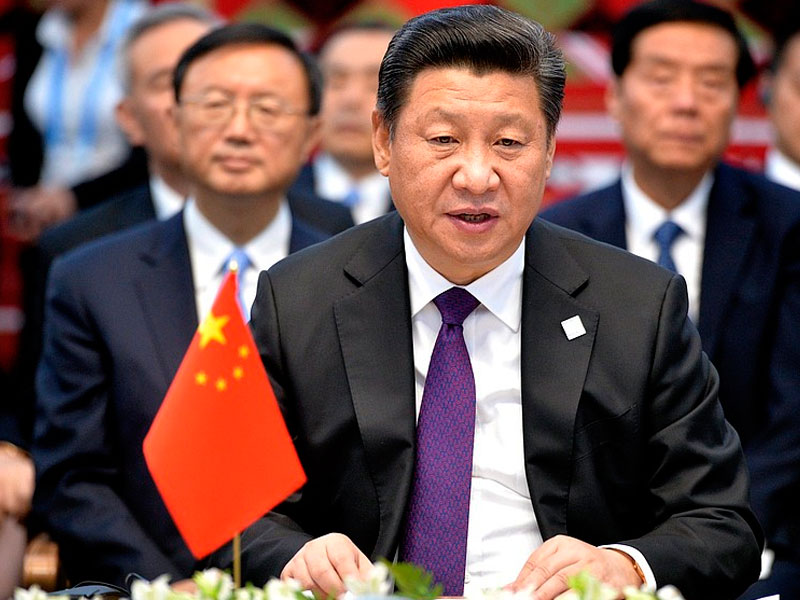 Xi Jinping - Chairman of the KPR / Kremlin.ru
Financial Times writes that with the end of the congress, the second term of Xi Jinping formally began as a party secretary general. The introduction of his name to the Constitution approves him in a status superior to the statuses of two previous presidents. They were both “first among equals”, that is, they were constantly surrounded by powerful political competitors.
Bloomberg discusses continuity. On Wednesday, the author writes, an answer to the intriguing question should be received about whether Xi Jinping will give a distinct signal about who to consider it a successor. The congress was crowned by the election of about 200 members of the Central Committee. About 25 of them will take places in the Politburo, which makes important political decisions. The Politburo includes the most influential group - the Permanent Committee of the Politburo of the Central Committee of the CCP. This group makes key decisions. The standing committee will remain in power until 2022.
There are many speculations about who will become part of the standing committee, but there is very little certainty. The current committee consists of seven people. The question is whether there will be at least one person of such an age in the new composition of the committee that if he becomes the president of China in 2022, then he would not reach the age of 68 over the next ten years, that is, until 2032 the current constitution, the author stipulates, limits the time of stay at the presidential post with two five-year periods. But for other important positions - such as the Supreme Commander -in -Chief or Secretary General of the CCP - there are no restrictions.
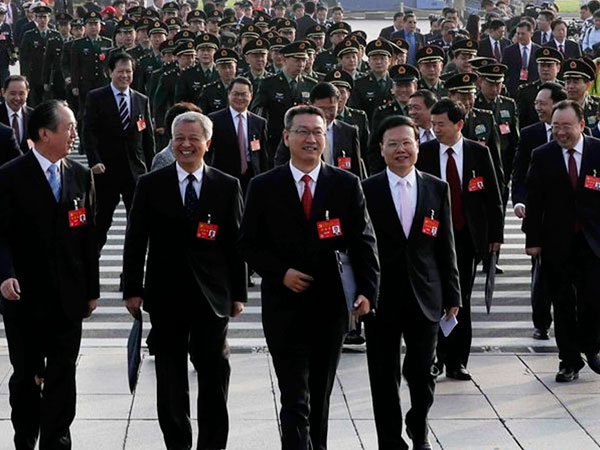 Delegates of the 19th Congress of the CCP during a break / Xinhuanet.com
Since the Chinese policy is very opaque and difficult to predict, the author offers three possible further scenarios. The first of them is the lack of an obvious successor. The new committee includes only people born before 1960. This will be a significant retreat from the conventions established after 1992 and this will be an argument in favor of the fact that Xi Jinping intends to further lead the CCP.
The second scenario includes two participants born in the 1960s. Here it will be necessary to monitor the status details in order to make assumptions about which of them are subject to successors. The third scenario involves a reduction in the composition of the committee to five people. Such a turn of events means even less likelihood of a successor and gives new power advantages to a leader who is easier to negotiate with a smaller number of participants.