
Translated material
Colta.ru
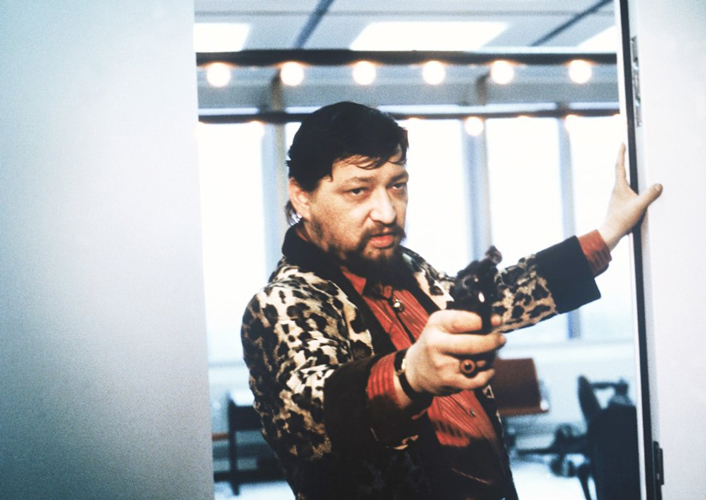
This year, the program of the Festival of Cinema on Science and Technology is a large block of anti -utopia “imperfect future”, assembled with the help of the Berlin festival. The main decoration of the program is Rainer Werner Fassborder, who plays his last role (police future) in Kamikadze-1989 Campovo (1982) Wolf Gremm; Only recently the film was restored and released on digital media.
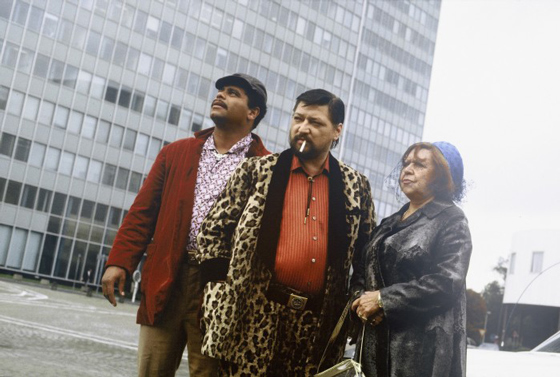
Kamikadze-1989 was released 36 days after the death of Rainer Werner Fassbinder, and the RVF in the poster-in the leopard jacket, imposingly instructing the viewer, the best invitation to watch the film. Whatever the director Wolf Gremm said (“The role of Lieutenant Jensen became a vacation from his own films for Rainer ...”), Fassbert had a tremendous influence on the entire filming process - already his capricious refusal to work among strangers. So the operator Ksaver Schwarzenberger appears on the site, the role of a simple -hearted partner of the protagonist goes to Gunther Kaufmann, Franco Nero looks straight from Kerel. Yes, this is not the film of Fassbinder, but here is his mythology everywhere (or is it worth saying - his family?).
And also about the cultural context: 20 days before the German premiere of the film in America, “Running Blade” is released. The paintings of Ridley Scott and Wolf Gremm are one-time projects, two equal ones (no matter how strange it sounds) attempts to look at tomorrow, compose the image of the future. After 35 years, it’s funny to compare how each of the directors managed to foresee today. The “Running Blade” and today looks like the standard of pessimistic futurism, while Kamikadze feels almost at home in the new millennium: it is sometimes difficult to distinguish modern fashion from German TV aesthetics of the 80s.
 © Ziegler Film / Ursula Röhnert
Finally, Kamikadze appeared on the screens 136 days after the death of Philip Dick. The presence in the film of allusia on Dick is, of course, a bold assumption on my part, based on naked intuition, vague conviction that a successful adaptation, which Dick’s novels, obviously will never wait, should look exactly like Kamikadze. Grem, taking as a basis the plot of the northern noir of Per Valeo, almost perfectly recreated the paranoid logic of the “Simulakra”, “Castle” and “We will build you”. The caricature corporation, the hero on doping and antidepressants, and most importantly-the road to the open and minor final, which no solid science fiction cinema will dare to.
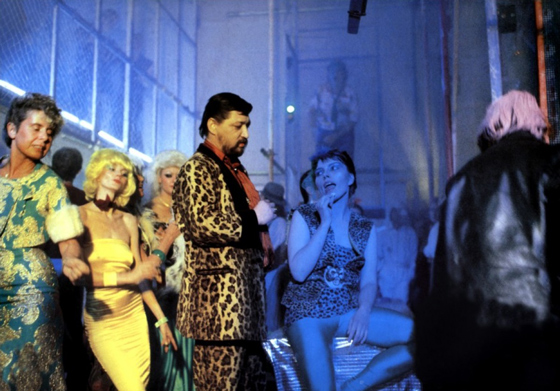
But about everything in order. “Kamikadze” is indeed almost purebred Sci-Fi , anti-utopia, except that slightly wounded in the EuroTreesh. In the world of a near future (so far that today it has become a deep past), “Heaven has become part of the human world”, Germany reached the peaks of prosperity, energy and raw materials have been resolved forever. Simplicity for the sake of all power and the media is given into the hands of one supranational concern, and police areas are retrained in the centers of therapy - friendly law enforcement officers are dressed just like participants in porn films with nurses, and doctors resemble fans of BDSM. Alcohol is prohibited due to an unpredictable effect, the cultivation of cabbage is due to the control of the purity of products, but drugs are now harmless to health. The last enemies of the President are mysterious dissidents scattering forbidden comics, and terrorists in underwear and balaclavs, threatening to mine the building of the government.
Even according to this (very cursory) description of the Kamikadze-1989 universe, it is difficult not to feel the tedious redundancy of the material. If this anti -utopia criticizes politics and society, then it glides along the objects of ridicule in the mode of so inconsistent and high -speed, which does not have time to get to any goal, working out all its endless finds of idle. Compared to the same blade running, where monologues roll up in all seriousness, the film of Grem from beginning to end slurredly mumbles and sacrifices itself in a series of bright episodes-spray. “Film for the Ambassador” - the expression from the vocabulary of Fassbinder comes to the rescue.
 © Ziegler Film / Ursula Röhnert
But, evading the Orwell didactivity, Kamikadze refrains from developing a good taste in the eloquent Fuck . Grem frankly sabotes a serious discourse of politics and still does not allow the film to turn into a pure emotion, a cheerful Shapito. The accumulated critical charge does not flare up, but retains, hangs in the last frames.
Instead of the expected denouement (will an explosion occur?) A rough mounting gluing tolerates us to the radio on the desktop of Lieutenant Jensen, the dictator's voice explains what happened in the government’s house. Absolutely and inglorious. The pathos of the final was as if stolen from the viewer from under the nose, but in fact placed in some trifle and saved in it. This is exactly how Philip Dick did-let’s say, on the last pages of “Our Friends with Froliks-8”, where the main character, finally meeting with one of the main architects of utopian reality, finds geniuses who fell into childhood:
- Then what are you doing?
- I'm building anything. Here, look.
Aild proudly demonstrated to Nick constructed by him from Linech and Press Papier.
“If you remove at least one load,” said Aild, “everything will collapse.”
 © Ziegler Film / Ursula Röhnert
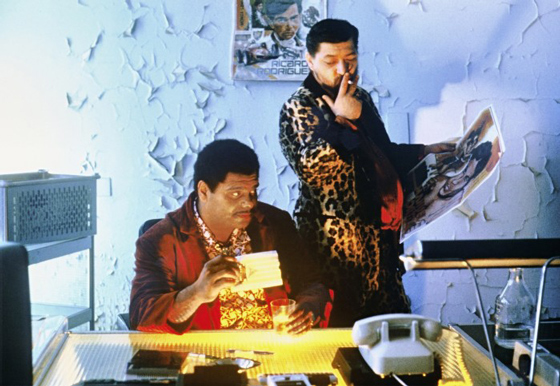
No, two hours of spectator efforts spent on the film Wolf Gremm are not in vain. They are carefully collected and accumulated in the same barely balanced structure of debris and sawdust. Her point of equilibrium is the crooked grin of Fassbinder on the final credits. In the chronicle, from the filming of Kerel and Kamikadze, the RVF repeats in different ways: "My first waves of intoxication and frenzy have passed after 10 films, now - the time to perceive the movie as a craft and as a small part of a huge reality." The right path to this unknown reality is an impenetrable hangover migraine. In a painful bliss, Fassbord indomitably leans against the Nile Armstrong, the portrait of which hangs on the wall, laughs tiredly into the camera. The whole film was pushed his Jensen with a persistent scream to the role of the chief rebel and antagonist, the affectionate president promised a comfortable position, but he rejected all the proposals, only indicating the power contours of the political, without removing his contradictions with either a riot or at least a challenge or an attempt to escape. In a world where drugs do not have any side effects, but only bring high, he prefers to drink - and not to get drunk, but only to suffer from his head.