
Translated material
They will remember everyone by name
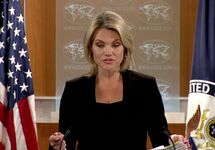
The State Department continues to work on compiling a list of persons and organizations related to Russian defense and intelligence sectors that will fall under new sanctions. The delay with their introduction is explained by the complexity of the process, the press secretary of the American Foreign Department of the American Foreign Department Hizer Neurt said at a briefing.
“It is quite difficult and can take some time,” Noert noted. She recalled the position of Secretary of State Rex Tillerson, who said, "in NATO and other parts of the world there are important allies and partners who need specific recommendations so that they themselves are not exposed to sanctions." In addition, American companies are also needed. Tillerson explained the current situation in the congress, Noert noted.
On October 12, Senators John McCain and Ben Cardin expressed dissatisfaction with the delay in the execution of sanctions against Russia. Senators noted that President Donald Trump was supposed to determine the list of Russian companies that potentially fall under sanctions within two months after signing the law, that is, by October 1. "The delay questions the adherence of the Trump administration to the sanctions bill," the Senators said in a statement. McCain and Cardin also accused the White House of insufficient pressure on Moscow with the allies in Europe.
On August 2, Trump signed a law on new sanctions against Russia, as well as Iran and DPRK. The document was adopted in the House of Representatives with 419 votes against three , and in the Senate - 98 against two . About half the document is devoted to anti -Russian sanctions. It is noted that they are introduced "in response to a crisis in eastern Ukraine, cyber attacks, as well as human rights violations in Russia."
The document tightens restrictions on the transfer of American technologies for the exploration and production of Russian oil in deep water, the Arctic shelf and in shale formations. Until now, such sanctions have been valid only against the Gazprom, Gazpromneft, Surgutneftegaz, Rosneft and Lukoil projects. Now they are extended to all projects in which one of the named companies owns a “significant uncontrolled share” - 33 percent or more. In addition, transactions with the participation of Russian military and special structures, as well as transactions in the field of pipeline export of hydrocarbons are limited.
Along with this, it is forbidden to participate in privatization transactions with Russian state property, if they assume an investment volume of more than $ 10 million a year and contribute to the illegal enrichment of officials, their relatives and close associates. Finally, sanctions against Russian financial institutions and their employees are imposed, who provide assistance to the Syrian dictator Bashar Assad in the development or receipt of weapons, in particular rocket and weapons of mass destruction.
The same document enshrines at the legislative level the previous orders of the US administration on sanctions and obliges the country's president to coordinate any mitigation of sanctions with Congress.
On July 28, even before the signing of the Trump law, Moscow demanded that Washington reduce the number of diplomats and technical employees at the embassy, as well as the Secondary Generals in St. Petersburg, Yekaterinburg and Vladivostok to 455 people - this is how many employees are now working in Russian diplomasses in the United States. In addition, the use of a summer house in the village of Serebryany Bor in the west of Moscow and warehouses on the road street was suspended. On August 31, the American authorities in response demanded from Russia until September 2 to close the Consulate General in San Francisco , as well as a trade mission in Washington and its branch in New York.