
Translated material
Kurtz and "Babisconi"
Pro-Russian-configured politicians-priests came to power in Austria and the Czech Republic. What to wait?
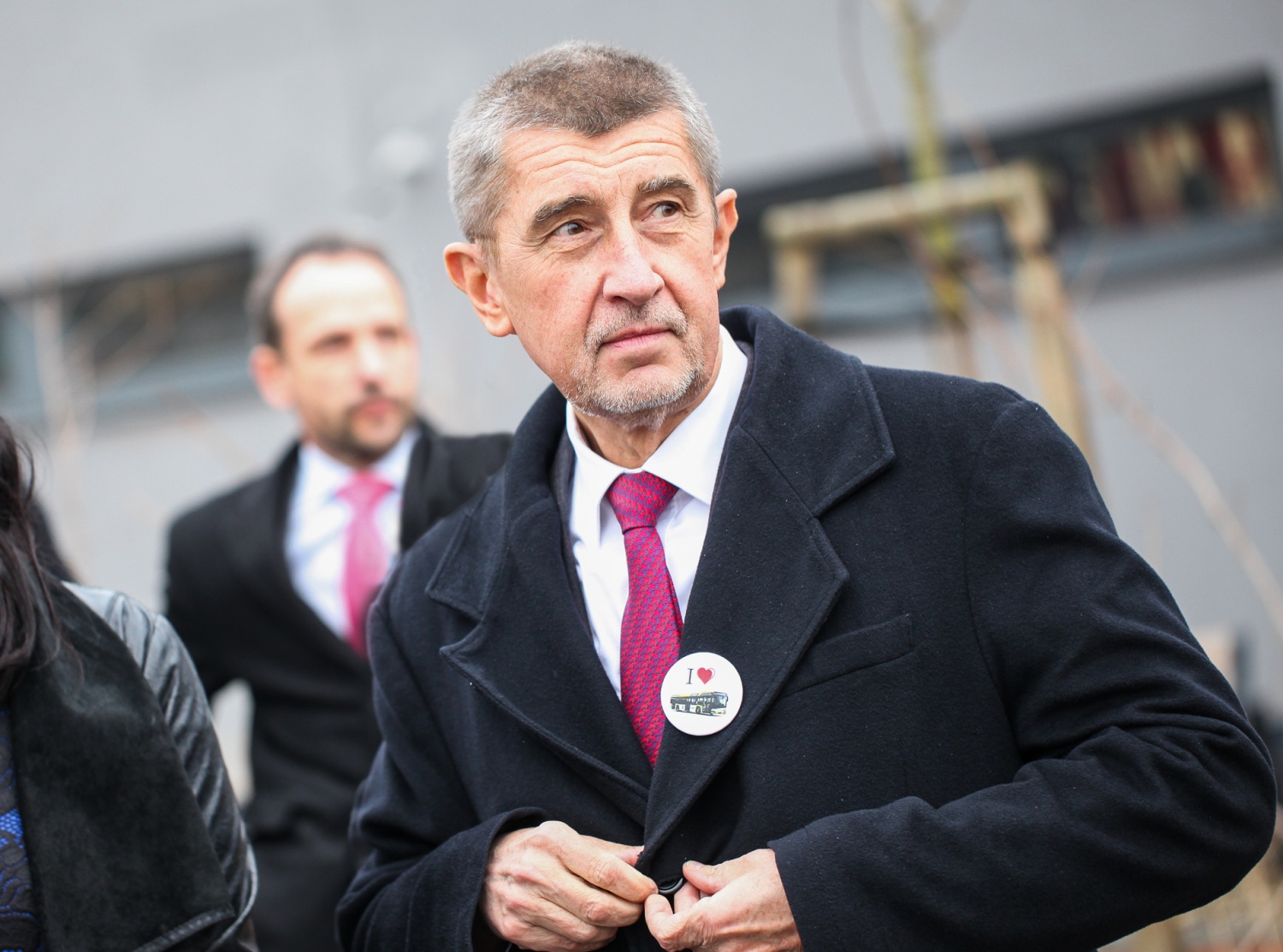
Andrey Babish. Photo: Flickr.com
Prague, October 21, 2017. Billionaire Andrei Babish, whose right -wing party of the ANO (the abbreviation of the Czech name “Promotion of dissatisfied citizens”) has just won the parliamentary elections in the Czech Republic, having received almost 29.64% of votes (78 seats out of 200), gives an interview with Reuters. “What do you think of a recent victory in the elections in Austria of the People’s Party and about its leader Kurt?” - “The victory of Sebastian Kurtz is our winnings. We won an ally, - Babish blurred in a satisfied smile. “Now we need to clearly explain in the Council of Europe what exactly we want to change.”
63-year-old Babish and 31-year-old Kurtz, despite the difference in age and biography, unites a lot. Both criticize the “national elite” and the “sales system” it created for corruption, both are sharply configured against the uncontrolled tributary of migrants, including refugees. Both rather sympathize with Donald Trump and Vladimir Putin - Kurtz, not having time to really get comfortable in a new role, already offered Vienna as a place for a new meeting of the leaders of the Russian Federation and the United States, and Babish, clearly imitating Trump, said that he intended to “govern the country as a company.”
Finally, both Babish and Kurtz praise Brussels condemned by the authoritarian domestic political steps of the Hungarian prime minister Viktor Orban and the Polish “Leader without a portfolio” by Yaroslav Kacinsky - for “an independent course of the Euroborocracy”. Babish, for example, does not get tired of criticizing Brussels for not allowing the Czech Republic to develop its richest potential, and Kurtz insists on reforms in the EU, requires reducing expenses in the community and considers excess that the European Parliament has two headquarters-in Strassbur and Brussels.
Babish himself, however, is suspected of illegal appropriation by the Deputy Prime Minister for Economics and Minister of Finance € 2 million received from the EU in the form of subsidies. Yes, and it does not seem that the EU prevented the Babish from making impressive capital in the Czech Republic: two years ago, in 2015, Forbes magazine estimated his fortune at $ 2.5 billion.
Babish already makes it clear that the community of approaches and views will allow us to strengthen the authority of the unification of Central European countries under the name “Vsevograd four” (it includes the Czech Republic, Hungary, Poland and Slovakia) and even expand its ranks due to the “new allies” in the person of Austria and the Balkan countries.
“The appointment of Babish (Prime Minister) gives the country (Czech Republic) of the second Trump,” USA Today , Czech correspondent, clarifies.
And the “first Trump”, according to the American journalist, already has the Czech Republic - this is the pro -Russian President Milos Zeman, who has already expressed his readiness to entrust the Babish for the formation of the Cabinet of Ministers, despite the fact that a criminal case has been instituted against the billionaire. Anyway, Zeman, Babish, won the election, hastened to remind you, now again, like in the ministerial years, is used by immunity, therefore, there is no need to talk about some kind of criminal prosecution.
Andrey Babish: From agents - to the oligarchs
Babish's statements against the elite look very strange if you read his biography. Dad worked as a trade consultant to the UN, thanks to which his son studied at a gymnasium in Geneva. Slovak by origin, Babish received higher education at the Bratislava Economic University. In 1980, he joined the Communist Party of Czechoslovakia, and in 1982-1985, according to the Slovak Institute of Memory of the People, he was an agent of the Czechoslovak service of state security STB. However, Babish himself denies cooperation with special services. In 1985, through foreign trade - a representative of Petrimex - he goes to work in Morocco. And he returns to the country only in 1991, after the velvet revolution (November 17-December 29, 1989).
In the New Czech Republic, Babish becomes the managing director of the subsidiary of Petrimex - Agrofert, which by 2017 has grown into one of the largest Czech companies with representative offices in several European countries and in China. The conglomerate of two hundred companies today is engaged in agriculture, food and chemical industries, logistics, construction, energy, forestry and media. After the parliamentary elections in 2013, when the Babish party, created two years before, performed so successfully that in the coalition office of ministers she received six portfolios, the businessman left the CEO post in Agrofert, but remained the single owner of the company.
In November 2015, it was Babish, then the Deputy Prime Minister and Minister of Finance of the Czech Republic, who issued a record guarantee for a loan for the Russian company Fosagro, which is in joint ownership of businessman Vladimir Litvinenko, a close friend of Putin Putin
In the same way, the party of Babish Ano is the “promotion of dissatisfied citizens” - in fact, the party of one leader. “The movement is completely dependent on his leader. Andrei Babish is a phenomenon that was not previously observed in Czech politics. It is so strong that the part of the voters who supported him and voted for him in the elections, is ready to forgive him even that a criminal case has been instituted against him, ”said Peter Novachek, a commentator on Czech radio. And despite the fact that Babish “huddles” the standard topics - to leave the EU or not the euro currency, what to do with migrants - many voters joined it.
“People see themselves in Babish,” the journalist and author of the Boss Babish book Yaroslav Ksal explains in an interview with Czech radio. - They also grew under communism. They understand that everything was not easy and remember the lines behind the bananas, but they tend to trust him. ” In addition, on the issue of migration, Babish showed firmness last year, refusing to accept refugees on the EU quota. “We must primarily respond to the needs and fears of our citizens. We must ensure their safety. Even if we are punished for this, ”said Andrei Babish.
“The crisis with refugees threatens the Czech Republic much more than Russia,” Babish said, at that time, the Deputy Prime Minister in the economy, in September 2014. Then he called Western sanctions against Russia "meaningless." As the Laureate of the Pulitzer Prize, journalist Anne Applum, Babish actually echoed President Milos Zeman, who also called the sanctions "ineffective", and "Islamic terrorism is more threat to Europe than Russia." Babish and Zeman and Zeman in her own list of agents of the influence of Putin's Russia introduced Epplebaum back in 2015.
Babish is softer than it was supposed to have treated the stable registered in the Czech Republic in the name of the Chechen President Ramzan Kadyrov. Despite the fact that Kadyrov himself fell under sanctions, the Czech Ministry of Finance decided not to limit the work of the stable
In addition to the antisancical statements of Andrei Babish, the following arguments were given in confirmation of his loyalty to Moscow. Firstly, a record guarantee for a loan for the company Fosagro, which is in joint ownership of businessman Vladimir Litvinenko, a close friend of Putin, issued by him in a difficult period for the Russian economy. In November 2015, Fosagro , reported on the company's website, received a long -term loan from Unicredit Bank Czech Republic and Slovakia in the amount of € 73.4 million, issued for the Czech state insurance company EGAP for a period of 12 years. EGAP is the abbreviation of the Czech Agency for Export Guarantees (EGAP), a division of the Ministry of Finance, which was then headed by Babish.
* A stable with rope horses registered in the name of Ramzan Kadyrov has existed in the "Jockey Club of the Czech Republic" since 2012.
Secondly, Andrei Babish rather gently ordered the fate of the stable registered in the Czech Republic in the name of the Chechen President Ramzan Kadyrov*, which fell in the summer of 2014 for personal sanctions of the EU. From this moment on, the Czech authorities had a formal right to close the Kadyrovsky “asset” in the country. Nevertheless, the Czech Ministry of Finance, who then headed Babish, in June 2015 limited himself to half measures, frozen the profit of the stable. True, the Kadyrovsky horses since then have not left the territory of the Czech Republic, and growing up there.
By the way, in 2014-2015, the Western press already paid attention to Andrei Babish. Then, for pro-Russian actions and statements, a conflict of interests and corruption scandals, Foreign Policy magazine compared him to the ex-Prime Minister of Italy Silvio Berlusconi (“Friend Silvio”) and even jokingly called the “Babisconi” policy. But times are changing - nicknames are also changing.
Sebastian Kurtz: A new type rhetoric
October 20, 2017, Vienna, Hofburg Palace. Austrian President Alexander Van der Bellen gives an official order to form a new cabinet of ministers to the Chairman of the Redientric Austrian People's Party (ANP) Sebastian Kurtz.
Despite his youth, a native of Vienna Sebastian Kurtz is not a newcomer in power and politics: up to the victory in the election, he served as the Minister of Foreign Affairs of Austria and managed to glorify the far from his country by sharp criticism of Brussels in migration dossie.
Kurtz was born in a simple family: mother - teacher, father - mechanic, after school he began to study the right at the University of Vienna, but did not finish training. He came to politics in 2010, becoming a deputy of the city and municipal assembly of Vienna from the ANP party, and already in 2011 he was appointed state secretary in integration matters. In 2013, Sebastian Kurtz was already heading the Austria Foreign Ministry, becoming the youngest EU politician in this position. Nevertheless, a couple of years ago, he was known as the object of ridicule for many party activists and functionaries, and today he is the most popular politician in Austria.
“Sebastian Kurtz pulled out the People’s Party of Austria from the“ Valley of Tears ”,” Stiman Shutzenhofer commented as Prime Minister of Austrian land, recalling that in the past 15 years the party has been harassing failures. But now, as many observers believe, it is likely that by becoming the Chancellor of Austria, Kurtz will advocate the coalition of his party with the ultra -right Party of Freedom, led by Heinz - Christian Straha, and that has a great chance of entering the new Austrian government.
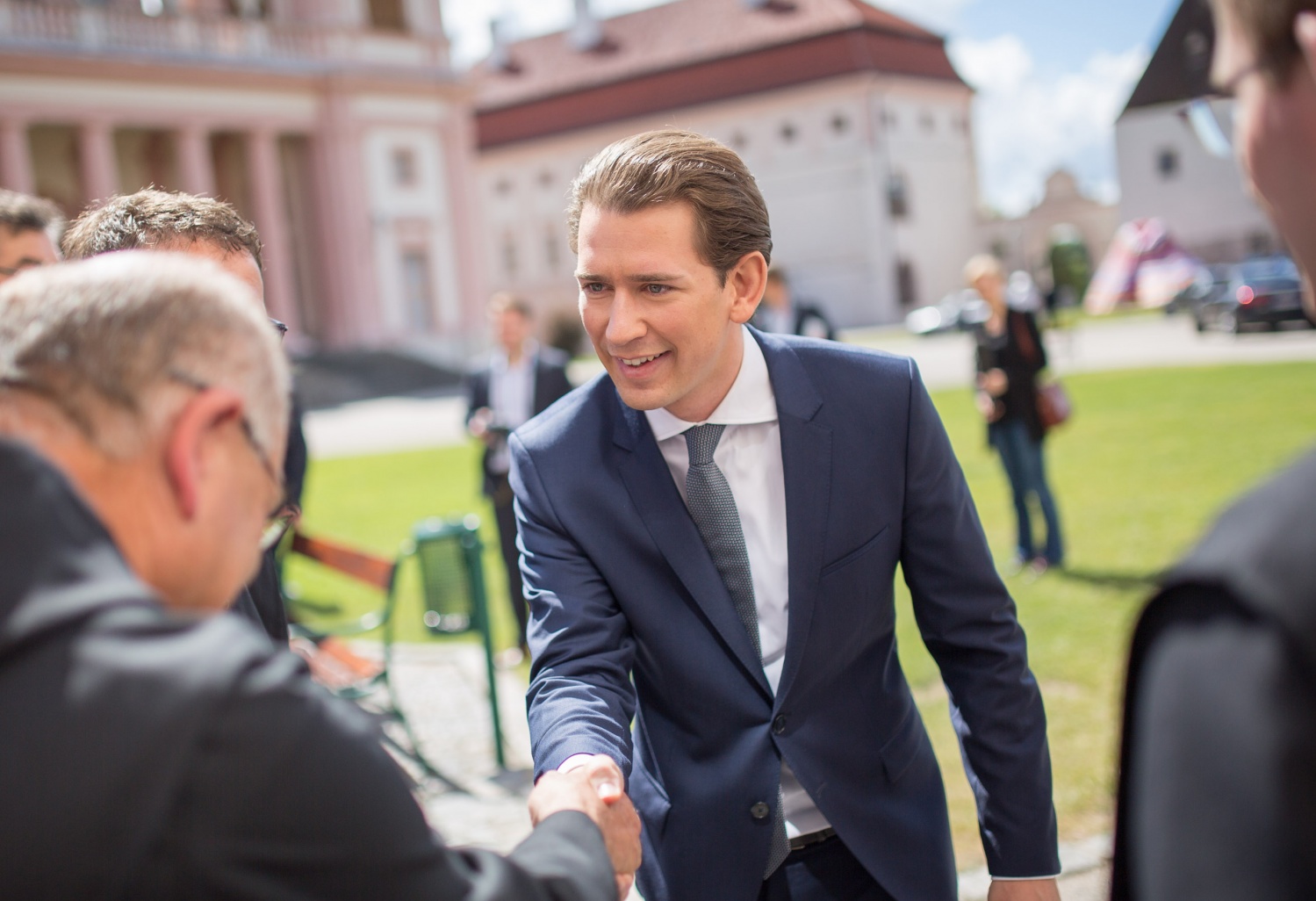
Sebastian Kurtz. Photo: Flickr.com
Even at the stage of the election campaign, an impressive, with a curtain combined hair combed back (although caricaturists often draw it with protruding ears), a beautiful stands and a speaker, clearly articulated his anti -immigrant credo, constantly recalling that it was thanks to his efforts as the head of the Austrian Foreign Ministry in 2016 that the Balkansky Route was closed before hundreds of thousands of refugees. “From Turkey to northeastern Europe, as a result of which it was supposedly managed to sharply reduce the influx of migrants to Austria and Germany,” Kurtz today calls this his biggest success.
The American magazine Time Magazine enlisted Kurtz on his list of “new type of politicians” - the list consists of the 10 most promising young politicians in the world.
Kurtz himself seems to be ready to agree in absentia with this decision of the magazine. “We are creating a new political culture and a new political style,” the politician said during a ceremony at the Hofburg Palace. For example, immigrants should, in his opinion, live and work in any EU country for at least 5 years before applying for social benefits. In addition, refugee benefits must be indexed - depending on the standard of living in the country where they came from. “The European Union should not be a social organization,” Kurtz insists.
Kurtz believes that the situation in the east of Ukraine “gradually changes for the better” and, therefore, the EU sanctions should gradually weaken. Moreover, Kurtz would like to "move from the punishment system (Russia) to the incentive system"
“Of course, with the victory of Kurtz, Austria shifted towards the right-wing populism,” says Rainhard Hanish, expert political scientist from Salzburg University. -It is enough to recall how, during the pre-election television devices, Kurtz and the candidate from the ultra-right Straha argued on the topic of which of them the politics of Hungarian Prime Minister Viktor Orban was closer. Both praised him. But the migration policy of the Chancellor of Germany Merkel - scolded. "
However, Hanish himself explains the victory of Kurtz by the attack in the country of the “era of political realism”: “We no longer live on the island of Blessed. Fear and anxiety for the future - these are the feelings over the Austrian voter throughout the election campaign. ”
Excessed expectations
Today, many Austrian newspapers recall that Kurtz has repeatedly spoke and even wrote on Twitter that sanctions against Russia are harmful to enterprises in the EU and "Austria needs to think about it."
Kurtz, a supporter of a “more flexible course” against Moscow, who would contribute to the dialogue between the East and the West, the German Die Welt indicates.
For example, he believes that the situation in the east of Ukraine “gradually changes for the better” and, therefore, the EU sanctions should gradually weaken. Moreover, Kurtz would like to "move from the punishment system (Russia) to the incentive system."
Another detail that distinguishes Kurtz even among European right: he is concerned about the decision of the Trump administration to abandon the nuclear deal with Iran, believing that for Austria it is a “significant and useful thing”. The issues of disarmament are also concerned, and to such an extent that he is ready to act a mediator between white home and the Kremlin and convene a security summit in Vienna with the participation of Trump and Putin.
True, this initiative has not yet found a response in the Kremlin - apparently, they still look closely at the Kurtz and do not want to create high expectations around him. Moreover, even fresh legend - the subject of exactly the same overstated expectations of Moscow was just a year ago, was US President Trump.
"There is no more except verbal support for the abolition of sanctions, you should not calculate"
Nevertheless, according to NT, the Embassy of the Russian Federation in Vienna, for example, has already received the Central Executive Committee from Moscow to collect an additional array of information about the Kurz, since he is already on the list of foreign statesmen who plan to send an invitation to visit Moscow “immediately after March 2018”.
“Kurtz and Babish, perhaps, are more frank than other EU politicians of this rank in favor of weakening sanctions against Moscow,” one European diplomat notes in a conversation with NT on the basis of anonymity. “Kurtz and Babish - Achilles's heel of the EU, and Moscow will put pressure on it.”
However, not only Kurts and Babish - many other European politicians also used the topic of sanctions, especially for election purposes, resorted to a more calm rhetoric against Moscow policy, recalls the political scientist of the Center for Political Technology Igor Bunin in a conversation with NT. However, when it came to business, everything changed sharply.
“There is no more except verbal support for anything except verbal support. The abolition of sanctions is an extremely formalized process, it is necessary to carry out a lot of negotiations, make concessions and compromises, and as a result it is easier to leave sanctions in strength than canceling them, ”says Bunin, emphasizing the ghostly of Moscow’s hopes in this regard. “To cancel the sanctions, you need a consensus of all EU countries, I would even say the whole EU system.”
Elena Teslova took part in the preparation of the material