
Translated material
Putin demanded to strengthen the safety of Runet
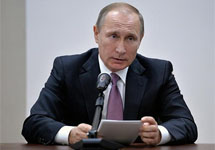
It is necessary to increase the safety of the Russian segment of the Internet, and in relation to persons using it for criminal purposes, strict measures should be used. This was stated by Vladimir Putin at a meeting of the Russian Security Council, the Kremlin press service reports .
“As in other democratic countries, we must fight those who use the information space to propagate radical ideas, justify terrorism, extremism, and decisively suppress attempts to place materials that threaten the security of our state, society as a whole and individual citizens,” the president said. “At the same time, it cannot be about restricting the access of law -abiding citizens to the resources of the global network, about some Total barriers and filters must be strictly observed and respected by the constitutional right to receive and disseminate information. ”
Putin noted that law enforcement agencies began to more often identify and suppress the activities of the Islamic state recruiters on the Internet. It is also hard to act within the framework of the law in relation to other persons and groups using the Internet, information space for criminal purposes, ”the president said.
In December last year, Putin approved the new doctrine of information security of Russia . In particular, the document notes that the special services of “individual states” use ”the means of providing information and psychological impact aimed at destabilizing the domestic political and social situation in various regions of the world and leading to undermining the sovereignty and violation of the territorial integrity of other states.” This activity says in the doctrine, "religious, ethnic, human rights and other organizations, as well as individual groups of citizens, are involved, while the possibilities of information technology are widely used."
Recently, the information impact on the population of Russia has been increasing, primarily on young people in order to erode traditional Russian spiritual and moral values, ”the doctrine says.
In addition, the document notes that a number of foreign countries are building up the informational impact on Russia, pursuing military goals.