
Translated material
Xi Jinping is no longer the first among equals. He is the emperor
What did the permutations in the Politburo Communist Party of China led: Carnegie.ru
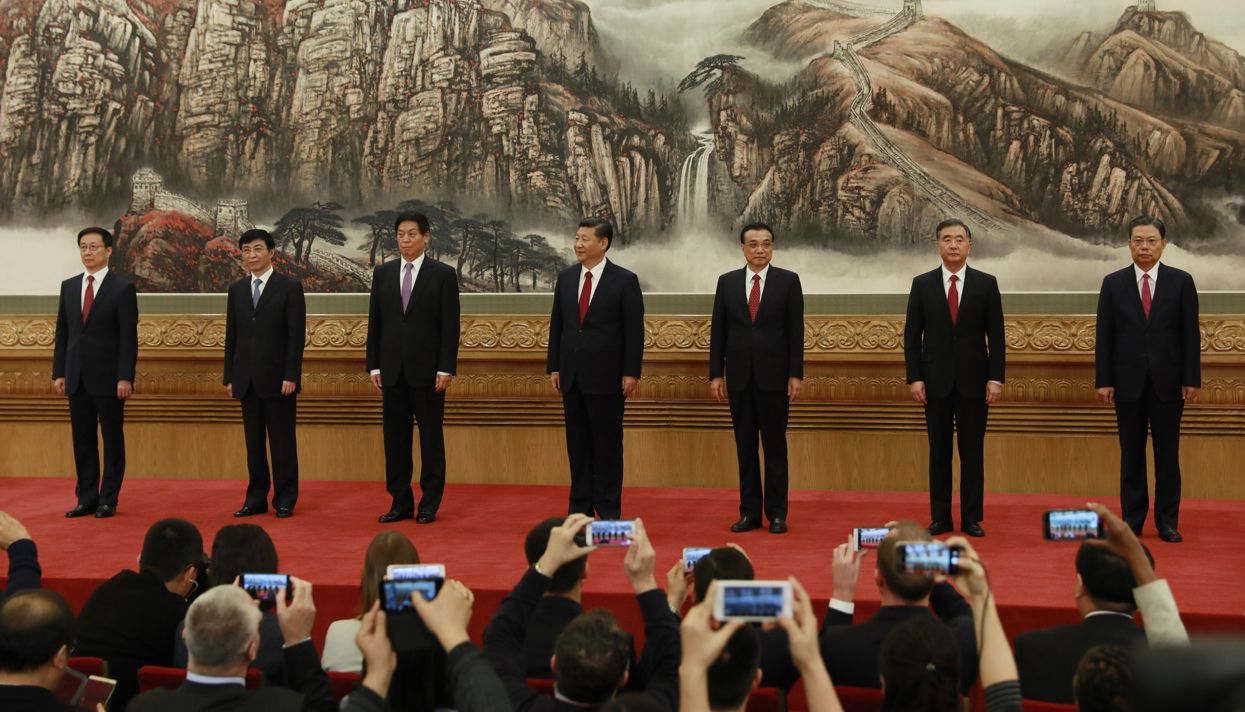
At the end of October, the updated composition of the Standing Committee of the Politburo Communist Party of China became known. As expert Alexander Gabuev writes in an article for the Moscow Center of Carnegie, permissions in the Politburo mean that the chairman of the PRC Xi Jinping is no longer the first among equal terms, but a strong emperor, who is preparing to stay in power even after the expiration of two terms allocated by law. “Medusa” with the permission of Carnegie.ru publishes an article by Gabuev.
On the morning of October 25, at the House of People's Assembly, the Secretary General of the Communist Party of China Xi Jinping brought to journalists a new composition of the Politburo standing committee (PKPB). The six of the most powerful people in China took turns silently out of the screen and peeled behind the boss to the places strictly allotted-they were marked on the carpet with pieces of paper so that no one would confuse their place in the established order of things.
Five years ago, Si exactly the same brought to the stage of six members of the PKPB of the former, 18th convocation. But with all external similarities, the essence of these two protocol events is noticeably different. Among the colleagues SI were then the prostate of the two former leaders of China Jiang Zemin and Hu Jintao, and the newly elected Secretary General himself was only the first among equals. The whole ceremony was the embodiment of the idea of collective leadership.
Now, the PKPB was not just the Secretary General, but the person who officially has the title of “party nucleus” from last year and whose name after the 19th Congress of the CCP was included in the party charter along with the names of the founding father of the PRC Mao Zedong and the godfather of reforms Dan Xiaopin.
The new composition of the PKPB and the 25-seater Politburo says that we are no longer in front of the collective body of the Leninist type party and not even the Board of Directors of China Inc., but a much more familiar format for organizing power for China is the imperial court.
Near circle
Since the Congress of the Communist Party is a concentrated expression of power struggle, there is no doubt that Xi Jinping came out of this battle by the winner - largely due to the fact that all the previous five years step by step towards this purpose. The results of the congress are almost the complete embodiment of the Maxi program to strengthen personal power.
First of all, in the seven new members of the PKPB there are no people who would be 10 years younger than SI. All his colleagues are born in the 1950s (SI was born in 1953, he is six months younger than Vladimir Putin). For the last two decades, China has gone to ensure that the tandem of the Supreme Leader and the Prime Minister is in power for two five -year periods measured by the CPC congresses, and in the middle of this cycle, two future leaders of the next generation were introduced into the PKPB - for the gradual entry into the course of affairs. It was this most important informal tradition that the XIX congress violated. Now Prime Minister Lee Katsyan does not have obvious successors.
It is equally important that Si spent his closest associates in the seven, who received key posts in the Chinese system of power. First of all, this is the third person in the hierarchy, the new head of the All -Chinese Assembly of People's Representatives (the highest legislative body of the PRC) Lee Zhansh.
Lee is one of the people closest to Xing Jinping. They met back in the early 1980s, when both headed neighboring counties in Shunxi province, from where the SI family came. Then their career paths parted, but they maintained a connection. Having become the Secretary General, the first thing was linked to Lee the head of the Chancellery of the Central Committee - one of the most important departments, which leads the schedules of all members of the Politburo and organizes internal document management, including the information constituting Gostaina.
Lee Zhanshu constantly accompanies SI on all trips, and since 2015 he serves as a Secretary of the Secretary General in negotiations with Russia on strategic issues (in this capacity he came to Vladimir Putin twice) and maintains regular contacts with the head of the presidential administration Anton Vaino. By the way, this format of interaction with the Central Committee of the CCP and specifically with Lee Zhanhah no longer has any power.
Another important participant in the seven is the sixth person in the hierarchy, Zhao Leszy, the new head of the Central Commission for the Checking of Discipline (CCPD), who replaced Van Tsishany. A native of the General Secretary of the Secretary General (and its party secretary in 2007-2012), Zhao headed the organizational department of the Central Committee for the past five years, who was in charge of all personnel appointments in the party. All this time he was the deputy van of Tsishan in the leading group of the Central Committee for inspection work, that is, the second person in the anti -corruption campaign expanded by the Secretary General.
Having transferred the CCPD to Zhao Leszi, Xi Jinping will retain full control over this powerful tool with a multi-thousandth staff of operatives, the right to conduct extra-court detention of members of the 89 millionth party and torture suspects in secret prisons.
Finally, another person close to SI is the new head of the Secretariat of the Central Committee Van Khunin, now occupying the fifth line in the party hierarchy. Since 2002, Van headed the Political Research department to the Central Committee and was the main theoretician of the party, it is he who is attributed to the authorship of the “theory of three representative offices” Jiang Zemin and the “theory of scientific development” by Hu Jintao.
Van also fit into the team of Xi Jinping, played a large role in formulating his ideas like “belt and path”, “four comprehensive” and included at the current congress in the charter of the CPC “See Jinpin’s ideas about socialism with Chinese specifics in a new era”. Therefore, Vana is called "a mentor of the three emperors." Van Khunin has no experience with the province, but in the current position, where he will oversee party -industry, ideology and propaganda, he does not really need this.
Clouded
The remaining two members of the PKPB, the future head of the People’s Political Council of China (if we bring Russian analogies, this is a cross between the Public Chamber and the All-Russian Popular Front) Van Yang and the First Deputy Prime Minister Han Zheng, do not belong to the near Circle of SI. Van is a nominee Hu Jintao and a representative of the Komsomol group. Han Zheng made a whole career in Shanghai and owes his nomination to Jiang Zemin, although he has a half -year work under the leadership of Xi Jinping in 2007, when the future Secretary General was sent to head the party committee (Han was mayor).
The appearance of these two representatives of the Komsomol and Shanghai groups in the PKPB can be considered as a desire to preserve consensus and not break the party through the knee - it is this interpretation that the influential South China Morning Post is persistent, which, after Jack Ma Ma Ma Ma -Ma, turned into a semi -office channel to external messages last year The world.
According to Van Xianvei, the former chief world of the newspaper, who has now moved to Beijing and acting as an “adviser on editorial policy issues”, Xi Jinping acts as a guarantor of preserving the rules of the game - therefore he agreed to introduce the prosteus of former Secretary Generals in the PKPB, and also did not hold his close associate Van Tan, who should, according to informal concepts He was retired due to age restrictions.
However, the version of “SI - the keeper of party traditions” does not explain why the Secretary General decided to violate a much more important rule and did not appoint his successors (Van Xianvei carefully circumvents this issue). Rather, it is different. The positions of SI were so strengthened that now it makes no sense to try to clear the protege of their predecessors - they have already stood under the banner of the Secretary General, glorify his “ideas for a new era” and pronounce the phrase “party nucleus” almost more often than governors in Russia mention Putin.
Trusted
The consolidation of power by Xi Jinping is not limited to the lack of successors and a large number of associates among the seven of the PKPB. It is equally important that in the 25-seater Politburo are also dominated by nodgers of SI, who occupied key posts in the party apparatus. The most important departments of the Central Committee, whose leadership automatically gives a place in the Politburo, completely transferred to SI, and in most cases the positions of the heads of these departments were taken by the former deputies - obviously, the Secretary General had already thought about such a hardware combination five years ago and was now able to implement it.
The Chancellery of the Central Committee was inherited by Dean Xuesyan, who was the head of the personal apparatus of Xi Jinping for the past ten years, starting with the Shanghai city committee. Chen Si, a classmate of Xi Jinping at the University of Qinghua and one of his closest student friends, became the main in personnel. They lived in the same room in the hostel, and See recommended Chan to join the party. The propaganda department was headed by Juan Kunmin, who worked under SI since the 1990s in the provinces of Zhejian and Fujian.
The only head of the important department of the Central Committee, who did not hold the post of deputy chief of this department in the first five -year plan, was the new curator of political research Li Hae. Liu and Si, according to rumors, have been familiar from childhood and grew up in neighboring courtyards in Beijing - this is one of the most plausible explanations of incredible trust that he experiences Liu (their careers did not intersect until 2012).
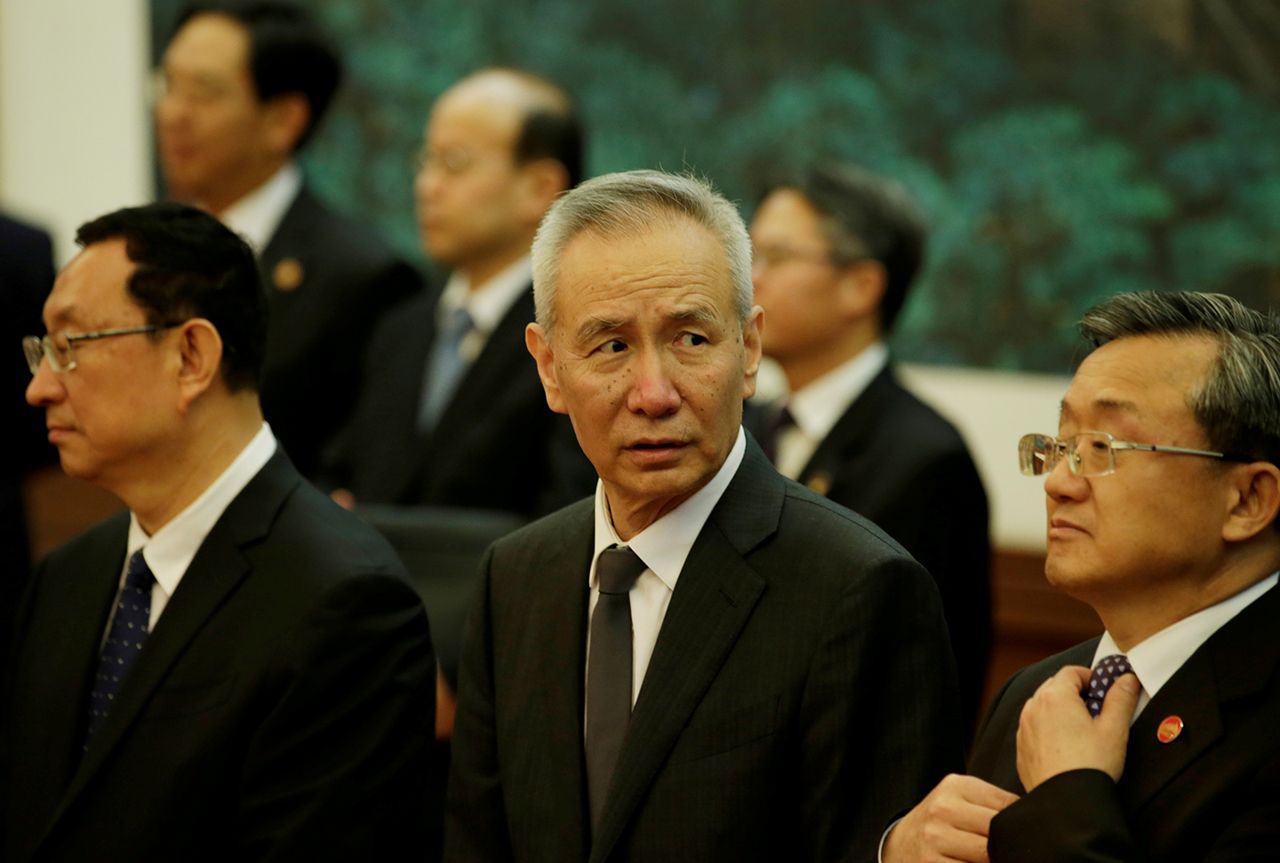
For the past five years, Li Hae, a brilliantly educated macro economist with a Harvard diploma, who worked for a long time in the structures of the State Planning Commission, was the main economic adviser to the Secretary General, holding the position of executive secretary of the leading group of the Central Committee for the Economics, which was headed by Xi Jinping himself. Liu HE, the author of the package of structural reforms approved by the Plenum of the Central Committee in 2013, he accompanies SI in most foreign trips, where the Secretary General represents him as a key participant in his economic team (as he once recommended Liu and Barack Obama). It was Liu who call American ministers to discuss the macroeconomic situation, and it was he who toughly troll the economic policy of Prime Minister Lee Catsyan two years ago from the first pages of the Zenmin Zhibao party’s own rope. Liu in a new situation was read the post of Deputy Prime Minister, but the cabinet work on meanings and messages with direct access to the Supreme Leader is clearly more suitable for him both according to the background and in academic temperament.
In addition to their chapters of the most important departments of the Central Committee, SI in the Politburo will have their own security forces. The armed forces in the Politburo represent only two generals: Xilyan and Zhang Yusia-deputies of SI in the Central Military Council (CVS) of the CCP, control over which is provided by the Supreme Leader of the loyalty of the People’s Liberation Army of China, a powerful state in the state.
After the congress to the CVS, SI did not have a civil deputy, and this is an indicator that he is not going to part with this most important of his posts after 2022 (although it is possible to enter the civil deputy to the years remaining before the XX Congress, but it does not seem to intend to do this at all). The new head of the Political and Legal Commission of the Central Committee of the GO SHANKUN will be overseeing the civilian security forces, which has switched to this position with the post of Minister of Public Security (analogue of the Ministry of Internal Affairs).
New generation
The distribution of posts between other members of the Politburo will gradually clarify until March 2018, when the composition of the State Council, the meeting, the People’s Political Advisory Council of China and many other formal state bodies will be updated at the sessions of the All -Chinese Assembly. By that time, the appointments of the new members of the Politburo to the posts of deputy prime ministers and the heads of party committees in key regions will be finally known.
One of the intrigues-whether the deputy prime minister will become the first-time curator of foreign policy of Jan Zeechi for the first time in the Politburo. The last diplomat, who was part of the Politburo and worked as Deputy Prime Minister (from 1993 to 2003), was the Qiyn, an outstanding Sovietologist and Americanist, who laid the foundations for normalizing relations with the West after the events of Tiananmen and played a big role in border negotiations with Russia.
Since 2003, the curator of foreign policy has never been part of the Politburo, so the promotion of Jan, the former head of the Ministry of Foreign Affairs and a professional Americanist (was a top -end synchronist from English, as well as an ambassador to the United States), reflects the increasing significance of foreign policy for the Chinese leadership.
In any case, the remaining members of the Politburo - either direct protege of SI, or loyal party bosses to him. Perhaps, Comrade Hu Chunhua, the head of the party in the 106-million province of Guangdun, whom his cartridge Hu Jintao, was preparing in the successors of SI. But in the new conditions, the opinions of the previous leaders for SI are not a decree, so Hu Chunhua did not get to the PKPB and was still easily escaped - his potential partner, the youngest member of the last composition of the Politburo Sun Zhentsai was generally removed from work in July and was under investigation.
Although Hu is still younger than anyone in the Politburo, it is far from the fact that Xi Jinping sees him his successor in 2022. After all, now the Protection of the Secretary General of Chen Migner, who was born in 1960 and only three years older than Hu, entered the Politburo. Yes, and the new head of the Chancellery of the Central Committee Din Suesyan is only 55 (however, against his nomination for the first position, he does not have the experience of leading the province).
In such a personnel situation, Xi Jinping opens a large field for personnel maneuvers. In 2023, he will need to release only the post of PRC chairman (as the Chinese constitution requires, if not rewriting it) - the most formal and insignificant of his posts. This post can be left by preserving in its hands in 2022, following the results of the XX Congress, much more important positions of the General Secretary of the CCP and the head of the CVS for another five years (with the separation of the posts of the head of the party and the state, the neighboring communist Vietnam lives quite successfully, and in the history of the CPC, the practice of uniting all posts dates back only to the beginning of the 1990s). Or you can give the post of Secretary General to one of their nominees who did not receive proper experience in the PKPB-along with control over the CVS and the network of their faithful people at key posts, this will give Xi Jinping all the levers of real management.
Si has time to think about how to consolidate power. Indeed, after October 25, he was no longer just the first among equals in the Politburo and not just CEO China Inc., but a strong emperor, who, after two weakly predecessors, should restore the position of his red dynasty. The main question is whether the next five years will be devoted to further consolidation of the regime or SI uses its strengthening power to carry out the previous structural reforms.
Read also on the Carnegi.ru website:
- Above the team. How ended for SI CPC Congress in China
- How the XIX Congress of the CPC will change China and its relationship with the world
Alexander Gabuev