
Translated material
Fuete on the stage of Russian history
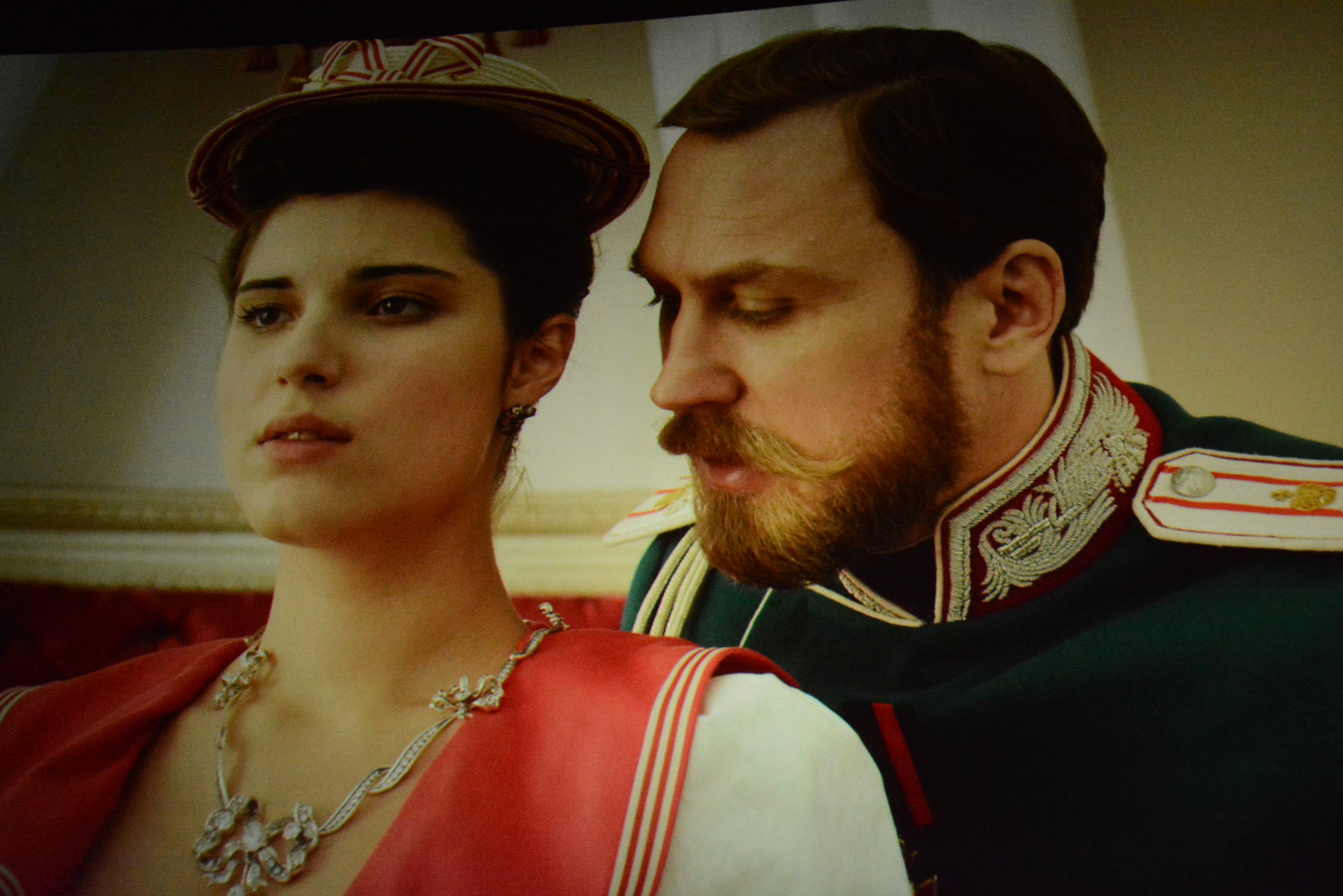
Historian Konstantin Lviv - O "Matilda"
In Russian rental, despite the protests of fans of the last emperor and defenders of the Institute of Marriage, nevertheless a picture of Alexei Matilda, a picture of Alexei Matilda, was released. The characters of the film wear the names of the actually existing faces - countless Romanovs, the ballerinas of the Kshesinskaya, some of the courtiers. The film mentioned and shows historical events: the collapse of the imperial train, bloody events on the Khodynsky field.
The story of the life and fate of the last Russian emperor is quite well known. Nicholas II, this quiet person who loved the photograph and filming more state concerns, suddenly ascending to the throne at 26, did not become a genuine "master of the Russian land", as he proudly called himself in the questionnaire of the census. During his reign, the empire collapsed after two lost wars and two revolutions, and he, together with his wife and children, was shot by the Bolsheviks. In a sense, Nikolai and Alexander Romanov repeated the fate of Louis XVI and Maria Antoinette executed by the French revolution. By a strange will, the imperial couple usually received guests in the front hall of the Tsarskoye Selo Palace, standing just near the portrait of the French Queen. The family life of the unfortunate imperial couple is carefully studied, this ruthlessly cut branch of the pedigree of the Romanovs.
She probably knew how to arouse strong passion
The biography of the title heroine of the film - Matilda Kshesinskaya is no less fascinating. The hereditary ballerina, Kshesinskaya danced at the Imperial Mariinsky Theater of a quarter of a century, until 1917, for more than ten years she performed there under the highest contracts, receiving 500–750 rubles for the performance. She performed in the ballets of Marius Petipa, Leo Ivanov and Mikhail Fokin, participated in the Russian seasons of Sergei Diaghilev, was represented by Peter Tchaikovsky in the Aurora party. Matilda Kshesinskaya was a mistress of not only the future emperor in 1890–94, after that she lived with the Grand Dukes Sergei Mikhailovich and Andrei Vladimirovich, in 1902 she gave birth to a son of Vladimir. She probably knew how to arouse strong passion. For example, an excerpt from a letter from Sergei Mikhailovich, written in the days of the disaster: “You know how I am attached to Vova and how I am warmly loved and how he is attached to me. You know that I live with Malechka 22 years old (this is not in the sense of physical, but I live with one house and only means). Of course, you understand how worried and worried about their integrity.” In March 1917, the Kshesinskaya Palace in Petrograd was looted. Sergei Mikhailovich was also killed in 1918, and Matilda and her son managed to leave Russia, married Andrei Vladimirovich, opened a ballet school in Paris, received a princely title and died at 99 in 1971.
From this immense mourning carpet, called the "Empire, the last moments" (according to George Ivanov), the creators of the picture cut out a small fragment - the love affair of Nicholas II (first of Tsarevich, then the emperor) with Matilda Kshesinskaya. It can be assumed that the reason for the intermediary acquaintance of the 22-year-old indecisive heir with the 18-year-old beauty-ballerina was prosaic. Champor wrote about a similar situation in France in one brilliant joke: "The intrigues who were aimed at marrying Louis XV, who had been dumbfounded from the ownership," at the court. "
It turns out a flaming "duck lake"
So, the authors of Matilda (the script of Alexander Terekhov with the participation of Michael Katims) abandoned the historical epic in favor of the costume melodrama. Some motives are forbidden love, aristocracy, Russian life, as well as episodes with dancing and leaps, combine the teacher’s film with the recent adaptation of Anna Karenina, directed by Joe Wright. Alas, the plot lines of the script were drawing not Leo Tolstoy and not the STOPPAD. Taste and measures are not always enough: prize jumps turn into a circus sight with fire, and court scenes are shot at such a pace that the Soviet comedy “Balzaminov’s marriage” is involuntarily recalled, when the hero of Vitsin represents himself as the king and proclaims the decree: “The rich marries the poor, and the poor is rich.” With its simplification and incredible, the plot of the film is closer to ballet libretto. It turns out a burning "duck lake", in which a white bird (Russian ballerina, the Polish princess) with a black bird (a German princess, obsessed with occultism) fight for a not quite beautiful prince. The sympathies of the authors and must be the audience on the side of the rootless ballerina (Mikhalina Olshansk), which actually confront the notorious "German dominance" around the Russian throne. Episodes with the participation of Princess Alix (Louise Wolfram) and the ominous Dr. Fishel (Thomas Ostermaire) eloquently testify to the harmful foreign "intervention".
Titled persons are forced to open the doors themselves
On the other hand, if the viewer humbles himself with a dramatic ballet on the screen, then it will be easier for him to agree to the vulgar romanticism of the plot and technical non -bonds of the scenography. There are too many courtiers in the frame, but there are not enough courtiers, so the wheelchair with Emperor Alexander III (Sergey Garmash) has to roll his wife (Ingeborg Dapkunaite), and the Romanovs and other titled persons are forced to open the doors themselves. One gets the impression that magnificent costumes and interiors have chopped and crushed with their borrowed gold not only the bodies of the performers, but also their artistic souls. Even Lars Idinger does not show the hurricane temperament with which Hamlet was crumbling the rotten Danish kingdom in the famous performance of Ostermaire.
The story told in the film is unlikely to insult those who honor the memory of the family of the last emperor, because it is as far from the facts as the story of Prince Siegfried is far from the fate of the Bavarian king Ludwig. If the authors of the picture changed the names to the fictional, not every viewer would have seemed obvious to the plot of the plot to the history of the Romanov House.
The authors of Matilda are afraid of excessive screen life
The characters of Matilda, following their creators, say that the ballerina would be the best Russian empress than Princess Alexander. And it seems to me that Emperor Nikolai went to his wife not that sister. Senior Princess of Hesse-Darmstadtskoy-Elizaveta Fedorovna was issued for his uncle, the Moscow Governor General, blown up by terrorist Kalyaev. Elizaveta Fedorovna was also killed during the years of the revolution, but left behind a magnificent monument of the Moscow Art Nouveau-Martfo-Mariinsky abode and at least one winged phrase: "Do not be afraid of death-we must be afraid to live." Unfortunately, the authors of Matilda are just afraid of excessive screen life.