
Translated material
Here you are not Norway
The Committee on the Legislation on Agriculture, Nature Management and Ecology of the Legislative Assembly of the Irkutsk Region held on October 26 a round table dedicated to water resources as the basis of the region’s economic complex.
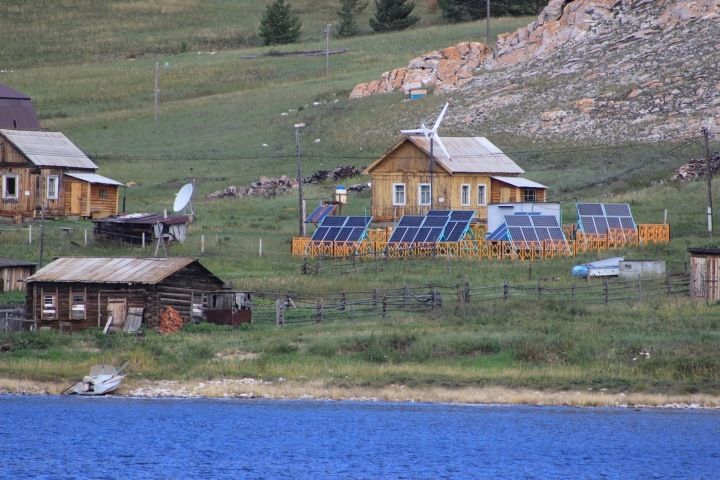
Irkutsk region depends on water
The Chairman of the Committee Kuzma Aldarov reminded the audience of the Water Forum, which was held in Irkutsk in September and set the task: to deal with the current situation to the further benefits of the whole of Baikalia.
“Today, many reassure us that these are only climatic phenomena, that it will end soon, but we see that the problem is deeper. It seemed to us that the shallowing of Lena was connected only with the cutting of forests, and then they checked and installed with the help of foresters, that they were not cut down in the water intake zone of Lena. Today we already have a problem with providing the population with drinking water and when our colleagues in the State Duma are asked to include the region in the federal program “Clean Water”, they almost laugh at them - how is it that if you have a Baikal there? There are problems with wastewater cleaning, building structures, the Lake Baikal Lake Program is completing and we must insist that it continues. At the water forum, all these topics were discussed, representatives of other states shared experience and we must study this experience in order to use it, ”said Kuzma Aldarov.
Nina Abarinova, Deputy Minister of Natural Resources and Ecology, introduced a report to the state of the round table on the state of environmental legislation in the Irkutsk region and concluded: the strategic documents on nature protection are executed in the region no more than the “average level”. Already in the early 2000s, the regional governor Boris said the inventory of treatment facilities and water supply sources. Already at that moment it was known that most of these structures were designed and built in the 1960s and need urgent replacement. Since then, the situation has not improved, but almost the entire life of the region depends on the operation of water resources: in 2016, more than 48 billion kWh of electricity, 2 million tons of pulp and paper products, 1420 thousand tons of aluminum, 8 million tons of petrochemistry, 7.8 thousand tons of iron ore and much more were obtained. Most of the water users are in the Angara basin, only 2% use Lena water.
Of the six factories in the roser of water in the Irkutsk region, three are poured deep Baikal water, three more from artesian wells. The project of the Aquasib plant provides for the construction of a new plant in Kultuka (Slyudyansky district) with a capacity of 158,400 cubic meters per year (528 thousand liters per day) - this is 35% of the permitted from Lake Baikal. The plant can be commissioned by 2020, while 148 jobs will be created, only 50% of the water produced will be exported outside the region.
“As for the low water, we have it since 2014. This year the situation was very difficult, the issue was considered at the emergency commission. We believe that the issue should be considered in the following direction: since we are approaching the critical values in Svirsk and Cheremkhovo, problems in Bratsk were outlined, and we do not have backup sources, we must admit that we need to urgently search and create reserve water intakes. Resolution No. 234 has not been executed since 2014. Decree No. 626 is allowed to go beyond 456 m marking, this measure is temporary and does not solve the problem as a whole, ”said Nina Abarina.
What to do and who is to blame
The current environmental legislation creates a complex socio-economic situation in the Baikal regions of the Irkutsk region: there is no way to develop the economy, you can’t build anything and arrange the property of citizens, you can’t even bury the dead. Federal officials and deputies of the State Duma have repeatedly received all the necessary information from the Irkutsk region and today there is a common opinion that at least settlements can be excluded from the water -winning zone. Even this solution (not yet accepted) does not solve the problem, because there are issues to determine the boundaries of settlements.
Nina Abarinova evaluates the prospect of the construction of the hydroelectric power station in Mongolia exclusively from the point of view of the energy security of Mongolia. The Ministry took an active part in organizing and conducting public hearings in three regions of the region and the city of Irkutsk, and when a negative response of the population was received, the Russian side did everything possible to facilitate the position of the southern neighbor - in particular, the electricity tariff was reduced by almost 40%. The meeting of the Russian-Mongol government commission, planned in mid-October, did not take place, the discussion of the prospects and proposals of Russian science is scheduled for the first decade of November-the meeting of experts and interested parties will take place in the Irkutsk Scientific Center.
The head of the Irkutsk department of the Yenisei basin water department, Mikhail Ludwig, in the report on the water -economic situation in the Angara and Baikal basin, called the situation "extreme low water." In August, the influx in Angara and Baikal was 48% of the norm, in September - 56%.
“The transition below 456 in 2015-2017 was caused by Decree No. 626, which operates until January 1, 2018. Now there is a task to extend it, on October 24 we gathered and drew up a petition to expand the meter range so that we can work. For the third year, we work with a consumption of 1300 cubic meters per second at the Irkutsk hydroelectric station and this is barely enough for water supply and shipping, ”explained Mikhail Ludwig. - According to the fraternal reservoir - the maximum was in 2001, in 2017, the supply of less than the average by 20–25%. Preliminary calculations show that by May 1 we will work as a reservoir to the mark of 393.64 m - this is lower than the navigation limit of 394.65 in the Baltic height system. We conducted an audit of water intakes at the Bratsk reservoir: we got 15, at Irkutskenergo -18. That is, either there is a lack of education, or there are very small volumes of the fence. We held several emergency commissions, prepared for the crisis of the development of events. ”
The regional department of Roshydromet, which controls the situation with the help of 180 hydrological posts in the Irkutsk region and the eastern part of Buryatia, states a shortage of water resources and explains it by a sharp reduction in summer rains - to 20–60% of the norm. Neither this department nor other participants in the round table had any positive news.
Side level, the main thing is refueling
Deputies of the Legislative Assembly began to discuss what was happening to the best of their own ideas about good and evil. Deputy Vladislav Bukhanov (District No. 16) said that science is poorly represented by what is happening: “Scientists can draw seven models, after some time explain what has worked and why, but not to say in advance which exactly it works.” That is why the deputy suggested on behalf of the Legislative Assembly to demand that the government of the region led order to Baikal-and first of all for some reason with the delivery of wastewater from small vessels and their refueling fuel and oil. “Science gives only a negative trend for the next 20-30 years, and we must end it. Close the gas stations and report to us, ”the deputy made an unexpected conclusion.
Bukhanov remembered his trip to Norway, admired the life there and demanded to do on Baikal as in the European Union. The idea that Norway is half as much as the Irkutsk region in an area, and the population is 2.2 times more, the deputy somehow did not occur to the deputy. Do not forget that Norway is still an independent state, and the government of the Irkutsk region must fulfill federal legislation. Nina Abarinova explained to those present that they realized everything said by the deputy much earlier and already in 2016 tried to restore order - but no laws of the Russian Federation would force the owners of the courts to go to the port where the specialized vessel of Samotlor is standing and to hand over sweeteners. Moreover: the smallest vessels no longer need to look for a “dump” in his port of the postscript - there are licensed organizations in Irkutsk, the Olkhonsky district, Kultuka and Slyudyanka. The results of 2017 are still unknown, but few contracts are concluded: shipowners want to use Lake Baikal, but do not want to pay for it.
Further discussion went in the same direction. The deputies demanded urgently inhabiting new artesian wells (“Is this not long and inexpensive, I understand correctly?”), Stop the construction of low -rise houses with septic tanks, and increase the volume of forestry. But they categorically did not want to take responsibility for anything-the government should make a list of measures, show the deputies, fulfill, and then report on the results. The apotheosis of the round table was the requirement to stop sticking out the problems of Baikal and switch to the situation in Bratsk, Bodaibo, areas along Lena. Constructive approach, what to say ...
Konstantin Zverev, Irkutsk