
Translated material
The operative part of the sentence
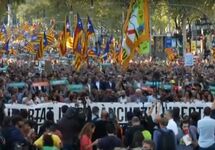
The Parliament of Catalonia adopted a resolution on independence from Spain, reports El Pais. 70 deputies voted for its adoption, 10 were opposed, two abstained. At the same time, 53 deputies boycotted a vote.
On the eve of the chairman of the Zeneralitat (Government) of Catalonia, Carles Puchdemon rejected the demand of Madrid and hold early elections and said that the autonomy parliament would continue to work.
The Constitutional Court of Spain gave the Catalan deputies for three days to annul the adopted declaration of independence, reports El Confidencial.
According to El Pais, after the adoption by the Catalan parliament of the Declaration of Independence, the Senate of Spain allowed the government to dismiss the region’s zeneralite (government) and dissolve its parliament. 214 senators voted for the resignation of the Catalan authorities, 47 were opposed to the Spanish government can remove the authorities of autonomy, in which case, early elections to the Catalonia parliament should be held within six months.
The Prime Minister of Spain Mariano Rahoy, speaking in the Senate, called the actions of the Catalan deputies the "crime" and promised that the Spanish government "would restore the rule of law."
Madrid first applied article 155 of the Spanish Constitution, which allows to suspend the autonomy of the region if his leadership "does not fulfill the obligations provided for by the Constitution or other laws, or his actions cause serious damage to national interests."
In the evening in Barcelona, thousands of inhabitants gathered on St. James Square to celebrate independence.
“Nothing is changing for the EU. Spain remains our only interlocutor. I hope that the Spanish government prefers the power of the argument, not the argument,” the chairman of the European Council Donald Tusk commented on the decision of the Catalan parliament.
The US State Department said that they consider Catalonia a part of Spain and support the "constitutional measures of the government to maintain the unity and stability of Spain."
The referendum on the independence of Catalonia took place on October 1. According to the autonomy authorities, more than 90 percent of the voted - 2.26 million people spoke from Spain. The turnout amounted to 42 percent. After the start of the vote, the Spanish security forces began to storm the plots and take the urn from there. Referendum participants were detained and beaten. In some cases, demonstrators were fired by rubber bullets. In total, 844 people suffered from the actions of the security forces, while the police themselves did not interfere with the Catalonia.
According to the Law on the referendum, the deputies of the Autonomy Parliament were to proclaim independence 48 hours after it, but they did not immediately do this. On October 10, Puchdemon called on parliamentarians to postpone the adoption of the Declaration of Independence for several weeks to facilitate negotiations with Brussels and Madrid. The next day, the president and 72 deputies out of 135 signed the declaration , but it did not acquire legal force, since it was not voted in parliament. On October 12, Spain Prime Minister Mariano Rahah called on the leadership of Catalonia for a week to disavow the document . However, the authorities did not do this.
On October 21, the Spanish government held an emergency. According to his results, Raha said that he would invite the country to dissolve the government of Catalonia , dismiss Puchdemon and appoint the Catalan parliament. The Senate of Spain will consider the initiative of the government on October 27. The Prime Minister emphasized that the government does not terminate self-government, but dismisses "people who put it outlawed."
The next day, Puchdemon said that the actions of the Spanish authorities are the most terrible blow to the people of Catalonia since the dictatorship of Francisco Franco . The Spanish government opens against the democratic will of the Catalans and consistently abandons the possibilities for dialogue, he noted.