
Translated material
The secret of death Pablo Nerud
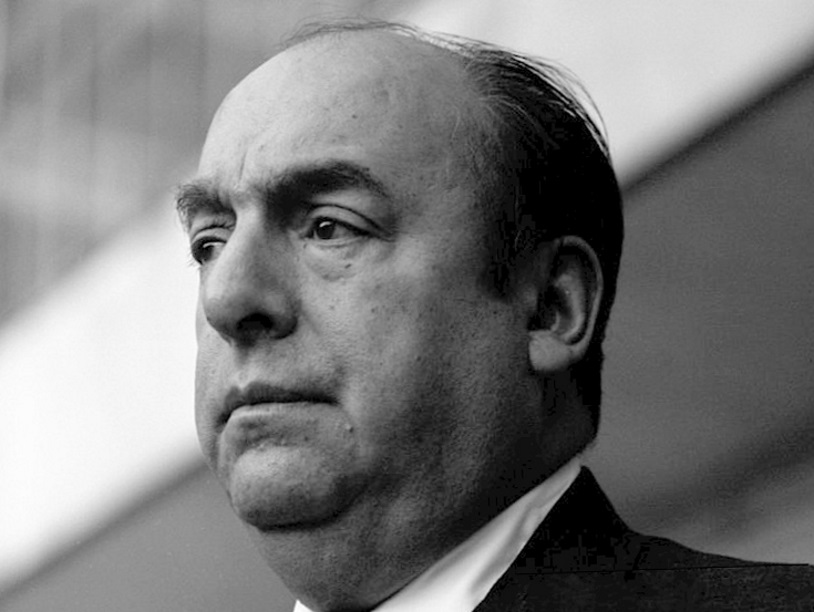
The international group of forensic experts a few days ago at a press conference in the Chilean capital of Santiago announced that the famous poet Pablo Nerud had died not from cancer. This news again strengthened the suspicion that Nerud was killed by order of Pinochet.
Pablo Neruda died on September 23, 1973, two weeks after the military coup, as a result of which Salvador Allende President, General Augusto Pinochet, came to power. The cause of the death of 69-year-old Neruda was officially considered heart failure that arose against the background of cachexia-exhaustion of the body due to cancer of the prostate gland. However, in Chile, rumors never stopped that in fact the poet was killed on the orders of Pinochet.
The Nobel Prize laureate, the deputy of the Senate and a member of the Chili Communist Party, Nerud was the most authoritative opponent of the new regime in the eyes of both the inhabitants of the country and the world community. After the Pinochet came to power, Nerud intended to leave the country and head the Chilean government in Mexico in exile (previously he ran for the president of the country, but withdrew the candidacy in favor of Allenda). Shortly after the coup, the military searched the Pablo Neruda house in Isla-Nagre in his presence.
A few days later the poet was hospitalized in the Santa Maria hospital in Santiago. His condition worsened, and on the fifth day Nerud called his wife and asked him to take him home, because he suspects that he gets worse from the drugs that the doctors give him. In 2011, the former driver of Neruds and the witness of the last days of his life Manuel Arai Osorio in an interview with the Mexican magazine Proceso directly said, according to Neruda, Pinochet gave him an order to eliminate him and the doctors made him an injection in the stomach. Manuel Araia was not a witness to the injection itself, Nerud told him about her when they were left alone. Pablo Nerud was transported from the hospital home to Isla-Nig, where he died six and a half hours after this injection.
In 2011, the Chili Communist Party appealed to the judicial authorities with a request to investigate the death of Pablo Neruda. After a long discussion, Judge Mario Carrosa gave permission to exhumation of his body, which took place in April 2013. In June of that year, an official investigation was launched.
Then the Order was issued to the search for the murder suspect - the former agent of the Chilean intelligence service Dina (National Intelligence Department , DireCción de Inteligencia Nacional), now living in the United States under a different name as part of a program for protecting witnesses. Townley has already been found guilty of murders by order of Pinochet's Pinochet’s orders of prominent Chilean emigrants General Carlos Pratsa and his wife (in Buenos Aires in 1974) and Foreign Minister Chile in the government of Allendo Orlando Letelier (in Washington in 1976).
On charges of the murder of Stevelera, Michael Townley appeared before the American court and concluded a deal with justice to admit guilt in exchange for immunity from further judicial persecution. He spent five years and two months in prison. Argentina's request for its issuance was not satisfied. Townley was also judged in Italy in the case of the relations of Chilean special services with Italian neo -fascists and the attempt on Chilean politician Bernardo Leighton. It was not issued by the US authorities, and the verdict (15 years of imprisonment) was handed over to the Italian court in absentia.
Although the track record of Townley is certainly impressive, his connection with the death of Pablo Neruda remained unproven. All arguments of the investigation are reduced to the testimony of Manuel Osorio, according to whom a certain Dr. Price, who looked like Taunley, was injected. In any case, it was hardly possible to hope for the participation of Townley in the process.
In 2013, supporters of the Neruda murder version were disappointed. Firstly, there were refutations of the version about participation in the attempt of Michael Townley. According to published documents, Townley lived in Florida in September 1973 and worked in a car repair shop. Of course, the salary statements do not give a complete guarantee in the case of such a clever person as Michael Townley, but in this case, even Peter Cornbla , a well -known researcher of relations between Pinochet and American intelligence agencies, was convinced of his lack of involvement. The confident that Pablo Nerud was killed, Cornbla called the version of Townley's guilt false next. The Chilean police also interviewed the doctor Sergio Draper, who worked in the Santa Maria hospital in 1973. He confirmed the existence of the “Doctor of Price”, an American who followed the state of Neruda, and then disappeared where it disappeared. But compiled according to Dr. Draper, the photobot turned out to be unlike Townley.
The second disappointment was the conclusion of forensic doctors who announced that “they did not find any appropriate chemicals that could be associated with the death of Neruda,” thus confirming the version of death from the disease. But Judge Carros did not complete the case on this and waited for the results of other studies conducted outside Chile. In 2015, experts announced that the presence of golden staphylococcus was found in the remains, the infection of which could be fatal. But this could neither give the final confidence in the murder of Nerud, nor dispel all suspicions.
In the current press conference, sixteen experts from Chile, Canada and Denmark deny the very possibility of the death of Neruda from Cahexia caused by cancer. A characteristic sign of cachexia is a significant loss of the patient’s weight, and, according to Dr. Niels Morling from the Copenhagen University Department, in the case of Neruda, there was no question of this, “he was a man with obesity during death. All other circumstances at his last stage of life indicate some kind of infection, ”says Niels Morling.
However, experts could not establish the exact cause of death. It is also not clear where the staphylococci came from. According to scientists, they could enter the body during life, but they could penetrate the remains at the burial site. “We cannot determine how bacteria got there,” says Debi Poinar, a researcher at the McMaster University Anthropology Department in Canada. - We must be very careful, because there are many bacteria in the soil, and some of them are strong pathogens. We have found some signs that these are old bacteria, not modern or consequences of laboratory pollution. ”
It turns out that the results of 2013 show that Neruda was not poisoned, but the current ones, that he did not die of cancer. Judge Carrosa clearly expected more clarity from experts. In the meantime, the researchers received another year to establish the cause of death.