
Translated material
Stadium "Rotten Spu"
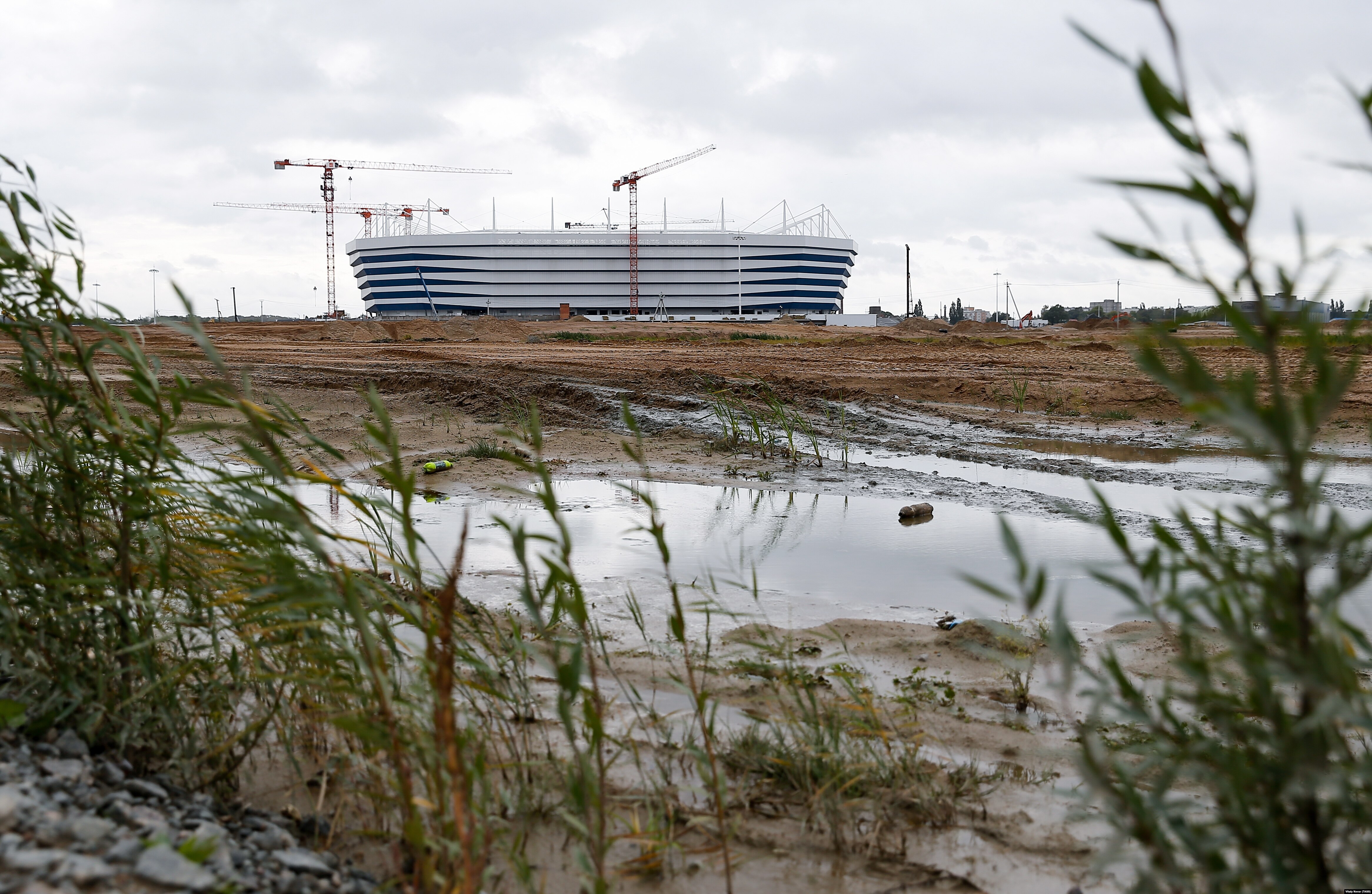
The Kaliningrad stadium for the 2018 World Cup was decided to build in a swamp that did not give in to the Koenigsberg Germans. Now it is a priority construction that has taken doctors, teachers, investments from the field of doctors, and someone has life.
Several myths about the Kaliningrad region.
First: you can get there only by passports, since this is a foreign exchanger, separated from the metropolis with the boundaries of foreign states and the sea. No, this is not so, get there according to Russian passports.
Second: thanks to the proximity of abroad, life is good there, because the dairy rivers of the forbidden and appetizing "sanctions" flow from Poland and Lithuania. This is also not so. Kaliningrad, like the rest of Russia, tastes exclusively the fruits of import substitution.
The third: this is a piece of the once flourishing Eastern Prussia - however, without an abundance of "who came up" and buying up all the Germans, and the Kaliningraders themselves, it is possible to "return" to Germany.
Of course, this is a myth, no one is going to join in any Germany, says Igor Rudnikov, the publisher of the New Wheel newspaper and the deputy of the Kaliningrad Regional Duma, and only idiots in Moscow can speak about the presence of separatism in Kaliningrad: “People, of course, are valuable with a special history and the position of Kaliningrad, but there are no separatist moods ...”
People are just grinding as they can.
"Here Putin was drunk"
Often you can hear that Putin had a special interest in the region, and in 2011 in 2011 in the coastal resort city-resort Pionersky (formerly Neukuren) the residence of the Amber Villa: a four-story palace in the pine forest, boats for yachts on the shore. According to legend, a historical place - supposedly there was a "cottage bismarck", although it is reliable only that since 1935 there were barracks of the air regiment and the Luftwaffe pilots school, then it went to the Soviet military, which brought everything to complete devastation. But Vladimir Putin prefers others to the Baltic beaches and does not complain to this residence with his attention, for the first time visiting it only in August of this year. But his earlier visit to Kaliningrad is perpetuated thoroughly: at the entrance to the restaurant near the Amber Museum, a bronze board was hooked, where it was minted that on July 2, 2005, a lunch was held here, which was attended by Vladimir Putin ...
Another commemorative notch, also dedicated to the head of state, is no less monumental: "Putin help! We are waiting for since 2007." . Anyone who enters the city from the airport’s side can see this huge inscription on an unfinished five -story building on Alexander Nevsky Street. The inscription was built in March 2017 by desperate equity holders in a vain hope that Vladimir Putin will notice it. For a long time, this art did not last, soon everything was carefully wiped, and the house itself tried to cover from excess eyes with a fence. But the stubborn equity holders again “refreshed” the inscription in August 2017 - just to the arrival of Putin. The action did not take any action.
Next to this incomplete, two more such houses, or rather, only the foundation where hens and goats roam nearby: the buildings were supposed to be commissioned in 2009. But - another 350 families were left without money and apartments. There is a huge eight -story building that they began to build in 2007: all 214 apartments were sold at the stage of building the foundation, they promised to complete the construction by the end of 2010. 10 years have passed - the construction is still frozen .
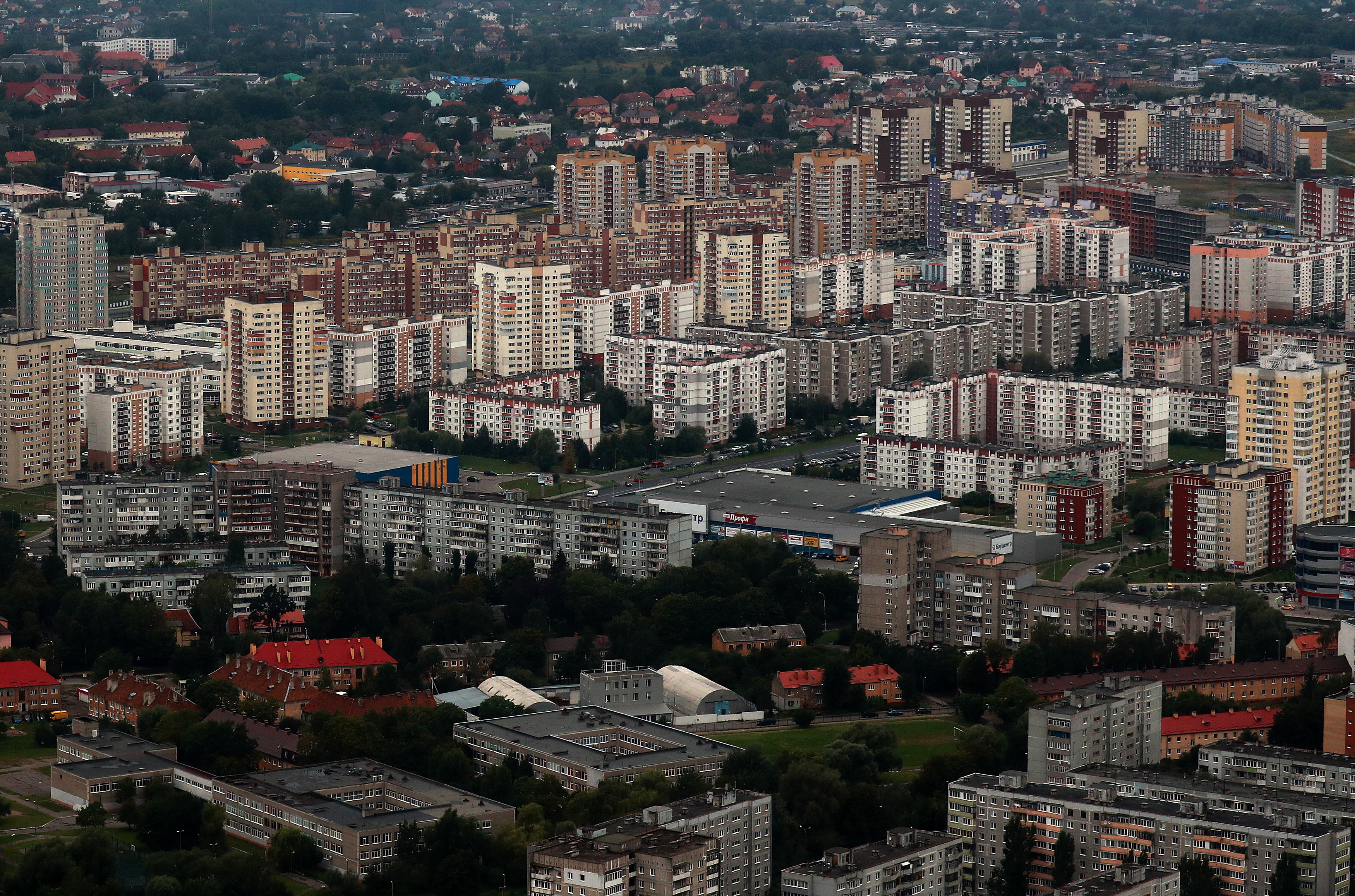
It is striking that housing construction in Kaliningrad and the suburbs is large -scale, everywhere there are a lot of announcements for the sale of apartments, but the rented residential areas are for the most part: the housing is not sold. People no longer have money, but who has it, they are in no hurry to take the newly, scolding builders for low quality and lack of finishing: as much as it costs, you will have to invest in the finish and wiring of communications ...
Boiler rooms in the region work mainly on fuel oil, delivered from the metropolis, and the accounts issued to residents are simply fantastic. The taxi driver who brought up what he lays six thousand rubles a month for heating - in the season, of course, my acquaintance, living in Chernyakhovsk, only pays nine thousand rubles for heating his small kopecks! In the vast majority of houses, heating is traditionally autonomous, and not central, from their boiler houses, new houses are generally built only with autonomous heating. Therefore, the score will be the same as the management company will freely wrap from the ceiling. Therefore, they almost prayed for gas here, but when he was let down, people were shocked: heating ... rose! “Previously, they nodded to the expensive fuel oil, delivered by the sea,” my interlocutor, a teacher of Kaliningrad University, wondered, “now made cheap gas, and the heating has become even more expensive!”
Where is the "sausages from Yuri Mikhailovich"?
The shelves of the Kaliningrad supermarkets lined with "sanctions" are not littered, the products are mainly Russian or with Belarusian labels. Prices and assortment - as everywhere, and quality - as always: import substitution clearly failed. But over the past quarter century, Kaliningraders have already been accustomed to good and high -quality products. “The regime of the so -called antisancies lowered the standard of living in the Kaliningrad region strongly,” says Solomon Ginzburg, a local policy veteran who worked in the administration of the First Kaliningrad Governor Yuri Matochkin, and from 2000 to 2016, elected by the deputy of the Kaliningrad Regional Duma. “Competition of products of products, people are fed by surrogates, and the quality of food and quality of food and quality of food and the quality of food and the quality of food and the quality of food are falling. life ".
“Antisanctions led to the fact that the economy of the region collapsed,” says Igor Rudnikov. - Hundreds of enterprises closed, and thousands have lost their work ... According to him, antisanctions destroyed the food industry: processing of meat, milk. - We used to fill up the whole country with minced meat - beef, Pork, Kurin. Beauen, pork and poultry were brought to us from abroad, they were processed into minced meat and supplied as Russian products. There was the production of semi -finished products, oil, cottage cheese - and all this was also destroyed. Entrepreneurs spent millions of dollars on the purchase of equipment, for the construction of processing industries - everything was destroyed, the food industry collapsed. We also developed furniture production - 340 companies in which tens of thousands of people worked, now less than fifty left!
The reversal of 2014 also led to the course to curtail a special economic zone: customs benefits introduced in the 1990s were canceled. So the quality of life, according to many of my interlocutors, fell 2-3 times. “But we are initially in a losing position,” says Rudnikov, “we cannot live according to the same rules as other regions, we are“ foreign ”Russia and are separated from it, surrounded by the European Union states. Where, by the way, we simply have nothing to supply, only rapeseed.”
And what about local farmers? On TV, it is reported that the ex-mayor of the capital, who owns vast lands in the Kaliningrad region, Yuri Luzhkov allegedly created a miracle, filling the region with delicious food. But it was not possible to find obvious traces of the products of the former mayor of Moscow in local supermarkets: maybe its "circulation" is the same as the notorious "sausages from Ivanovich"? And in general, there is no particular abundance of products of local farmers. Does the local land do not bear fruit? It can often be heard from Kaliningraders that the former Eastern Prussia was a granary of the whole of Germany, but when the Soviet came here, they destroyed the special system of cultivating the Earth that existed here. In the Kaliningrad Regional Historical and Art Museum, in the exposition about post-war immigrants from the USSR, the words of some chairman of the collective farm were placed under one of the photographs: these Germans, they say, did not know how to conduct agriculture, plowed shallowly and finely, but now we arrived and plowed into the fullest depth ... and really plowed more deeply-it was clear that it was peeled off. Under the fields, the system of irrigation and drainage. “The Germans have been creating a special drainage system, reclamation, irrigation for 400 years - we destroyed all this,” Igor Rudnikov laments. “We are still reaping the fruits: over half of the agricultural machine is flooded.”
One way or another, the region does not feed itself, and the Kaliningraders themselves believe the neighborhood with Poland and Lithuania for themselves with a blessing: you can go there for the "sanction". Even after the collapse of the ruble, this is even more profitable than buying Russian products, not to mention the difference in assortment and quality. In a few hours, you can roll abroad in your car to the nearest Polish supermarket, for example, in Branevo, and go to Gdansk already for something more serious than products, and less often. But you can purchase a “sanctions” in Kaliningrad-from under the floor: no one canceled the “shuttle economy”, and in the city the places where the Polish “prohibition” are traded from the trays or from cars.
Not everyone suffers from self-arrangements only. The Kaliningrad newspaper "Division" published material as employees of the executive committee of the regional branch of United Russia enjoy the forbidden imported products with might and main. Party comrades in special orders are supplied with Polish sausages, sausages, minced meat, cheeses. The United Russia “boil a sausage bought from Polish Yan to the detriment of the specific Kaliningrad Ivan,” writes the newspaper, “and are indignant about the aggressive and unfriendly anti -Russian policy of Poland, looking for an explanation of the electorate that there is nothing good in these Polish products, continuous chemistry, and you and I do not have them, and not to see.”
But anti -Polish hysteria, promoted by Moscow channels, is not popular in Kaliningrad. Tomash Omansky, the head of the Polish Cultural Center in Kaliningrad, says that, despite the sharp deterioration of interstate relations after the events of 2014, he did not feel any hostility to himself, and indeed, even from local officials. People still go to the Polish language courses, although there are few of them: someone is interested in Polish culture, someone wants to send children to study in Poland, and someone is mastering the basics of language to communicate with business partners and read documentation. Recently, says Tomash Omansky, a local businessman asked to transfer documentation from Polish to the equipment purchased by him for the donut baking network created by him. Before the collapse of the ruble in 2014, 18-19 thousand travelers crossed the border in a day, sometimes more, then this indicator fell, but later the stream grew again. Previously, residents of the region could go to the border areas of Poland without visas - by cards of local border movement (MPP). They were popularly called food: it was on them that they mainly went shopping. The MPP cards had 270 thousand Kaliningraders - this is over a quarter of the population of the entire region. But in July 2016, Poland stopped the MPP regime, citing security problems - the militarization of the Kaliningrad region and the Russian policy in relation to Ukraine. Moscow answered the same. Now you can drive only if there are visas.
... and gloomy German genius
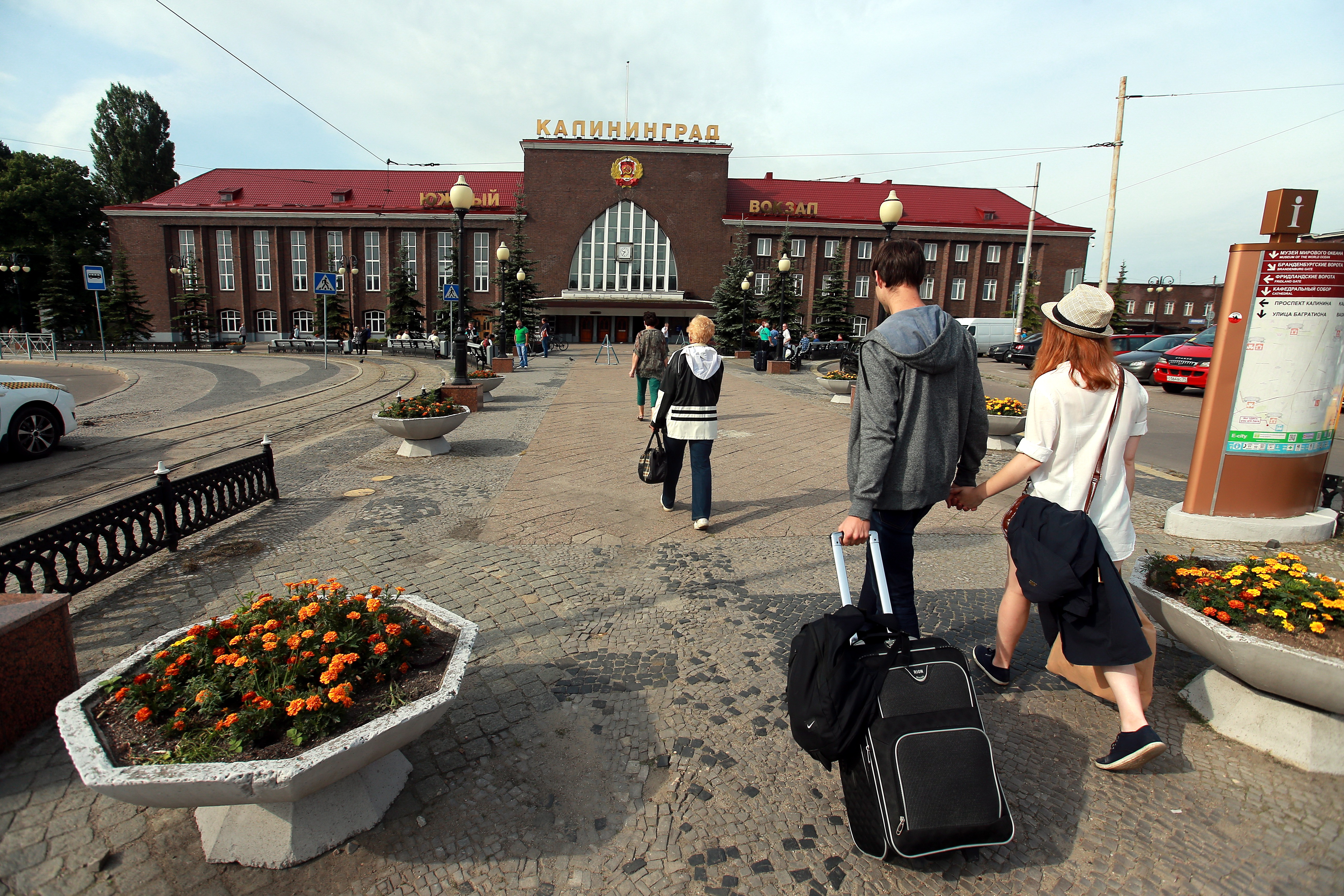
Once before Poland, a stone's throw, I decided to look at how the "tourism in Kaliningrad" looks like. He went to the bus station, chose an early flight to Gdansk: 625 rubles for a ticket there, 565 rubles - back. The morning of the weekday, but the bus is full. A lot of passengers go to the Gdansk airport, from where it flies on vacation: a ticket from Gdansk to Malaga is almost four times cheaper than from Kaliningrad, to Barcelona almost three times, in Paris, it is cheaper to fly from Kaliningrad to Moscow. This is also to the question of a close connection with their homeland, which is not a pocket for most Kaliningraders, but Europe is closer and cheaper and Gdansk - a window there.
On the Russian side of the border from the window of the bus "admire" the thickets of a poisonous hogweed who completely dotted the roadsides of roads and even fields. The fields are generally a lot of neglected, groomed and overgrown with weeds. You cross the border - immediately roads are better, the fields are lovingly cultivated, the personalities are well -owned, neat houses, all are repaired, painted. By the way, the German infrastructure has been preserved to a large extent - this is the Polish part of the once of the same East Prussia. Having received their share of the “Prussian inheritance” after the war, the Poles also evicted the Germans, but neither their land care system, nor all this irrigation, reclamation and drainage systems for water drainage (as well as sewage, water supply, etc.) were touched, but successfully mastered. In the Polish part, it is striking and more. A story is visible here, not its fragments, as in Kaliningrad. Former German castles are restored, in perfect order, old German Kirshs, houses, and farms. For some reason, for the Poles, it was not a problem to accept this part of Germany, preserving the German historical and cultural heritage, they did not destroy it or build up the centers of old German cities with faceless boxes-there were enough outskirts for this. And now the burgher quarters of old Gdansk and Teutonic castles are organically perceived as part of Polish history and culture.
Yes, of course, the consequences of terrible bombing, post -war ruins, and all that is so - and in Gdansk a lot of things had to be restored again. But the Poles did not clean their “share” of Eastern Prussia from the German trace, did not blow up German Kirshs, they did not blow up the Gothic Basilica of the Ascension of the Blessed Virgin Mary or the Mariaste Cathedral in Gdansk - as they did in Sovetsk (Tilsit) with the Order Kirschu, who remembered Napoleon, or with the Gothic Cathedral of Mary. So the Poles “Posov-Rytsers” in Malbork, for some reason, did not blow up, as they did with the remnants of the Königsberg royal castle. Therefore, in Gdansk you can simply wander among old cozy houses for hours, examining everyone, sitting in one of the numerous cafes, plunging into the enveloping atmosphere of a medieval city, and sigh nostalgically: so Kaliningrad could be like that ...
Of course, in Kaliningrad there is also a certain aura of "Germanism", and the rudiments of the old Königsberg seemed to be not so much. Khrushchevs in the center are already reconstructed in the German style - to the 2018 football championship. In general, it is noticeable that the Kaliningraders are very interested in the German roots of the region, even proud of them. As a friend of the Kaliningradets jokes, now "here the Prussian spirit, here it smells of Kant and Bismarck sits on branches." But not everyone welcomes the interest of Kaliningraders in the history of their city. Patriarch Kirill, for example, urged them not to build their identity on the "German stones", not to emphasize the "layer of the German heritage", because, they say, the spiritual values of those who lived here before. And the question is, why are it unacceptable? And what exactly is unacceptable? Kant with his philosophy?
What does Lyudmila Putin have to do with it?
On September 10, 2017, Anton Alikhanov won the election of the Governor of the Kaliningrad Region. Alikhanov recently turned 31 years old, in a stranger to him, he was landed by Moscow in September 2015, before that he worked for three years in the Ministry of Justice, and a couple of years in the Ministry of Industry and Trade. In less than a year in Kaliningrad, he quickly ran a way from the deputy chairman of the regional government to the acting The head of government, and then the acting governor. Nevertheless, for many he became the "governor of hope."
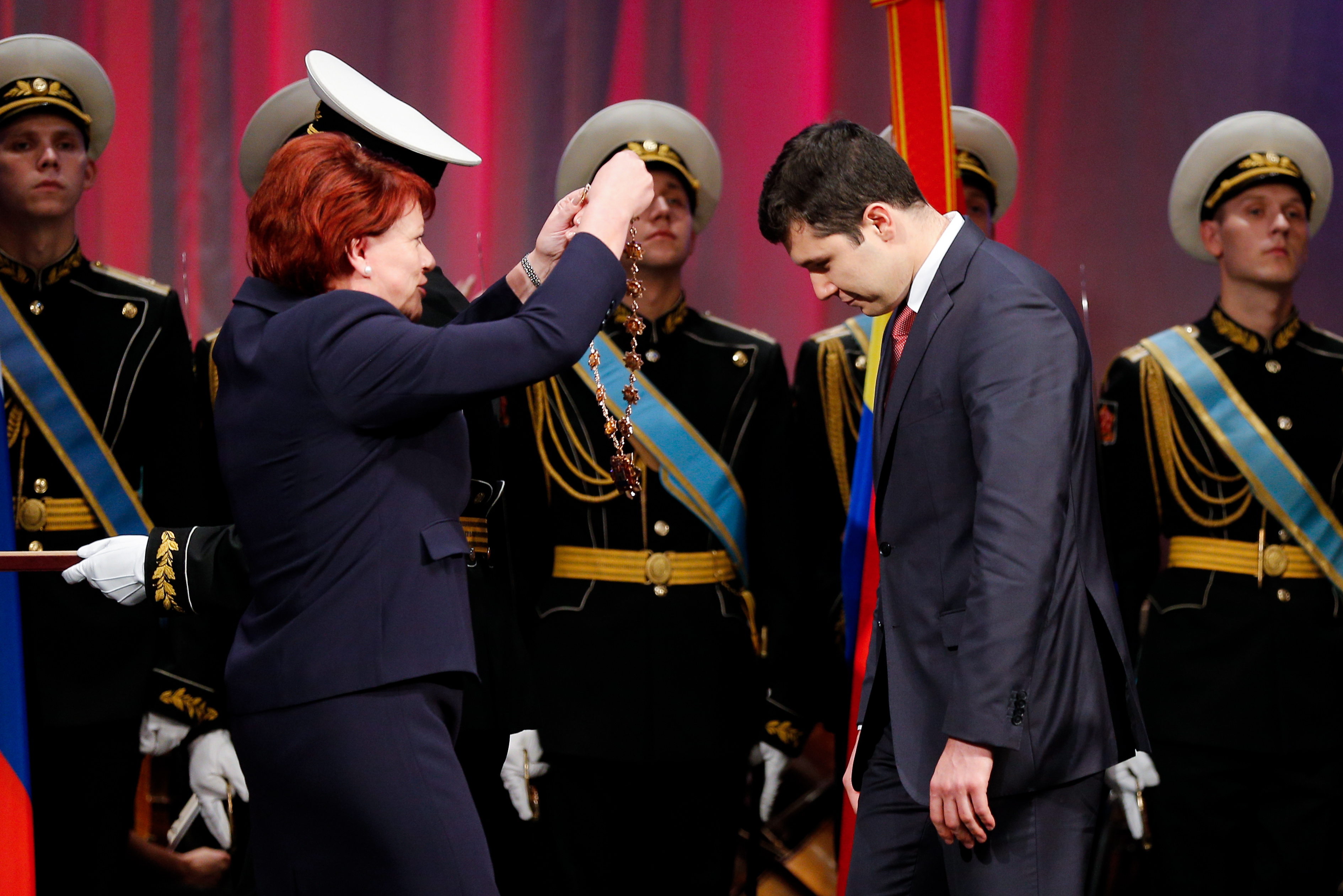
But in the same way, Evgenia Zinichev, the previous head of the region, previously - the head of the FSB in the Kaliningrad region and the guard Putin, was also called. Hopes did not materialize: being appointed by the acting The governor instead of the Tsukanov, shot on July 28, 2016, Zinichev left this post after 70 days later! The real reasons can only be guessed. With the light hand of Stanislav Belkovsky, a rumor was launched that Lyudmila Putin had a hand in this. According to the political strategist, the Kaliningrad region is already almost the personal patrimony of the form of the first lady, who was “given to the register”. As evidence, the political strategist cited the fact of the unexpected resignation of Zinichev, supposedly assigned to "look after" by the ex -wife of Vladimir Putin. He didn’t work, here, they say, they removed it. In Kaliningrad itself, no one could hear that the region was handed over to Lyudmila Putin to "feed", nor about her conflict with the former acting Governor. Yes, and Putin’s influence on regional policy has not been noticed: some business interests are really present here, but they are clearly not so great.
In 2016, the appointment of Zinichev to the post of acting governor surprised many, but accepted him with the hope that he would restore order after Tsukanov. However, almost immediately it became noticeable that the new work clearly burden the former head of the Federal Security Service, especially the publicity, which was inevitable for an official of such a rank. For the entire time of his stay in the post of head of the region, he held only one single briefing for the media, setting a peculiar record: his communication with the press lasted exactly 49 seconds! Бытует еще и версия, что он изначально был фигурой временной, а его задачей была подготовка площадки для технократа Алиханова и "расчистка" кадровых и коррупционных завалов после правления Цуканова. Так ведь не расчистил же! О чем свидетельствует, в частности, скандальная ситуация вокруг стадиона для футбольного чемпионата мира 2018 года.
"Дабы не спугнуть удачу"
Стадион строят на острове Октябрьском, омываемом реками Старая и Новая Преголя. До 1948 года остров назывался Ломзе: это старое прусское слово переводят как "топкая земля" – сотни лет здесь было болото. Сами горожане именуют его кратко: Остров. Страсти вокруг стройки на Острове кипят нешуточные.
Идею включить Калининград в число городов, принимающих мундиаль, местная власть лоббировала яростно. Когда включили, решили строить новый стадион, а не модернизировать уже имевшийся, хотя еще одна футбольная арена попросту не нужна: там нечего проводить, а его содержание и обслуживание после чемпионата будет влетать региону в 300 млн рублей ежегодно. Министр спорта Виталий Мутко тоже в свое время полагал, что разумней было бы реконструировать уже действующий стадион. Но на него дружно ополчились все ветви калининградской власти: к тому времени в площадку на Острове уже успели вложить свыше миллиарда рублей. Во что именно, непонятно, но тем хуже – куда было отступать местным чиновникам? Да и вообще их можно понять: финансовые потоки под реконструкцию – одно, а под строительство в чистом поле – совершенно другое. Если сначала речь шла о 15 млрд рублей, то вскоре цифра перевалила за 18 млрд. И это только на сооружение собственно стадиона, а на инфраструктурное обустройство Острова, подсчитали, было нужно еще не менее 19 млрд рублей! В кои-то веки городу представилась возможность получить грандиозные финансовые вливания, грех было отказываться от шедшего в руки богатства.
Только всё ушло в песок – в буквальном смысле: стадион решили строить на Острове, в самом натуральном болоте, там, где ничего не решились строить даже немцы. Старый Кёнигсберг всегда испытывал острую нехватку свободной земли под застройки, но возводить на Ломзе жилые дома запрещали из-за ненадежной болотистой почвы и постоянных разливов Прегеля. Здесь возводили лишь легкие хозяйственные постройки, да использовали для выпаса скота заливные луга. Позже на отвоеванном у болота кусочке возвели кровельную фабрику и даже чугунолитейный завод, но затем перевели производство в более подходящее место, так что основными обитателями здешних болот были дикие утки. Покорить это болото пытались уже советские строители, развернувшие здесь сооружение панельных многоэтажек. Но спустя время почва проседала, фундамент корежило, стены шли трещинами, в подвалах была вода, дома заваливались, их приходилось расселять. Да и во время весенних паводков и после сильных дождей Остров вновь превращался в натуральное болото. К 1980-м годам попытки его обустроить прекратили.
Новые власти решили, что стадиону быть именно там. А вскоре оказалось, что ничего исправить уже нельзя, потому что, как заявил в январе 2011 года руководитель областного Агентства по спорту Олег Косенков, "есть заявка в ФИФА", на ней "стоят подписи первых лиц государства", и "мы никаких телодвижений делать не будем, дабы не спугнуть удачу". Что бюрократ понимал под удачей – пусть читатель сам догадывается.
Аукцион на 850 миллионов рублей по инженерной подготовке площадки выиграло ОАО "Глобалэлектросервис". Нагнали технику и ввали в болото 1,6 млн кубометров песка для укрепления грунта. Еще в контракте значился монтаж 1,779 млн погонных метров дренажных труб и постройка временных дорог. Песка насыпали много, но, как оказалось, то ли недосыпали, то ли насыпали не тот, но только в августе 2014 года калининградские правоохранители возбудили уголовное дело по ч. 4 ст. 159 УК РФ ("Мошенничество в особо крупном размере"). По представленной позже версии, это произошло после получения "сигналов", что вместо песка, соответствующего техническому заданию, якобы поставляется совсем другой песок, не соответствующий. Что экспертиза и подтвердила. По версии следствия , песок вышел золотым – только на нем чистый "навар" составил свыше 500 млн рублей. К сегодняшнему дню эта цифра выросла почти до 750 млн рублей.
Строители утверждали, что песок был качественный, но в болотистой местности он стремительно стал… менять свою структуру! А еще они, мол, столкнулись с ранее непредвиденными трудностями – с плывунами, на преодоление которых потребовались дополнительные 400 млн рублей. Плывун – насыщенный водой грунт, встречающийся в болотистых местах. Выходит, учинив стройку в болоте, строители не ведали, что там по определению есть плывуны? При этом все дружно молчали о главном: уложили ли ту высокотехнологичную дренажную систему, о которой так много раньше говорили и без которой все потуги "вычерпать" болото обречены? Судя по тому, что именно после этой "песочной" подготовки площадки для стадиона подтопления на острове стали регулярным бедствием, выводы напрашиваются сами.
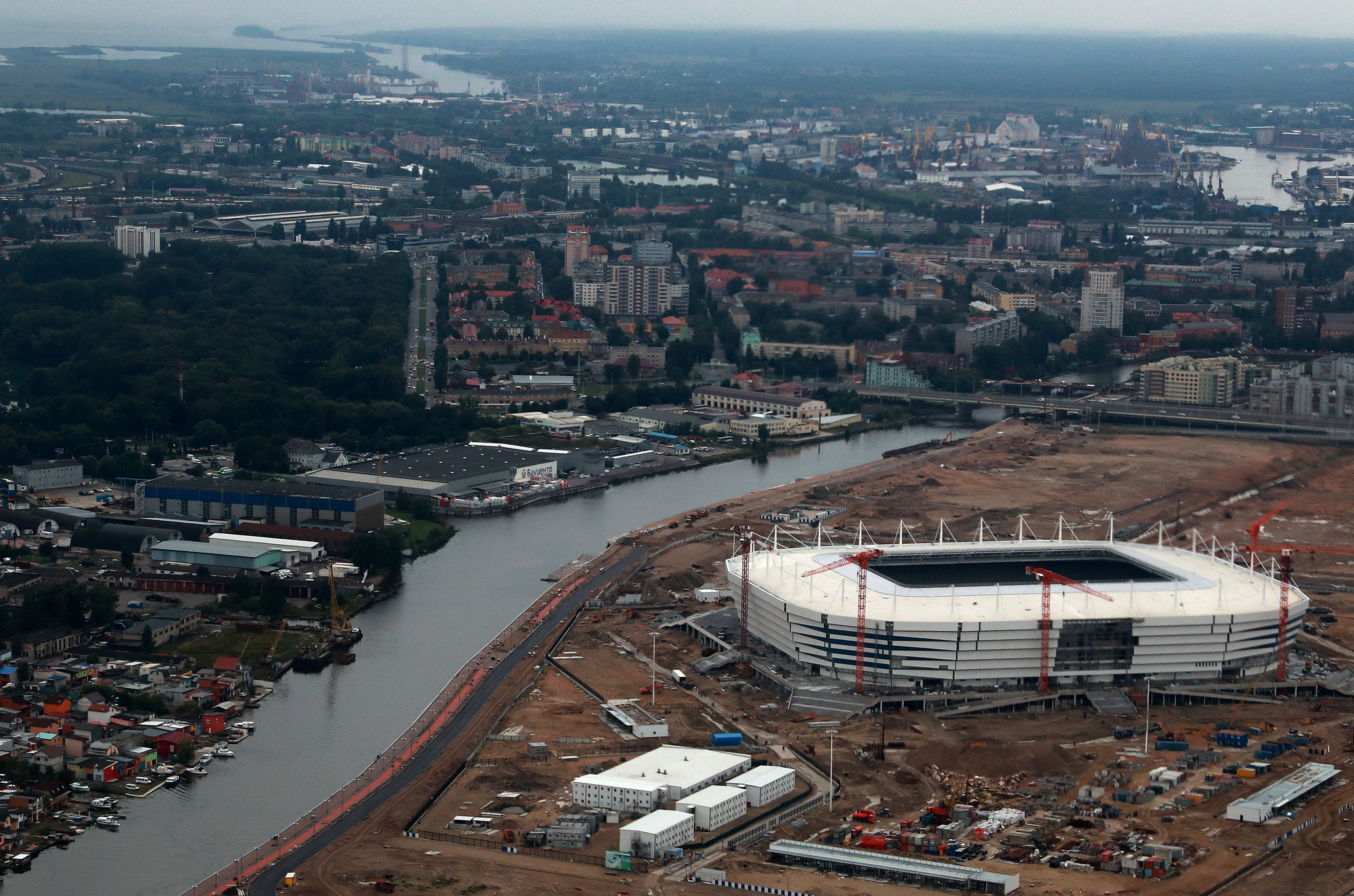
Стройка забуксовала, но отступать уже было некуда, и без всякого конкурса правительство поручило исправлять ситуацию Арасу Агаларову с его Crocus International. Поначалу Агаларов был в шоке : "Полное отсутствие коммуникаций. Чистое болото, оно достигает 50 метров глубины, там надо не просто забивать, а забуривать сваи, тысячи свай. У нас в стране даже нет столько техники, сколько нужно для такого объема работ". Да еще и подготовительные работы выполнены неправильно: площадку засыпали не шестиметровым слоем строительного песка, а в два раза меньшим и – суглинком. Но от кремлевских предложений в России не рискнет отказаться даже бизнесмен из первой сотни списка Forbes. И предприниматель заявил , что место "выбрано немножко болотистое", но это его не пугает: "Мы и "Крокус" строили на болоте, и во Владивостоке на острове себя проявили…" Да и вообще ничего страшного, забьем сваи – и всё будет в порядке.
Вбили, затем снова стали… засыпать болото песком. Про дренажную систему ни слова. После дождей в этом году всё поплыло, и стадион стал напоминать рубку подводной лодки посреди моря грязи. Его даже величают ныне первым в мире подводным стадионом, но чаще – стадионом "Гнилая топь".
Медицина в коме
Нередко слышал от калининградцев: здесь жить можно, если ты не один, если есть свое жилье и, главное, если ты здоров. Жалобы на состояние местной медицины – общее место. Особенно на гинекологию, педиатрию и онкологию. Нехватка педиатров в регионе катастрофическая. Еще в 2015 году областной Минздрав сообщал, что не хватает 100 педиатров. По официальным документам Минздрава РФ, на одного врача-педиатра должно приходиться до 800 детей, в крайнем случае – до 920. Получается, что медицинского обслуживания в области реально лишены от 64 тысяч до 92 тысяч детей? Это при населении 986 тысяч человек. В области вообще острейшая нехватка врачей всех специальностей. В университете есть Мединститут, но там лишь бакалавриат по специальности "лечебное дело", готовящий "врачей общей практики" – участковых, проще говоря: 60 мест для бюджетников, еще 60 – для платников. То есть 120 "врачей общей практики" ежегодно должны пополнять ряды калининградских медиков. Но это в теории, реально и выпуск не превышает сотни человек, и почти никто из выпускников не идет работать в клиники. По данным Минздрава области, в 2015 году число врачей в регионе увеличилось на 32 человека.
Профильных специалистов в регионе и вовсе не готовят, хотя формально ординатура есть – на 17 мест: два акушера-гинеколога, один анестезиолог-реаниматолог, два патологоанатома, два педиатра, один кардиолог, два невролога, четыре терапевта, два хирурга, один онколог… Но это тоже в теории, например, места для будущих педиатров не заполнены .
Кадровую дыру пытаются заткнуть, зазывая специалистов из других регионов. Но у тех мотивации ехать в Калининград нет. Заманили, скажем, целый десант педиатров из Новосибирска, а те сбежали: нагрузка в детских поликлиниках превышает нормативную в три раза. Других не устроило, что предложенные им ставки оказались меньше зарплаты кондуктора автобуса. Еще хуже с жильем: подавляющую часть приезжих специалистов не могут обеспечить даже временным.
За такое положение дел калининградская медицина благодарит Георгия Бооса, возглавлявшего регион с 2005 по 2010 год: он дал старт процессу "оптимизации", закрыв треть всех госмедучреждений. В их числе и онкодиспансер. По официальным данным , на начало 2017 года в Калининградской области на учете числились около 24 тысяч онкологических больных, их количество ежегодно увеличивается примерно на 400 человек. В 2016 году в регионе от рака умерли почти 2 тысячи человек – тоже официальные данные. Столь же официально ежегодно выявляется около 3,5 тысяч новых случаев злокачественных заболеваний. И это лишь те, кого зарегистрировали. Известно, что в Калининграде даже еще не до начала лечения, а до постановки на учет умирает каждый пятый онкобольной.
Сменивший Бооса Цуканов клялся калининградцам построить онкоцентр. Цуканова во главе области уже нет, нет и центра. А в региональном министерстве экономики заявлено, что в рамках Федеральной целевой программы развития Калининградской области будут финансироваться только объекты чемпионата мира по футболу…
Калининград – Гданьск – Москва