
Translated material
Memory waves
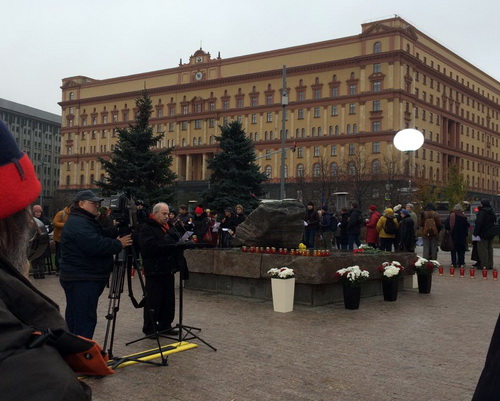
The eleventh year in a row in Moscow is held by the “Return of Names” campaign, when on the eve of the day of memory of the victims of political repressions, people all day, from 10 a.m. to 10 pm, read the names of the executed in Moscow - the name, age, profession and date of execution, two names each in the Lubyanskaya Square. The action is carried out by the Human Rights Society Memorial, according to which, only in Moscow during the years of large terror, more than 40 thousand people were shot.
At the very beginning of the eleventh, when I arrive at the square, a line is already wriggling around the Solovetsky stone. Her tail reaches almost to the transition, and those who came, replacing each other, read out the mournful list. Accountant, head of the production department, stooper, Red Army soldier, priest, student of the Pedagogical Institute, the NKVD driver, agronomist, locksmith, philosopher, chimney sweep ... Lord, even the chimney clerk suffered, the figure is almost fabulous these days, rushes in the head.
Someone pronounces the names clearly and loudly, someone is coming from the excitement of the word, someone cannot hold back tears. Some add the names of their loved ones to the “official list”, instead of the traditional “eternal memory” they abandon the angry - “Never again!”. Many people finish the call to free Yuri Dmitriev - the local historian and the head of the Karelian Memorial, who in 1997 found the Fire Polygon of Sandarmokh and who is now allegedly “for pornography”.
In the corners of the square - the posters of the “Memorial” dedicated to the shares, a little on the side are the stands of the “last address”, a public organization that sets memorial signs on the houses of repressed, from where they were taken on the last journey. The principle is simple - "one name, one life, one sign." The project has existed since the end of 2014, and some are still unknown. People approach the stands, ask. “But I also have a grandfather, but he lived in the village ...” - the young woman says regretfully. “Nothing,” explains the volunteer of the “last address,” “we put in the villages.” - “Then we will try to find out when he died for sure. We still do not know this. ”
By 11 o’clock, only one leaf with a surname is already distributed to the newcomers - the queue still grew, began to scrape the rain, and the organizers decided to speed up the process so that people did not have to stand too long.
I am leaving from Lubyanskaya Square at 11.30 in order to catch the other action-remembering: the largest association of believers in Russia, the Transfiguration Commonwealth of Small Brotherhoods, along with the Stol.com media project, is lucky on the ship of the “Riviera” of the Brotherhood and other recorded people along the Moscow-Volga channel. From the Krasnokholm Embankment, the ship will swim to the pier “Kolomenskoye”, on the way it will be possible to look at the places where the Dmitrovsky correctional labor camp, created in 1932, was located specifically for the construction of the channel. Without free labor, such a colossal project was not implemented.
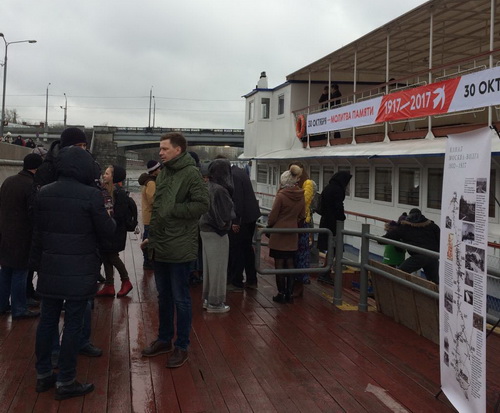
“You are probably from Solovetsky stone? - Familiar members of the fraternity meet me with a question. “We are going there after a trip.” The journey begins with watching the 20-minute film by Andrei Dvornikov , a resident of the Nagatinsky floodplain, which a meeting with a friend’s grandmother came across a historical search. She annually came to the shore of the channel to put flowers in memory of her brother, who died somewhere in these places. Why died? Why here? Who was he at all, this brother? A friend could not really answer these questions, and her grandmother was silent until she had a heart attack - only then she decided to tell the young company how everything was actually.
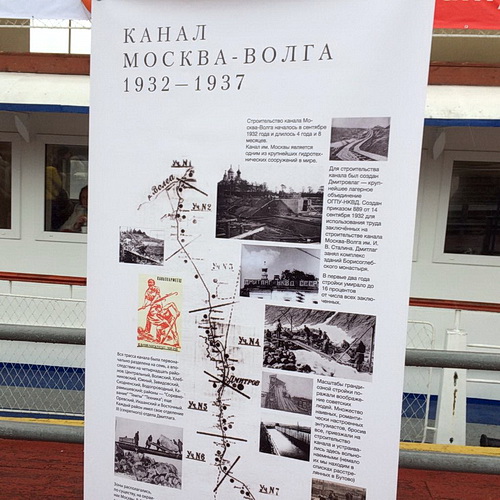
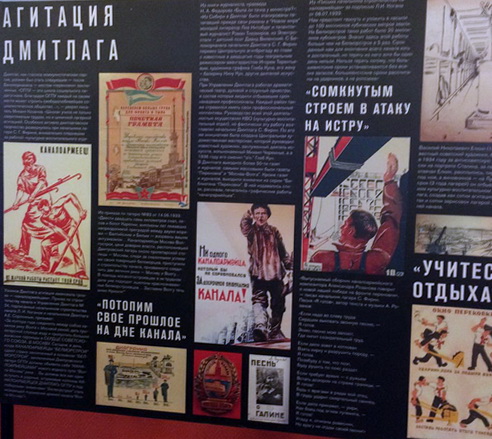
The family lived in the village of Dyakovka, here, in the Nagatinsky floodplain, the grandmother’s brother was a priest, in the early 30s, when the persecution of the church was tightened, he was arrested and placed his sentence in Dmitlag, whose huts stretched along the entire future channel. The brother occasionally ran home at night, he was collected some simple west, because they fed in the camp only twice a day-at 6 a.m. and at 6 p.m., and the daily rate of the soil of the soil per person was 5 tons. At the same time, 2/3 of the work in the camp was carried out manually, the land from the future of the channel was dragged up the mountain (excavators appeared only in 1934), worked, almost constantly standing knee-deep in the water, in some miserable shoe-rubber boots at that time were a rarity, and who was barefoot. It is not surprising that few people held on this construction for more than two to three months. However, the grandmother’s brother died for another reason: one night he ran home and said that he would ask him to be transferred to another place-there is no strength to live near the house and not be able to be there. The next day, the family found out that at night he was shot at the very gateway that he built: one of the neighbors reported.
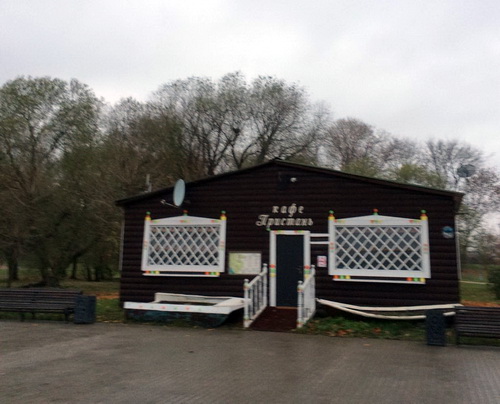
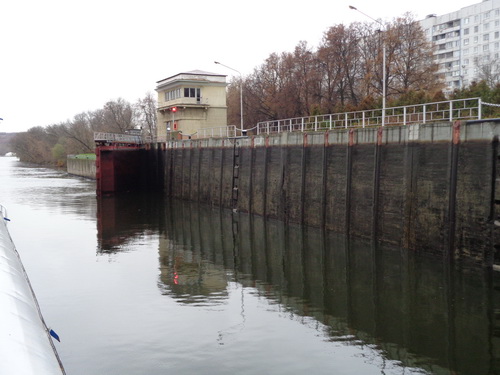
It turned out to be extremely difficult to extract information about Dmitlag. In 1938, after the construction of the channel ended, the traces of the camp were erased from the face of the earth, the documents disappeared during the war. The little that we managed to learn is known from the memoirs of the surviving prisoners or from local residents, who, after the film appeared on the Internet, was untied languages. The ship slowly sailed across the channel, and Andrei Dawns showed: here there was a concrete plant, and here the cemetery, people were stored right in trenches, the elderly say that then, when the river was blurring the shores, bones swam in the water. At the site of the current pier “Kolomenskoye” (the territory around the cafe) there was a camp of priests, in general, the terms of three categories were served in Dmitlage: ordinary criminals, collective farmers (shortly before the construction of the channel, “decree on spikelets”) and political (priests and convicted in the case of the so -called industrial party).
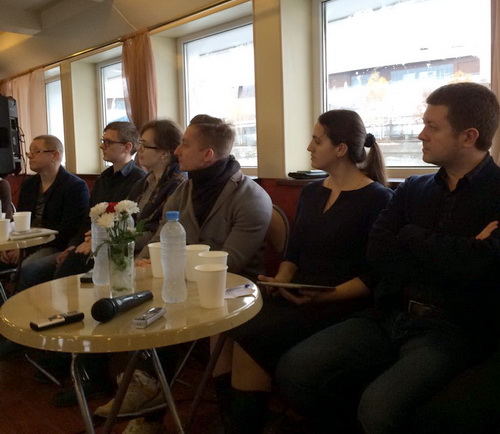
Read more about this on the round table, which took place after watching the film, the local historian and founder of the site moskva-volga.ru Igor Kuvyrkin . The participant of the Memorial program “Topography of Terror” Olga Lebedeva spoke about their new project “This is right here”. He is engaged in the identification of places in the urban space where the memory of the past is concentrated, takes it to the surface. For example, the modest pointer “Novinskaya Women's Prison - 1.7 km” should remind residents of Moscow of the once largest metropolitan prison for women who existed for more than half a century and closed in 1960.
The founder of the magazine "Archeology of Russian Death" Sergey Mokhov discussed the barbaric attitude of Russians to death. The sociologist of the Levada Center Denis Volkov noted that now the conversation about repressions and victims of repression has become at least possible, but the memory of repressions prevents the imperious narrative about the great Soviet state and there is a desire to obsolete it. The editor of the Stol.com site Alina Garbuznyak spoke about the main for the project for this year-the shares of national repentance in connection with the 100th anniversary of the revolution. The abbot of the church of the Archangel Michael in the Letovo Archpriest Dmitry Kuvrtalov emphasized that only a strong people are able to honestly talk about their history.
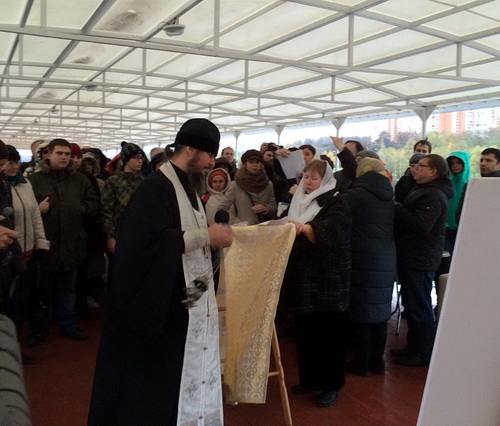
Then the members of the fraternity said: that we must take on this memory and this pain, to feel those invisible threads that bind all people. Search for what connects us, not disconnects us. At the end of the meeting, Father Dmitry served Lithuania, and secular participants in the action launched flowers in the memory of people who died in the construction of the Moscow -Volga channel. 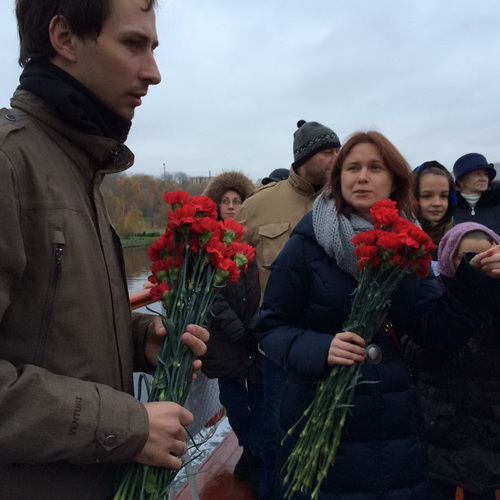
Photos of the author