
Translated material
Working termites for molting are returning to their native nest
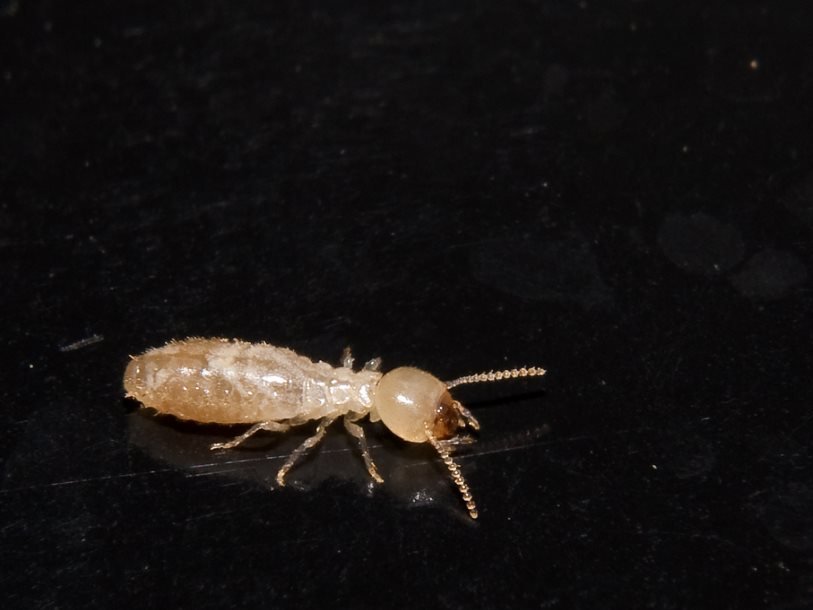
A group of entomologists from the University of Florida found that the workers of the Taiwanese underground termites ( Coptotermes Formosanus ), when the molting is time, return to the central nest of their colony. This observation is important for organizing the fight against these insects that relate to one of the most dangerous wood pests.
This type of termites from its historical homeland (Taiwan, Japan, South of China) over the course of the 20th century spread throughout North and South America, South Africa, also came to the Hawaiian islands. It feeds on both wood of living trees and buildings. Due to the destruction by the Taiwanese termites of houses, dams, ships, bridges and other structures in the United States, the damage in the United States is about a billion dollars a year.
During the experiment, an artificial colony of termites was created at the University of Florida. It consisted of a central part of the central part of 60 by 60 by 0.9 centimeters, which was connected by plastic tubes with “subsidiaries” of smaller nests located every three meters. This reproduces the natural structure of the colony of Taiwanese underground termites, in which the central nest is connected by underground passages with feed bases. After the Termite family lived in an artificial colony for a week, scientists began observations of migitors of workers. As it turned out, all of them during molting were exclusively in the central nest and remained there at least 36 hours after the molting. On average, 1.7 % of the working termites of the colony were fed per day.
Termites in front of molting. Photo: Kakkar et al., Journal of Economic Entomology
Researchers suggest two reasons for the return of preparing termites to the central nest. Firstly, it serves as a safe place for an insect that is deprived of a firm chitin. Secondly, it is noted that the chitin shells dropped in molting are used to feed the oviparous uterus. Perhaps they serve her as a source of nitrogen compounds.
This fact is important, since the main means of combating Coptotermes Formosanus are inhibitors of chitin synthesis, which act on insects during molting. Thanks to this, the termites do not die immediately near the bait, but after some time, when the molting time comes and they will find themselves in the central nest. If the substance acted on termites instantly, then a large number of dead insects in the immediate vicinity of the bait would quickly force other termites to avoid it.
The study was published by Journal of Economic Entomology.