
Translated material
A new consumption is coming
A new type of tuberculosis is rapidly spreading in Russia - it does not take medication
Three patients
The patient and spent a total of 12 years in prison, took drugs, and HIV infected. In a pre -trial detention center, he was planted in crowded cameras, where there were patients with tuberculosis. In the colony, he did not please the administration - he was beaten, held in a cold isolator. After some time, the state of health worsened greatly, he was diagnosed with “tuberculosis with multiple drug stability” (MLU-TB), but refused treatment. Once at large, he continued to take drugs. But the disease progressed, and as a result, it ended up in a hospital for patients with tuberculosis.
Patient B fell ill with pneumonia and lay in the hospital. The boss called him and, threatening with dismissal, ordered him to go to work immediately, which he did. A few months later, he again began to cough and decided that this was again inflammation of the lungs. He tried to be treated on his own, taking medications prescribed in the hospital and continuing to work. The cough did not go through, and, contacting the doctor, he found out that he had MLU-TB. He was treated in the hospital, then he began to work and was treated on an outpatient basis - he could not work, as it was necessary to support the family. Then he went to work to the north, where he was offered a high salary. But the conditions were very bad: a long working day, cold, work on the street. Tuberculosis returned, and patient B ended up in the hospital.
Patient B is retired, but continued to work as a cleaner in a grocery store. Unofficial - because this is the only work that she could find, and the family really needs money. Before hospitalization, her day began at five in the morning: having prepared breakfast, she went to work. After cleaning in the store, she returned home to sit with her grandchildren - the children of her son, with whom the children stayed after the mother was deprived of parental rights. Since the patient suffered from chronic bronchitis, she did not pay attention to the intensified cough and treated it on her own. Only when one morning she could not get up, she called an ambulance and soon found out that she had MLU-TB.
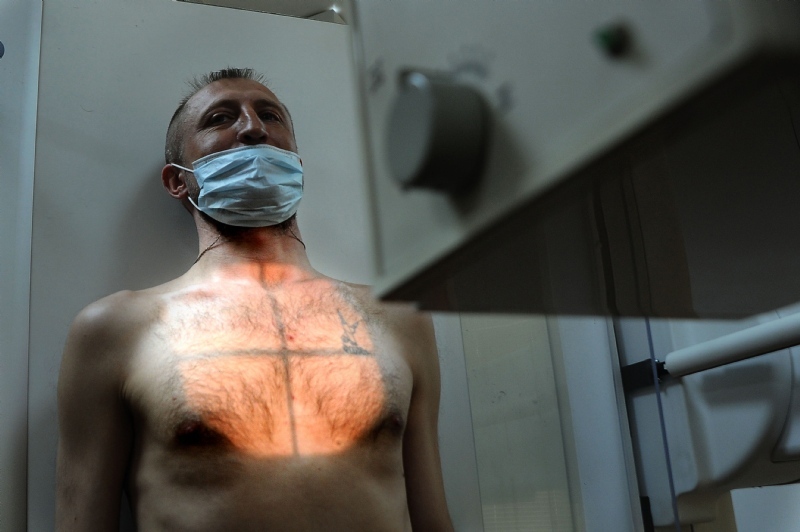 Fluorography in the city anti -TB dispensary photo: Valentina Svistunova/Interpress/Photoxpress.ru
All these are stories of real patients of the hospital for patients with MLU-TB, collected during the implementation of the research project this year. Stories are different, but similar: everywhere poverty, ignorance, loneliness. And everywhere medical care does not fit with the realities of patients of patients. In the alliance with Koch mutating a wand, all this promises a jump in a new disease-that very MLU-TB.
New face of an old disease
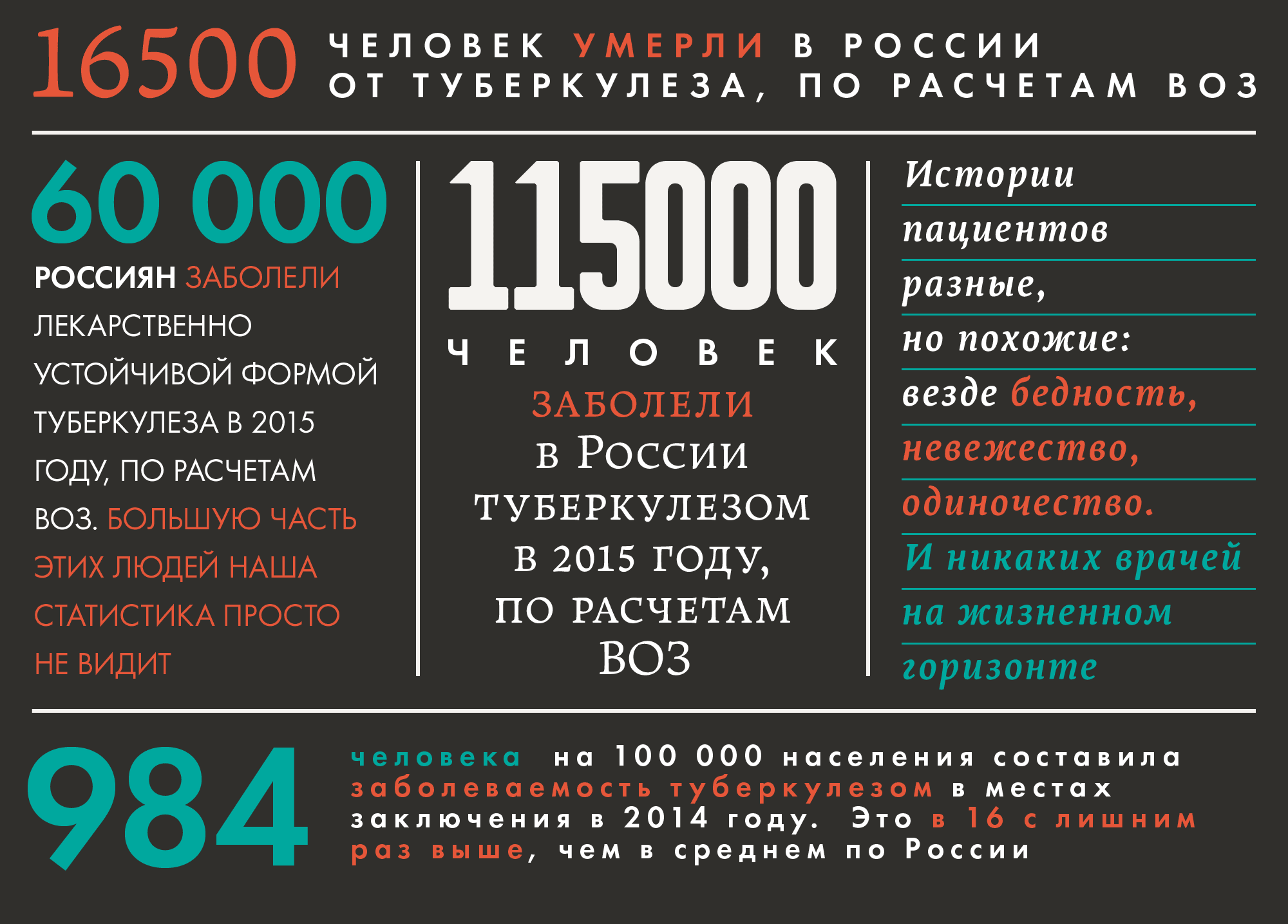
Tuberculosis is one of the 10 leading causes of mortality in the world, taking more lives than an HIV. According to the calculations of the World Health Organization (WHO), for 2015 - the last year, according to which these statistics are available, in Russia 115 thousand people fell ill with tuberculosis. According to Russian statistics - 84 515 people. The difference in numbers is explained by the fact that international and Russian experts consider it differently: the former model the incidence, the latter take into account the number of first-registered patients (in the latter case, those who did not seek help do not fall into statistics).
In 2015, 13,484 deaths from tuberculosis were registered in the country. According to WHO calculations, real mortality is higher - 16,500 people.
If the treatment is not completed, stable mutants are selected: microorganisms that do not die, get significant advantagesWHO emphasizes that tuberculosis is cured and prevented. However, for more than a hundred years, which have passed after Robert Cochu, the bacteria-exciter of tuberculosis, it was not possible to completely take the disease under control.
From the moment of this opening, numerous effective drugs and diagnostic technologies have appeared. However, the successes of scientific medicine gave rise to a false sense of safety. Therefore, the revenge of tuberculosis found many by surprise: outbreaks of tuberculosis in the USA in the 1990s, the rapid increase in the incidence in the countries of the former USSR at the same time, multiplying reports about cases of tuberculosis, resistant to one or more drugs, and from the mid-2000s the appearance of tuberculosis, which we have at the moment, are at the moment.
Where does the resistance to drugs come from? If the treatment is incorrect or not finished, stable mutants are selected: microorganisms that do not die from the use of drugs, gain significant advantages. The accumulation of such mutations leads to the appearance of more and more stable pathogens of the disease.
According to WHO, in 2015, 580 thousand people fell ill in the world of tuberculosis with multiple medicinal stability . India, China and Russia are leading here, which have been 45% of cases.
Tips against the Koch stick
Compared to the late Soviet period, the incidence of tuberculosis in Russia has grown a lot.
The system of control and treatment of tuberculosis appeared in us in 1918. In a developed form, it included a network of dispensaries providing access to diagnosis, treatment and rehabilitation, massive radiological examinations and tuberculinodiagnosis (use of Mantoux test), generally vaccination of BCG, specialized sick leave and sanatorium bunks.
A real nursery of tuberculosis was the place of imprisonment. In 2014, the incidence there was 984 people per 100 thousand, and this is a good indicator, because in 1999 it was 4347 per 100 thousandSoviet doctors usually hospitalized patients for the entire treatment time to ensure regular medication and nutrition, as well as isolate them from other people. It is important, since 1960, patients received the right to 10 months of support for incapacity for work, to protect the workplace for the treatment period and for additional living space (generous measure, given that many people lived in very constrained conditions).
As a result, by 1991, the incidence of tuberculosis decreased to a record indicator in 34 cases per 100 thousand population.
With the collapse of the Union, the incidence of 2000 jumped up to 90.7 cases per 100 thousand population (that is, almost three times). Obviously, this leap has a double nature. On the one hand, due to a lack of funding, medical specialists and drugs, the work of the healthcare system was violated. Many patients did not receive adequate treatment and, being dangerous to others, continued to be in society. On the other hand, the collapse of social protection, the inability to satisfy the most basic needs and the growth of alcohol use have led to a decrease in the immunity of many healthy people and, accordingly, to increase the probability of the disease.
Poor illness
Tuberculosis has a biosocial nature: bacteria and pathological processes launched by them act together with social problems.
In particular, unprotected population groups are especially susceptible to tuberculosis. So, since 1992 (when official data on the level of unemployment appeared), it became noticeable that a significant share among those who have been detected for the first time have been unemployed. In 2010, the incidence rate among the unemployed was 850 per 100 thousand - 22 times higher than among workers. According to the latest data, the unemployed still constitute the main share of the first identified patients, and this share is growing.
The Federal Penitentiary Service (FSIN) was a real chaster of tuberculosis . In 2014, the incidence in its institutions amounted to 984 people per 100 thousand. And this is a good indicator, because in 1999 it was 4347 per 100 thousand.
Almost 30 times greater risk of getting sick with tuberculosis is exposed to HIV-infected with tuberculosis. Against the background of the growth of HIV incidence in the country, this problem is becoming increasingly large. For example, from 1999 to 2011, the number of cases of tuberculosis combined with HIV infection increased by more than 50 times. In 2016, 12,489 were registered such cases, and the growth trend remains .
New Russian mutant
Since since 2009 there has been a smooth decline in general incidence, including in the institutions of the FSIN, one could say that the situation is improving if not one but. Yes, the total incidence is reduced, but the incidence of stable options for tuberculosis, which is expensive, difficult, or even impossible to cure, is growing.
As a result of the problems accumulated in the 1990s with the organization of treatment and infectious control, by the beginning of the 2000s, a source of tuberculosis with drug stability appeared in the country, which continues to replenish due to unfinished patients. The incidence of tuberculosis with drug stability is growing. Moreover, the gap between the incidence of MLU-TB, which is registered by healthcare institutions in Russia, and the calculations of WHO, is noteworthy. For example, in 2015, 7602 cases of MLU-TB (5.2 people per 100 thousand people) were registered, while the WHO indicates the figure of 60 thousand (42 people per 100 thousand people), which includes patients with MLU-TB (tuberculosis resistant to rifampicin and isoniazida) and RU-TB (tuberculosis, resistant to rifampicin). That is, it is likely that most cases of drug stability are simply not detected.
What to do
Many have hopes for new anti -TB drugs that are now in development. But the whole history of the evolution of treatment methods over the past century shows that the most innovative drugs are not enough. Stability will still develop.
The reason in the already mentioned biosocial nature of tuberculosis, including its medicinal stable options. Although all cases of tuberculosis are caused by the same mycobacteria transmitted by airborne droplets, among people the risk of sick is distributed unevenly. Tuberculosis is mainly a disease of poverty, insecurity, social isolation. And it is these same factors that stimulate the development and spread of stability.
People who do not want or cannot be treated, innovative drugs will help only in one case - in combination with an approach called social medicine . One of the options for this approach is the WHO proposed this year, the “Mode Tuberculosis Model, focused on people's needs”.
Drug addicts should not be planted, but treated. Then they will not get sick with tuberculosisThe main message of social medicine is simple in theory and is extremely complicated in practice: it is necessary to work with social factors that impede the timely receipt of medical care and finding the patient in the course of treatment. By the way, they actively engaged in the Soviet Union.
We need material assistance to patients and their families; Depending on the specific case, these can be transport subsidies, benefits, including paying utility services, benefits, grocery rations or coupons, organization of additional power. Psychological assistance is needed, for example, counseling or support groups. Less cases of interrupted and inadequate treatment are fewer stable microorganisms in society.
At the level of medical care, you need flexibility in choosing a treatment format and interdisciplinary interaction. Depending on the life circumstances of the patient and the form of his disease, treatment can be carried out not only in the hospital, but also at home, outpatiently, at the level of local communities (patient organizations, for example). And the anti-TB treatment itself can be integrated with the treatment programs for HIV-Spid, with narcological organizations and mental health institutions, as well as with social services. Such an adaptation to the needs of individual patients increases the demand for anti -TB care and, accordingly, the likelihood that the source of tuberculosis with drug stability will decrease.
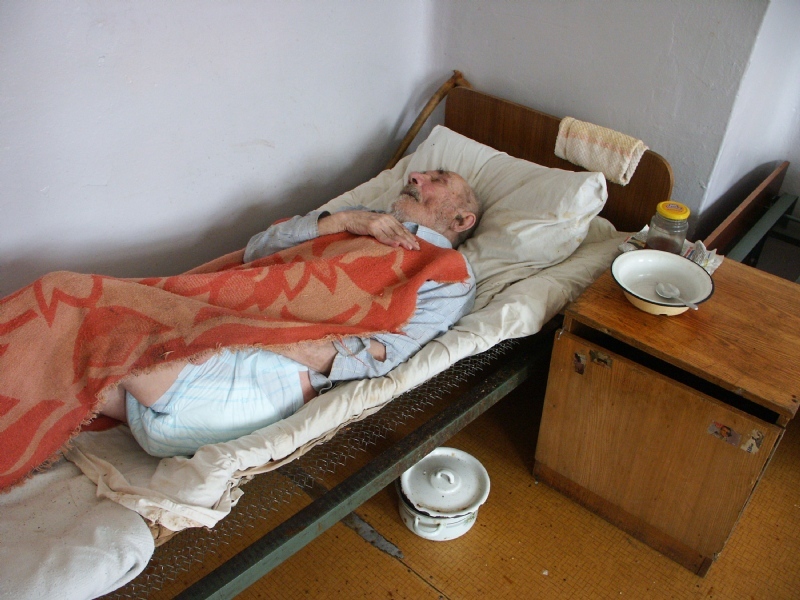 Hospice for patients with tuberculosis of people without a specific place of residence. Archival photo photo: Maxim Lunin/Photoxpress.ru
And there are several things that do not need to be done. Firstly, drug addicts should not be planted, but treated. The criminalization of drug addiction and, as a result, the lack of programs for reducing harm (exchange of syringes, replacement therapy) turn drug addicts into a “invisibility” group, not covered by neither measures of prevention, infectious control, or treatment, including tuberculosis. Secondly, in the fight against an HIV/AIDS epidemic in the country, one should not rely on the propaganda of traditional values. Sexual education, along with the mentioned programs for reducing harm, will rather lead to the goal, and at the same time reduce the incidence of tuberculosis. And thirdly, in the institutions of the FSIN, reducing the number of prisoners due to decriminalization of drug addiction, it is necessary to improve the conditions of detention and overcome the disunity of prison and civilian medicine, which leads to interruptions and problems in treatment.
Author - sociologist, associate professor of the University of Maastricht
Other articles of the heading "Such Russia"