
Translated material
The writer of every decade
Galina Yuzefovich - about how Vladimir Makanin comprehended several eras
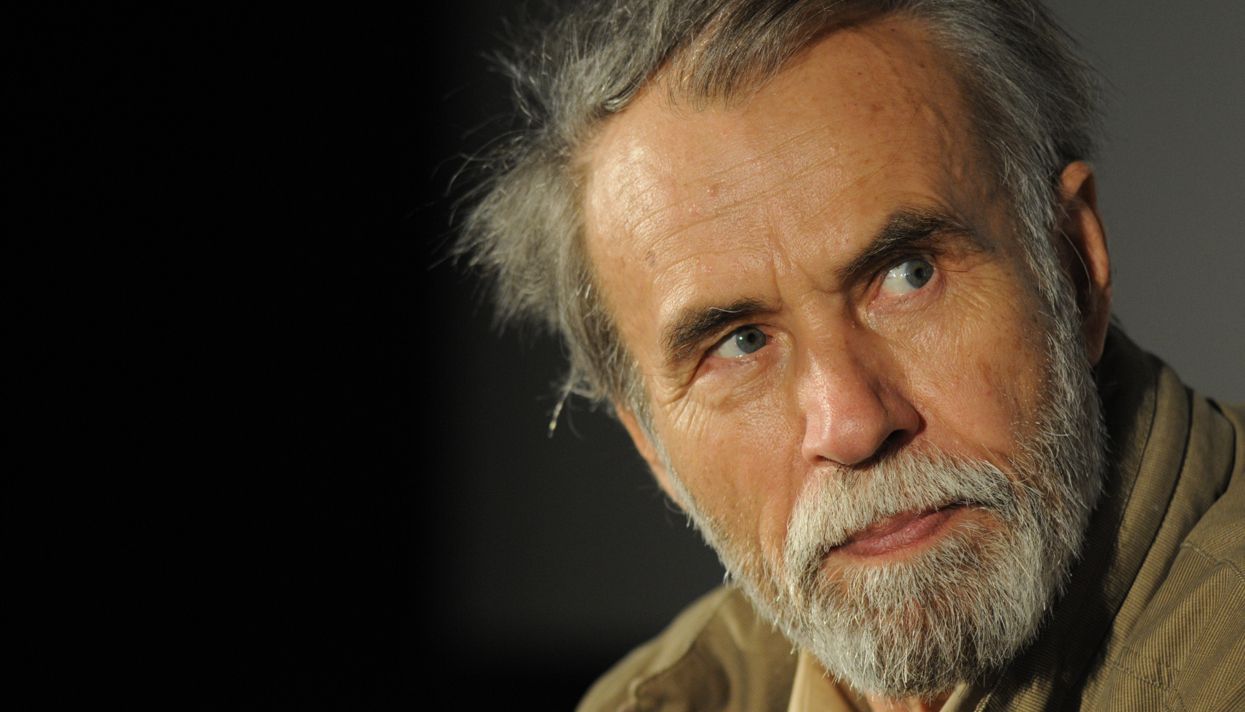
On November 1, the writer Vladimir Makanin died - laureate of the “Russian Boker” and “Big Book”, one of the most important Soviet and post -perestroika writers who knew how to talk about universally important things in various periods of history. Vladimir Makanin, a writer that has been relevant over the past 50 years, recalls the literary critic of Medusa Galina Yuzefovich.
A truly large writer is most often securely recorded at a certain time, and rarely anyone manages to go beyond. The real literary longevity, the ability to comprehend and display more than one historical era is the lot of rare lucky ones, and the deceased Vladimir Makanin is definitely from their number. Surprisingly, for five long decades of his literary career, he retained the ability to talk about the universally important, self-propelled, and Khrushchev’s thaw, Brezhnev’s stagnation, and tectonic shifts of the eighties and nine, and even the “Putin's stability” of zero.
Both by age (born in 1937), and by origin (graduate of the Mehmat Moscow State University), Makanin belonged to the sixties, and its first story-published in 1965, “Direct Line”-lies strictly within the framework of the generational paradigm. The laboratory as a place of action, production drama as the basis of the human conflict, the Caribbean crisis as a background and a counterpoint - from a typical set of elements, Macanine constructs an exemplary sixties text, characteristic that it seems almost grotesque. If for some conditional anthology it was necessary to select one work that accumulated all the stamps, finds, discoveries and excellent delusions of the sixties, the “direct line” would have good chances.
With the transition in the seventies - motionless and stuffy - Makanin's prose changes beyond recognition. Now its subject becomes the Kafkian absurdity of Soviet life - approximately the same as in the films of Eldar Ryazanov, only shown much tougher, without a warm Ryazan irony. The best, perhaps, the story of this period “The Man of the Svita” - the tragic and crazy story of the hero, forcibly excommunicated from the ghostly “institutional” elite, also explores the ephemerality of this concept (“elite” in Makanin’s book is the secretary of the director and her hemby), and the authentic tragedy of expulsion from paradise - poor, meaningless and meaningless and meaningless and senseless Orphan, to match the whole era.
In the eighties, in a crackling and optimistic perestroika time, Makanin before many realizes the steady (at first causing unrestrained delight among observers) the transformation of the Soviet underground into a new post -Soviet establishment and related problems. In the nineties, perhaps the first of the serious writers is conceived not only about acquisitions, but also about losses, not from the perspective of nostalgia and resentment, which is then characteristic of many, but rather from the standpoint of objective and sober impartiality.
Then, in the nineties, and after, already in the zero, Makanin the first (and still the only one) begins to talk about the Chechen war not as a local armed conflict on the outskirts of the empire, but as a war in general, translating it from the sphere of personal experience and individual experiences into the field of global and tragic laws of Russian (and wider - world) history. This is precisely by abstractness, generalization in the description of a quite relevant war - the last noticeable novel by Vladimir Makanin “Asan” (the writer for him received the Big Book Award in 2008) did not like many. Makanin - and in general, it must be admitted, reasonably - scolded for inaccuracy in the details, for abstract and slightly naive pacifism, but the main thing (in this matter was especially strict in this matter, writers who passed Chechnya themselves) for not seeing the war with his own eyes, he dared to write about her. However, today, after ten years, it is already clear that with all its indisputable and obvious inaccuracies, it is the “asan” that remains the most striking and deep novel about the Chechen war, while many books written, as they say, on the live material, were significantly faded - and their value is more likely a memorial than artistic.
The word "chameleon" in our cultural tradition has purely negative connotations - it is believed that resistance, hardness and constancy are better than plasticity, variability and adaptability. The fate of Vladimir Makanin, relevant and successful in different (dramatically different) times, is the best evidence of the opposite. Without completely dissolving in any of the eras described by him, throughout his life, maintaining a slight detachment from his subject, he turned out to be one of the most important - and without exaggeration of the most worthy - figures in the Russian literature of modern times. And the only thing we can regret today is that our further story will be left without his smart, cold, analytical and surprisingly vigilant gaze.
Galina Yuzefovich