
Translated material
Magic and witchcraft course
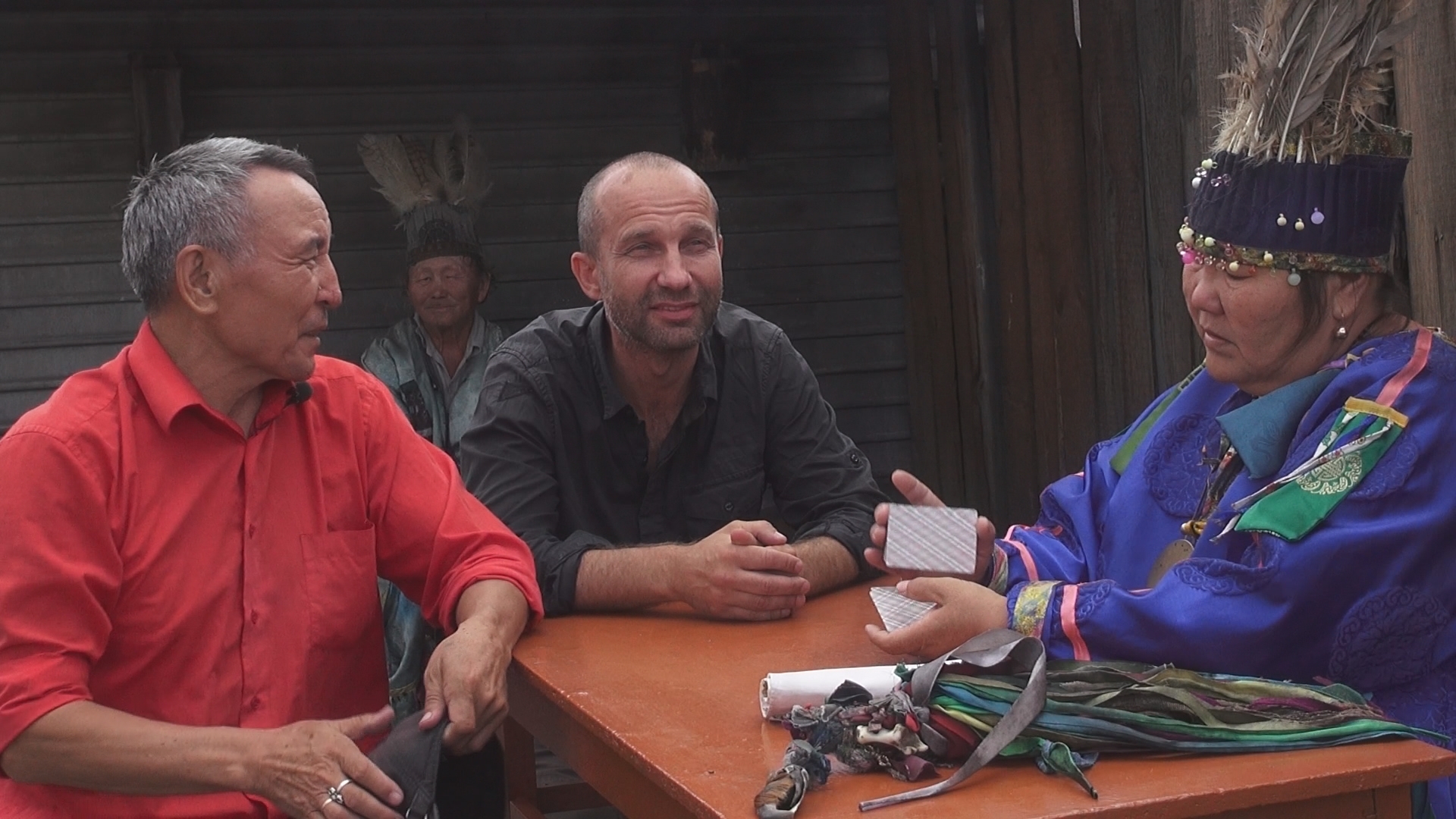
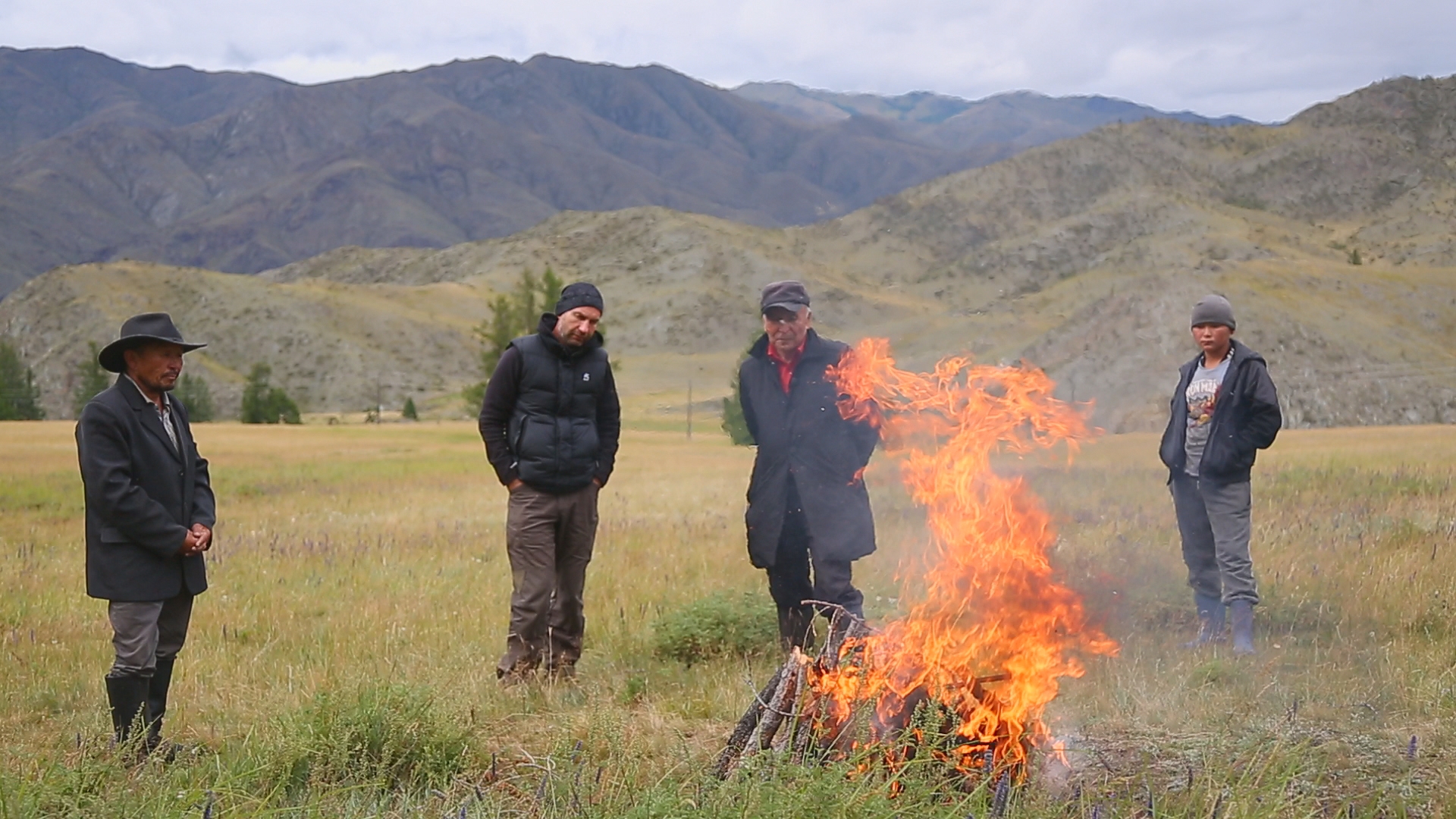
At the 11th Festival "Artdokfest" in December 2017, the film directed by Svetlana Stasenko "The course of the young shaman" will be shown. This is a documentary about the life of modern Tuva with its ancient traditional culture: another, parallel world, completely unfamiliar to most inhabitants of Russia. How shamanism is embedded in the present, what is the power of Tuva and what way of life, from the point of view of the Tuvans, is the right one, Svetlana Stasenko said in an interview with Siberia. Reali.
- How did you have this idea - to go to Tuva to the shaman?
Magic is from the word "I can." I either can or I can’t. Shamans really can something
- This is not my first film, let’s say, ancient thinking. I made films about Udmurts, where there were also sorcerers, I had Pomors, Mari. This layer of ancient culture, ancient knowledge, is generally very interested in me. I believe that it is very relevant today. Because a person is not a separate ear-hill-tole-five ear, this is a single organism that should be in harmony with himself. Real shamans can do it. Yes, they have a lot of things, I do not understand: to scratch the bear with a claw, there is something else. But the fact that they know how to align energy can bring a person into a state of harmony, “tune” and harmonize the human body in a way that the adjuster puts the old piano in order - this is true, I myself observed.
-It seemed to you that the current shamans really can: cure, help ..?
- Magic is from the word "I can." I either can or I can’t. Shamans really can something. That is, they are so deeply studying a person, our behavior that they really can predict.
We have been witnesses more than once. We have an episode in our film when a divorced man (rather solid, he is more than 50 years old) suddenly says: "And you will find a new wife, and you will have a son in a year." In the film it was recorded that she says this, and a year later he comes and says: "My son was really born." Although then he did not believe her absolutely.
- The plot of the film is that a psychologist from America comes to the Tuvan shamans to learn from them. What is this character?
- This is Alexei Razumov, he was engaged in business, went to America, then read the American psychotherapist Arnold Mindell. Many people were ill with Jung, Mindell, Levi-Broule-regardless of the profession. This is interesting: to look into what we do not know what science grazes, but what is in ancient knowledge, in ancient culture and what no one can explain.
Our hero, in general, is not a poor person, accumulated capital and went to Arnold Minell to study. And Arnold Minell recommends that summer practices be held with shamans. Thus, our Alex found Chocar Kes-Kama and went to him honestly to go on practice.
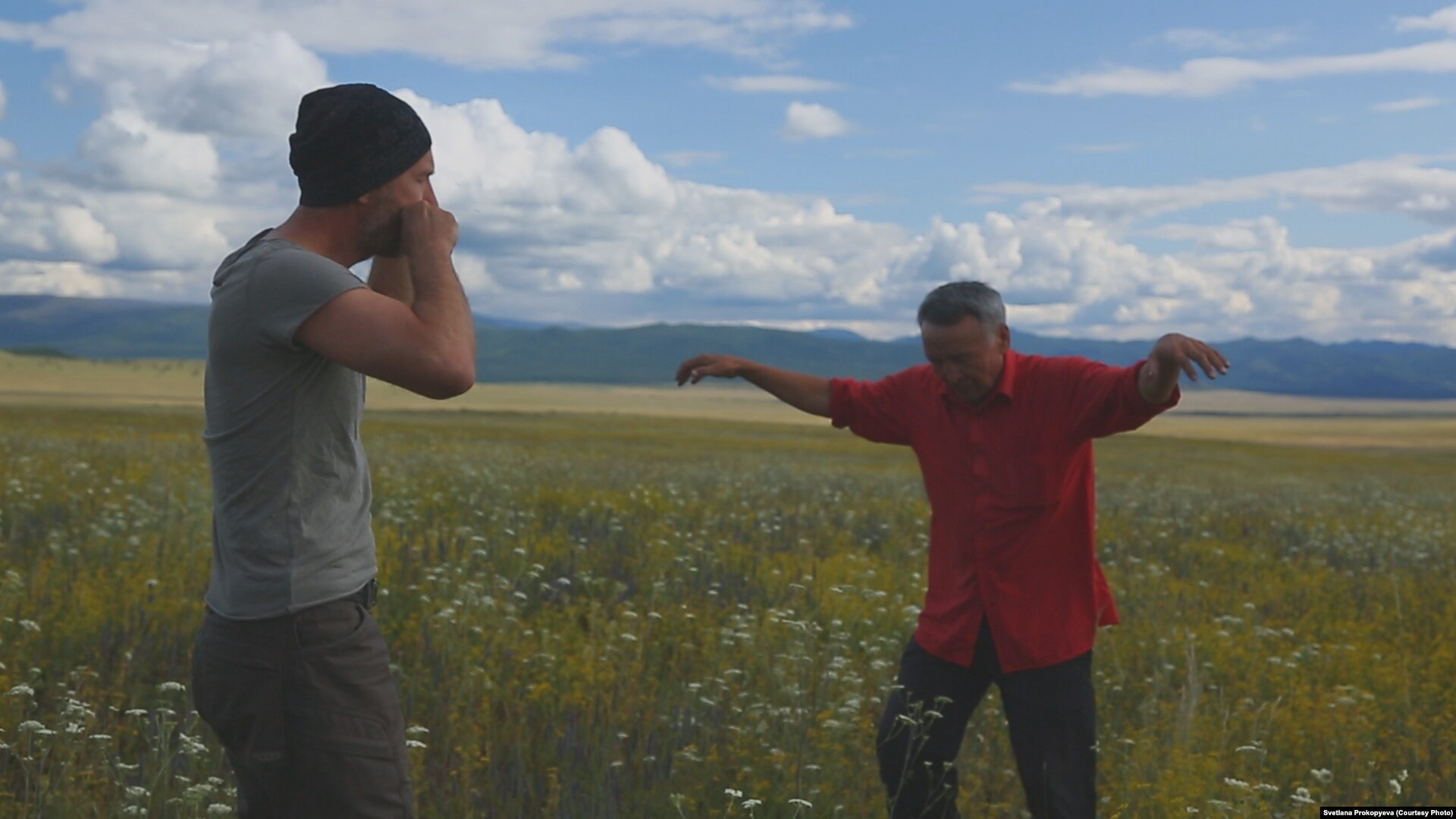
- Did practice successfully?
- Alex defended the dissertation in America under the leadership of Arnold Minell on the topic "Procedural work with sexuality and magnetism", in which, according to him, he largely used the experience gained in Tyu. Understand what you want ... He himself believes that he owns shamanic techniques, knows how to introduce a person into a trance, etc. Now he is in Moscow, opened his private psychological school here, and also works at the Center for Family Consulting - talks about sexuality ...
-And yet, with which they take shamans for their services-is it expensive for local?
- Shamans are wise people, and they clearly differentiate their and visitors. For example, here in Ak-Dovurak-this is a city, it is not a village-there is Daria Saryglar, she is a famous shaman, to whom they go from everywhere. And there is a paramedic. They don’t go to the paramedic, they go to Daria. You can imagine, it’s just like a rural hospital: people are sitting, a queue, numbers, a price list are recorded. There are two more shamans, but Daria, of course, is the most popular, she does not have time to accept everyone. She is simply among the main people in the city. She has practically no weekend, she works on Saturday and Sunday, very rarely she has free time. For example, a girl from some village came to her. The husband disappeared - all the bore, with a photo of her husband. Daria looked, said: no one killed him, everything is fine with him, he is in your village, here is a house in the middle, some blonde lives there, here he is there. Two days later, an enraged husband arrives: “Who told you?! You have spies there” and all that place, “thoroughly, as I found me.” Daria asked us to go out, and told him something-he flew out of her with a bullet, and he had no more desire to sort things out.
So, Daria takes 20 rubles for fortune telling (I did not make a reservation - this is the amount!). And if there is no this money, he will guess for free. The people in Tuva are predominantly poor (except for serious cattle breeders with huge otars), you can’t get it much from it. And the visitors come to this to lower their money with a high. They will guess and make purification, and they will draw a bunch of rituals, and for other money, of course ... approximately such a logic has a logic. We were even witnesses, as one shaman conducted a rite of cleansing the Japanese ...
- Are there crooks among shamans, which are many among, for example, all kinds of Russian psychics?
- Crooks among shamans are certainly found, but they almost always work with tourists (and there are enough tourists in Tuva, and many go from Europe, America, South Korea, Japan). Such a "shaman" will not stick to the locals: locals, as a rule, go to the shamans on the recommendation. Sarafan radio in these parts works more than successfully. For example, all Siberia drives to Daria. And as for tourists - there are travel agents that gain groups in large cities and take them to Tuva to the "shamans". The most popular services are the treatment of infertility, impotence, "removal of damage", etc. This type of tourism is not very popular, but it is.
"These are people of air"
- What did Tuva seemed to you?
- Great! Sayani is so beautiful! .. Sometimes it feels like you are in a dream when these kite, these eagles fly around you. And such a paradoxical thing: here is the Tuvan yurt, and wherever it stands, it is perfectly inscribed in the landscape. They can stand five, ten, and they are ideally inscribed in the landscape. Just a picture of Roerich in its purest form.
The whole second generation of the Tuvans lives in the cities, and they simply do not understand what the “policy” means and what they eat with. They still cannot get used to the city, they cannot live in this space
But the culture of the city, as it seemed to me, they did not master at all. They do not understand how to live in the city. This is something like to put me in the cave: I don’t know how to clean up in it, how to make my cave be cozy. Even in Kyzyl - there are many five -story buildings, but they are absolutely not mastered, not inscribed in space.
Tuvans are people of air, these are people of mountains, these are people of the steppes. They simply cannot fit into cities. And those people who live in yurts and graze cattle - they are quite wealthy, they feel very comfortable. They have posture, self -esteem, they are beautiful, proud. But as soon as the Tuvinets gets into the city, he flies out of his native element somewhere where he cannot get comfortable.
Our Chochagar, for example, said that when he was small (now, in my opinion, sixty), they were forcibly moved from a nomad to the cities. That is, the whole second generation of the Tuvans lives in the cities, and they simply do not understand what the "policy" means and what they eat with. They still cannot get used to the city, they cannot live in this space. But in the Soviet Union, traditional peoples were supposed to master city life and break with the usual way of life. And the Tuvans had to go this way.
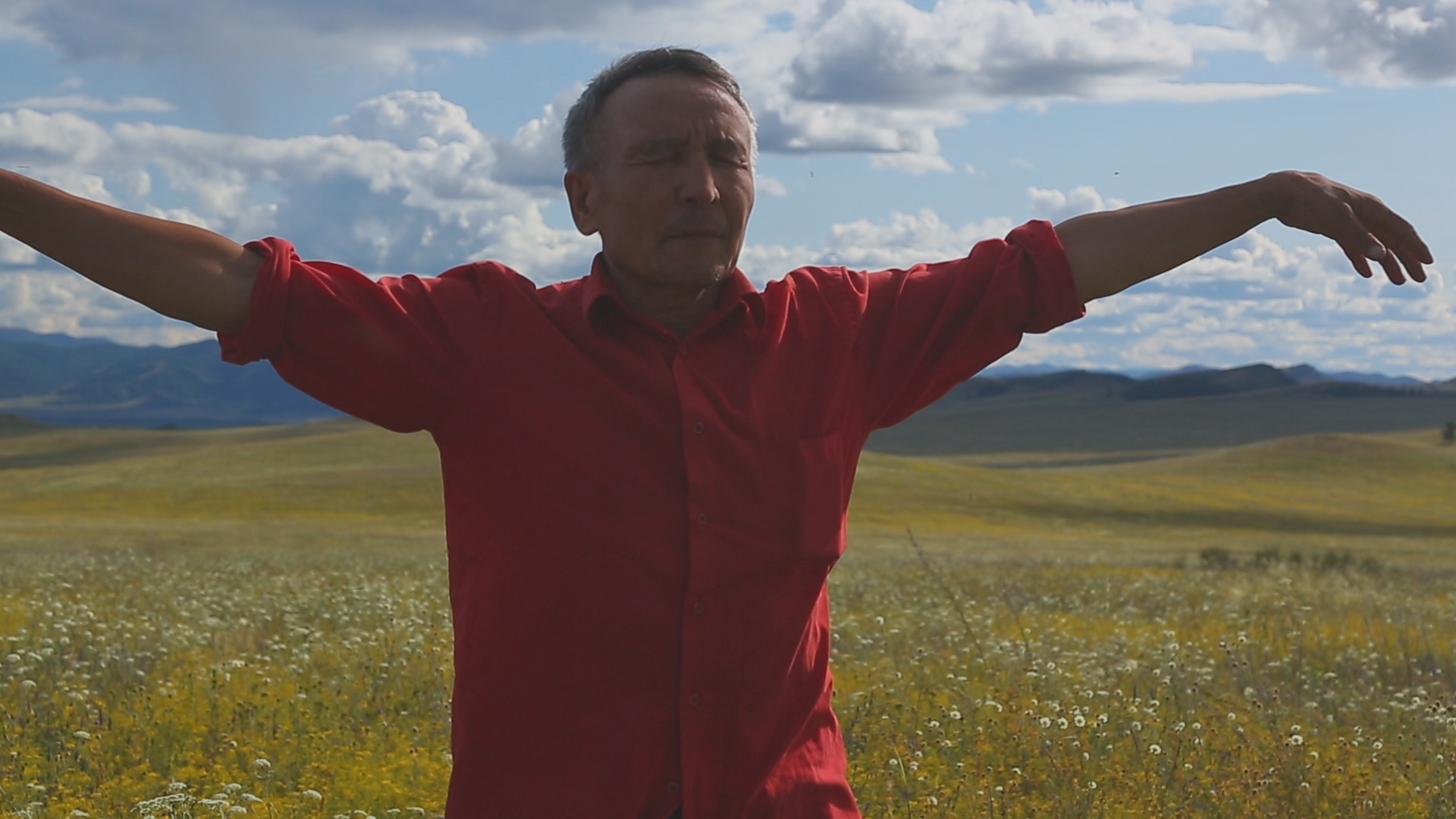
They tried to cultivate them, but they don’t need to cultivate them, they are highly cultural people, and they are perfectly inscribed in their world, in their nature. When the Soviet Union ended, the Tuvans began to return to the traditional way of life, to their yurts. First, summer yurts appeared, now there are already winter yurts, when they wander around all year round, they are engaged in cattle breeding. And these nomads are very interesting people, it is very interesting to talk to them, it is interesting to observe their lives.
- That is, we can say that the traditional nomadic culture in Tuva is alive?
- Of course, this is a very lively thing, very strong. And this is also hard work. Imagine, huge flocks! But those who return to the traditional lifestyle, they are harmonious, they are satisfied, they can earn good money, they have the opportunity to teach children at universities outside of Tuva. We met there with a girl, her family is engaged in cattle breeding, the girl is studying at the university in Novosibirsk on a psychologist. That is, not just she moved to the city of the groom to look, but this person is already going to the city to study, and the family can keep it in a big city, learn it. And her two brothers remained to engage in cattle breeding. At the same time, they all support each other, help each other, and these are such strong traditional families.
- It seemed that during the years of Soviet power, the nomadic traditional culture in Tuva, as in other republics, was irrevocably lost ...
In Tuva, in many ways, such as the feudal state, which lives its traditions, some kind of its market, its often natural exchange of some kind. And I did not notice that they were very integrated into the Russian Federation
- Of course, she suffered losses. But still 25 years have passed since the collapse of the Soviet Union, and many people simply did not spend this time for nothing. When everything fell apart, they revived traditional crafts, and as a rule, if the family has these traditional crafts, then the family lives well. Outside of Kyzyl, more or less wealthy people in Tuva are people who are engaged in cattle breeding, traditional crafts. For example, we were in one yurt: they have three cows, three calfs, somewhere about twelve sheep, about the same number of goats-here they, as we were told, are considered poor. And let's say, there was an asbestos plant in Ak-Dovurak, it closed ... The Russians left from there, there were only Tuvans, but in the end those who did not return to the traditional lifestyle live in alms, sleep, and in general, look at it terribly.
- Is the craving for a traditional lifestyle in Tuva feel not only among the rural population or does this also affect the city?
- The Tuvans were so delighted that after decades of the Soviet regime, now again you can, traditional, that they, I would say, bathe in this. They began to observe all their old rites again. We were somehow taken to one such traditional rite. We rode through the Yenisei - very far. And while they were driving for three hours, they met everyone. There were teachers, businessmen, accountants-that is, people of the most-most different city professions. But they definitely need to go in the spring, perform this ancient rite, thank their ancestors. And they are preparing for a long time - they prepared gifts to their ancestors, they prepared gifts to each other. It feels like they were preparing for six months, and this is very important for them.
In Tuva, in many ways, such as the feudal state, which lives its traditions, some kind of its market, its often natural exchange of some kind. And I did not notice that they were very integrated into the Russian Federation, to be honest.
- And how does state power in Tuva react to this revival of a traditional way of way?
- You see, the Tuvans are cunning such guys. For example, our hero Chokhagar, who is a shaman, he said that he came from officials. He graduated - you will laugh - the Moscow Literary Institute named after Gorky as a translator. These were the 1990s, there was no work, and he was invited to the Ministry of Religions. And so they developed a whole code there: shamans must create associations, shamans must behave this way and so, regulations, prescriptions. He says: we walked, explained something there, the shamans listened. But they did as it is convenient.
The state structures and these carriers of the traditional way of each other in Tuva, in my opinion, do not interfere, but do not interact. Live their lives.
- Shamanov did not alarm your appearance with a video camera, were they all ready to show you their work, share your experience?
- One shaman says to me: you had shamans in your family. Although where did the shamans come from in my family? I am generally from the European part of Russia, and I never have any relatives in any Siberia. But she says: you had shamans in your family, and I will teach you. I say: how? Well, he says, here you go, look and tell me what you see. Well, I walked, looked, told what was interesting to me, said what I see. She says: well, that's all, the process is going on, fine, everything is fine.
- That is, during the filming, you also became a little shaman? What did you learn there, what did you understand what you did not understand before?
-No, I still did not become a shaman! (Laughs.) Probably still not. But very interesting! You begin to notice some things, some nuances, which you have not noticed before. This world is interesting, it is an unknown world, it is a strange world. What she learned - she learned to be more attentive to people, learned that people are different. In every person there is an unknown one, everyone can speak with another in some non-verbal language. Shamans do this very well, skillfully, and they, as it were, cause a person to speak in a non -verbal language, in the language of the body, in the language of gestures. This is very interesting.
- And the most important thing should understand the viewer about Tuva and this world of shamans after your film?
- That the world is infinitely diverse. We must love him, we must listen to him. It was very important for me to show that the regions are not only tuva, in general, the regions are not depressed, they are just different. It must be able to see. People who come to Ak-Dovurah and say: “Ak-Dovorah is depressive, everyone drinks here,” they are wrong. This is that on the surface, it is foam, and in the depths - strong, powerful, beautiful people who are important not to interfere. It is important to give them, their energy, their business qualities to develop, grow, grow. And everything will be fine. It is important for people not to interfere. They are strong, powerful, they will cope, ”director Svetlana Stasenko told in an interview with Siberia. Real.