
Translated material
Source of Interfax: Navalny’s lawsuit will not be considered
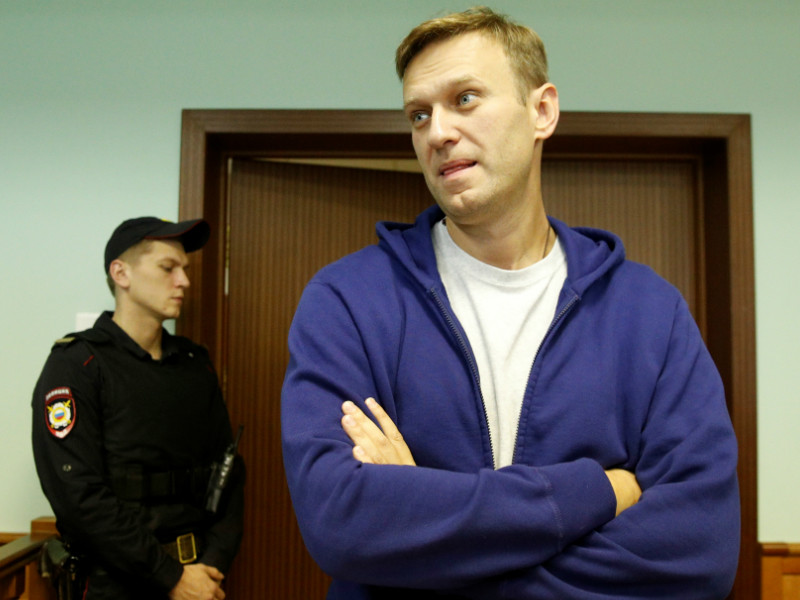
The lawsuit of the opposition Alexei Navalny against the President of Russia Vladimir Putin, who filed 800 sheets in the Tver court of Moscow, has no judicial prospects and will not even be considered, a source in the trial told Interfax .
“Navalny’s lawsuit against the head of state regarding the refusal to agree on rallies by definition has no chance of being accepted for consideration, and, accordingly, has no judicial perspective, since the raised issue is exclusively in the competence of local authorities,” he said.
According to the interlocutor of the agency, the story of Navalny's claim "initially has nothing to do with justice." “At first glance, it is clear that this is nonsense. We are talking about some kind of PR game, and this is not included in our competence,” the source emphasized.
On November 1, Navalny in his blog announced the termination of meetings with voters in the form of agreed rallies, since this, according to him, is more impossible due to the fact that local authorities do not give permits to them. According to the opposition, all this is coordinated from Moscow: "President Putin personally gave the order in connection with the fact that he is simply afraid of our election campaign." In this regard, Navalny said that he was suing Putin and his administration "and will present" comprehensive evidence of how city administrations throughout the country act organizedly, synchronously and on obvious instructions from Moscow. "
“Every week we send about 200 applications and failures everywhere. Absolutely illegal. You remember that by law it is impossible to simply ban the rally. The authorities are obliged to offer an alternative site. We personally have no doubt that this activity is coordinated from Moscow. Well, officials cannot begin to act equally illegally without special instructions,” Navalny added.
The lawyer of the Corruption Fund (FBK), founded by the oppositionist, Ivan Zhdanov explained that in the statement of claim Navalny asks the court to recognize Putin’s actions, in his opinion, to coordinate rallies in different cities in different cities. “We are talking about the relationship of refusals in the coordination of events in subjects,” Zhdanov said.