
Translated material
For the king, the Fatherland and against the authorities
Loyal nationalists celebrated on November 4 march with portraits of Nicholas the Second and Polit
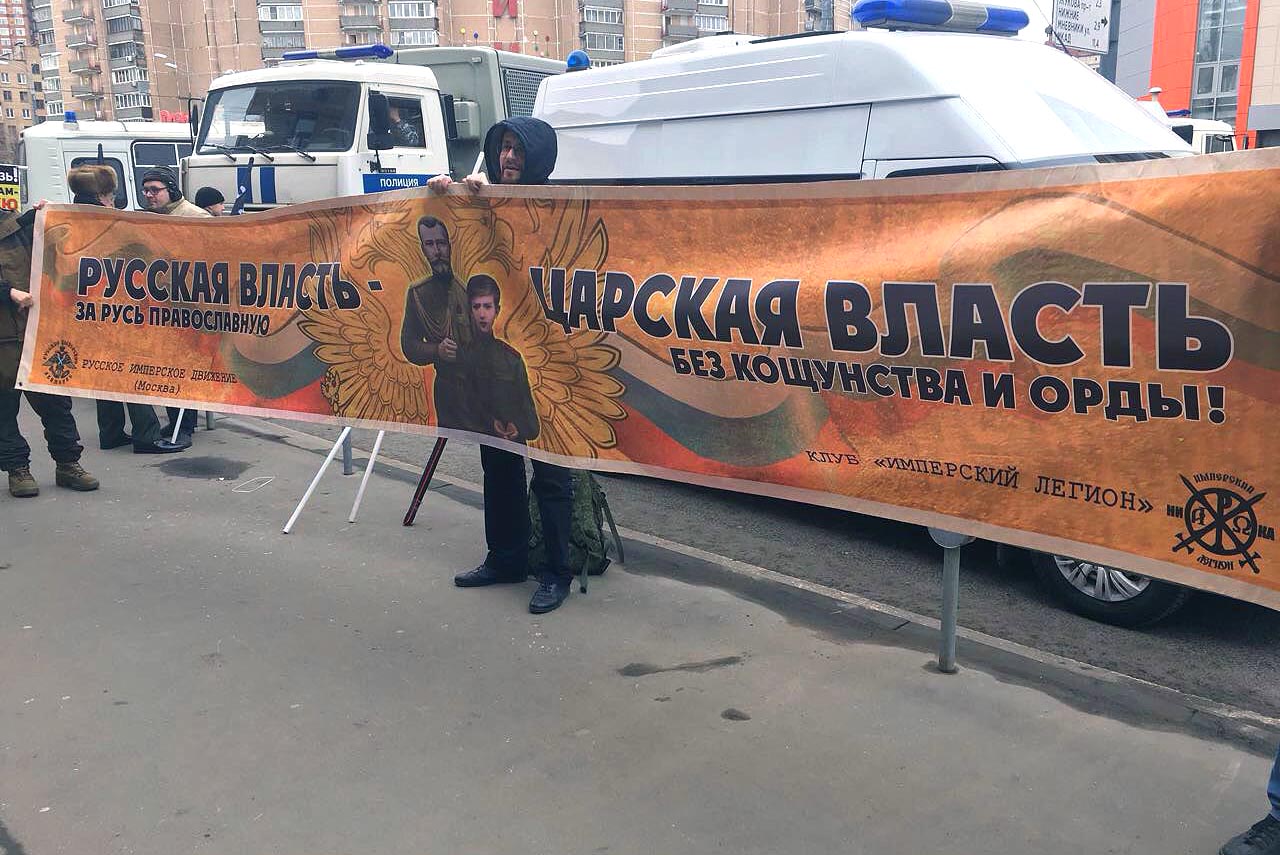
Photo: Olga Frenchova
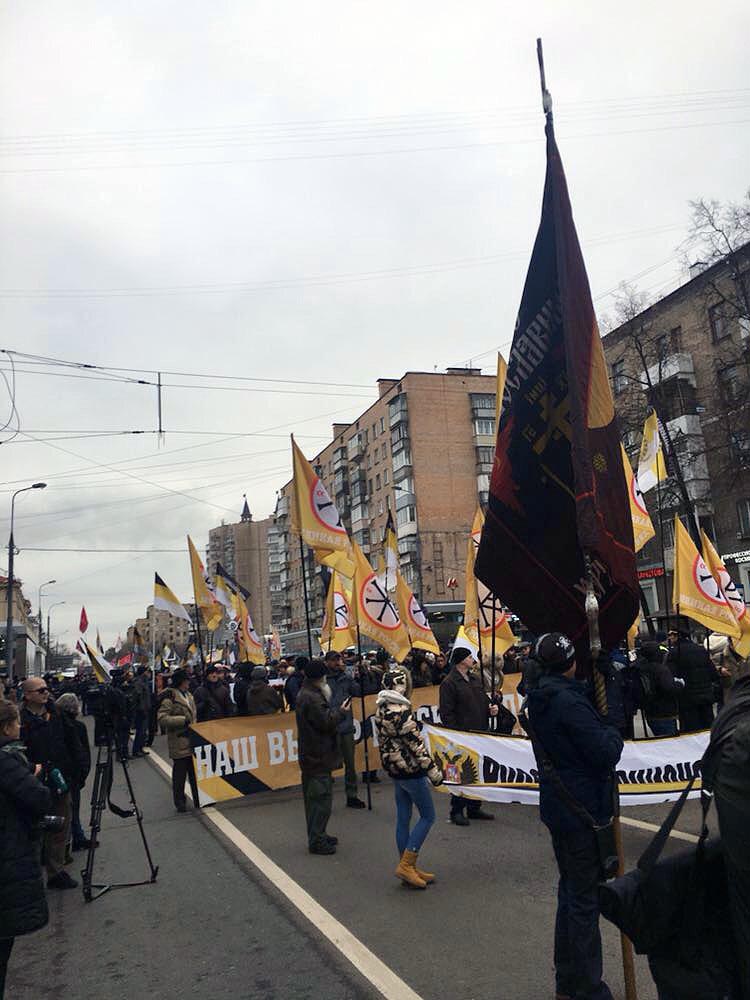
Two campaigns of nationalists, according to tradition, were held on October 4, on the Day of National Unity, in the Moscow regions of Lublin (in the southeast of the capital) and Schukino (in the north-west). Radical opponents of the authorities, including the Kremlin’s support for Novorossia, participated in Lublino in the “Russian march”. Mostly young people went out into the street. In Schukino, there were more elderly people, more loyal to power, supporting the “Russian world”, the slogans were national-patriotic.
Unlike the action in Lublino, not a single person was detained at the procession in Schukino, the action passed as much as possible and calmly with emphasized a friendly attitude towards the protesters from the police. “We are law -abiding citizens, and these are our defenders,” one of the organizers explained to the assembled. The Russian march who came to this “Russian march” accused the Lublin nationalists of provocation of the riots and, in general, solidified with law enforcement officers, who staged mass detention of supporters of the nationalist Vyacheslav Maltsev on the eve of the shares.
The procession moved to Russian patriotic music, occasionally interrupted by the speech of activists who chanted the slogans "Russia - Russian power", "freedom to Russian political prisoners." Among the attributes were dominated by imperial flags and portraits of Nicholas the Second.
The main goal of this march, according to the organizers, was to show that the Russian people are still there and he is not ready to come to terms with what is happening. The audience outraged the ban on calling the march "Russians". "We are actually forbidden to be Russians!" - one of the organizers commented on the situation.
The audience went under the slogans of "Russia - Russian power", "freedom to Russian political prisoners." Among the attributes were dominated by imperial flags and portraits of Nikolai Second
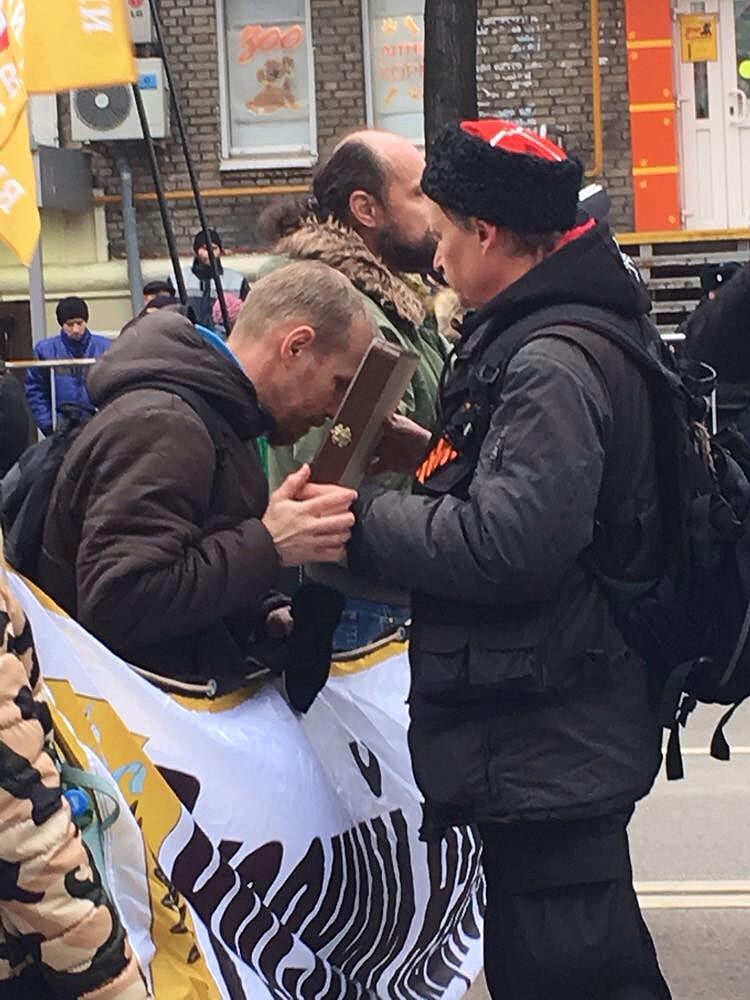
This year, the action had a new leitmotif: many said that they were stimulated by the exit to the wide rental of the film “Matilda”, contrary to the protests of representatives of the church and the near -church public. “They were not counted with believers, and this showed that they were all Satan’s servants,” one of the participants in the procession was indignant. At the rally, the main public critic of the film from among church hierarchs, Archpriest Vsevolod Chaplin, performed at the rally. Among the main requirements was the restoration of the monarchy in Russia: the king should be in the Russian country, the audience insisted.
Another leitmotif was the demand to free the Russian patriots from prisons. The organizer of the procession in Schukino was the “Russian National Fund”, among the tasks of which is the support of political prisoners and the expulsion of oligarchs from the power of the oligarchs. Many came with banners on which the names of political prisoners were written, including Colonel Vladimir Kvachkov (carried his photograph) and his associates.