
Translated material
Human Rights General
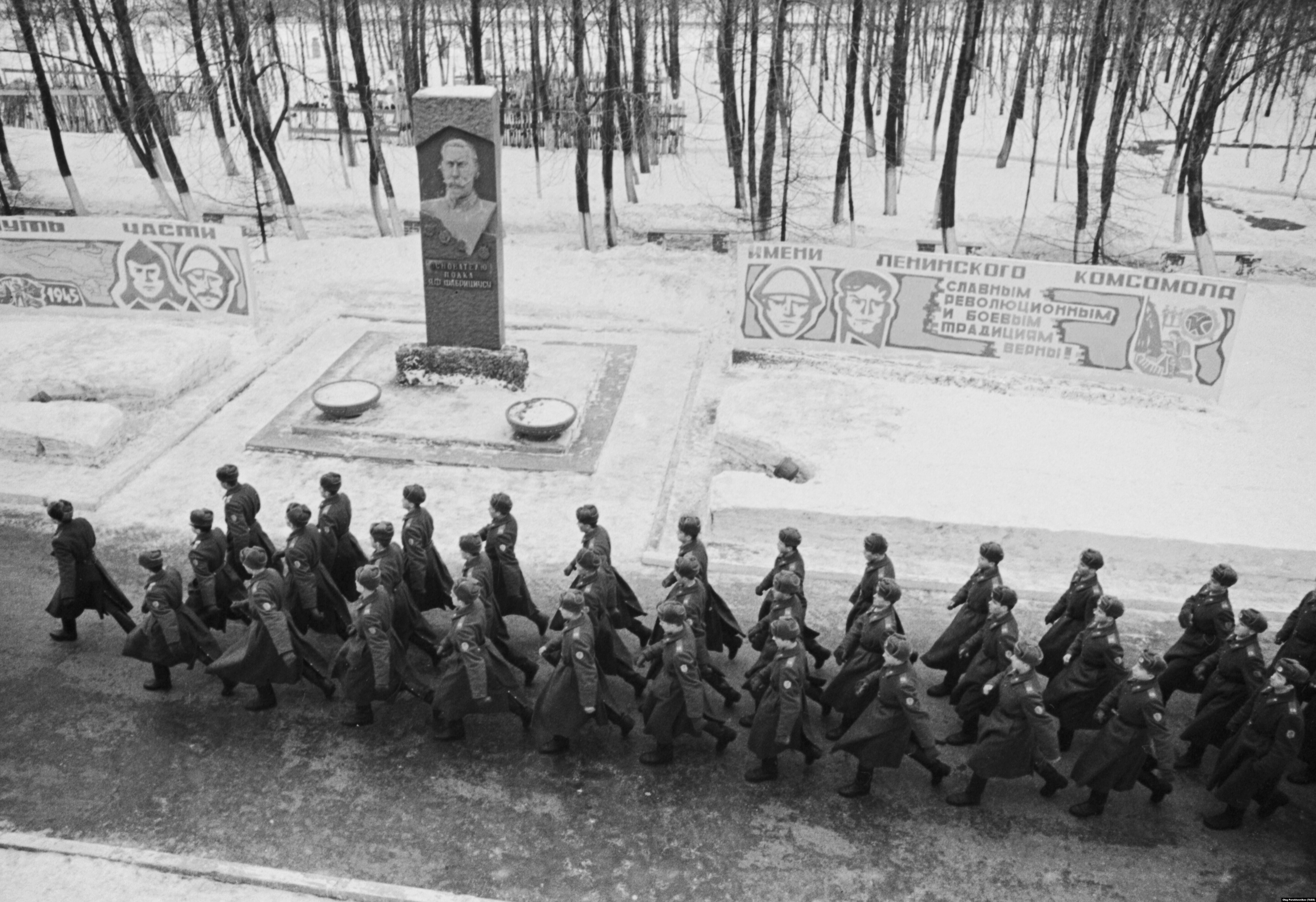
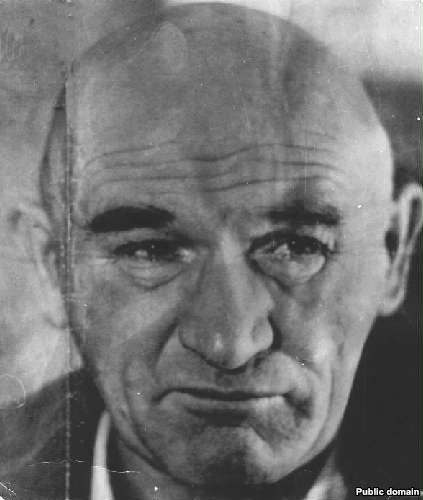
Guest - Andrei Grigorenko, son of the legendary legalizer general Peter Grigorenko
Vitaly Portnikov: General Peter Grigorenko is still one of the legendary figures in the history of the Soviet and Ukrainian dissident movement. The 110th anniversary of his birth has recently been celebrated, and this is a good reason to talk about him and how the history of power resistance in the former Soviet Union developed and what remained in memory of this story. We bring to your attention a plot dedicated to Peter Grigorenko.
Correspondent: On October 16, the 110th anniversary of the birth of Peter Grigorenko-one of the leaders of the public resistance of the Soviet totalitarian car in the 60-70s of the last century.
The son of a peasant from the Tauride province (current Zaporizhzhya region) studied at first at the Kharkov Technological Institute, and then made a brilliant military career. In 1939, he graduated with honors from the Academy of the General Staff. During the Second World War, he commanded a rifle division, was wounded twice. After the war, he taught at the Moscow Military Academy named after Frunze and headed the first department of military cybernetics in the USSR there.
Peter Grigorenko remains one of the legendary figures in the history of the dissident movement
In 1961, the general criticized Khrushchev himself for the repetition of the Stalinist methods of government. In response, the authorities deprived him of work in Moscow and sent him to the Far East, but the general did not abandon political and human rights. For this, he was subjected to repression many times: two prisoners, punitive psychiatry, deprivation of pensions, awards and military titles.
Pyotr Grigoryevich was the first historian to indicate that the defeat of the USSR in the first period of the Soviet-German clash were due not only to the total extermination of officers before the war, but also mainly because the country was preparing for an aggressive war, neglecting defense.
Grigorenko devoted most of his life to the protection of Jews, Meskhov, Armenians, Germans of the Volga region, Chechens and Crimean Tatars. “Stop contacting the Central Committee of the CPSU and the Government of the USSR with requests for justice. They are the main culprits of crimes against your people. We must resort to decisive action, because they do not ask for what belongs rightfully, but they demand,” the general wrote in one of his appeals addressed to the Crimean Tatar people.
In May 1976, Grigorenko became a founding member of the Moscow Helsinsky Group to comply with human rights and contributed to the creation of a Ukrainian Helsinsky group in Kiev. He became one of the key Soviet dissidents and one of the leading representatives of the Ukrainian human rights movement (together with Nikolai Rudenko, Vyacheslav Chornovol, Leonid Poysh, Vasil Stus).
At the end of 1977, the general went to the United States for surgery and a meeting with the previously emigrated son. A few months later he was deprived of Soviet citizenship. As a result, Grigorenko received political asylum in the United States.
In exile, Peter Grigorenko continued the struggle for human rights
While in exile, he continued the struggle for human rights - he headed the foreign representation of the Ukrainian Helsinki group, and also promoted the ideas of independent Ukraine, performed at international forums, and was engaged in journalism. The human rights activist wrote several books, his memories "underground can only be found in the underground," that published in French, English, Russian and Ukrainian.
Pyotr Grigorenko died on February 21, 1987, he was buried with military honors at the Ukrainian Orthodox cemetery in Baund-Bruck near New York. In 1990, the first and last President of the USSR Mikhail Gorbachev posthumously returned to Grigorenko Soviet citizenship, and the second president of Ukraine Leonid Kuchma for participating in human rights movement posthumously awarded him the Order "For Courage" of the first degree. In Lviv, in honor of Peter Grigoryevich, they named the square, and in Kyiv and Kharkov - avenue. In addition, in Simferopol in the late 90s, at the initiative of the Mejlis of the Crimean Tatar people , and with the assistance of the people's rush of Ukraine, a monument was opened by an uncompromising rebellious Soviet general.
Vitaly Portnikov: The guest of our program today is Andrei Grigorenko , the son of General Grigorenko. Did you feel that your father’s interest in your father is now great enough? Or is he already becoming a historical character?
Andrey Grigorenko: There is both. Those who knew him personally, his contemporaries die.
I noticed that there is also an interest in the younger generation, which does not even remember the Soviet regime. It is difficult for some young people to explain what a totalitarian regime is.
It cannot be said so far that totalitarianism is being revived in Russia-it is still authoritarianism
So far, it cannot be said that totalitarianism is being revived in Russia-it is still authoritarianism. The press was crushed, but still there are some separate islands on which in a quiet, squeaky voice, but still speak relatively free. But on the other hand, it suddenly became clear that Russia could not get rid of its colonial heritage. Imperial consciousness drags society back.
In Ukraine there is no imperial, Ukraine wants to become a normal country, there is a democratic vector, but there are vectors that pull back. People still do not really know the history of their own country, they know history in the Russian imperial presentation, which is often very far from historical truth. Russian history itself is distorted, everything is distorted by propaganda. In order for this not to be, it is necessary that there is a free press, a free book publishing, but it’s bad with this, and in Ukraine, unfortunately, it’s also not as good as we would like.
Vitaly Portnikov: Tell me, do you perceive your father in the context of what story - Soviet, Ukrainian, Russian? Where to enter it?
Andrei Grigorenko: Father is an international figure, he fit into international history. In ten years of emigration, he did a lot in the West. Many problems, including the problems of the Crimean Tatar people, would not be so famous without it. It was very difficult to break through. I could not put anything about the Crimean Tatars in the Turkish press (then I struck, but it was not easy). At that time, it was believed that only the Turks live in Turkey, and there are no incomprehensible Crimean Tatars and others there, although in Turkey, according to some information, up to six million people of Crimean Tatar origin lives.
Vitaly Portnikov: And you understood why your father took up the Crimean Tatar movement? After all, then it was not the only people, actually devoid of their homeland.
Andrei Grigorenko: Father was engaged not only in the Crimean Tatar movement.
Vitaly Portnikov: He went down in history as the one who raised this topic to the international level.
There is no imperial in Ukraine, Ukraine wants to become a normal country, there is a democratic vector here
Andrey Grigorenko: Thanks to the Crimean Tatars, Father and everyone who helped them. But there were still Chechens, Meskhi, Soviet Germans. There were 14 small peoples. It began, by the way, with the Koreans of the Far East in the 30s. There were social deportations, deportations of the so -called kulaks, 17 million dispossessed and expelled by no one knows where. There were partial deportations from Ukraine, Belarus, Latvia, Lithuania, Estonia, Bessarabia, the present Moldova, Bukovina, which was not at all part of the Russian Empire.
The entire Crimean Tatar people, one hundred percent were part of the democratic movement, the human rights movement - no other nation gave this. So we must thank the Crimean Tatars themselves for the fact that their problems became known.
I managed to make a film on Austrian television about deportation. Father also did a lot for this. There was a conference "For Human Rights" in Spain, they gave the floor to the representative of the Crimean Tatar diaspora, and my father said: then I refuse my time, let him speak longer.
Vitaly Portnikov: Looking at the experience of the dissident movement in the Soviet Union, in Ukraine, do you think that it really influenced the erosion of the regime? Or, nevertheless, did not strongly afford everything that happened to the dissidents?
Andrey Grigorenko: I don't really like the word "dissident". This is like a nickname that foreign correspondents invented, and we responded to it. In theory, more correctly - "human rights defender."
We probably changed the atmosphere, although it was a miserable bunch of people in relation to the large population. But historical changes are often carried out just such a small bunch.
Vitaly Portnikov: Did you even understand how your father, the general of the Soviet Army, a high -ranking military, teacher of the military academy, entered into a conflict with a system from which there was no longer a road back? I do not remember other law enforcement generals in the Soviet Union.
Father is an international figure, he fit into international history
Andrei Grigorenko: Someone said that in our human rights movement there were few generals and academics. And someone said: no, we have one general, there were no others. And although he was unclenched from the generals, he remained the general of human rights.
This is a difficult question. My conflict with the Soviet government began much earlier. I considered myself a communist, however, there were conflicts. Even in adolescence, I had forbidden books.
Vitaly Portnikov: Is this the result of family education?
Andrei Grigorenko: No, it was probably when I went on strike against my parents.
Vitaly Portnikov: That is, you were a general son who rebelled against parents?
Andrei Grigorenko: By the way, I hid from everyone that my father was a general - it was ashamed. I did not understand much. And when his father spoke in 1961, I was simply delighted: it turns out, and he was there, in the same steppe.
Vitaly Portnikov: Are you not afraid? After all, life has changed.
Andrei Grigorenko: No, it was not very frightened. The only thing how life has changed: I went to work. I have not turned 16 for another 16 years.
Vitaly Portnikov: 1961 is still a conflict with the Khrushchev regime, when your father was afraid of the cult of Khrushchev’s personality.
Andrei Grigorenko: He went further then. Shortly before that, he had a conflict at the Academy about anti -Semitism. He wanted to take an officer: an orderlyman, a participant in the war, everything is fine - but they do not take him. He came to swear with the political department, they say: "The fifth point pumped up." "What is the fifth point?" Where does he, Ukrainian, understand what the fifth point is? Ukrainians did not have such discrimination. "He is a Jew." Father lowered the dogs against him, went to complain to the head of the Academy, and still knows where. This head of the political department was called, they say: "What did you contact with Grigorenko? Do you know, he is at all like that, he perceives everything one to one."
Vitaly Portnikov: As it is written in the party’s program, it is.
Andrey Grigorenko: He was a little eccentric.
After his father’s performance, we became friends, although I still continued to hide the fact that he was a general.
Vitaliy Portnikov: But soon soon after that he ceased to be a general.
I don't really like the word "dissident", more correctly - "human rights defender"
Andrey Grigorenko: There was still time. I studied at the evening school, and there no one knew that my father was a general. We had one teacher, her husband was a listener of the Frunze Academy, and he greatly appreciated my father as a professor. She decided that she had to make a report on the Second World War, invited her father to school. I told him: "You go by yourself, not with me, I do not know you."
Vitaly Portnikov: On the air of Ukrainian service, Radio Svobodava spoke Ukrainian. But you did not live in Ukraine, lived in Moscow, how did you even know Ukrainian? I do not think that in your family they spoke on it.
Andrei Grigorenko: The mother was not capable of any languages: despite Ukrainian relatives, she never learned. When in the last two years, my father completely forgot the Russian after the stroke and could only speak Ukrainian, there was a terrible problem, because I could not be there all the time and translate, I had to translate on the phone, and she was angry that she did not understand him, and he was also angry. He did not lose his mind, he simply did not understand why she did not understand. Then the doctors explained to me that this often happens in people after a stroke, because the native language is in some other part of the brain than a well-made.
The father was perfectly in the Russian language, wrote and spoke completely freely, the only thing - he had a terrible Ukrainian accent. And here is the German, which he knew quite decently, also evaporated, only one Ukrainian remained. Father always spoke to me in Ukrainian.
Vitaly Portnikov: Even in Russia?
Andrey Grigorenko: Yes. For me it was a secret language. On the other hand, he ceased to be secret when we went to Ukraine, and we went every summer, I had friends there, and Ukrainian was everywhere and everywhere. When I was younger, it seemed to me that Russian and Ukrainian were almost the same thing.
Vitaly Portnikov: During the celebrations in Ukraine, you see that Grigorenko perceive here as part of Ukrainian history - political, in any case?
Father always spoke to me in Ukrainian
Andrei Grigorenko: I think that yes: I don’t know if everything is, but, in any case, many. Father played a big role in emigration. When he began to lead the representative office of the Ukrainian Helsinsky group, it functioned literally as the Embassy of Ukraine, which was not formally independent: a Ukrainian voice was heard.
By the way, in a sense, we must be offended by our Ukrainian diaspora for not being able to convey Ukrainian problems to the rest of the world. In Canada, Ukrainians were then the third minority. I first came to Montreal, went out, did not understand where to go, I had English in its infancy. The policeman asked what language I speak, I replied that I was talking in Ukrainian and in Russian. He says: "I will call a friend who speaks in Ukrainian now." In Montreal, the policeman speaks Ukrainian! As it turned out later, he was an ethnic Ukrainian.
Vitaly Portnikov: People left Ukraine when there was no Ukrainian state, and it was difficult to imagine that it would appear.
Andrei Grigorenko: For example, in America, nationality was determined by the country from which they left. There was no Ukraine as an independent country, and all emigrants from there were considered Russian. Signing up for German courses, I said that I am a Ukrainian. They answered me: such a nation does not exist. If it were not for two Canadians who confirmed that there were Ukrainians, I would be alone.
Vitaliy Portnikov: According to your observations, contacts between Ukrainian and Russian dissidents, mutual understanding between them has not changed in recent years, did not alienate after the events that began in 2014?
One of my father’s merits is that national problems began to somehow understand
Andrei Grigorenko: I do not condemn anyone, but in Russia they did not understand the national problem, and it was difficult to force it to understand. One of my father’s merits is that national problems began to somehow understand. Then there were good relations, now, probably, they are worse, and the war does not contribute to their improvement. But still, even then the aspirations were somewhat different.
Vitaly Portnikov: Participants in the Moscow Helsinsky group told me: we did not even know that national sentiments are so strong in the Ukrainian Helsinsky group. That is, nevertheless, there was an idea that this is a common human rights, but Ukrainian human rights activists still thought about national and state interests.
Andrey Grigorenko: Of course. We must pay tribute to my father: he introduced this problem in the statement of the Moscow Helsinsky group. I can’t say that they did not know this: Yura Orlov was very well aware, he generally knew national problems. No wonder he is an academician of the Armenian Academy of Sciences.
Vitaly Portnikov: The question here is not only knowledge, but also an understanding of priorities.
Andrei Grigorenko: Once I really appreciated the phrase that anti-Semitism cannot be understood if you are not a Jew. Then I did not immediately understand it, only then understanding came. I learned to be a Jew, so I understand what anti -Semitism is. There are no purebred people a priori.
Vitaliy Portnikov: For xenophobes, everyone they do not like is purebred.
Andrei Grigorenko: Once Shenderovich, my virtual friend, congratulated everyone on Rosh Hahan . He said: "I congratulate everyone who is from Adam and Eve, and I do not congratulate those from the monkey."
Grigorenko, being a Ukrainian and the Soviet general, remembered the Crimean Tatars and other persecuted peoples
Vitaly Portnikov: The difference between the Russian and Ukrainian audience exists even today. If I publish such a congratulation in Ukraine, none of my Ukrainian readers will be surprised.
Andrei Grigorenko: Because in Ukraine there is no anti -Semitism.
Vitaly Portnikov: State - no, but, like in any country, there is a household one. Nevertheless, it is important that people calmly react to other people's holidays and perceive them as their own. This is probably thanks to people like your father. Ведь он, будучи украинцем, будучи советским генералом, помнил о крымских татарах и других преследуемых народах, и это во многом фундамент того, что потом происходит в обществе, как оно потом воспринимает такую работу. Это как свет погасшей звезды: она погасла, но он все равно идет.