
Translated material
Red harvest
On November 7, 1917 (according to the new style), an armed uprising occurred in Petrograd, which later called the Great October Socialist Revolution. The Bolsheviks seized power in Russia-the radical wing of the Russian Social-Democratic Workers' Party, led by Lenin. A communist experiment began, which has lasted more than 70 years
NT asked historians to answer several questions about October, which are discussed today in society
1. In connection with the 100th anniversary, there are many publications that reveal the "Secret Springs" on October 1917, up to the most fantastic. And in fact, today it seems incredible ease with which the Bolsheviks have seized power. In your opinion - what helped them? What decided the case? What did they "take" Russia?
2. How do you prefer to characterize October: a revolution or revolution?
3. Did the Russian society manage to reflect the events of 1917? Have we experienced October?
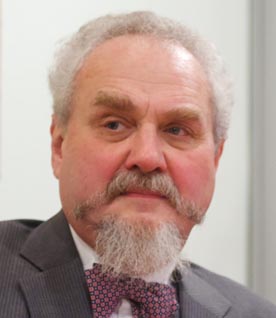
* Andrey Zubov, Doctor of Historical Sciences *1. There were no secret springs. The Bolsheviks took advantage of the two features of the then majority of the people - an extremely low social and moral culture, illiteracy (therefore, the impossible slogans of the Bolsheviks seemed possible to them) and, the second, the embitness of the lower classes on the highest, generated by memory of the serf state and the still existing abyss and lifestyle. What happened is an archaic counter -revolution. The Bolsheviks destroyed or expelled a new cultural layer and approved their power on the promises of paradise on Earth, stunning and fear of a small majority.
2. The revolution of October 25 is the most important moment of the Russian revolution, which took place from 1905 to 1929 (1929 - the beginning of collectivization, the liquidation of the peasantry, the main and most numerous estate of Russia, without the support of which the Bolsheviks would not seize power in Russia). This is the moment of the transition of the authorities to a completely new group of persons. There is no other such moment in the revolution.
3. No, Russian society failed to reflect the Russian revolution over the past 25 years, although there are many good books and research on this topic. In society, the propaganda stamp of the revolution of the Soviet era remains latent.
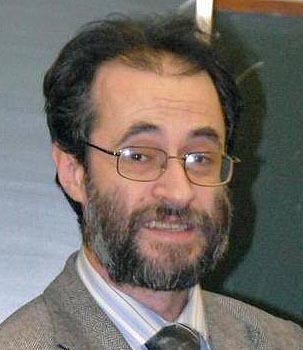
* Leonid Katskva, history teacher, author of textbooks and manuals on the history of Russia *1. The Bolsheviks helped to seize power, firstly, the extreme radicalization of society caused by the war, and secondly, absolutely shamelessness in the methods and willingness to promise the masses what the latter wanted to hear, without the slightest intention, these promises to fulfill.
2. Of course, a coup.
3. I think not. Both October and February were more supplanted on the side of public memory, but were not properly reflected. The truly experience of the revolution of society is not experienced and not analyzed, therefore, both the “new left” ideas and the idealization of the monarchy are constantly arising.
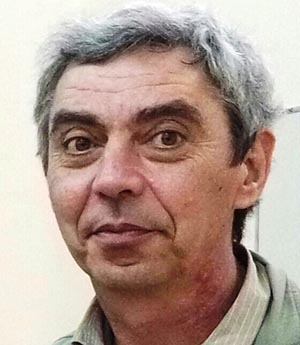
* Nikita Sokolov, candidate of historical sciences *1. Historians have their own version of the “Razkama razor” - not to try to look for a conspiracy in those failures that can be explained by human imperfection (stupidity, self -interest, etc.). In the case of October 1917, conspiracyology is completely helpless, no conspiracy can make such a tectonic movement of human masses. The myth of the “triumphal procession of Soviet power” is completely inconsistent with reality. Yes, the revolution in Petrograd was carried out relatively easily, but already in Moscow, the Bolsheviks had powerful resistance. And finally the Bolsheviks “took” Russia only after the “great turning point” of collectivization in 1930. They did not even take it in the course of a terrible civil war, which they were forced to complete on the terms of a compromise with a peasant mass (the NEP was just a form of such a compromise). And only having blown up the village from the inside, the Bolsheviks were able to continue the experiment on their conditions.
2. The question is completely secondary, how to call one of the episodes of a large revolution (and the revolution is, generally speaking, the period from the collapse of one social order to crystallization of the new), the chronological boundaries of which are 1917-1930.
3. It would be more correct to ask sociologists about this. But it seems that the 1917 revolution nevertheless went into the past and ceased to be an relevant meaningful event in public debate, in contrast to the political repressions of the Stalinist time, which are certainly not reflected properly.
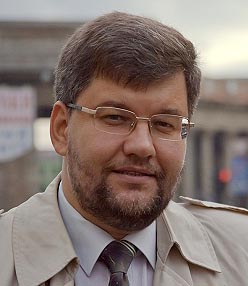
* Kirill Aleksandrov, candidate of historical sciences *1. "Lightness" looked relative. Relatively simply the Bolsheviks, relying on their illegal armed formations in the form of Red Guard detachments, as well as sailors and a small part of the garrison soldiers, seized power in the capital on October 25–26 (November 7–8)-and this is explainably by the military-political weakness of the republican Provisional Government. However, already in the first days after the coup, the question of holding power in Petrograd turned into a problem, if we keep in mind the onset of parts of the III equestrian corps, Major General P.N. Krasnov and the uprising of the Petrograd junkers on October 29. Of the 97 large cities and provincial centers in 17 (Astrakhan, Vyatka, Voronezh, Irkutsk, Kazan, Kursk, Moscow, Orel, Penza, Samara, Saratov, etc.), the Bolsheviks met armed resistance, primarily from officer groups and students of youth of military schools. The power of the Council of People's Commissars refused to recognize the Cossacks on the Don, in the Orenburg region, in the Kuban, the Urals and in Astrakhan. The organization of the general from infantry M.V. Alekseeva, from which the Volunteer Army grew up at the end of December. The October one -party coup and the practical actions of the Council of People's Commissars, consisting mainly of the leaders of the Lenin Party, put Russia on the line of the Civil War. She became inevitable after the beginning of the Bolsheviks in the province of massacres of citizens on a social basis at the end of 1917 and the dispersal of the Constituent Assembly. The temporary political effect on neutralization of the soldier’s mass and the peasant majority gave the Lenin residents the decrees “On Peace” and “On the Earth”. But they were essentially a popular deal with the devil. Instead of peace and victories in the First World War, the Bolsheviks gave the people a five -year civil war, and instead of the Earth, in the end, collective farms, Gulag and OGPU with the forced discaration of a huge country.
2. The Leninians planned and carried out armed seizure of power, arrested the Republican government in Petrograd, waiting for elections to the All -Russian Constituent Assembly, by the melodies, they secured the “majority” at the wrong II Congress of Councils on October 25–26 and created a new government consisting of the leaders and activists of the Bolshevik party. The Council of People's Commissars of the Council of People's Commissars obliged to report to the newly elected All -Russian Central Executive Committee (All -Russian Central Executive Committee), in which the Bolsheviks also dominated. And at the same time, each member of the Bolshevik party pledged to obey the intra -party discipline and the Central Committee of the RSDLP (b). As a result, after a successful rebellion, the Leninians chose themselves, appointed themselves to state posts and controlled themselves. In Petrograd and in Moscow, in cities with the millionth population, the forces of the Bolsheviks who made a coup, at best, numbered 10-15 thousand people, this is not a mass social movement. Another thing is that their opponents in the capital's centers were even smaller. Therefore, the answer is simple: in October-November 1917, a revolution occurred in Russia. The Bolsheviks contrasted themselves with the whole Russian society and could hold the seized power only in the establishment of dictatorship, terror and violence.
3. No, failed. Firstly, the authorities are not interested in the appropriate memorial, educational and information activities, since the modern Russian Federation is the heiress of the Bolshevik state, the Soviet Republic, lawlessly proclaimed by Leninists at the III Congress of Councils in January 1918 after the dispersal of the Constituent Assembly. Secondly, as a result, historical ideas about the events of 1917 and the Soviet period in Russian society are very weak and vague. The catastrophic figures of human losses from wars, hunger, repression, terror, deportations and emigration in the mass consciousness with the October coup are not binded in any way. The history of the Communist Party of Lenin-Trotsky-Stalin and its social war against Russian society remains still unknown, it is absent as part of national memory. Therefore, it is impossible to talk about any reflection. At the same time, attempts to comprehend the nature and consequences of the October Revolution for the population, the church, for individual class and professional groups, for the tragedy of Russia in the twentieth century - are still undertaken by society itself, albeit at a modest level. This is gratifying.