
Translated material
History as a dialogue with the past

Review of a member of the Council of the Free Historical Society of Nikita Sokolov on the book of Ivan Kurilli “History, or the past in the present” - the finalist of the Enlightener Prize. (See also an independent review of love of the sums to this book.)
If you try to designate the main advantage of the book of Ivan Ivanovich Kurillla in one word, it should be said that it is highly timely.
And in the sense that by the way it will have to, by the way, all participants of the controversy in Russian society about the essence and the content of Russian history and memory.
And in the more important sense that it gives the reader a general idea of the current state of historical science in a compressed and clear form, about which the concepts of very vague and for the most part are deeply archaic. Even the leaders of public opinion do not consider it shameful to operate on the historical models of the era of Nikolai Karamzin, and only a few are moving to the methodological innovations of Vasily Klyuchevsky. The most important metamorphoses that have been committed in historical science in historical science in the next one and a half centuries are almost unknown to the wide Russian public.
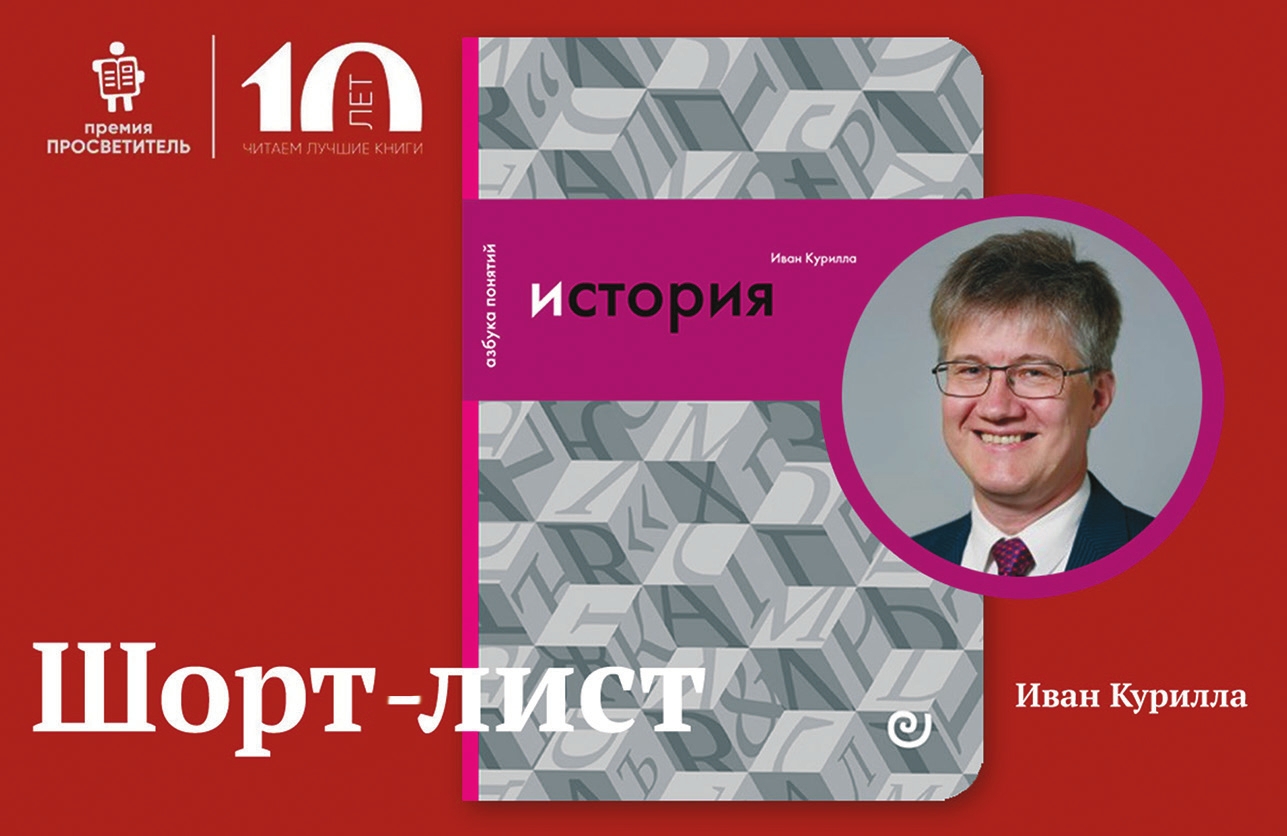 This book is an extremely solid outline of the modern state of its own field of historical knowledge and the “applied” conceptual areas with it. A great advantage of work is a distinct (rare in popular literature) breeding and analysis of the ratio of history as knowledge and memory as a social institution. The substantial outline of the history of the development of historical science itself until the middle of the 20th century is designed in a positivist tradition, dating back to Robin Collingwood, which, in our opinion, is one of the merits of the book.
Pedants will find this brief essay excessively dashed; Indeed, the later trends in the development of historical knowledge caused by the “linguistic attack” of the 1960s are fragmented, but this cannot be blamed for the author, since this problem itself is not sufficiently developed, at least in Russia.
In any case, this historiographical review of the search for the science of the right path, inevitably associated with falling into various dead ends, naturally leads the reader to the perception of the main author’s message. It consists in the fact that history as knowledge, finally recognizing attempts to describe the past “how it actually was”, in its entirety, laid itself a more modest but chosen executing task, the solution of which is available to strict verification.
The work of a modern historian is a dialogue with the past. The historian addresses historical sources a certain question that is important for his contemporaries, and receives, subject to well -known procedures, a significant answer. From this position there are two important consequences, which are also investigated in the book in detail.
Firstly, the story constantly corresponds. And this is not its defect, but the immanent property, since each next generation asks the past questions that did not occur to the predecessors (or they did not dare to ask them). Secondly, there is no financially tangible and unshakable objective “historical fact”.
The historical fact is the result of the work made by the historian, the answer to the question is true or false a certain statement about the past. That is why a naive call - often addressed to historians inexperienced people - “talk only about facts”, and leave the interpretation to the reader, is not part. “Fact” is only an element in a chain of evidence. An infinite number of historical facts may correspond to one event in the past, depending on the question with which the historian is addressed to him.
Difficulties that have been faced with scientific historical knowledge in a society that replaced the “regime of historicity” in detail and clearly described in detail and clearly described in detail. In contrast to antiquity and the Middle Ages, committed by Passeism (the past is a more reliable and valuable substance than the present), and the new time living in the regime of futurism (the past is always dark; the present is the time of the struggle for the bright future), we have passed into the regime of presentism (the real authenticity and value that delays part of the recent past).
In this regard, society is much less interested in distant eras, in a conversation about which a historian with special source -based skills had an advantage of public trust; And he pays much more attention to the recent past, in respect of which social memory is a powerful competitor to a professional historian, which is on the constant pressure of “political, economic, cultural and other group interests”. That is why, in principle, a “single textbook” is impossible.
A complex society will always have many private narratives about the past. And, apparently, the author quite rightly indicates as new and not yet quite reflected tasks of professional historians “stitching contradictory narratives”.
In cases where there is no single solution in the professional community, the author rightly indicates danger and calls for caution. This call is especially important and appropriate in the section on the ratio of knowledge and ethics, where it is stated that "some options for consistent stories about the past turn out to be contradictory moral attitudes of the modern era and, which is especially dangerous, can arouse hostility."
It should be noted especially that the author manages to withstand the register of a popular story without prejudice to subtle distinctions, at the same time avoiding excessive details that lead other writers into scholasticism, and give the reader the concept of a variety of points of view presented in historical science and related cultural disciplines.
Conclusing, in general, it should be recognized that the book of Ivan Kurilla can serve as an excellent manual both for non-specialist readers who are interested in the modern state of historical knowledge and the nature of the “conflicts of memories”, and for historian students as the initial “introduction into a specialty”.
Nikita Sokolov