
Translated material
Sochi experience for Novosibirsk
The technology for creating an ideal transport model for the Sochi Olympics is quite applicable to Novosibirsk.
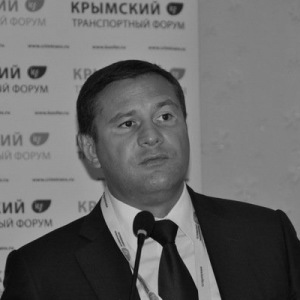
Andrey Zhukov
The head of the executive committee of the Siberian Agreement, Andrei Zhukov spoke about the transport situation in the city where the residence of the plenipotentiary of the Siberian Federal District is located.
Recently, once again asked himself where such traffic jams on Novosibirsk roads come from? I looked at the publications in the media . They write: incorrect logistics, poor organization of the work of passenger transport, and professionals in this area - count on the fingers.
I thought how so? The city is almost a two millionth, dozens of universities, Akademgorodok. Why can not everything be calculated and established the normal work of transport?
Talked with informed people - they shrug. Yes. Constantly talk about how to overcome traffic jams. They ordered one of the universities a multimillion -dollar study on the regulation of traffic flows. The Bugrinsky bridge was built, which, however, was not unloaded for some reason, but nothing comes out: "Grenades, they say, are not the same system." By the way, the same university recently concluded a contract for the development of a transport strategy until 2030 with the Novosibirsk region. God forbid, as they say.
In general, I thought if everything is going so, why not use the resource of the team that provided effective transport services in the Olympic Sochi? All these experts today are engaged in project activities in the Executive Committee of the Siberian Agreement and have such experience in the field of transport logistics, which few have few in Russia.
For understanding.
When the “Transport Inspectorate of the Olympic Games”, which I headed, was given the task of ensuring the highest level of transport service of the Olympiad, it was clear that it could only be solved comprehensively. Specialists conducted the necessary calculations and created an almost perfect model that allowed not only to establish the supply of Olympic objects under construction with everything necessary, but also to ensure unhindered movement throughout the Olympic cluster.
137196
In Sochi, an automated control system was created, the entire transport was equipped with the GLONASS system, more than 15 interchanges were designed and built, the understudy of the resort prospectus, and the road and railways in the mountains, dozens of bridges and tunnels. Passenger electric trains "Swallow" joined the system of transport logistics.
In general, the capacity of the Sochi transport hub increased by almost 30%. As a result, even after the Olympiad, there are essentially no transport and logistics problems in the Sochi cluster. Moreover, the technology for creating an ideal transport model has not gone away and is quite applicable to Novosibirsk. Here, nothing needs to be invented and ordered by the research of the monitoring system of the transport complex for 14.5 million. There is essentially such a system!
It can be argued that the finances of Novosibirsk and the money allocated to the Olympics are not comparable. This is fair. However, no one bothers when building a model to take into account absolutely all opportunities and features, including financial ones.
I am sure that the Executive Committee of the Siberian Agreement may conduct a comprehensive analysis of the Novosibirsk transport situation and create such a model. Unless of course they are interested in this in Novosibirsk.
We are open for suggestions.