
Translated material
Difficulties in the degeneration
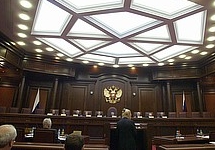
The Constitutional Court explained the procedure for holding meetings with voters, indicating that the transformation of such events into rallies requires special agreement. This was reported by Interfax with reference to the resolution of the KS.
Meetings of deputies with voters in the premises and in the house areas do not require notification, as they are held in limited space, the KS decided.
"However, if the meeting in the domestic territory" develops "into a rally, such a meeting should be held already in accordance with the legislation on public events. As for the recognition of the possibility of holding the deputy meetings with voters in the form of a public event, this does not imply automatic distribution to such events in full all the rules contained in the relevant legislation. It is necessary to take into account the specifics of deputy activity, special and targeted. The appointment of such meetings, ”the resolution says.
From the existing list of forms of public events, a meeting and a rally are suitable to achieve meetings with deputies, and only the latter requires coordination, was considered to the Constitutional Court. Along with this, the resolution notes that the possibility of an unplanned meeting of the deputy with voters outside the premises or domestic territories at the initiative of the voters themselves is not ruled out. Such a meeting should be discontinued if there is a threat of security of citizens, the normal functioning of infrastructure facilities, and so on.
At the same time, the court recalled that the concept of "coordination of a public event" does not imply that the authority can, at its discretion, prohibit the event or change its place. The authorities should give good arguments in case of refusal to agree, offering the organizers an alternative, the court emphasized.
In June, deputies of the State Duma from the Communist Party, LDPR and Fair Russia filed a combined complaint with the Constitutional Court of the Constitutional Court of the CCA to amends the Law on rallies adopted in the spring session, introducing restrictions on meetings of deputies of all levels with voters. These amendments equate deputies with the organizers of public events and assign to them the appropriate responsibilities, including such as the submission in writing of a notification of a public event, the complaint of deputies said. It is noted that the law also limits the realization by deputies of their authority to hold meetings with voters and their informing about deputy activities.
Prior to this meeting with deputies, they remained the only form of a public event that did not require a preliminary notification of the authorities.