
Translated material
"Genetics will be another brick in the Facebook algorithm"
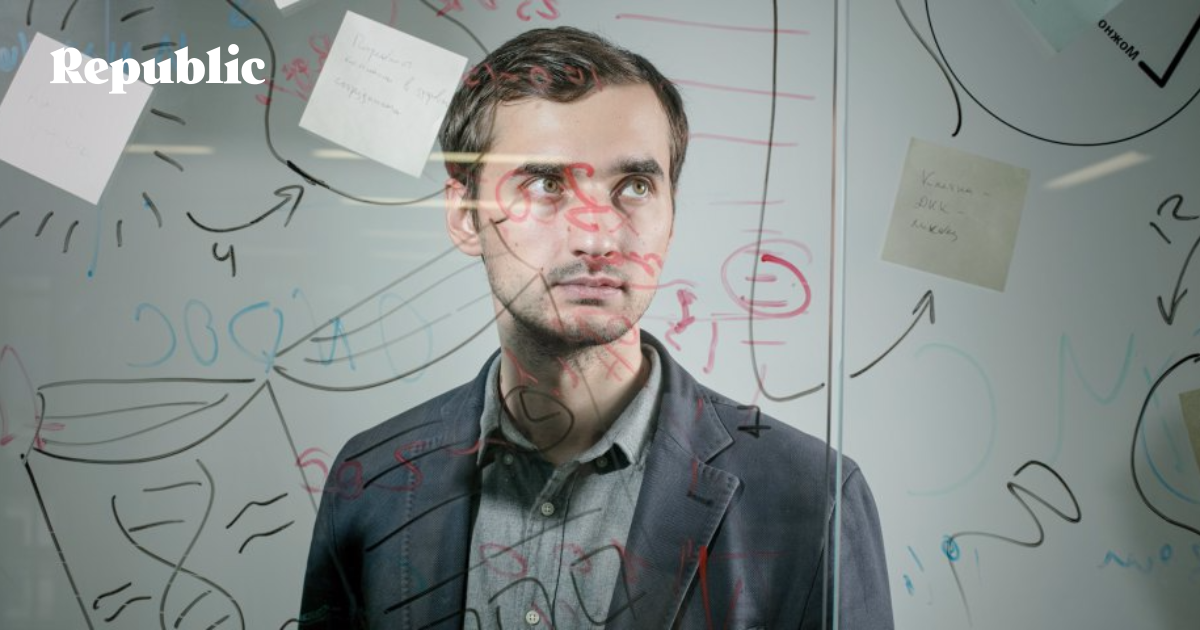
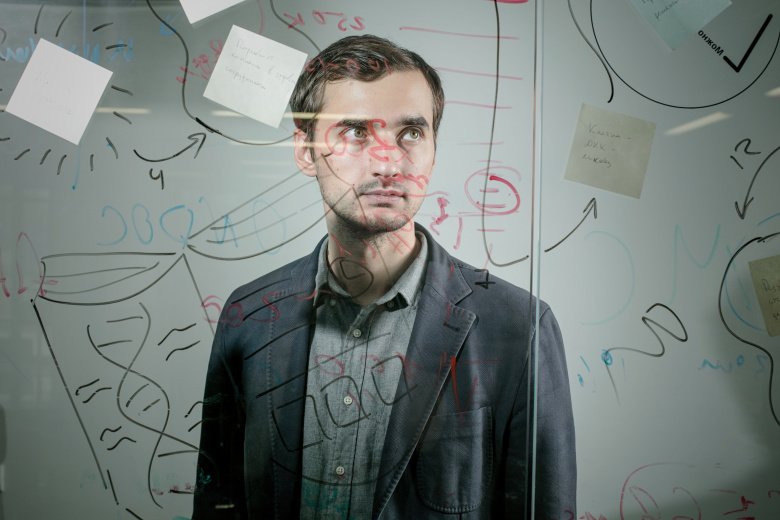
Artem Elmuratov. Photo: Arseniy Nesodimov for Republic
The news about the collection and sending of biomaterials abroad made a lot of noise in late October. History acquired a scandalous shade partly because Russia is a rare example of a country where they are too scrupulous about biological samples, and their export is actually prohibited. The closing mode should help local companies engaged in genetic analyzes - if you send samples abroad too difficult, then why not buy a service at home. However, Artem Elmuratov, one of the founders of Genotek , who makes consumer genetic tests, claims that this does not give special advantages: the market and science would in any case benefit from the opening of the borders, he said.
A graduate of the Mehmat Moscow State University Elmuratov, together with two partners, founded Genotek in 2011. The company decrypts - completely or partially - the genome of its customers, helping them to find out the predisposition to diseases, make a decision on the birth of children or study the history of the family. The former head of the presidential administration, Alexander Voloshin and Pharmstandart, invested in Genotek. We talked with Artem about why the Russian genetic tests market is less than American times, about large -scale genetic projects financed by the governments of Iceland, Kuwait and China, and about the future in which you (possibly) will know to what extent you will come with friends on Facebook.
Help about genetic analysis. Genetic information is contained in chromosomes, more precisely, in DNA molecules that consist of nucleotides . There are four of them: adenin, guanine, thyme, cytosine, and in DNA spirals they form couples , which mean: at, GC. The entire genetic set of humans is 3 billion pairs, but only about 1% of them (20-30 million pairs) participate in the encoding of proteins, that is, they directly affect the formation, development and work of the body. This functional part of the genome is called ecz . Part of the genome - about 1 million pairs - is well studied: it is known that these genes are responsible for certain external signs, diseases, and other features. When they talk about a genetic analysis of an individual, they mean one of the four options: 1) the decryption of the entire genome (3 billion pairs) ; 2) the decoding of the exom (about 20 million pairs) ; 3) the decoding of the well -studied part of the genome (about 1 million pairs) ; 4) Search and analysis of individual genes (thousands of pairs) .
- Three billion couples inside the genome are a huge size. Even a million steam - a lot, given that they are placed in an object that is ten times thinner than the hair. I have an absolutely amateurish question: how exactly can the devices “read” such an array of information?
- Modern technologies have made a minimum error - now it is less than 1%. Then it depends on the specific device.
- And how has the price changed in recent years?
- In 2003, the project “Human Gene” ended - then it was first completely deciphered by the genome. All this long -term project cost $ 3 billion. Now it is only a few thousand dollars to read the genome with our competitors. That is, a fall of a million times.
- The American company Genos, and not only it, offers the decoding of the exom for $ 499. Does this price reflect the cost? Or is it a subsidized story, as with Uber and its competitors: companies burn investors' money, capturing the market?
- It's hard to evaluate. But it seems that it is close to cost. For example, the decoding of the exoma costs 45 thousand rubles. There was a time when the most famous company in this market - 23andme - reduced the price to $ 100, and then it seemed that it was a subsidized story, they seized the market. But now their prices also do not look dumping.
- People order a genetic analysis from you or other companies, as I understand it, for two reasons: a) find relatives, find out your ethnic origin or b) find out the likelihood of developing dangerous diseases and conditions, roughly speaking - predict the future, which to be afraid. How many academic diseases are now able to predict with great accuracy?
Subscribe to read the whole
Make a subscription Redefine.media to read Republic
Subscribe [you can pay for a Russian or foreign card. The subscription is extended automatically. You can unsubscribe at any time.]
Where are the money subscribers going