
Translated material
Minister with the head
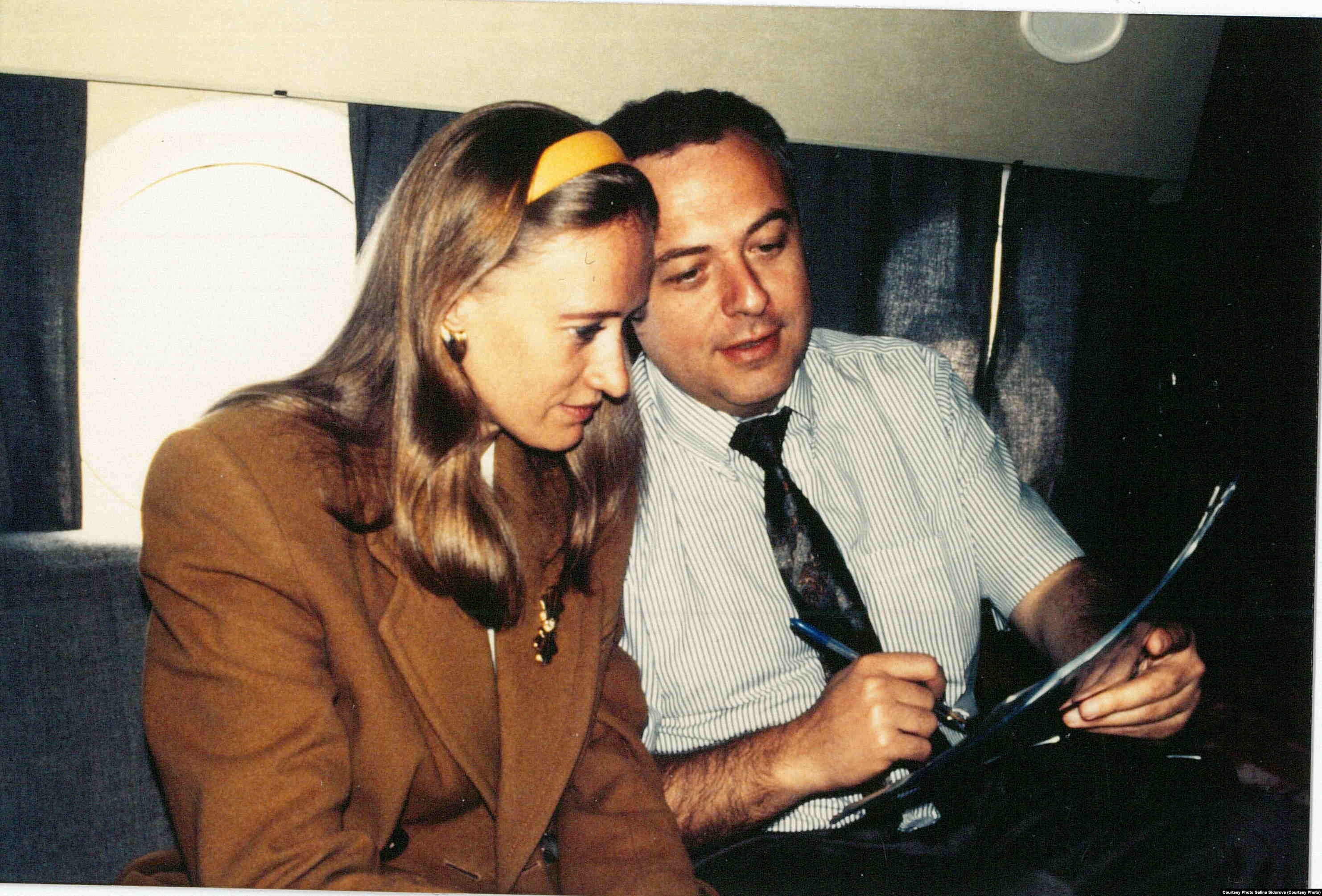
Andrey Kozyrev in the new issue of the program "Cult of Personality"
Leonid Velekhov : Hello, on the air, freedom is a radio that is not only audible, but also visible. In the studio Leonid Velekhov, and this is a new issue of the program "Cult of Personality", which, in addition to our Internet channel, you can watch on the TV channel "Present time". This program, as I always remind people with an insufficient sense of humor, is not about tyrants, it is about real personalities, their fate, actions, their views on life.
This issue, dedicated to the first Minister of Foreign Affairs of Post -Soviet Russia, Andrei Kozyrev , will not be built. Andrei Vladimirovich has been living in the United States for several years, it is rarely in our Palestinians, and after his recent correspondence verbal duel with Vladimir Putin, apparently, he will completely cease to be, in any case in the near future. Nevertheless, he will participate in our program on Skype. And to the Moscow studio, I invited his colleague in the past and my colleague and in the past and present, Galina Sidorova , who over the first few years of the formation of post -Soviet domestic diplomacy was the right hand of the Minister of Foreign Affairs, his political adviser.
( Video about Andrei Kozyrev. Sanding text:
Andrey Kozyrev is the first Minister of Foreign Affairs of the Overseas Soviet Russia. Having called him a few days ago, for no reason, the Minister without a head, Vladimir Putin did not just allow himself an unprecedented rudeness and personal attack for a politician of this level. Calling a spade a spade, he had to hurt the pride of all people who worked with Kozyrev, who made foreign policy with him, including the current leaders of the Ministry of Foreign Affairs, direct nominees and in the past of the friends of the first minister. But, as usual, no one raised his head and did not object to Putin, taking this spit, in accordance with the proverb, apparently, behind God's dew. In addition to Kozyrev himself, in a response attack, he called Putin a man with his head turned back. Let us pay tribute to Kozyrev: the image turned out to be worse and more precise than Putin.
Of course, Andrei Kozyrev completely does not fit into the gallery of Soviet and Russian foreign ministers, almost always frightened, those who have fallen and seemed to be puzzled exclusively to give exclude the West, to brand his endless machinations, cunning and hypocrisy. And such as Kozyrev really was the only one: with a quiet voice, a soft smile, intelligent and not embarrassed by his own intelligence. And most importantly, invariably adhering to the point of view that Russia should become part of the Western world, to which it belongs to its culture and history. And is this not this national interest in Russia?
Today, when a representative of Russia at the UN addresses a foreign colleague with the words “Do not take your eyes off”, the official representative of the Foreign Ministry allows himself in a mocking tone to speak of the chapters of other states, and the Russian president himself expresses anecdically sounding accusations against Western intelligence, collecting biomaterias inhabiting the country throughout Russia-today it is difficult to imagine the time when Russia was opened to the world and the world and the world He sympathized with Russia, the ambassador in the United States was a former dissident Vladimir Lukin, the same and at the same time completely different, not similar to the current, Sergey Lavrov, in Paris - an academician, unforgettable Yuri Ryzhov, interaction with NATO was carried out by the intelligent Nikolai Afanasyevsky, and the Cinematographic Hello was resolved by the Yugoslav crisis. Vitaliy Churkin, and the Middle Eastern-Virtuosa diploma and virtuoso Viktor Vocauluk ... Such a galaxy pursued Russia's foreign policy along with the head minister Kozyrev, whose right hand, his political adviser was the fundamental and independent Galina Sidorova ...)
Studio
Leonid Velekhov : Galya, the first thing I wanted to ask and remember: how did fate have tied you with Kozyrev?
Galina Sidorova : How did it go there? ( Laughter in the studio. )
Leonid Velekhov : Yes, under what circumstances? When? How did this happen?
Galina Sidorova : In general, such things sometimes happen ... This case was. Because, as you probably remember, before that there were almost ten years behind him, if not more, in the "new time". And in recent years in the "New Time" I have been engaged in, let's say, a diplomatic theme.
Leonid Velekhov : Do not tell everything, because we will still make a program about you so as not to be repeated ...
Galina Sidorova : ( Laughter in the studio. ) In short, I worked very closely with our then diplomats and with Minister Shevardnadze. As you remember, it was a time for the discoveries of everything, including the opening of the Foreign Ministry, we had our own sources in the Ministry of Foreign Affairs and had the opportunity to write quite openly, frankly, including critically, about what is happening in our diplomacy, what is happening with our foreign policy. Actually, as it turned out later, it was in this capacity that the people of Kozyrev noticed me.
Leonid Velekhov : Was it interesting to work with him?
Galina Sidorova : I immediately said that if they take me so that I am a kind of pleasant face, I am not interested. But if I get access and get the opportunity to participate in everything in everything, I am interested. And it was so, at least, the first few years. And then the rollback went. And there was a feeling that the Russian leadership, first of all, of course, is Russian President Boris Nikolaevich Yeltsin began to listen to some other advisers more, some steps back began more and more often.
Leonid Velekhov : Your most vivid memory of working with Kozyrev?
Galina Sidorova : The most striking, probably, is still Transnistria. I want to associate Transnistria with such, in my opinion, a very important point from which you cannot leave, speaking of those years. Andrei and his team, which I entered, as you recall, very often resembled firefighters, rushing here and there ... And mostly this happened around the perimeter of Russia. We either flew in Transnistria, then solved some issues related to the Nagorno-Karabakh ... and of course, Yugoslavia. Kozyrev, of course, first of all, was engaged in foreign policy, and not diplomacy. That is why all the time we had to extinguish fires somewhere, somewhere to solve some issues that did not quite sometimes fit into some purely diplomatic powers. This was also due to military conflicts, first of all, because the military leadership was not engaged in politics. The military leadership seemed a little bit from all these things, but no one solved the problem. And Kozyrev’s head all the time scrolled on Yugoslavia, those Yugoslav events that resulted in bloody conflicts. He kept it in his head all the time and was ready to fly anywhere, if only to bend, if only there did not begin. For example, this Transnistrian history, which I really remember. And at first this trip did not imply Transnistria, we flew to the Tajik-Afghan border. And this is just a specific example of what we were engaged in foreign policy. On the Tajik-Afghan border were Russian border guards, who until recently were Soviet, and then became Russian, but were not on the border of Russia with Tajikistan, which, as you know, exists, but on the border of Tajikistan with Afghanistan. And they did what they did there? They had to stand there to death, so that no Mujahideen would penetrate from there, primarily based on the fact that they would go to Russia. There were no contracts at that time. I mean agreements that these border guards continue to serve there on a legal basis, which, in fact, the then Tajik leadership. And Kozyrev flies to this border-to explain something to the border guards who do not understand what they are doing there ... Many were in the mood "Take the overcoat, went home."
Leonid Velekhov : "The White Sun of the Desert" is this ...
Galina Sidorova : He explains to them - why they need to be there, convinces that they did not forget about them that they are fulfilling the most important mission and so on. And then there is a completely unexpected story. By chance on the radio, not even finishing communication with the border guards, we hear that at that time the vice president of Russia Mr. Rutskaya, being in Transnistria, calls on the 12th army to go on Chisinau! When Kozyrev heard all this on the radio, he in horror rushed to the AUTOMATE phone-we did not have special communications there-and called Yeltsin. And Yeltsin says: "And what is it?! It's okay. I let him go there." And at that moment Yeltsin was important that Rutskoy did not hang under his feet. He was, in my opinion, happy that he had left Rutskoy. At this level, this issue was resolved.
Leonid Velekhov : They cost each other, Rutskoy and Yeltsin.
Galina Sidorova : After which Kozyrev explains everything and says that it can happen if the riots do not stop, people listen to Rutskiy and begin to fight there. Then Yeltsin Kozyrev gave the go -ahead for a trip to Transnistria. And there Kozyrev showed himself a man ... In general, I respected him even more.
When we flew there, it turned out that it was really a crowd, heavily heated by Rutskiy. We flew in, and Rutskoy flew a few hours before. And people were still on the platoon. And when on the platoon the wives of people who do not know what to work, it is not known how to survive, then you can imagine the mood of this crowd. The crowd was very inflated. And Kozyrev’s guards told him: "Andrey Vladimirovich, it is simply dangerous. We will not be able to protect you. Let's finish this story and fly away." To which Kozyrev said: "No, I'll go." And he really went into this crowd. There was some kind of small tribune to which he climbed. It was rather scary, honestly. Not only are these women very heated, but also their husbands who are armed! And Andrei tells them in his quiet voice, they say, can I say? And they shout to him: "No! Everything! Let him leave! Who is he?!" Because we must remember that Rutskoy still told them that these are all the "boys in pink pants" who are in Moscow, what can they? We will now go to Chisinau and restore the Soviet Union. And this "boy in pink pants", whom Rutskoi rinsed, goes to the rostrum. Everyone yells. But then some kind of voice is heard there: "Let him say." And Andrei, then said: "I was horrified, I did not understand what I should tell them. Because I had Yugoslavia in my head, but I understand what to tell them about Yugoslavia is simply idiocy and nonsense ..."
Leonid Velekhov : Lecture on the international situation. ( Laughter in the studio. )
Galina Sidorova : Yes. And then he says to them: "Women! I see - here are mostly women. Do you all have children. Are you ready to send your children to war now?" And now, oddly enough, this simple phrase works. And the crowd begins to subside. And the woman’s voice is heard from the crowd: “Come on, let's listen! He says the case! Whether, we’ll go to fight?!” And somehow it all fell silent. After which we went to the officer assembly, where about the same thing happened. Because when we went into this officer assembly, what happens? Gentlemen, the officers get up, nevertheless, the Minister of Foreign Affairs came in, no less. And then there was a very lazy move. And then the general looked at them and said: "Comrades officers!" And they lazily rose so lazily. But it was absolutely clear that the situation of complete rejection. And with them, with these officers, Kozyrev already spoke, let's say ... He gave them a lecture about international politics, about Yugoslavia. It lasted a few hours. He talked about what role they could play, said that, they say, we are not throwing you, we really need peacekeeping forces, so that there is no war here, no incidents. You are our most reliable stronghold between extremists from one and the other. And it succeeded. It was such an example of real foreign policy.
Leonid Velekhov : Yes, and with a little exaggeration it will be said that he prevented the war.
Galina Sidorova : And when you think about what is happening in Ukraine, and all those events that are developing exactly in the opposite version, you involuntarily compare it in your head and understand what foreign policy is and what is the current diplomacy, which, of course, has nothing to do with normal politics. This is the diplomacy of the unquestioning execution of the instructions of our main diplomat, which is located in the Kremlin. This is a completely different story.
And when they say that in those years we had a weak foreign policy, I believe that it was much stronger than now. Although the country was weak, the country was really very exhausted, it was possible to keep it from many conflicts.
Leonid Velekhov : summing up. It was, it seems to me, real diplomacy, that is, the search for a compromise, the search for peace, the search for joints and resolution of conflicts, and not the design of conflicts and even more aggravation by hanging offensive labels and inciting confrontation moods, which our Foreign Ministry does today.
Galina Sidorova : Yes, these were real deeds, not words.
Leonid Velekhov : Yes. And then, finally, the first foreign minister of post -Soviet Russia Andrei Vladimirovich Kozyrev, who is now quoting Wikipedia, “lives with my family in Miami, criticizes the political system in Russia and the activities of President Putin”. Such is Zagogulin ... Andrey Vladimirovich, about you on Wikipedia, everything is said correctly?
Andrey Kozyrev : This, of course, is only a part, but in principle correctly.
Leonid Velekhov : One cannot help but start a conversation with this recent history of your verbal correspondence duel with President Putin. Why did you decide to answer, and so very sharply and personified, for lunge to you? After all, you are very experienced by the diplomat, always very restrained in the public sphere and you understand very well that people are very dangerous, petty and vengeful against you. You just could not restrain yourself? Or is it such a political kangugus and a thoughtful first step in a certain new chapter of your political biography?
Andrey Kozyrev : If you start from the end, then I do not see a new chapter here. And the second is nothing, as they say, personal. It’s just that this situation, this statement addressed to me, frankly, the non -excess that the president allowed myself, it touches on a much more important topic, which I, in fact, would like to answer, realizing that if it is in the form of a personal answer, most likely it will attract more attention. This is a journalism school that Galya Sidorova taught me. I tried to learn something, but maybe I pulled it onto the trio, if she puts it ... ( Laughter in the studio. )
What is the idea? The conversation is about the interests of Russia, not my interests, but the interests of Russia. This is the topic that interests me all my life. And, in fact, I answered this topic. I believe that Russia's interests are not to wage war with fraternal Ukraine. They are not to be under sanctions, and not how to fight on the side of Assad. Therefore, I think that since we had at least a partial success in realizing the real interests of Russia in foreign policy, this does not give rest now the regime ... See, almost twenty -five years have already passed since then, and they could not calm down. All of them are polemicizing with us, in particular, they polemicize with me, not because it is something personal (we have nothing with Putin, of course, personal), but because there was a lively example of the fact that Russia could be a normal country, pursue its genuine national interests, and not the interests of the group, which, as I put it, looks back, in the best case in the last century, and in some aspects it seems even somewhere that it even seems that somewhere. In the Middle Ages. Actually, this is the only topic that interests me. Nothing personal.
Galina Sidorova : Maybe it was necessary to talk about this before, Andrey? You have been silent for a very long time.
Andrey Kozyrev : I tried. I know that always, all your life you have criticized me, especially when we worked together, but I'm already used to it. And I know that this is the right criticism with which I agree. But in an excuse I can say that I tried to say. For a long time I tried to speak at Echo of Moscow. Even Venediktov gave me a weekly program, which I pulled for two years, then I realized that no one hears it all. Unfortunately, I'm afraid that there are not many people now. In English there are two different words - to hear physically and hear in the sense of understanding, so I mean this second meaning. I agree that you can always do more, but I tried and try now. And the very first case that turned up was used.
Leonid Velekhov : You can ask you such an extremely common question. Is the diplomat in your opinion an official who takes a visor under a visor and executing someone made? Or is it still a politician who makes any decisions himself? What is the perfect balance?
Andrey Kozyrev : This is one of those questions in which there is no perfect balance. Because on the one hand, of course, the diplomat, like a military, and any, in fact, a government official, must obey, otherwise the state will simply fall apart. But on the other hand, of course, there is a constitution. When it comes to a direct violation of the Constitution, what can be done? You can resign. You even need to resign. This is my opinion. Of course, I am very depressing when my old friends, Galya almost an exception, continue to serve this regime. I doubt that they sincerely do it. Но они, может быть, думают, что надо брать, как вы выражаетесь, под козырек. I do not agree with this. Всегда есть возможность найти какое-то решение. Тем более мы живем сейчас в России, это все-таки не Советский Союз, где не было почти никакого выбора, хотя были герои, конечно, как Сахаров и правозащитники, которые шли в тюрьму. Сейчас так вопрос не стоит. Вот я, например, ушел из Думы после того, как кончился мой второй срок в Думе, и пошел в бизнес. Да, пришлось переучиваться, по ночам читать книги, которых я раньше в глаза не видел, про бизнес, про экономику. Ну, ничего, можно научиться и можно заработать на жизнь. Так вопрос, что тюрьма или служить этому режиму, сейчас, по-моему, все-таки пока еще не стоит.
Леонид Велехов : Но вот те ваши товарищи, которых вы анонимно упоминаете, мы тоже не будем никаких имен раскрывать, все и так их знают, вы считаете, что все-таки они сейчас кривят душой, а не тогда, когда они были с вами заодно?
Андрей Козырев : Мне хочется в это верить. Потому что они достаточно образованные люди, умные люди.
Леонид Велехов : Галя, а ты как бы прокомментировала эту тему?
Галина Сидорова : Мне кажется, к сожалению, наши коллеги, наши друзья, с которыми мы все вместе когда-то работали и казалось, что делаем общее дело, мне кажется, что произошли какие-то необратимые перемены в этих людях. Трудно себе представить, что это просто так…
Леонид Велехов : Что это маска…
Галина Сидорова : Да, маска. Видимо, это что-то более глубокое, к сожалению. Мы находимся здесь, ты сейчас находишься далеко, и наверное, это играет роль. Я тут совершенно тебя не критикую, а просто это объективная реальность. Когда постоянно находишься в этой атмосфере, все это слышишь и видишь, приходишь к выводу, что какие-то необратимые перемены произошли у людей в головах.
Леонид Велехов : Андрей Владимирович, помните такую пантомиму Марселя Марсо, где он примеряет разные маски – примеряет, сбрасывает, примеряет, сбрасывает. Надевает маску дурака и в ней заигрывается, веселится, потом хочет ее снять, а она не снимается. Она приросла к лицу. Я с Галей абсолютно согласен, мне кажется, что тут тоже могут произойти необратимые метаморфозы.
Покончим с настоящим и немного вернемся в прошлое. Андрей Владимирович, вы ведь работали с президентом, очень тяжелым по характеру, непростым, я имею в виду, естественно, Бориса Николаевича Ельцина. А вам когда-нибудь его удавалось переубедить при принятии того или иного решения?
Андрей Козырев : Да, конечно! Пока мы с ним работали года до 1994-го, я бы сказал так, это было довольно часто. Он прислушивался. Он был вообще, конечно, другим человеком по сравнению с тем, каким он стал, начиная примерно с 1994 года, а дальше совсем, как я понимаю, другой… Хотя я с ним после 1996 года уже лично не общался, но то, что я видел по телевизору, – это, конечно, было исключительно удручающее зрелище. Ну, и потом он же и назначил всю эту смену. Схема изменения режима осуществилась во время его второго срока окончательно. И назначение Путина, конечно, было совершенно неслучайно. Началось все это, повторяю, с 1994 года, а до этого, да, очень часто удавалось объяснить и переубедить. Профессиональная разница между вообще дипломатом и министром в том, что министр может и должен играть и политическую роль. Конечно, если президент окончательно принимает решение, ты должен либо следовать этому решению, либо, опять-таки, подавать в отставку. Но министр имеет гораздо больше, на мой взгляд, политической ответственности. Недаром на Западе министров, руководителей таких ведомств назначают после выборов всегда новых, что свидетельствует о том, что у них есть политическая роль.
Леонид Велехов : А наоборот – часто ли вам приходилось выполнять решения, которые шли вразрез с вашим мировоззрением, с вашим взглядом на ту или иную политическую коллизию? В частности, например, мне кажется, что все-таки в этой колоссальной многолетней югославской драме, особенно в ее финальной части, не всегда ваша личная позиция совпадала с той линией, которую вам приходилось проводить.
Андрей Козырев : Абсолютно верно. Я даже могу сказать, когда у нас произошел окончательный разрыв с президентом. Это случилось после Сребреницы. Когда там произошло массовое убийство мирных людей, и это было очевидно всему миру, мы с министром обороны Грачевым поехали на международную конференцию. И там Грачев вместе с другими министрами обороны экспертно изучили ситуацию именно как военные и пришли к однозначному выводу, что там было такое преступление совершено и что нужно разрешить применять силу, в том числе натовские бомбардировки. Мы позвонили оттуда в Москву за последними указаниями, потому что время очень поджимало, некогда было переписываться. Мы позвонили Борису Николаевичу Ельцину и доложили эту обстановку, сказали, что если мы воспротивимся, то окажемся в полной изоляции, я бы сказал, совершенно позорной изоляции, тем более что это и морально неправильно. Я это сказал абсолютно чистым текстом. Грачев подтвердил с военной ноткой, что да, мы оказываемся в изоляции и что надо поддержать это решение". Ельцин нам категорически запретил это делать. Мы вынуждены были высказать возражение, не совсем внятное, правда. После этого, как вы знаете, НАТО начал бомбежки и так далее.
Вернувшись в Москву, я Ельцину сказал, что это не годится для меня, принимайте решение… Но дело в том, что я был с ним связан личной договоренностью еще с 1991 года о том, что он меня не уволит, со мной не переговорив, а я сам, по личной инициативе, не уйду, с ним не переговорив, не получив его согласия…
Леонид Велехов : Очень коротко, подводя итог вашей жизни во власти. Скажите мне, какая ваша главная победа и какое ваше самое досадное поражение?
Андрей Козырев : Главная победа – это то, что мы все-таки несколько лет, два-три года, может быть, но действительно воплощали национальные интересы России. Мы создавали СНГ. Мы пытались урегулировать отношения с той же Украиной, вывезти ядерное оружие и так далее. Это главное достижение.
Главное поражение – это то, что мы провалились. Вся эта политика была перечеркнута еще при Ельцине. И я никого в этом не обвиняю. Это моя беда. Это наша ответственность, демократов того времени, то же самое относится, по сути, и к экономических реформам. Да, мы не смогли справиться. Когда Ельцин сменил курс, мы не смогли выставить своего кандидата. Мы не смогли взять лидерство в демократическом движении. И я несу за это ответственность наряду со всеми остальными. К сожалению, наверное, народ это помнит. Поэтому я думаю, что людям нашего поколения и того времени при всем уважении ко многим из них, личном моем уважении, лучше было бы сейчас оказаться советниками на втором плане, а не лезть возглавлять демократические партии. Потому что я понимаю: для большинства населения вся эта ельцинская команда провалилась. И мы действительно провалились. Но все-таки нам удалось создать прецедент. Нам удалось создать какой-то временной период, когда это все было: нормальные, хорошие отношения с цивилизованным миром и желание идти с ним одной дорогой.
Леонид Велехов : Как говорится в "Юноне и Авось", за попытку – спасибо. Галя, а ты так же определила бы победу и поражение?
Галина Сидорова : У меня более такой пессимистический взгляд. Андрей, нет ли у тебя ощущения напрасно прожитой жизни? Не то что напрасно прожитой жизни, это, может быть, слишком сильно сказано, но у меня иногда бывают такие приступы пессимизма, когда кажется, что всех этих наших усилий как будто и не было, до такой степени сегодня все это разрушено и растоптано. Вот у меня бывает такое ощущение. Может быть, оно неправильное, может быть, это потому, что я слишком погружена сейчас в эту жизнь здесь. У тебя бывают такие моменты? Как ты с этим борешься? Ты выглядишь очень оптимистично – и это радует. Но на самом деле нет, на мой взгляд, никаких поводов для оптимизма.
Андрей Козырев : Я исхожу из нашего же опыта. Мы – люди из Советского Союза. И, казалось, откуда все это взялось в 1991 году, в 1992 году? Потому что даже в советском КГБ и в армии, и в государственном аппарате было очень много патриотов, было очень много людей, которые болели за страну, болели за Россию, болели за ее интересы. Если помнишь мою предвыборную кампанию в том же Мурманске, когда я стал разговаривать с офицерами Северного флота и объяснять им, в чем наша политика состоит, это вызывало позитивный отклик. Потому что большинство из них были честные люди, патриоты настоящие, много не понимавшие долгое время. И сейчас, я абсолютно уверен, в России есть не только те, кто смотрит назад, в КГБ, в службах безопасности, в армии, и вообще в государственном аппарате не одни только продажные шкуры, но есть нормальные люди, которые все это или понимают, или поймут рано или поздно. И поэтому этот режим так и бесится, что даже со мной через двадцать пять лет продолжает спорить. Потому что они знают, что все равно настоящая Россия, настоящие люди, настоящие патриоты проснутся. Но я понимаю, что пропаганда – это чудовищная вещь, чудовищная сила. И для нас это тяжело видеть, но что делать. Я верю в то, что Россия проснется, в то, что в том числе в самых руководящих, как у нас говорят, структурах есть очень много настоящих патриотов.
Леонид Велехов : Андрей Владимирович, вы сегодня себя считаете политическим эмигрантом?
Андрей Козырев : Можно и так сказать, хотя мой статус здесь не связан с политикой. Я не просил политического убежища.
Леонид Велехов : У меня к вам вопрос такого рода. Мы помним, что и Молотова, и Громыко называли "Господами Нет". Вас в противовес им – одни с одобрением, другие, наоборот, с осуждением вашей деятельности – называли "Господином Да". Для вас "Мистер Да", "Господин Да" – это похвала или осуждение?
Андрей Козырев : Отвечу на таком примере. Интересы России соответствуют общим человеческим интересам? Мои противники говорят: "Нет!". Я говорю – "Да!". Я – "мистер Да". Я считаю, что интересы России, как и любой нормальной страны, совпадают с общечеловеческими. Что, русские, россияне – монстры, у которых интересы не совпадают с общечеловеческими интересами? Why? Пушкин – это часть европейской культуры. И он чувствовал себя частью европейской культуры. И сказать, что Пушкин, тот же Достоевский, тот же Толстой, что они против общечеловеческих интересов? Да нет, батенька! Вы просто не читали и не знаете ничего про русскую культуру, если вам кажется, что наши национальные интересы, интересы России в том, чтобы противостоять наиболее развитым демократическим, продвинутым, как теперь говорят, странам. Да с какой стати?! Что, мы хуже других, что ли? Что, мы какие-то прокаженные? Why? This is absurd! Поэтому мой ответ на этот вопрос – да, совпадают! Да, мы должны быть членами мирового сообщества! Да, если мы заключили договор с Украиной, его надо соблюдать, как любой другой договор. Я в бизнесе был последние семнадцать лет. И договоры надо соблюдать. А если они не соблюдаются, на тебя в суд подают, и правильно делают. Вот видите – вот вам "Мистер Да" и вышел.
Леонид Велехов : Да, да и да! Спасибо большое, Андрей Владимирович! Это было очень интересно! Это было очень, в каком-то смысле, оптимистично, хотя итоги мы промежуточные подводили невеселые. Я вижу, что оптимизм и вера в то, что Россия когда-нибудь все-таки полностью станет частью Европы, вас не покидает. Thank you!