
Translated material
Music in a tailcoat
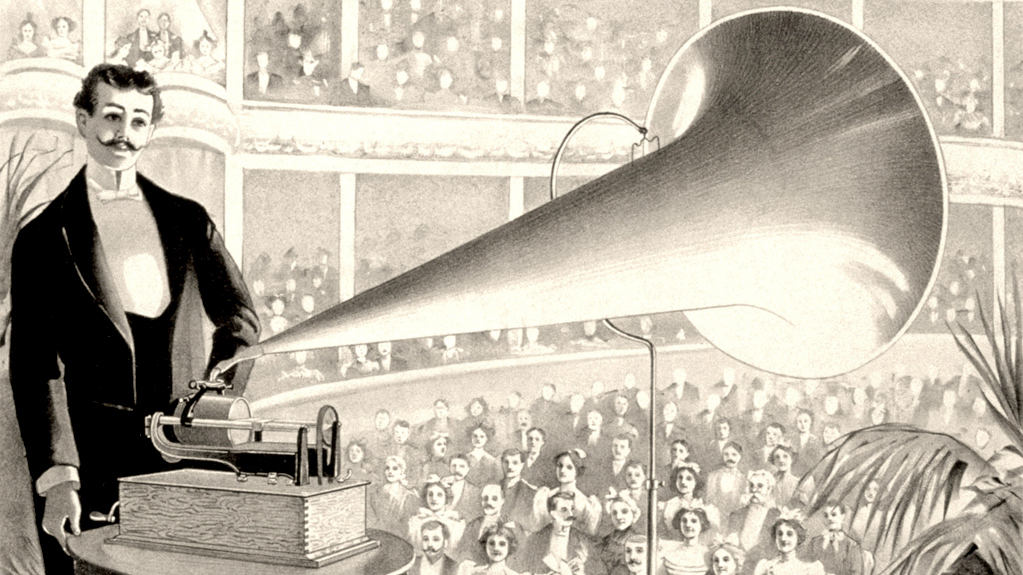
Experts argue about whether the classical concert has a future
Sergey Medvedev: This is the program "Archeology. The Future" is a new cycle of programs associated with our great project "Archeology" . We talk about a person in the face of social and technological changes about the future that has already occurred - as before they did it in the radio, the Futuroshok program . The Futuroshok itself goes to the archive (listen to the best issues on the air of “Freedom” on Saturdays and Sundays before the next year), and replaces its video program “Archeology. Future”, which we bring to your attention on Sundays with repetitions for a week.
Today we will talk about the sphere of culture, about the sphere of public being, in which the future comes with very great difficulty. This is academic or classical music, following their 100-200 years ago, the established formats: festively dressed people gather at seven in the evening in concert halls, musicians dressed in tailcoats come on stage, and people in silence reverently listen to the sounds of music.
Classical music in a sense is similar to an elderly, Dowager Empress, whom everyone respects, but which no one can say that she has been wearing the same dresses for many years. So what is classical music today, can it change, what is the format of its existence in the 21st century? Let's see the plot of our correspondent Anton Smirnov .
By the 19th century, the music was left alone with itself, began to comprehend itself
Anton Smirnov: In former times, the sound and system of music, and the music itself was largely determined by external factors: the order of the aristocrat, the score for the church or the folk fair. There was not even such a word as a “composer”, and records often were left without a signature. By the 19th century, a turning point was outlined, the music was left alone with himself, and began to comprehend himself. Now, behind the musical signs stood certain people who tried and try to give answers to questions: what is music, what is it for and what should it be? Questions gave rise to experiments, and they are dozens of aesthetic languages.
In the present days, the space of music is extremely atomized, there are hundreds of genres, while academic music determines the use of notations and binding to institution, theater or opera. The modern composer is looking for ways to overcome this disunity, find a new versatility and achieve complete freedom from external factors.
Sergey Medvedev: Our guests today are Ekaterina Biryukova , editor of the Academic Music section of the Kolta.ru portal, and Alexander Karmanov , the head of the classic -XXI publishing house.
Katya, you had a very interesting lecture this summer, there was a lecture marathon on the “Colt”, and among other things you wondered how much the traditional format of the concert would last. Actually, the format that I described, a modern academic concert is the middle of the XIX century.
Ekaterina Biryukova: It seems to us so. Some rituals, especially that you can not clap between the parts, is generally a rather later phenomenon. By and large, this is the end of the XIX century, the Posigner history: Tuscanini, Mahler, Stokovsky. And it was completely delayed (if you patted, they are pissing at you) already somewhere in the middle of the twentieth century. I recently stumbled upon Borodin’s biography: the premiere of his first symphony is 1868, before the Nibelung Ring is eight years old. Balakirev, who was a conductor, writes: "The first part was somehow not very good, they clapped a little. I was frightened, began scherzo, Skerso passed more fun, after him they clapped, called the author and demanded to repeat. It all ended well." This is not the Mozart era - this is quite the second half. The audience reacted vividly, took part in what was happening.
Sergey Medvedev: At what point did the music froze in this traditional format of the concert?
Ekaterina Biryukova: It is believed that Wagner did a lot with a certain ritualization, the introduction of sacredness: the music has completely ceased to be entertainment, but became a sacred effect, began to drag on the features of some ritual practices. Then there was a huge influence of the first quarter of the twentieth century, but Wagner did a lot for ours today. You come, sit, frozen, not moving. It turns out that this recent story, of course, is very involved in the twentieth century of the era of tyrants and dictators, a conductor, which is a kind of priest.
Sergey Medvedev: Actually, the maestro, which turns his back to the audience, appears in the 19th century.
Wagner did a lot for ours today
Ekaterina Biryukova: He became such a superfigure in the twentieth century.
Alexander Karmanov: Classical music is generally very successful in totalitarian modes. Today, one of the most powerful systems for supporting musical art exists in a country far from democratic ideals - in Venezuela. This system was launched in 1975 and still, despite what is happening in Venezuela, is one of the most important social elevators in the state. A system of actually yard symphonic orchestras and choirs as a system of social elevator was created. Gustavo Dudamel , Bolivar's orchestra collected a colossal number of children from the street.
Ekaterina Biryukova: This is the peak of the iceberg - their huge number throughout the country.
Sergey Medvedev: And China, too - there is either 5 or 50 million pianists.
Alexander Karmanov: But in China this technique. In Shanghai, Russian musicians raised the conservatory, Russian musicians work in Japan on master classes. This is such an Asian copy of the European model.
Ekaterina Biryukova: Venezuelan model - precisely the orchestra, this is a joint music, such a socially important story. And the oriental musicians still die in soloists, there are really singers, instrumentalists. This may be a model of a greater social elevator than in Venezuela, because in Venezuela this is done more with the aim of picking up children from the street, from drugs and occupying something.
Sergey Medvedev: That is, you want to say that classical music is a rather totalitarian story at the heart?
Alexander Karmanov: I would not say that the music itself is totalitarian. Its ritual side - yes.
Sergey Medvedev: And what will happen to her in a democratic century?
Ekaterina Biryukova: I was just a month ago at the Beethoven festival in the city of Bonn - this, of course, is not Bayroit, but, in general, a certain old institution, which is now led by the great -great -grandson of the sheet and great -great -granddaughter of Wagner. This respectable gray -haired audience is sitting and claps very amicably after the first part of the Gershvin concert, and the next day - after the first part of Beethoven’s concert. I say to the organizers: what is it? They answer: "Yes, you know, already in the newspapers they write that you do not need to restrain yourself. The question is discussed that now you can clap." And by the way, during the time of Beethoven, they just clapped. Some kind of music, especially baroque, looks quite strange when all this happens in silence.
This is to some extent the answer to the excessive sacralization of music: the lid was opened, and now we have this music in all devices
Alexander Karmanov: This is to some extent a response to such excessive sacred: deskalization - they opened the lid, and now we have this music in all devices. But this does not help very much, because it does not fall into a person with the substance that begins to change it, but gets just like exhaust gases.
Sergey Medvedev: Partly falls. At the Beethoven festival, the very venerable gray -haired audience, the upper middle class - it really remains philharmonic and ages with music. Young people are not recruited, the current 30-40-year-olds: they will not go to the Philharmonic at the age of 60.
Ekaterina Biryukova: In Russia, the audience in this sense is much better-all Western musicians note this: it is really younger for us, maybe even because of some financial circumstances. Our pensioners are not Bonn pensioners. I sometimes meet a very young hall. Recently, I saw at the Lyusier festival, the classic of the American avant -garde, which is 83 years old. I came and did not understand where I was. In the chamber hall of the House of Music sits a full hall of people for 25 years.
Alexander Karmanov: It depends on the channel through which the audience is recruited.
Ekaterina Biryukova: I have never seen such a hall.
Alexander Karmanov: Times are changing. There is a wonderful example, however, he is 15 years old. Then, of course, the audience was not gathering in such quantities through VKontakte when Martha Argerich and Alex Rabinovich arrived, and they played a piano duet on the stage of the Great Hall of the Conservatory. As a gift to the Russian public, they began to play one of Rabinovich’s plays. The hall began to leave just in packs, and they were forced to stop. This is an enlightened audience of the Big Hall of the Conservatory, which went here when Rubinstein shook the air with phalda.
Ekaterina Biryukova: Because they came to listen to Marta Argerich, not that.
Sergey Medvedev: Because people come with certain expectations that they will be filed beautifully for a thousandth time ...
Alexander Karmanov: Subsequent events have already answered this question. There is Pussy Riot, there is the Cathedral of Christ the Savior. You probably do not need to shock the audience like that, which came to pay tribute to the temple of art ...
Ekaterina Biryukova: I don’t see anything bad in these scandals at all. We all remember the "sacred spring", "Carmen". They actually move history. If they do not prohibit the performance, they do not plant anyone, let them scandal - this is even fun.
Alexander Karmanov: But those who really were the elite of that time went to Carmen. They did not go to concerts for 50 years before, they did not come and did not make a mistake "Carmen". And here we are talking about the public, which really went to Golovanov’s concerts, she suddenly came, and they here - on you ...
If they do not prohibit the performance, they do not plant anyone, let them scandal - this is even fun
Ekaterina Biryukova: There is a huge number of different public in Moscow. You come to different halls - they are complete, there are different sensations, different expectations.
Sergey Medvedev: In this sense, does Curentzis create a completely different audience?
Ekaterina Biryukova: Kurentsis has his own audience, Spivakova has his own.
Sergey Medvedev: Because he allows himself much more than any other academic performer: for example, walking around the hall with a bar.
Ekaterina Biryukova: Krentzis is already such a guru, he can afford it. Of course, there is a circle of admiring who accept this.
Sergey Medvedev: Krentzis is one of the future formats that academic music can go to?
Ekaterina Biryukova: He is simply a very charismatic person, but this is not a format.
Alexander Karmanov: A night with Curensis is a very format.
Ekaterina Biryukova: This is impossible to imagine as a stream production.
Sergey Medvedev: Isn't that something radically new?
Ekaterina Biryukova: A bright character.
Night with Curentsis is a very format
Alexander Karmanov: Of course, this new ritualization is very curious. Krentzis is a rare example of a medium. But, considering the topic of this program, I suddenly realized that he was not quite a medium. The medium is the purest water intermediary between the world of the mountain and the world of Dolm. And Kurentzis is still a greater creator than an intermediary. And it is precisely because of this that he has some kind of super-right not only to form an audience, but also to offer completely unexpected formats.
Ekaterina Biryukova: Of course, Krentzis expresses some more serious trends. A very important topic: we are used to listening to dead composers. Thus, mummification of art is reproduced. Back in the 19th century, this was not. Of course, Theodore gives a hand to modern music, performs a lot, a young shoot is swirling around, and all this immediately falls into some other space. For example, the other day in Moscow will begin the laboratory of a modern listener - this is also a project that was invented in Perm and was very successful there. This is a desire to break through the wall, chat with the public, teach her something. And she comes with a completely different mood, and certainly you can’t frighten her any Rabinovich.
Sergey Medvedev: On our air - the composer and improviser Kirill Shirokov .
Kirill Shirokov: I act within the limits of a musical letter, and this is enough to be called an academic composer. It seems to me that the music as academic separates not what it contains in itself, it is probably determined by two things - education or sources if a person has no education. I understand perfectly well that from an external position I belong to some very specific context: someone can call this post-lawsian music, and someone will say that this is a belonging to the aesthetics of a group of “Vandelvaser” composers or to something else. But when I write myself, it is interesting for me not to keep in mind any contexts, and only to keep in mind only the matter with which I work.
I am trying to abandon the designation in the sense that in fact the sound does not mean anything. The possibility of interaction with sound is great joy, that is, I can write something that means nothing. So I am a fairly happy person.
In fact, the sound does not mean nothing
Most likely, composer music will gradually leave the environment, in which it is mandatory disqualified, that is, the discourse will gradually exfoliate from the institution, the institution will gradually exfoliate from the industry, and the industry will gradually exfoliate from itself, and only sound and money will remain. It seems to me that some new romanticism is needed when, between what the composer writes, and how it really exists, there is no fundamental difference.
Sergey Medvedev: In fact, when did this divorce of academic and the rest of the music occur? Is this, everything was invented by Schlenberg - all this dodecafonia, the duodenum system, when all this became incomprehensible, the broad masses went one way, and the academic Philharmonic audience?
Ekaterina Biryukova: Wide masses always went in the other way. There was always some kind of folk, amusement music, which during the time of Haydn was not music for the masses-it was court music. Another thing is that the philharmonic audience and the public, relatively speaking, the festival in Darmstadt are different things. Of course, they themselves also created such a workshop isolation, such a ghetto.
Now I am convinced that the festivals of modern music have already become obsolete. This is proved by the same Yurovsky, Kurentzis, which include the latest works in their programs, come up with something, explain: Yurovsky - himself, Kurentzis - with the help of laboratories. And all this is normally coexisted. And if we take the Moscow Autumn festival, where only freshly written music is performed, then this, in my opinion, is also an anachronism.
Sergey Medvedev: In my opinion, criminally a small amount of freshly written music falls into a wide repertoire. Look at the Philharmonic season - this is canned food, music ending with Shostakovich.
Ekaterina Biryukova: This is also some familiar template. In fact, all festivals are already accustomed to ensuring that there is a good tone ordered by the world premiere. Another thing is who chooses what: Novosibirsk, Yekaterinburg, Kazan - please, I'm not saying - Perm.
Criminally small amount of freshly written music falls into a wide repertoire
Sergey Medvedev: Anyway, music in this sense is monstrously conservative compared to literature and visual arts.
Alexander Karmanov: Music in itself. Music is promoted by specific people. There is a prevailing system of completely conservative, very archaic institutions through which it was customary to move it like a gas pipeline. This is the Philharmonic system. Katya talks about Perm, Yekaterinburg and Moscow, but all these cities are exhausted by the entire space. And everything else is still that archaic, everything happens there, as in the XIX century. God forbid, you are slamming - you will be immediately expelled from the temple, subjected to ostracism.
But okay, the Philharmonic, this is the most typical example of totalitarian - a hall with columns; Here the scene is a podium, and someone broadcasts from this scene. Such an ancient Greek system of suppression of you: you are here in the hall - such a small one. And after all, it is interesting that the system through which you can expand the horizons of the same audience, no less (or perhaps more) is conservative - for example, the same system of music schools. They still study the twentieth century, now - a little bit of a screw, but they do not have time to really draw him.
Sergey Medvedev: It all ends in 1975.
Alexander Karmanov: Shostakovich and Prokofiev - the Soviet period was a little touched on, and nobody generally nobody in foreign music. And the twentieth century is the century of experiment. And it so happened that huge few generations did not enter the context of the century in which they lived, and continue to carry this archaic. They say to your children: come on, go to the music school, there you will be taught to play Haydna. It turns out that a person is immediately given to some museum, where he learns to things that are not very interesting to him.
Ekaterina Biryukova: Children's education is really very conservative, but at the same time it is very high quality. There, first of all, they teach comprehensively - solfeggio, muslituracy, choir, specialty. Мы же живем в не безвоздушном пространстве, у всех есть друзья, куда-нибудь отъехавшие с детьми и мающиеся, ищущие, где бы в Германии было и сольфеджио.
Александр Карманов: Такой дремучей архаики, как в детском образовании, наверное, не осталось ни в каком другом институте, даже в поликлинике советского розлива, потому что все это до сих пор остается под бюджетным крылом. Они сейчас спущены на муниципальный уровень, реально конкурируют с детскими садами, с общеобразовательными школами, с бассейнами.
Музыка чудовищно консервативна по сравнению с литературой и изобразительным искусством
Сергей Медведев: Это же лучше, чем ничего. Все равно выпускаются музыкально грамотные люди.
Александр Карманов: Но это близко к ничего. Что такое музыкальная грамотность? Знание нот и при этом неумение чувствовать и проживать эту музыку? Более того, согласно исследованиям, которые когда-то проводил филармонический корпус, 90% людей, прошедших через эту систему, не являются и слушателями филармонических концертов, то есть ее КПД страшно мал. В Венесуэле, плоха она или хороша, эта система охватывает 92% детского населения.
Сергей Медведев: На что тогда опереться, в чем же будущее академического композитора, академического филармонического слушателя? Или сейчас вообще надо говорить о том, что прекращается как таковое самостоятельное бытование академической музыки?
Александр Карманов: Она никогда не бытовала самостоятельно.
Сергей Медведев: Считается, что есть серьезная музыка, и есть развлекательная музыка. Сейчас композитор извлек несколько нот из этого органчика, и что, как нам это классифицировать — это серьезная или развлекательная музыка? Это как в современном искусстве, все зависит от институции, от того, куда ты поместил эту картину: выставил ее на улице или внес в храм или музей.
Александр Карманов: На мой взгляд, все зависит просто от готовности и способности аудитории к открытому типу размышления. Наша аудитория точно к нему не готова. Современные произведения искусства, скорее, ставят вопросы, загоняют тебя в тупик. Современный художник из кожи вон лезет, но стремится придумать какой-то новый взгляд, новый ракурс, новые средства, новую форму, новый вход в твой мозг. А ты к этому не готов. Вчера ты был не готов, сегодня ты должен как-то по этому поводу рефлексировать, а ты не готов, потому что переполнен старыми стереотипами.
Сергей Медведев: Как различить развлекательную и более серьезную музыку?
Александр Карманов: А зачем ее различать? Что такое развлекательная музыка?
Сергей Медведев: Я слушаю Хор Турецкого, он раскладывает какую-нибудь прелюдию Баха, и я понимаю, что это чудовищно.
Развлекательная музыка тоже бывает хорошей и плохой
Екатерина Бирюкова: Развлекательная музыка тоже бывает хорошей и плохой.
Александр Карманов: "Хороший — плохой"- это тоже вкусовой, экспертный момент. Вы имеете музыкальное образование и можете отличить хорошее от плохого, а человек не имеет, и как ему отличить: нравится или не нравится?
Екатерина Бирюкова: У человека все равно есть какой-то вкус.
Александр Карманов: У него музыкальная школа видите, как прошла. Ему нравился только "Менуэт быка", "К Элизе", "Петя и волк" - и все, больше ему ничего не показывали. Ему не показывали, что в классической музыке может быть то, то и то, а может быть вообще "4'33''" - сидеть за роялем, тупо пялиться в пюпитр, а ты сиди и слушай, не уходи в это время - это, оказывается, произведение теперь такое. Но ты к этому не готов.
На мой взгляд, эта проблема вообще никак не касается музыки, она касается именно слушательского восприятия, аудитории: настолько она вообще готова к новому, насколько вообще открыта хоть к театру, хоть к кино, хоть к явлениям природы или даже к своей жизни. А если человек до 16 лет набил себя, как комод, стереотипами, а потом всю жизнь тащит их за собой, то там ничего не меняется, там уже зацементировано.
Ведь самое железобетонное в человеке — это ценности. Они закладываются до определенного возраста - и все, попробуй смени. Сменили парадигму целой стране, так она до сих мучается, не знает, как себя осознать, с какой стороны на себя посмотреть.
Екатерина Бирюкова: В этом смысле многие, занимающиеся современной музыкой, говорят, что гораздо проще непрофессиональная аудитория.
Александр Карманов: Профессиональная аудитория — это еще тот флюс.
Сергей Медведев: Слово композитору Даниилу Пильчену – интервью записал Антон Смирнов .
Произошло освобождение высказываний от привязки к какой-либо эстетике
Даниил Пильчен: Примерно к XIX веку у людей начали возникать вопросы, начали появляться какие-то проблемы, связанные непосредственно с музыкой. Какой должна быть музыка для того, чтобы она возбуждала прихожан, что такое музыка вообще?
Сегодняшняя ситуация во многом обязана вот этому движению, рассредоточению эстетик. Произошло освобождение высказываний от привязки к какой-либо эстетике. Все, что мы делаем, так или иначе завязано на контексте, так или иначе в этом присутствуют следы многовековой истории музыки, того, что делают сегодня другие люди, но эта музыка не связана непосредственно с жанром, стилем. В какой-то момент своего развития, как мне кажется, она перестала быть искусством, связанным непосредственно со звуками. В принципе, нет какого-то единого поля, в котором работают музыканты, в первую очередь имеет значение мое конкретное желание, отвязанное от представлений о прекрасном, о том, что нужно, что должно.
Сергей Медведев: Каковы форматы, в которых классическая музыка может существовать в XXI веке? Все тот же концертный зал, или, может быть, новый, трансформирующийся - будут снимать кресла, сделают танцевальный партер?
Екатерина Бирюкова: Сегодня существует такой знаменитый фестиваль Руртриеннале , который проходит в очень красивых зданиях Рурской области - это бывшие фабрики и заводы начала ХХ века. Тот же Куренетзис там играл. Там было, например, "Золото Рейна". Конечно, это не акустический зал. Они там делают это с очень хорошей подзвучкой, там огромные, очень интересные, очень крутые пространства, и там совсем другая публика. Все это очень инновационно. Это один из проектов Жерара Мортье , и чего там только не бывает…
Сейчас много новых пространств. Конечно, с интернет-трансляциями все тоже очень сильно изменилось. Как бы мы ни боролись с пиратством, но факт остается фактом: мы сейчас можем посмотреть из дома практически все новые постановки лучших фестивалей. Я просто вижу, что на этом уже воспитывается, кормится молодежь. Очень много новых постановок идет в трансляции хотя бы на местное телевидение, умельцы их тут же ловят и выкладывают для всех нас.
Александр Карманов: Катерина, распните меня, если эти ролики или постановки смотрят люди, которые ничего не понимают в классической музыке. Такой процент есть, но это все-таки единицы. Речь идет о замечательных сумасшедших, посвященных в классическую музыку, и этот круг ужасно узок.
Сергей Медведев: Как его расширить, в каких форматах? Где звучать музыке?
Самое железобетонное в человеке — это ценности
Александр Карманов: В Германии делают жесты в пользу тех пространств, в которых музыки не было, в пользу той аудитории, которая музыку не кушала, и ей теперь подают кушать музыку в других пространствах.
Сергей Медведев: Вальдбюне - сколько там народу, и уж они точно не ходят по концертам.
Александр Карманов: Они, может быть, приобщились, но понимать этот язык все равно не стали. Все-таки нужно говорить о том, чтобы люди начали понимать этот язык и придумывать какие-то вводные, образовательные вещи, которые позволяют им его постигнуть. Это достаточно серьезная работа. И как это сделать, сегодня никто не знает.
Екатеринбургская филармония - наверное, самая продвинутая в стране, у них есть система виртуального концертного зала. Грандиозная сеть раскинута этой филармонией по Свердловской области: 35 мини-залов, есть и виртуальные филиалы.
Екатерина Бирюкова: Есть несколько филиалов, куда ездят живьем, а есть труднодоступные места, где в ДК стоит экран и идет прямая трансляция.
Сергей Медведев: В Зале Чайковского стоит очень хороший проекционный экран. Если вы не попадаете на какой-то концерт в Зале Чайковского, то в фойе всегда стоят штук 30 стульев, и идет очень качественная трансляция.
Александр Карманов: Тем не менее, даже с использованием этих современных средств - что, улучшается понимание?
Сергей Медведев: А лекции? Юровский, скажем, приезжает в Москву и дает фантастические лекции.
Екатерина Бирюкова: Аудитория классической музыки должна быть широкой? Я в этом не уверена.
Сергей Медведев: Хотелось бы, чтобы больше людей слушали и замещали этой музыкой весь тот трэш, который льется в уши.
Екатерина Бирюкова: Это один вопрос. Второй: аудитория Вальдбюне и Руртриенналле — это разные аудитории. Вальдбюне — это ты пришел с кружкой пива, послушал вальсы Штрауса даже в хорошем исполнении, 9-ю симфонию, но на самом деле это тоже уже попса. А если ты пришел на Руртриеналле смотреть спектакль Кастеллуччи, то это совсем иная история.
Есть разные методики. Одно дело эти села в Екатеринбургской области: то, что делает директор Колотурский, - это, скорее, очень важная социальная функция, и они действительно очень оживляют жизнь этих бабушек с козами. А другое дело - там же проходит фестиваль "Евразия", туда приезжают какие-нибудь сирийские дервиши, и это просто невероятно расширяет сознание. На филармонической сцене, на которой обычно играет Уральский симфонический оркестр под управлением Лиса, - вдруг эти крутящиеся дервиши.
Слушайте классическую музыку, которая будет для вас не просто времяпрепровождением, но и времясозиданием!
Сергей Медведев: Революция барокко, революция аутентизма в современном исполнительском репертуаре как-то расширяет горизонты?
Екатерина Бирюкова: Безусловно, расширяет. Мы сейчас все время упираемся в XIX век. Уйти от этого мейнстрима… Что делает Курентзис и многие другие музыканты — уйти в современность и в старину, в барокко, и, таким образом, все сильно расширяется. Это, конечно, другой инструментарий, другие правила музицирования.
Александр Карманов: В барокко ушло музицировать очень много молодежи, и за молодежью потянулась молодежь: это не седовласые опытные концертмейстеры с 50-летнем стажем, а ровесники, туда начала идти другая аудитория.
Екатерина Бирюкова: Просто уйти куда-то от этого Бетховена, Брамса, Чайковского…
Сергей Медведев: Обращусь с призывом ко всем нашим зрителям и слушателям: идите в концертные залы, за пределы концертного зала, в интернет и слушайте классическую академическую музыку, которая будет для вас не просто времяпрепровождением, но и времясозиданием!