
Translated material
"Avena waves his fists after the fight that he won"
The book of Corpus publishes the book of entrepreneur Peter Aven “Berezovsky Time” - a collection of an interview dedicated to Boris Berezovsky (1946-2013) and his role in the latest Russian history. We discussed this book with one of its participants - the writer and businessman Demyan Kudryavtsev.
- We are discussing the project, one of the participants of which you are. Among these fairly numerous participants, you are perhaps the only one who, I would say, actively polemizes with the concept that Peter Aven conducts consistently in all interviews. Now that you see not only your part of the conversation about Berezovsky, but the whole project as a whole, what is your impression of the picture presented by Aven and his interlocutors?
- And as a participant in the project, and as a participant in the events of the idea of this project, I attributed critically. Now emotionally I treat him better than expected, and even better than he deserves. I finally read the whole book entirely, and in it, be that as it may, there are a lot of anchors of time, a lot of breaking through the feeling that resonates or conflicts with mine. Let's just say: some excerpts that I saw before, conversations with some of the project participants aroused irritation (and sometimes squeamishness)-and now I am just sad.
- At the heart of this project, in my opinion, is not a rational, but emotional principle. After all, what image of the hero gets out of this book? This is the image of a classic tricster. And even if the author does not agree with him in anything - neither ideologically, nor morally and in all respects is inclined to condemn his hero - they are connected by a long common memory, a common emotion, and this is a warm feeling associated with the past, is the only, so to speak, positive feature, which is renewed by the author of Berezovsky. But at the same time it is noticeable that this feature outweighs everyone else. Accordingly, as a result of the Avenov reconstruction, a private person faces us and, to a minimal degree, “historical figure”. Historical - ideological, political, political technological - the role of Berezovsky in this book is revealed in the most minimal way.
- Let's cut it into several different parts. Yes, if we consider this project not as a book of my friend about my friend, but as an object of criticism, it can be seen in it by several systemic problems. The number one problem: the compositional and literary skills of Peter Aven are higher than that of the average banker, but lower than that of the normal author of non-fiction. Therefore, the gap between the fact that he wanted, possibly, to say, and what he really said is very large. Admiration always borders on envy, but here this border is erased. Probably, she is very clear in the author’s head, but his skill is not enough for it to be also clearly visible to the attentive reader. The main dialogue of this book is not a dialogue with any of us interviewed, but a conversation with the deceased. The deceased in it, in fact, is allotted only one remark: "No, you do not understand anything." And this whole book is made in order to answer (quote) now: "It seems to me that I just understood." But the deceased and said different things, and heard a lot, and did not deny everything from the threshold, convinced of his own pseudo -law, as the reader might seem.
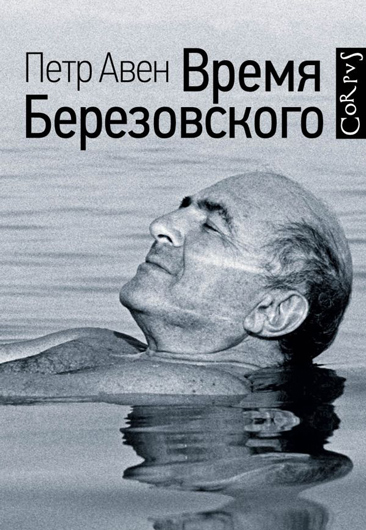 © AST-Corpus, 2017
This book is an attempt to wave his fists after a fight. We usually say that when it comes to the loser. And the paradox of this book is that the author waves his fists after the fight that he won - not allegedly won, but literally. His opponent, who chose a losing strategy, died unhappy and ruined. Why wave now? This is done somewhat clearer if we recall that this is not about clarifying the relations of two Moscow Jewish researchers who bought at the temptations of time and chose unexpected and not the most interesting for both the path. In fact, each of them wanted to become - and in his soul he was a thinker, publicist, teacher, but could not develop this in himself to the required level. From Aven, the same entrepreneur as from Berezovsky mathematician approximately. Although he is undoubtedly a much more powerful entrepreneur than Berezovsky.
So, this attempt to prove something to the deceased would be justified if it were openly said that we are talking about a big historical figure. And this is the second systemic problem of this book. And not only the deceased (essential remark), but also in absentia and post -facts - the British court. It is important that this book is written by a defeated in court against the winner in court, who lost in life. These are complex relationships, for the description of which there are not enough literary and mental skills and in much deeper people than the author and participants of this project.
But back to the fact that the main character of the book was a very important historical figure. The point is not that someone denies it (although some in the book deny). The fact is that there is a huge figure of silence around this, allegedly justified by the fact that we all know, but let's talk about how he was a man. What, in fact, is hypocrisy and deception, because we do not know this, because the real historical acts of Berezovsky and during life were closed by the tinsel of myths, his own mistakes, propaganda, counter -propaganda and so on, and since then almost twenty years of total silence have passed. It’s like writing a book, what guy was a writer, whose novels were not published. Why do this at all?
There is probably some kind of circle that is interesting, but this circle knows about Berezovsky not that more than Peter Aven, but certainly more than in this book. And a wide audience - or not wide, but uninitiated - it is completely incomprehensible why we are talking about this at all, why 800 pages do not offer a detailed historical context, nor a description of real events, but only the private experiences of the author and his interlocutors. Moreover, this figure of the silence is incomplete, it breaks up in two conversations - with [Alexander] Voloshin and [Valentin] Yumashev. In which both are dishonest.
“Yes, the conversation with Voloshin makes an impression of a surprisingly false, designed, as they say, really“ for a fool ”.
- Unfortunately, I did not see it before reading the book, but I saw a passage of the text of Valentin Yumashev. After all, Arena asks me in an interview: "What have you resisted this interview for so long?" And I answer him there why this book, by definition, can be neither honest, objective, or even detailed, nor even informative. And so, when an interview with Yumashev came out, I went to Aven at some event in the Pushkin Museum and say: “Now it’s clear why I was against it? Because it happened - he says a lie! " (In fact, there was no condemnation in my words: I believe that Yumashev does not have a way to tell the truth, there is no desire and there is no way, he has no way out, he can only say, let’s say, not the whole truth, which, by definition, was not true.) Aven then laughed: “Well, you still haven’t read it!”
Now I read it. Against the background of Voloshin-with my actually good attitude towards Alexander Stalievich both then and now, because I again think that this is a systemic problem, and not the way someone behaves-Yumashev, of course, is a scrupulous chronicle. And these are the only people, at least somehow, at least a little talking about the subject that Berezovsky was engaged in Russian history.
- The book still has a very important and even outstanding conceptually beyond the discussion of the figure of Berezovsky’s conversation with Aven with Chubais, where they, as it were, find out their ideological positions. And here - against the backdrop of Chubais - Aven is much closer to Berezovsky, and their ideological disagreements so carefully procrastinated in the book fade into the background.
- Chubais regarding Berezovsky is generally an extra person. They were never close. They never understood each other, they never loved each other, their relationship was complex, and these difficulties were working and political. They crossed a million times, but there was no personal behind this, and the book was about personal.
- Yes, in this sense, Chubais as the interlocutor of Aven is rather an exception. No wonder the culmination of their dialogue is not a discussion of Berezovsky, but to clarify an ideological relationship.
- Yes, but how great the difference is that, as they say in this book about Berezovsky, and those who Berezovsky was, is the same difference between how Avena speaks here, and how Chubais speaks. Chubais's speech is flat in the most important conceptual, ideological issues in this book. Much more flat than Chubais himself. Maybe you need to choose some other epithet, but ...
-No, in my opinion, this is a very correct definition.
-I think it seems to him that you need to be detached and that for him-the same Chubais, who was declared guilty in all 90s and so on-this is now the right position that he needs to be cold in this sense. But the problem is that in this case it should somehow read that a person has something to say, he just does not want to do it now. But this is not in the dialogue. As a result, this statement is so ... cardboard. It seems to me that I understand why it happened, but these are my thoughts - even those that are in favor of Anatoly Borisovich - they are now inappropriate for my part.
In the joint history of Berezovsky and Russia, there are two most important things that are not described, not understood, not studied. This is a Chechen war, and this is the election of Putin, but in fact, of course, the creation of “unity” and the 1999 parliamentary elections, without which Putin would not be. These are large historical events, and they occurred as happened, only thanks to Berezovsky. Any understanding of his role in this sense is historically incorrect and humanly doubtful. Any objective coverage of these events is politically dangerous and factologically difficult. Therefore, this book turned out to be a discussion of the writer’s personal life, whose books are not published.
There is another systemic problem of this book - it is outside of established genres. But she is very close to them, so she has to be judged with these standards. This is a non-fiction book, in which the main narrator is addicted-that is, it is like a memoir. On the other hand, this is a book of interviews, where Aven plays the role of an impartial interviewer: he enables his interlocutors to say what they want - not contradicting them where he does not agree with them, and not catching them on the contradictions with the said others. This conflict between Aven involved and Aven, also constantly exists, and for example, he terribly embarrassed and annoyed me. Because you don’t laugh and are not indignant if you know that a person tells you a lie?
-This conflict bursts in a funny way in the text of the book, when there are carefully given some characteristics in one conversation-another conversation, and from them it is clear that Aven, as it were, is rebuilt from his past interlocutor ...
- Yes, but not enough! Because the normal (for example, American) author non-fiction in this situation would directly come across these conversations.
- In the historical perspective, Aven's book inevitably looks like the first attempt to collect some factual material. The historical analytics should follow. And, by the way, precisely because, in my opinion, this book is based on a kind of emotional attachment, its release is not so defiantly risky in the present time by step - after all, one of the people (and the author makes it clear in the book), this emotional attachment of those who experience, is still Vladimir Putin.
- Yes, of course. Although it does not seem to me that it is so important. In general, the scene with Putin is again artistic, it doesn’t matter that it is documentary, but a person creates a book, and weights are laid out in it differently than in life-this scene is probably very interesting for a historian, but for Avena-a hero of the book, and for Aven-Auth, she is a compromising. Despite the fact that she is absolutely true, I am just convinced of this - that scene with Putin is true.
In general, before I say another bad thing, I want to say one good one. It doesn’t matter again - why, we are on this side of the pages, but Aven is not afraid in this book to look stupid and funny sometimes. Not in the sense - sometimes he is not afraid, but in the sense - he sometimes looks like that and is not afraid of this. So he recalls how Berezovsky told him that he and Khodorkovsky were going to privatize the whole country for two (I am convinced that Berezovsky was mocking him at that moment, and in his interview I am talking about this). And although Aven writes a lot where such a position is alien to him and how such an attitude towards Russia is harmful to him, here he leads his first reaction, instant at that moment: “And what? What about us? "
I flew on an airplane when I read, and directly frightened several rows with laughter. This, in my opinion, is very touching. Well, there are also a couple of the same beautiful places where directness makes everything alive and entertaining.
Now again about the bad. The great harm of this book is that it is Falstart, it closes-at least for its participants, and for many other people who are under the oppression of the authority of these participants or not having evidence of their opinion, is the opportunity to speak out on the same issues, the opportunity to return to the same memories after, say, ten years, when it can already be said differently. That is, forcing people to talk at a certain historical moment, for this book contextually harmful or conjuncturally inappropriate, it fixes what at the other moment it could be said otherwise, it would even be one hundred percent said otherwise if more people were talking more, more different people. Although, unfortunately, many are already not alive now.
- Who in this book was not enough of those who would be, from your point of view, is obligatory in such a conversation? In addition, of course, Putin and Roman Abramovich.
- They are not enough. I lacked other people, some, unfortunately, can no longer speak. And not even Berezovsky himself. Of course, I lacked Badri [Patarkatsishvili], who very deeply understood these processes and their human reflection, he was generally about people. There was not enough [Vladimir] Kadannikova, Ksenia Ponomareva, children of Boris, Elena Georgievna Bonner, Konstantin Ernst, Vladimir Gusinsky, Natasha Gevorkyan. There was not enough Glushkov, who sat in prison for the described events and having a completely different point of view, paying another price for this. By and large, this is a conversation about a man who, for his false, alien, infidels or any beliefs, died, but the conversation of people who did not sacrifice anything. And Aven admits that this is the only reason why it is worth talking about Berezovsky. But it still turned out that never the wounded tens are discussing the Afghan war. Of course, many of them lost something or underwear, but this is incomparable with what happened to [Alexander] Litvinenko, Berezovsky, Badri and Kolya Glushkov.
- By the way, it is interesting that the plot of Litvinenko is very reduced in this book.
- Are all other stories unfolded?
- In my opinion, the rest of the stories are spelled with greater depth, but here is such a demonstrative gap. Plus another complete absence ...
- I don’t know, it seems to me that the ends of the First Chechen War ...
- The Khasavyurt world, yes.
- Mira, of course. That is, the history of the creation of "unity" is simply distorted, but it, so to speak, is discussed, and the Chechen world is completely removed.
- Although there is a topic of rejection by the Berezovsky beginning of the war itself, the emphasis was on this, in 1994.
- rejection of the beginning of the Second Chechen War, yes.
-No, no, the first. Just Valentin Yumashev recalls that in 1994 Berezovsky was almost the only one who was against the beginning of the war and tried to prevent it, but nothing happened.
-Well, he tried to prevent the second, so there, maybe I looked around something. But, of course, one thing is to be against the beginning of some war, and another thing is to end some kind of war.
- Yes, it turns out, it was his consistent position - peaceful, he was against the beginning of the war, he tried to finish her, and he finished her.
- He finished one of them, yes. I must say, in an amazing way, the rhetoric and the real message of Berezovsky with Putin in relation to the Chechen issue are different, and formal actions at the end of the Chechen war are similar. In a sense, the return of Chechnya Kadyrov repeats the return of Chechnya Maskhadov with an amendment to the quality of the elections. That is, the impossibility of conducting this war and the inability to win it are recognized by any person who directly deals with it. And there were not two such people, not Berezovsky and Putin, but three, and the third was [Alexander] Lebed. There was still a swan between Berezovsky and Putin, who, in fact, signed Khasavyurt. At first he did not want peace. He was sure that these weaklings did not understand anything, and now he would quickly go back the Chechens, he would come there as in Transnistria. And within a few months he came to the need to negotiate. Not because the Chechens were strong, but because this is the only way to move on.
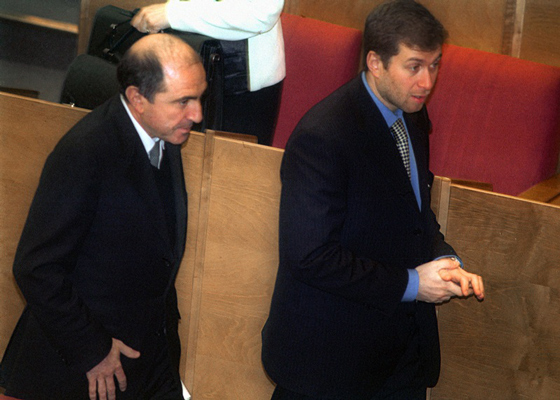 © Dmitry Azarov / Kommersant
 И ты прав, что кроме Березовского в этой книжке есть еще один герой, такой же герой, вокруг которого все немножко ходит и вокруг которого есть такая же недосказанность. Это Роман Абрамович, конечно. Он абсолютно действующее лицо. Я никогда не думал и не ждал, что он заговорит, этого не произойдет и в будущем, с моей точки зрения, но масштаб присутствующих настолько меньше, чем масштаб отсутствующих, что от этого горечь и недоумение. Березовскому уже все равно, но наша история, наша жизнь в таком пересказе оказываются проще и прямолинейнее, чем, безусловно, были.
Peter Aven. Время Березовского. — М.: АСТ-Corpus, 2017. 816 с.