
Translated material
The cooks are returning
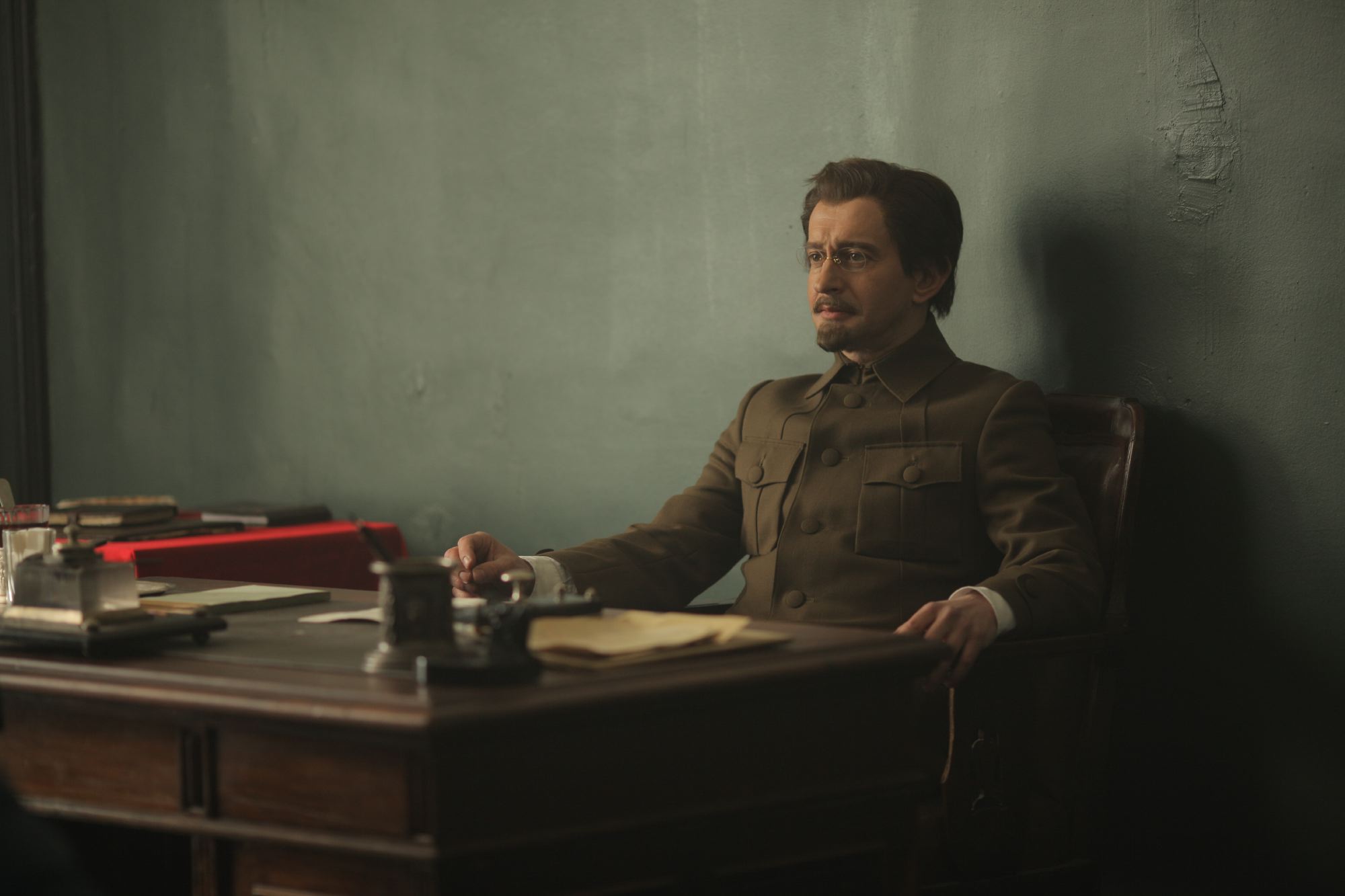
Everyone who does not read books, but watch TV (and such are the majority) now laid the October coup in their heads as federal channels prompted them
Last Saturday, in the studio of the Agora program, Mikhail Shvydky was hot. It is so hot that the experienced moderator of such scenes, a mile, wanted to hide in the shadow. Historians and artists tried to discuss this. The artist Khotinenko, whose series “Demon of the Revolution” was put up for discussion, shouted that he did not want to listen to the stupidities of historians gathered here about the inconsistency of the series of historical truth. Evgeny Mironov, who played almost living Lenin, promised that his legs would no longer be on any current show. Historians roamed and foolishly-in a word, “a bunch of mala”, as it turned out, the format for the “Culture” channel is not alien at all. It also became clear: in our expanses, the historian and the artist cannot be converged together.
These little things say about the great familiar indifference, which has become both the facade and the interior of the whole countryThe series “Demon of the Revolution” (Vladimir Khotinenko) and “Trotsky” (Alexander Cott and Konstantin Statsky) have already been discussed, sprinkled, sucked to the smallest bone up to stylistic and linguistic absurdities. “I like your positive attitude,” Parvus says to his mistress. A little later - "I heard you." Ready office plankton, by golly. Well, when one of the royal generals says: "And what?" - I would like to cover myself with the Rosenthal textbook and fall asleep until better times.
Trifle? In general, yes, a trifle. The same trifle as, for example, an alleged Kerensky, who, as you know, was boring all his life. Or Lenin, listening to Wagner in the Wagner Theater about his “amazing, inhuman music”, from which “I want to stroke the heads, but you can’t beat on the heads.” Yes, these are such small, vulgar thoughts, although it is practically about the breakdown of civilization. But these little things say about the great familiar indifference, which became both the facade and the interior of the whole country.
This trend is the most evil adherents of the October Revolution - Lenin, Trotsky, Parvus. In Trotsky there is still gloomy jigit Stalin, whose lips do not leave the fatal grin, and eyes look predatoryly from under the frightened eyebrows. Both series have their own Lenin - in the Demon this is Evgeny Mironov, in Trotsky - Evgeny Zakuchkin. For some reason, everyone likes Mironov more-probably because he is almost like a person flirting with an inesa Armand, eats soup and washes dishes behind him. At first glance, Podchkin is more caricature and even schematic, but in this, oddly enough, his power is his hero is an unknown evil, as if crawling out of the underworld, which is so evil that he does not even try to be like good. If Lenin Mironova is a devil, then Lenin Podchkina is the devil himself. If you already made a hook towards the artistic side of both films, we immediately note: there are few living characters. This, in addition to the Podchkinsky Lenin, Natalya Sedova is the wife of Trotsky, who is very pale-trigiously played by Olga Sutulova. This is Trotsky himself in a worthy, but quite familiar performance of Konstantin Khabensky. This is Parvus from the "Demon of the Revolution", which Fedor Bondarchuk played a hundred years ago Boris Berezovsky - a small demon with large ambitions. Bondarchuk is the first main success of these films. The second is the director of Trotsky, Alexander Cott, who at the limit of directorial opportunities erase the art of agitation. In some ways he even succeeded. At least he quite fervently uses the directorial and installation tricks, with the help of operator Sergei Trofimov and installer Alexander Ivanov, giving the film a clip swiftness.
More, perhaps, there is no point in talking about the artistic side - indeed, packaging is packaging, but the content is always more important, no matter how it is a shame to hear the respected Khotinenko and Cotta. They are here - the support group of Ernst and Dobrodeev, and those in turn - the support group yourself know who. And as a group of support, they quite clearly explain to the audience from Kaliningrad to the find that over a hundred years the philosophy of the revolution has not changed: it makes a bunch of Jews and joined them for foreign money. For the sake of this, enormous funds from our taxes were spent, for the sake of this there is a lot of absurdities like cutting Orthodox crosses for the winding of Trotsky’s armored train, for this, even the famous Black Highway Ivan Ilyin, who later supported the Nazis, was shown in the “Trotsky” hero and darling. Ilyin is now in Russia a fashionable figure among the United Russia, patriots and sympathetic, he is quoted by the president, prime minister, Minister of Foreign Affairs, Patriarch, and the gray cardinals of the Surkov and Volodin recommended him for compulsory reading. Needless to say that it was this philosopher, who assured that the Russian person should have three objects of love - “God, the Motherland and the National Leader,” he was awarded to become the only one -percent hero of the film?
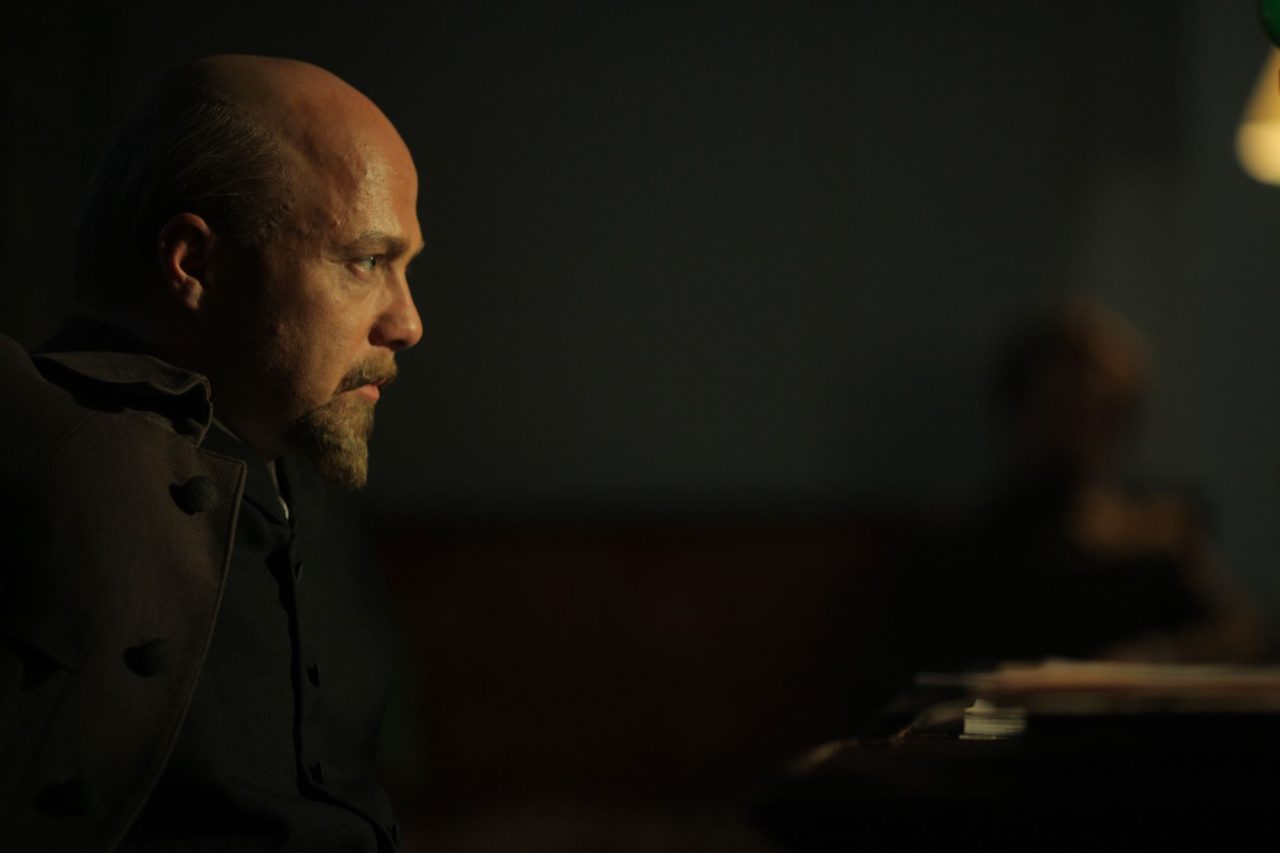 Frame from the series "Trotsky" photo: Producer company "Wednesday"
Let's not amuse yourself with illusions, but respected films by curtains: this is Uber Alles ideology, and what packaging you will wrap it - you can even solve it yourself. But so that no, so that strictly within the framework. So that the theme of the unbearable Jewishness of Trotsky sounds exactly 34 times in the film (less impossible, more to taste), Parvus - 21, so that German money was shown close -up six times.
Returning to the Ristalism at the Agora. Clear business - historians are fixated on historical accuracy, the artists in the coffin saw it if it does not help their artistic plan. Both the others are right. Usually. But not in this case. Leo Tolstoy said: "Do not be afraid of ignorance - be afraid of false knowledge." The TV is generally a source of false knowledge. Especially in Russia, where television has long ceased to fulfill its direct functions-the educational and news media-and has long turned into a huge, expensive and successful PR agency working for a single host.
The TV is generally a source of false knowledge. Especially in RussiaAnd in this context, a comic book about Parvus on Russia-1 and a clip for eight episodes about Trotsky on the first are carried out about the same harm as the Solovyov and Kiselev, who are breathing in the back of the back of the program. There is a difference between fantasy and deception. The “inglorious bastards” of Quentin Tarantino - fantasy, “Trotsky” and “demon of the revolution” - deception. Although at Tarantino the Second World War ends in the 44th death in the fire in the cinema of the entire top of the Third Reich-everyone understands that this is a fairy tale. In a society in which Tarantino lives and takes off, such fairy tales are normal - there were no long years of silence, lies, totalitarianism. They love their own story and are not afraid of it. We love history as Pygmalion Galatea - they themselves come up with, create themselves and admire themselves. One hundred years have passed since the October Revolution, and the vast majority of people in Russia are nothing, nothing at all, nothing knows about him. The trouble is that they don’t want to know. The October Revolution is not understood, not reflected, not disassembled by bones, by minute, by all its consequences. We continue to live in a world created by her, but it was not as if. Some kind of veil-morgana. And on a clean sheet, what are the brains of viewers, all this is dumped-about German money, about a bunch of Jewish liberals, about Russia, which lived peacefully and well, but this heap turned everything upside down. And everyone who, of their own free will, did not reach the thoughtful analysis of the events of a hundred years ago, everyone who does not read books, but watch TV (and the majority) now laid the October coup in their heads as federal channels prompted them. And it will seem to them to the grave board that they are armed with knowledge. And knowledge is whispers to them: anything, but not a revolution, we need stability. A hundred years ago we encroached on stability - you see how many horrors were done!
Such films have the right to exist, but with a reservation: first you need to largely analyze the October RevolutionSuch films and TV shows have the right to exist, but with one reservation: first you need to largely analyze the October coup, reflect it with many documentary films, without lies and extremes, without good red and bad white, and perestroika and, on the contrary, to this day. It is necessary to understand well what Russia was by October 1917, and why the tragedy became possible. And only then, after serious educational work, but not before, to take up the fun development of the material and allow himself to change Beethoven to Wagner, and to launch the sailors into the winter room, where the Provisional Government sits, with a cry: “Which are temporary?!” It’s good that they have not shouted: “Slava! Your time has ended! "
Do not make jokes here, sorry for the expression. The consequences are too serious.
No need to console yourself, as the authors of the adaptations usually console, they say, now they will run to read and study. Therefore, by the way, the film adaptation is the same harm that the watched film by Vladimir Borto Idiot or Anna Karenina Karen Shakhnazarov, now I am sure that he is well versed in Dostoevsky and Tolstoy. From now on, they know about the revolution from Channel One and Russia-1. One hundred years ago, such as them explained: each cook should be able to rule the state. The cooks were not long in coming. How it ended - we know.
This is what the smart Lev Tolstoy warned about.
Do you want us to send the best texts of “such cases” to you by e -mail? Subscribe to our weekly newsletter!
Cinema TV shows