
Translated material
Life kidnappers (plumbum)
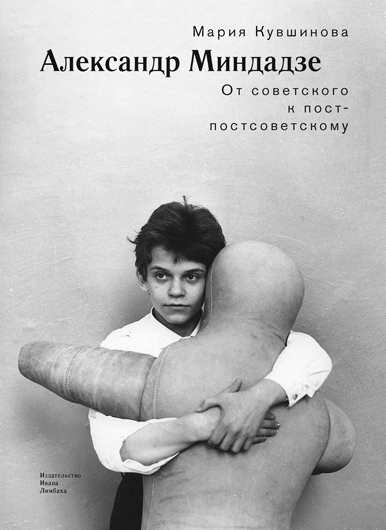
In mid -December, the book by Maria Kuvshinova “Alexander Mindazze” was published in the publishing house of Ivan Limbach. From Sovetsky to the post -post -Soviet ” - the first study of the texts and directorial works of the author, which occupies a special place not only in Russian, but also in world cinema. Colta.ru publishes a fragment of one of the chapters of the book.
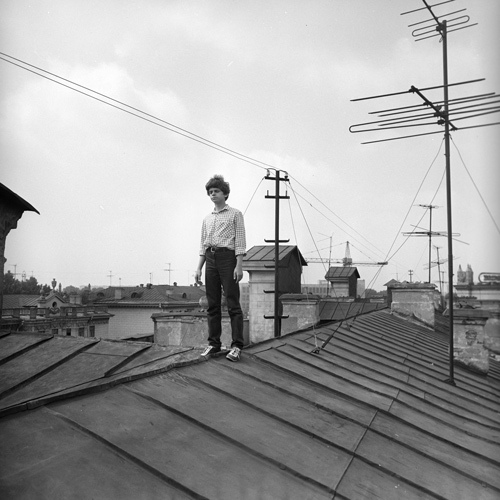
On the afternoon of April 26, 1986, when a radioactive wind had already blew from the south, Vadim Abdrashitov, Alexander Mindazze and operator George Rerberg were shot on the roof of a residential building in Minsk, the final scene of the film “Plubum, or a dangerous game”.
The height of five floors, each of which, bypassing pots with seedlings, wet linen and variegated carpets, in the finale on a slow shoot, will fly in love with a classmate Sonya Orekhova - a maximum, according to the General Plan of 1946, for a residential building in the center of Minsk. In reality, the young actress, of course, did not fly: the details of the building were recreated in the pavilion, and she was transported past the scenery on a special spinning platform, blowing out of the windbound.
House No. 32 on Ulyanovskaya Street, completed in the year of Stalin's death, in 1986 already belonged to the dulling world. In the scene of the girl’s fall, the viewer can consider the building in the smallest details: rusty roof; rusty railing; the balusters from which time ripped off the flesh, exposing the skeleton of the reinforcement; The consoles and bas -reliefs are endless, like a flight between life and death, triumphant wreaths that turned into mourning ones. Empty windows are “two culture”, nothing human. Abdrashitov with artists called the Joe-Stayl architecture chosen in honor of Stalin.
Erased by the war to the ground and rebuilt as an exemplary proletarian capital, in the “plumbum” Minsk plays the role of a conventional provincial city, in which imperial facades slowly crawling out of the yards began to corrode. In one of the scenes, the hero, who runs away from the annoying classmate, suddenly freezes in front of the arch, in the opening of which two gigantic gypsum statues stand next to the pile of broken brick: a collective farmer and someone resembling an astronaut, but still (in the era of the Stalin Empire) they are not. This is a test pilot in a high-compensating suit and with a helmet in his hand. The film will sound twice bravura and deliberately contrasting with what are happening about the pilots: from the screen of the TV at the house at the plumbum and in the park from radio -dynamics in the scene of the abduction of the bums of the duck from the city pond. The phonogram from the past becomes a sound accompaniment for a different reality. They don’t explain anything to us, but we understand: the decomposition of the gypsum flesh cannot be stopped - the collective farmer and the pilot, who still retain the heroic expression on their faces, began to crumble and were exiled here from the roof for safety purposes. To emphasize the bewilderment of the hero, unable to decipher the meaning of the sculpture, the camera takes the statue for a few seconds for a few seconds. Not described in the script and woven from the characteristics of the chosen nature, this episode, as if inhibiting the main plot, is a short and painful moment of a person’s detachment from a recent history, the fact of its accomplished transition to antiquity. Another example of such detachment on a similar material is the film of the Swedish director Lucas Mudisson “Lily Forever” (2002). Provincial post -Soviet teenagers (the main role is played by the fifteen -year -old Oksana Akinshina) wandering into the red corner of an abandoned military base and find a transcript of the long -lasting congress there. The heroes born in the late 1980s read about the stormy and prolonged applause with calm indifference, as if ancient letters are disassembled, devoid of any meaning. <...>
 © "Publishing House of Ivan Lumbach"
* * *
Almost every perestroika article about Plumbum mentions the name of the Ural teenager Pavlik Morozov, the most famous of the pre-war heroes-heroes, who, according to Soviet legend, gave testimonies against the father who covered his fists. Killed in 1932 by his own grandfather, over time, Morozov began to be perceived as the “zero patient” of the Stalinist terror, the author of the first of the “four million denunciations”.
The audit of this ambivalent even for exemplary Soviet citizens, a cult, begun by the emigrant writer Yuri Druzhnikov in the book “Scammer 001, or the Ascension of Pavlik Morozov”, became one of the most burning topics of perestroika. If the pantheon of the young heroes of the Great Patriotic War was still inviolable, then the forced long -term excuse for the patricide caused discomfort, which he no longer wanted to put up with. Due to the universal conflict of generations, the legend attracted attention not only within the country, but also beyond its borders. In 1982, The New York Times devoted a 50-year anniversary from the day of Morozov’s murder an article in which the journalist sadly stated that in the USSR they continue to honor the traitor of his own father and write denunciations not only on colleagues and neighbors, but also for parents. <...>
The success of the film “Plumbum” - “Thinly disguised revision of the myth of Morozov” - The New York Times devotes a large article under the heading “New times change the attitude to the“ holy ”Stalin era.” The newspaper reports that in fifteen months about 20 million people watched the picture, while about 30% of the audience who wrote to the authors after watching, considers plumbum a positive hero. Answering the questions of the American journalist, the director Vadim Abdrashitov prefers to consider Pavlik Morozov as a tragic figure, torn by the contradictions between feelings (to the father) and the debt (before society), and compares it with Antigon, unconsciously shifting the Stalin era into antiquity. During the television broadcast dedicated to the discussion of the picture, the real schoolboy reports that he would have reported to his father if he had come into conflict with the law.
Meanwhile, in the filmography of Abdrashitov and Mindazes there are no characters ridiculed more than the Parents-Stevelens who brought up the plumbum. <...> First, the son tells them about his operational activity, and they accept his stories for teenage fantasies and chuckle. Then the family sings the song of Okudzhava about the blue trolleybus, skating on the skates, watches a fashion show of fashion models on the TV (one of them, who came to the plumbing into development, is quietly kukackakika on his order - parents again do not hear and do not believe) and the performance of a cloying trio of two men and one girl performing a song about pilots. And if the blindness of the mother is genuine (another demonstrative metaphor: after falling on skates, she continues her touching pirouettes on ice in broken glasses), then the blindness of her father is purely pragmatic. At the end of the film, caught along with other poachers, he answers his son’s questions condescendingly, but holds as if he was completely not surprised. "Maybe you like power?" He asks rather with curiosity than with anxiety. The son for him is Terra Incognita , which he did not plan to explore. <...>
The family is the longest, but not the only stop in a sightseeing tour of the route, which Abdrashitov in one of the interviews calls the "genesis of the child." Following the hero, we visit the school (where he is an excellent student and in good account), to the Sambo section, to the lair of the homeless. For these movements - songs about pilots from street speakers or from television screens - a specific mass culture that digests the remnants of the Soviet myth. The new era is already leaking to the screen, it can be seen in the graceful act of fashion models - fashion agents, whose defiles began to show on TV.
The melody, forever connected for plumbum with humiliation and knocking it out of the rut, is the play by Beethoven “To Eliza” in electronic processing. Hearing her at the rink, he squeezes his head with his hands, like from severe pain. The symptoms of plumbum are similar to the symptoms of another difficult teenager - Alex from the “Clothing Orange”, the adore of Beethoven, who, after the Jesuitic course of therapy, who connected the work of the composer with the images of violence, could no longer listen to “without nausea and pain”. <...> Together with the plumbum, we move between the media: the family, school, thieves underground, the sports section of the struggle where one of the combatants works as a coach, is an example of amazing observation of Mindadze: not only the soldiers of the criminal wars of the 1990s will grow from the same sections, but the entire top of post-Soviet Russia, led by President Putin, a master of sports in judo in Dzuudo (The episode was shot in one of the halls of the Minsk Stadium Dynamo, where in those years it acted exactly the same as in Leningrad, the Sambo section).
Another world, the door to which we open along with a plumbum is the medium of the homeless, officially not existing in the USSR, the champions of immunity , who settled in some of the basements for the winter and avoided the capture each time. The raids on homeless people (this word does not yet exist, neither Mindaze, nor his characters use it) is formulated as an operation, which the combatants and the police carry out for the sake of their own good. <...>
Ruslan, without revealing his intentions, is attached to one of the homeless, gets acquainted with his comrades. Together they catch ducks in the city park and look from the balcony behind ballroom dancing in costumes of the XIX century. "Who were you?" - asks the plumbum, mockingly alternating names of a new friend: Kolya, Oleg - what's the difference. “I have not been, I am,” he suddenly answers. When the tramp realizes that it was the young friend who surrendered him to the warriors, he takes a blow with unexpected dignity and meekness. Kolya-Oleg from Plumbum, who is nonexistent and not taken into account by the system living outside of society, is the predecessor of a German who, in the “brother” of Alexei Balabanov, will act as a director's alter ego, a carrier of a genuine, withdrawn from a hierarchical society of humanism. He sadly states that Danila Bagrov “disappeared” in a big city, and refuses the dishonest money proposed to him - a gesture, the meaning of which today needs to be evaluated again. Non -understanding and unsolved at the end of the nineties, today the German is increasingly becoming the main character of this legendary film, which at the time of release mistakenly considered the apologies of the superman. Both in the “plumbum” and in the “brother” with a saving alternative to the superhuman, which could not cope and tear, can only be one who is forever exposed from the middle class, the one whom the cleaners and simplifiers consider the subhuman.
* * *
Selected of six thousand applicants, who played the role of plumbum Anton Androsov, and had previously had experience in the cinema, from childhood suffered from a stomach ulcer. The imprint of this early physical suffering on the face of the young actor obviously attracted the attention of Abdrashitov; In an interview, he says that the authors loved the hero as a “puncture”. For the operator, George Rerberg, “Plubum” has become a radical technical “experiment”. The entire film was shot at an unusual speed of 22-23 frames per second, during the projection, this leads to elusive rhythm acceleration, swallowing microscopic phases of movement, and the main character seems even more angular, endowed not entirely human, slightly reptile plastic.
Ruslan is the only child in the family, like many of his peers born in the seventies. Until the time of the ripened, the asexuality of which is already noticed by the first reviewers - he is indifferent to the classmate in love and only once approaches her for an impassive mechanical kiss. The insensitivity of the plumbum to the pain (“I spent the reception,” the trainer is surprised. “I didn’t work,” the hero answers calmly) is usually understood as insensitivity to pain in general, not only his own, but also a stranger. His sadomasochist inclinations are not in doubt: a manipulator, a psychological abuser that torments his victims, he with pleasure accepts flogging from one of the criminals, and the human attitude to the Gangster girlfriend, the fashion model of Mary (one of the first bright appearance on the screen of Elena Yakovleva), awakens after she suddenly gives him a murder. The point is not in the power of the blow, the blow is obviously weak, like a slap of a midwife, when a newborn refuses to breathe, but this is the first and only attempt to protest in the film. A sudden long-awaited shell, not received from his parents, after which the shocked hero tries to come up with a plan to save his new acquaintance and her boyfriend-gangster. The very sudden inclusion in reality, the destruction of the illusory world in which he was omniscient and omnipotent.
Having met a plumbum and his ideology, we learn that he is obsessed with the search for a personal offender - he hunts for a fox, follows the trail, finding himself in captivity of tunnel vision. The plumbum enters into a chemical reaction with society at the time of humiliation, which happened before the film: the older guy took the tape recorder from him, the “car” on the then slang. The humiliation will move the hero forward, to the squad of the warriors, in pursuit of Braconyer's father, on the roof where his classmate will die. Played by a sixteen -year -old actor, Ruslan is sensitively small in an exaggeration: he is a schoolboy among adults, he is small in growth. He is a small person, the smallest of people, and this is what makes him so dangerous for others and disgusting for the viewer. Pavlik Morozov and the spirit of the 1937th-a stamp of late Soviet and post-Soviet perception, but in the space of the film something else, unfamiliar, not reminiscent of a stereotypical night funnel from the 1937th.
Talking to Sonya in love about the mortal danger that has entered his life, not yet knowing who exactly will become the victim, he is a teenager who considers himself a forty -year -old and does not have erotic drives - he was already subordinate to the instinct of death. The film owes his lasting toxic impact that Ruslan is one of the several obviously protopharsist characters in Mindazes. He himself recalls in connection with this script “Lakomba Lucien” Louis Maly: a film about a French teenager, a cleaner in a hospital, who was not taken into resistance due to age and stupidity, so he went to where they took it to the Gestapo.
There are thousands of definitions of fascism, and there is no reliable list of mandatory features, however, many years of understanding experience reveals certain elements of the human psyche, which under certain social conditions intensify, replicate and develop into such a state of society when the mass is ready to crush a person. “The fascist mentality is the mentality of a“ little man ”, enslaved, striving for power and at the same time protesting,” Wilhelm Reich writes in the book “Psychology of masses and fascism”. “This“ little man ”thoroughly studied the behavior of a“ big man ”and therefore reproduces it in a distorted and grotesque form.” “Why Plumbum? Well, soft metal, lead. I understand - steel, ”the operative surprises. - “Steel! Without hints. I'm just sensitively. " Lead is only a parody of steel, plumbum - a parody of Stalin, a dead “master of discourse”, from which there was an impressive vocabular of empty verbal structures.
In one of the thousands of comprehensive books about the nature of the phenomenon - “Anatomy of fascism” by Robert Picston, the desire for cleansing and simplicity, decorative contempt for the material, the desire to punish and the origin of the middle class - and it is from the Soviet middle class provided by tape recorders, jeans and the Ganka’s headset occurs. The complication of the world causes him pain as a melody “to Eliza” in modern processing - he wants to become painkillers, tries to act as a rectifier and simplifier, using manipulations (weapons of a weak), trying to reduce the world to a single denominator. Among other things, Pakston defines fascism as a “impulse of destructive cruelty”, which can be directed, including himself.
And in none of the plot lines of the picture, the proto-fascist nature of the plumbum does not manifest itself as clearly as in an episode with a rally on homeless people, from which the hero cleans the city, as in the Germany of the 1930s, they cleaned the races from “wrong” impurities. Dante took the last circle of hell for those who committed the most terrible sin - the deceit of the trusting person, and it was this evil with a cynical grin that Ruslan is sensitive to the homeless who accepted him to his company. With the same grin, armed people put Jews in wagons, telling them about labor camps or sanatoriums that turned out to be gas chambers - Auschwitz is reproduced every time where a person is humiliated by a person.