
Translated material
In Silicon Valley, everything was obsessed with starvation
They say that the refusal of food extends life and helps to think better. This is true?
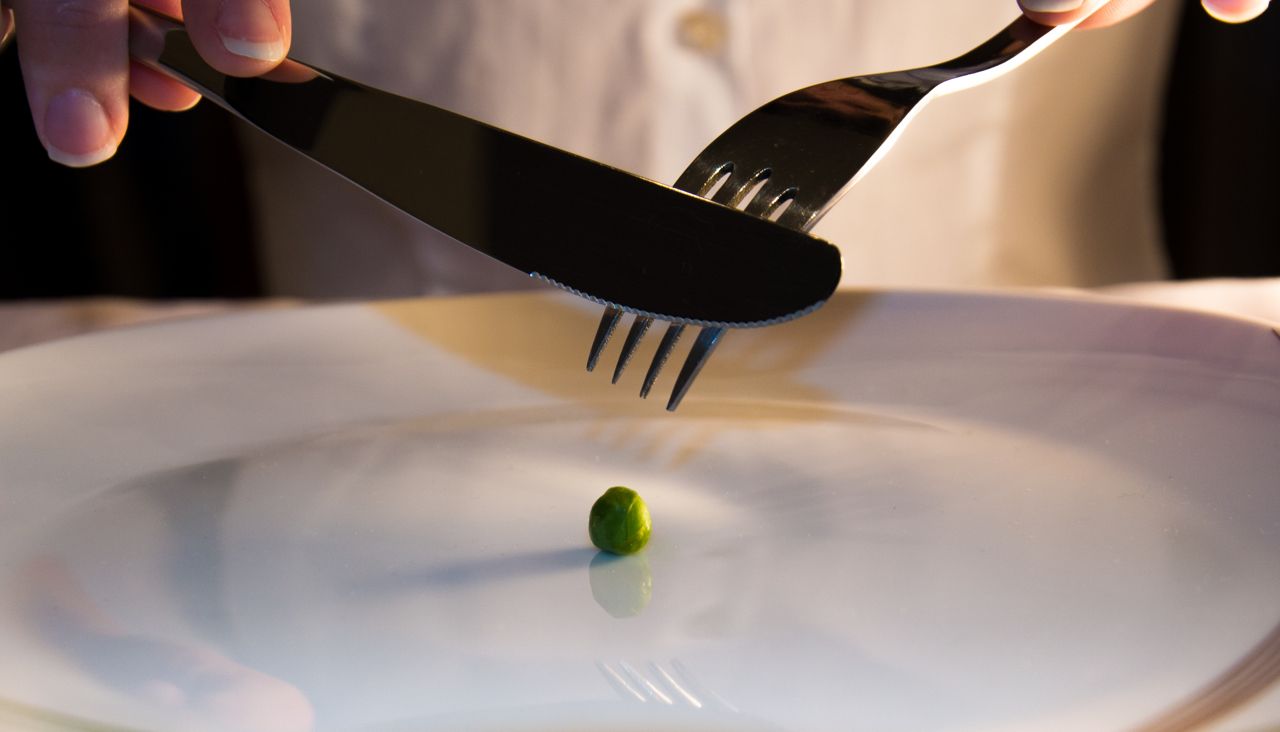
In the USA, and especially in Silicon Valley, many people are fond of faceting, which is also called interval starvation. The heads of IT companies and their employees believe that, periodically refusing a few days from food, you can reach a new level of performance and even extend your life. Medusa tried to figure out what interval starvation is, whether it has some kind of scientific background-and is it harmful.
On June 6, 2019, the creator of VKontakte and Telegram Pavel Durov said that he also decided to practice starvation in search of new ideas.
"New Trend in the field of self -means"
In the fall of 2017, the Western media began to actively write about the popularity of starvation in Silicon Valley-among managers and employees of IT companies. In an interview with the Russian magazine Tatler, the founder of the startups LUKA and Replika, Evgeny Kuyda, who has been living and working in California since 2015, told about this. “I am the main cliche of Silicon Valley,” Kuyda told the publication. - I have a meditation teacher, a psychotherapist, a heler, a personal coach and a coach in the gym. I am engaged in phasting, I eat Asai-Bowl in the morning ”(if you want to understand that all this is, read the footnote ).
Kuida says that in San Francisco “everything was obsessed with intermittent pharation”, that is, interval starvation-alternating cycles, when a person eats as usual and when he abstains completely from food. According to Kuyda, all her friends have the Zero application - "a timer to count how much time you do not eat." This is also confirmed by The Guardian newspaper: as the publication writes, Fasting has become a “new trend in the field of self -means” - following the enthusiasm of meditation and Mindfulnes .
Hunger popularizers
Fasting is far from a new practice; The tradition of restrictions on food, including complete abstinence from food, is in many religions. In the 20th century, starvation was popularized by an adept of alternative medicine Paul Bragg, whose book “The Miracle of Hungering” was published even in the USSR. At the same time, Bragg did not have a medical education, and much that he spoke about himself turned out to be not true: in particular, he overestimated his age for 14 years (to show how young he looks) - or claimed that he participated in the Olympic Games twice. Bragg believed that if you follow his advice, you can live up to 120 years, but died in 81 from myocardial infarction.
According to The Independent, a new take-off of fashion for starvation fell on 2014, when celebrities like actresses Miranda Kerr and Jennifer Aniston were carried away. A year before, the book “The Fast Diet” , written by a British television journalist and author of popular science programs, Michael Mosley, co-authored with journalist Mimi Spencer, was published. The book, the subtitle of which promised the story of “how to lose weight, be healthy and live longer” became a bestseller; The authors promoted in it one of the main schemes of interval starvation, the so -called diet "5: 2". Its essence boils down to the fact that five days a person should eat as usual, and two more days - consume significantly less calories (up to 500 per day).
In addition, in 2014, a lecture on the TED was made by scientist Mark Mattson, the head of the neuronauk laboratory at the American National Institute for aging and a professor of neurobiology at the University of Johns Hopkins. His studies on animals have shown that interval starvation has a positive effect on the functioning of the body and brain: for example, reduces blood pressure and improves memory.
Interest in starvation grew even after the Japanese molecular biologist Esinori Osumi, who studies autophagy, has grown in the 2016 Nobel Prize-the process of “self-presentation”, when the body involves its own cellular resources to produce energy, in particular when starving.
Silicon Valley bio -hackers
The ideas about the beneficial effects of starvation were picked up by IT specialists from Silicon Valley, passionate about biohaking -attempts to improve their body and even extend life with different practices, from control over physiological indicators to taking medications. Among the main enthusiasts of the movement are the head of the Biohaking company HVMN Jeffrey Wu, as well as the co -founder of the Evernote, the CEO of the venture fund All Turtles and one of the startup investors Evgenia Kuydy Replika Phil Libin.
“On the first day [starvation] I so wanted to eat that I thought I would die. On the second day, I felt terribly exhausted. But when I woke up on the third day, I felt better than ever over the past 20 years, ”Libin admitted in an interview with The Guardian. According to him, starvation "can extend life for 40 years." Jeffrey Wu also believes that starvation is also a great way to protect yourself from an aggressive consumption culture, which, according to him, dictates that it is necessary to eat all the time. At the beginning of 2017, Wu held a seven -day “hunger strike” with employees of his company and members of the Wefast community, uniting supporters of interval starvation. Now this community includes several thousand people, mainly 20-30-year-old developers from Silicon Valley.
Is it really useful?
There are entire startups based on the idea that starvation can improve the quality of life and extend it and even prevent serious diseases - from diabetes to cancer. This, for example, is Prolon (from the word longevity - “longevity”), offering a five -day dietary nutrition program instead of hard fasting.
Nevertheless, if we talk about people, and not laboratory animals, the benefits of starvation are not proved . Studies on mice and other mammals have really shown that as a result of starvation, animals live longer and less often have chronic diseases. But there are much less studies with the participation of people, they are worse in quality - therefore, no convincing conclusions from scientific papers can be drawn.
Some food disorders also believe that hobby for starvation can lead to unhealthy fixation on nutrition. And the desire for self -improvement with the help of starvation can even be a kind of “cover” for the need to limit oneself in food. “An excessive tendency to track its indicators and food consumption becomes the norm, so it is difficult to understand when it turns into obsession,” says Schrain Bamrami food disorders.
A surge of strength and clarity of thought
On November 6, the Biohaking company HVMN announced that she begins to accept orders for the Ketone energy drink developed by her, “Superbiad” for athletes (it should be delivered to the first customers in December 2017). It allegedly contains some ketones - substances that are produced by the liver during starvation and serve as a source of energy (according to the description of those who have already tried it, the smell of the drink resembles a liquid to relieve varnish from the nails). According to the creators of Ketone, the drink changes metabolism and must improve physical capabilities, increase the ability to concentrate and give strength. As the journalist The Atlantic tells Olga Khazan, after receiving Ketone, she experienced an incredible surge of “positive energy”, caught herself smiling at the strangers and worked tired of late even in the evening - not noticing how it was not noticed how Time has passed.
The creators of the drink are explained by the fact that it supposedly rapidly introduces the body into ketosis - a condition caused by a high concentration of ketone bodies. True, some nutritionists question the idea that ketosis can be caused simply by using such a drink. As a rule, such a state can be achieved with the help of, in fact, starvation-or a special low-carb and at the same time high-fat diet (also known as a keto-diet ). In all these cases, the body has no way to use glucose for energy production - and it begins to “eat” with ketone bodies. Jeffrey Wu calls them “super -fuel for the brain” and says that “clarity of thought” and “a surge of strength” during starvation are achieved precisely due to an increase in the concentration of ketone bodies in the body.
How exactly does ketosis affect well -being?
After 12-14 hours of starvation, the number of ketone bodies in the body really rises and continues to gradually increase, but then usually stabilizes at a level that is not dangerous to health (this is ketosis). Fans of Keto Deta are trying to maintain this condition using the diet for weeks and even months. For example, the Business Insider journalist adhered to a keto-dot for two months on the editorial assignment-and says that she felt stronger, smarter and more confident than ever. Although the condition of ketosis can cause discomfort - nausea, headache, fatigue and poor breath.
In fact, there is no reliable scientific evidence that ketosis can affect the work of the brain in healthy people, although the keto-diet under the supervision of a doctor is used in the treatment of epilepsy. At the same time, it is still not completely clear how the ketone bodies affect the result.
In addition, ketone bodies become a lot not only when a person refuses food or almost does not use carbohydrates - but, for example, when he greatly abuses alcohol or does not control diabetes under control. Sometimes the level of ketone bodies can increase and stronger than an acceptable level (including in healthy people) - and then we are talking about such a serious condition as ketoacidosis , which sometimes ends with coma and death.
Fasting and weight loss
Despite the fact that modern starvation adherents refuse to eat not for weight loss, they note that they managed to lose weight at the same time. For example, Jeffrey Wu claimed that after a week of starvation he began to weigh five kilograms less. But the problem with interval starvation, as with any diets, is that it is far from always possible to maintain the result. There are also not many data confirming the effectiveness of starvation and other diets. In any case, those who choose such a diet, the British Association of Dietetologists recommend following the plan drawn up by a specialist, so as not to provoke a deficiency of some important substances.
If the body mass index is within normal limits, then in general, a small reduction in calories should not affect health poorly, because, most likely, you eat a little more than you need (and therefore you can gradually gain weight). However, nutritionist Elena Motova believes that it is better to deal with this differently - you need to learn not to overeat: “This is easier to develop the skill, and this is physiologically at least. I am afraid to recommend a diet “5: 2” to everyone, while there are no good research. ”
With more intense starvation, people really really lose weight, but then they gain weight with the same success: metabolism slows down due to such a change, and subsequently the body more actively storages the resulting calories. Therefore, nutritionists do not recommend this method of nutrition, especially since it can lead to various unpleasant consequences like hair loss, headache, constipation or diarrhea.
So starving-is it still harmful or not?
A short starvation (one or two days) usually does not harm . For example, Jeffrey Wu says that he is starving 36 hours once a week - and once again three months stops eating for three days. According to him, this helped him better understand his sense of hunger, and control the process of saturation. But the refusal of food for many days or even weeks is already dangerous: in a person, internal organs begin to collapse and, first of all, muscles, various vitaminosis and simply exhaustion appear. In addition, any starvation is in principle contraindicated in eating disorders (anorexia, bulimia) or predisposition to them, pregnancy and often diabetes. In some people, starvation can provoke migraine attacks. You also need to remember that fasting does not go well with physical exertion, which, of course, are necessary.
Daria Sargsyan , Olga Strachovskaya
The editors thanks for the help in the preparation of the material of nutritionist Elena Motovu