
Translated material
New efficiency of governors

In Russia, a system for evaluating the effectiveness of governors has been changed, and more evaluation criteria itself have become more. According to the decree signed by the President, their number increased from 12 to 24. In the apparatus of Deputy Prime Minister Dmitry Kozak, this change was explained by the inter-budget reform.
The decree increasing the number of criteria for evaluating the work of governors by half, the President of Russia signed on November 15. As a result, as the Kommersant newspaper reports, the assessment system has changed not only quantitatively, but also qualitatively: against the backdrop of an increase in the number of economic indicators, the population of the region will first be asked to evaluate the activities of not only regional authorities, but federal authorities. The Cabinet of Council of Cabinet will have to develop a methodology for the last indicator within three months (as well as the methodology for assessing the share of residents of the subject of the Russian Federation faced with corruption).
From the previously existing list of performance indicators, only four positions have been preserved: the expectation of life, unemployment rate, the volume of tax revenues to the consolidated budgets of the constituent entities of the Russian Federation per capita and the volume of investment in fixed assets. Another previously existing criterion - the assessment of the population of the regional authorities - will be applied until August 1, 2018, and after the population of the region will evaluate the conditions for self -realization (including children), satisfaction with education, health, culture and social services.
 The work of a children's doctor / AGN "Moscow" / Photo: Kiselev Sergey
The assessment system also includes the following indicators: the share of the population below the subsistence level of the subject of the Russian Federation, the housing availability coefficient (depends on the time necessary for a family of three to buy a standard apartment of 54 sq. M), the ratio of the population and the set of main goods and services, the quality and availability of housing and communal services. True, most of these indicators will begin to take into account only from January 1, 2019, but the assessment of the dynamics of wages from this moment will cease to be taken into account.
Natalya Zubarevich, director of regional programs of an independent institution of regional policy, in an interview with Polit.ru noted that previously governors had never been shot for the fact that the region had big debts. However, now the governors will have to report for “the ratio of the volume of public debt as of January 1 of the year following the reporting, to income excluding subsidies” and overdue payables. The work of the heads of regions will also be evaluated by the “integral index of the constituent entity of the Russian Federation”, the density of the road network, the share of employees of small and medium -sized enterprises among the population of the region, the level of corruption and crime.
In addition, their work will be evaluated to increase the level of socio-economic development of the region, as well as to increase its tax potential (November 15, the State Duma gave the regions the right to introduce tax on movable property) and the rules for granting grants in the form of inter-budget transfers. The government is also instructed to prepare a draft decree on the assessment of the effectiveness of the work of the heads of regions to create conditions for entrepreneurial activity.
Reports on the effectiveness of the governors and the state of affairs in the regions are supposed to be represented annually by the president before November 1. The government will be evaluating the work of the governors of Crimea and Sevastopol in 2018.
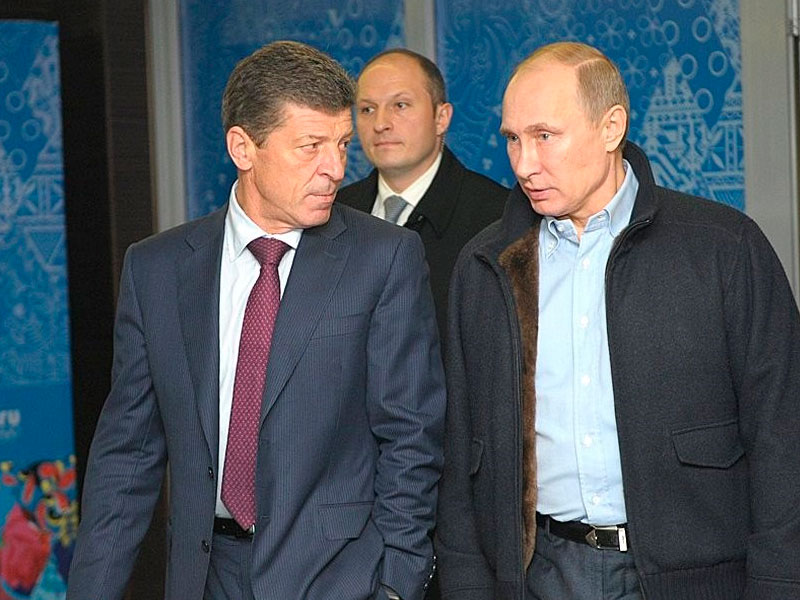 Dmitry Kozak and Vladimir Putin / Kremlin.ru
The system for evaluating the work of governors was launched with the presentation of Russian President Vladimir Putin in 2007, then the post of Minister of Regional Development Dmitry Kozaku at that time. For some time it became more complicated and gradually the number of evaluation parameters grown to 400. In 2012, those indicators were introduced that were used until recently. However, at the beginning of 2017, the Kremlin again spoke about the change in the system.
The source of the newspaper explained the need for these changes by “changing intergovernmental relations”. Recall that it is expected that the program of restructuring the budget loans accumulated by the regions will work on January 1, 2018.
Experts surveyed by the publication expressed the opinion that the main criterion for evaluating in essence should be the standard of living in the region, and the population should evaluate it. They also expressed the opinion that the authorities are trying to find such a configuration of the assessment of the activities of governors, which would really show the results of their work for the population. The proposed option, according to Natalya Zubarevich, is made according to the Western methodology that does not work in Russia. In her opinion, the expansion of the list of indicators will still not clarify the picture: the more criteria becomes, the “the mixture is more incomprehensible” and the more difficult it is to evaluate the work of the governors. “These indicators turn into simulators,” the publication quoted her words.
Talk to Polit.ru about the likely consequences of changing the methodology for evaluating how effectively the regional managers work, Nikolai Petrov, professor, and the head of the methodology for assessing the regional development of the Center for Fundamental Studies of the NIU-Veshe agreed. In his opinion, updated parameters for assessing the effectiveness of the work of the heads of regions will still not be able to give the picture close to reality, since this assessment of this is produced by the federal government, and not the population of the region.
Commenting on the assumption that a change in the methodology could be associated with the update of the governor’s corps, he did not rule out such a connection, but indicated that, according to his representation, the question of whether it was necessary to strengthen the pressure on young governors, in this case, there is still no.
“The point here is not in pressure on the governors, but in the very principle of the system of evaluating the activities of governors. We see that it is constantly changing. And the essence of the problems is understandable: when you have normal competitive elections, then the governor’s effectiveness is evaluated by citizens of the region. And they do not need any criteria that someone will lower them from above-they themselves know what exactly is important to them in this region and today.
 Working with documents / pixabay.com
When you have no elections that would play this role, you have to come up with something all the time. The situation is changing, it becomes necessary to change the assessment system. New people come who select new governors. They also bring a new assessment system with them. But, in fact, it seems to me obvious that the more indicators, the less tough and strict the assessment becomes.
When you have one or two, well, three to five indicators, you can clearly monitor who performs them and how. When you have 24 indicators, then the picture is less unambiguous: somewhere better, somewhere worse. And on the one hand, your hands are untied and you can blame any governor and change because some indicators look worse for him than it should be. On the other hand, it is impossible to objectively evaluate the activities of the governor using these indicators.
So the main problem is that the elections do not work, that people do not trust the governors on their own, and they are evaluated by the presidential administration, ”said Nikolai Petrov.