
Translated material
"The prison business must be loved"

Andrei Loshak talked with Olga Romanova about why she had to leave Russia and what ideal prisons should be
Last week, the journalist and human rights activist Olga Romanova wrote on her Facebook that she was forced to leave Russia because of the criminal case started with the FSIN of the Federal Penitentiary Service .
We contact Olga via Skype late in the evening. She had just returned from a trip to Brittany's prisons to Paris, where she stayed visiting Gevorkeshi (Natal and Gevorkyan). In the room, along with Romanova, journalist and coordinator of Rus Sitting, Maria Aismont. Olga fills the glass of red: "Well, now we can start."
You have already been asked where this idea of warring in French prisons came from and why do you need it?
 Andrey Loshak Photo: Mitya Aleshkovsky for TD
All embassies in the world come to the "sitting Rus'" and ask: how to help? But it is inconvenient for us to ask for money from foreigners. And we say: show us your prisons, because we are wondering how it works with you. It is very important for us to see this, to feel, to know, because, for example, French prisons did what we dream with Masha Eismont and what the people who were before us dreamed about. Valery Abramkin rushed with this idea, Gifter rushed with this idea [ Mikhail Yakovlevich Hifter, Soviet and Russian historian, philosopher, publicist. - approx. "TD" ]. All one wanted: so that we have a system of probes and free access to the public to prisons. In France, all this was done 20 years ago, but it does not work at all. This does not reduce the level of criminalization of prisons, that is, prison in France is black.
Is it like in Russia - black and red?
This is a global practice. Prisons are everywhere divided into red and black (in the first case, the administration rules, that is, the police, in the second - looking, that is, "plowmen"). But in Russia there are still green zones - the novelty of this season. These are zones where power belongs not to red and not black, but to radical Islamists. And people who fall into the green zone, even the Tajik coniller-man, come out of there by radical Islamists. This is directly related to ISIS ((a terrorist organization prohibited in Russia. - “TD”) - he came to our zones, and the zones always come to the zones earlier than this manifests itself at large. The prison in Russia does not correct a person at all, but, on the contrary, adds new strokes, new characteristics.
Even more marginalizes him, right?
Yes, it shows and develops in it some qualities that, maybe, were, or maybe they were not laid in it.
"Solzhenitsyn said that the prison is useful for man"
Are these not the best qualities?
Different. Let's remember that there are two big theories: Solzhenitsyn's theory and Shalamov Theory. Solzhenitsyn said that the prison is useful for a person who, after it, can write “One Day of Ivan Denisovich”, might think about how a person and humanity are arranged. And in fact, many Soviet dissidents went this path with great dignity and great benefit: Vladimir Bukovsky, Anatoly Marchenko and others. People who went to prison after the war with simple hooligans, falling under the influence of political, left prison human rights activists who made up the glory of the human rights movement around the world. Of course, this is. For example, my husband got there as a simple businessman and went out to a rather decent person.
 Left: writer Varlam Shalamov
Right: writer Alexander Solzhenitsyn photo: TASS
And the Shalamov version is that the prison is crippling and killing?
Yes, that a person can enter there with a simple thief, and go out in some other poor quality. And the same with Islamization. I will tell you the story of what qualities a prison shows in a person. Although this story is quite many years, it is still relevant.
Read also “Any execution of the 37th year can be repeated” Sergey Solovyov talks about a trip to Shalamovskaya Kolyma
In 2008, my husband ended up in Butyrka, where three met in the same cell: my husband, a top manager from Yukos Sergey Chenkevich and Max D.-an official who fell into the disgrace. For the last two, it was a dramatic meeting, because Sergey was from Yukos, and Max sold the assets of the Yukos Baikalfinance group. Max worked in the State Committee forces - a promising official who made a brilliant career. Everything was fine with him, he was a member of United Russia, but then he suddenly failed with his superiors unsuccessfully. As a result, at first I received a convention, which, of course, put a cross on his career, and “forgot” at all. I received four years already a real regime, and then eight years. Moreover, after 8 years, he received two lanes in a personal file: especially dangerous, prone to escape. It is curious that he was convicted on the basis of the testimony of his grandmother, who allegedly saw from the 8th floor, as in the building opposite the official Maxim D. received a bribe of 2.5 million euros in a diplomat. Grandma wrote a statement, and Max sat for 8 years.
Once in this situation, Max began to make a thieves career. Pretty quickly he became a look: first in the Tula zone, then in Ryazan. He served “before the call” and to the end of his term, as looking, raised the question of his coronation. Coronation is now taking place on Skype. Two thieves in law gave him a recommendation, as when joining the party. He understood what questions would ask him. And then there is a gathering on Skype, and they ask him: “Max, you claim to be the high rank of thief in law, but you worked. He also served as an official. Is it compatible? " To which Max replied: "But I stole it there!" They say that he was crowned. I met him when he left prison. After improving, he worked in several banks that are directly related to the state.
“I have not been asking for a long time:“ Do you have innocent ones? ”
You think that the prison makes some people better . This does not contradict the concept of “Russia -sitting”, which fights that people do not get in prison?
This is not entirely true. We are always talking about the fact that we are for improving the conditions of detention, because there are a lot of random, good people, innocent people in prison. Actually, why are we fighting for this? There should not be random people at all. Not that we in France made such an opinion-this is the 20th or 30th country in which I watch prisons.
I have not asked for a long time: "Do you have innocent ones?" People do not understand this, this is an unusual question. Now I ask: "Do you have random people in prison?" For example, you are sober driving, tired, bad weather, and you drive into another car-you are damaged, maybe even cripple someone. It's a pity. This is a terrible misconduct, but this is a fatal accident. It could be slippery, a cat ran - in general, the "Station for two." This is a person who was in prison by accident. So, there are no such people there.
They are not planted?
They are not planted.
"I left the country and, as it turned out, did the right thing"
Returning to the departure, what exactly do people from the FSIN are charged with you? What logic acts on their part?
Look, there are people who want to become security forces. They go to the Academy, to the FSB, to the Investigative Committee, to the Prosecutor's Office or the Ministry of Defense. Some are not taken there - then they go to the Academy of the Ministry of Internal Affairs. Some are not taken there, because there are certain characteristics - then they go to the bailiffs. And there are people who do not take anywhere - then they go to the FSIN. I would not say that among the security forces this department is respected. And not because the prison work is so unpleasant. It can be different. For example, in Germany this is a very honorable work. Society is grateful to them for doing this dirty work. Everything is different with us.
And so young ladies appear, which, due to their life experience, begin to spoil the blood of this department. They tolerate it. The bosses are changing. At first one leaves, then the other is planted. In the end, Kranienko comes. He does not like this work, does not want to deal with it: many times he is trying to resign, but he is not released. He hires two deputies on the recommendation, one of which is Oleg Korshunov - a man is already famous, by the way, my classmate.
 Deputy Director of the Federal Penitentiary Service (FSIN) of Russia Oleg Korshunov (right), accused of embezzlement, after consideration of the request for his arrest in the Basmanny Court photo: Sergey Fadeichv/TASS
What is he famous for?
He is now sitting in Lefortovo for custom -made murders in crosses, yachts and so on. The second is Major of Rudny missile troops, who rolled a statement on me. The “sitting Rus'” was won by the tender of the World Bank, and for two years we enthusiastically worked with this: for example, we had a big questionnaire among prisoners on the topic of what financial issues they have. My champion among questions is from a prisoner from Chelyabinsk: “My husband took a loan, and I killed him. Should I give a loan? "
There were more than 500 questions, of which we made up brochures and topics: how to pay for housing and communal services, if you are in prison, how to give a loan, how to pay alimony, how to receive a pension, whether there can be deductions from pensions, etc., and the Ministry of Finance, having pierced our work, about six months after all the reports, wrote gratitude to the Federal Penitentiary Service for the fact that the program passed with such success. As I understand it, at that moment the FSIN discovered that such a program was going on for two years, and wrote to the Ministry of Finance that there really was no program.
Of course, we always knew that sooner or later it could happen, and therefore we accompanied each lecture in the zone, audio and videos, photos, gratitude from the head of the zone or, in extreme cases, a certificate that the lecture was held. We attracted members of the regional PMCs, the Commissioner for the Rights of the Child of the Vladimir Region for a lecture in a colony for minors, the Nizhny Novgorod diocese - that is, different people took our materials, gave our lectures. We paid them the way, hotel expenses and paid a fee at the rate of lecturers of the Higher School of Economics. Therefore, the fact that the First Deputy Director of the FSIN did not know anything about this is the problem of the First Deputy Director of the FSIN, and not ours. But, unfortunately, not every person can realize what his problem is, so he wrote a complaint against us.
What is it? That you are decorated with state money?
Yes, that we stole state money in the amount of 190 thousand dollars. There are several problems: firstly, the state money of the Russian Federation is not measured in dollars, but, apparently, the FSIN does not know; Secondly, this is not state money, but the money of the World Bank, but thirdly, we had reports. We earned a net profit from this project for two years - 300,000 rubles, which was submitted to the accounts of the Rus Sitting charity foundation. In total, 150 thousand a year came out, despite the fact that, of course, we paid with the printing house, with sociologists, with experts, with hotels, with lecturers, paid for transportation costs, etc.
FSIN believes that you stole this money from him?
He does not write such details. This is better to ask him. The case was sent to the Investigative Committee, which came with searches, then conducted a depth check, checked all the papers, printing houses and said that there was nothing here. Moreover, we printed one batch of brochures, and then we turned to us for a second circulation so that the brochures were placed on the stand. Then, when I looked at Rudogo’s letter for the first time, on a search, I realized that the accusation is serious and, if I want to answer, I had to do this from the distance of long -range artillery. I left the country on June 8 and, as it turned out, I did the right thing, because more recently I found that I was not a traveling way, despite the fact that I have no property and debts. It was quite accidentally revealed that the bailiffs opened the case at me when Rudy wrote a statement at me, and I became a disorderly near the first search.
"We want to destroy the Gulag"
And why does this organization hate you? After all, you help them become better.
No, in fact, we do not help them, we destroy them. What exists now is called the FSIN is the century before last. The concept of the Gulag itself was invented by the British. In the Anglo-Broke war, they came up with concentration camps. In Russia, concentration camps appeared during the Czech Corps. Then it ceased to be relevant around the world, but in Germany and we have left.
 Komi ASSR. Concluded by the Ukhta expedition of the Northern Purpose Camps of the OGPU to transport goods up the river Izhma photo: TASS
They built a gulag, and his last reform was carried out by Lavrenty Pavlovich Beria in 1953: the Gulag was transferred from the NKVD to the Ministry of Justice. This is all. Then only the abbreviations changed, the morals were softened: a moratorium on the death penalty was introduced, the number of political prisoners decreased, industrial and industrial preferences were replaced, that is, they stopped spending money on meaningless construction of roads behind a polar circle. But everything else remains. Now they are not killed in a court by decision of the court and women will not be hunchbacked on the construction of railways, and everything else remains. But the Gulag outlined his term. In its place you need to build a normal penitentiary system.
How in Norway or Sweden?
This is completely different. In Norway, Sweden and Denmark, an excellent penitentiary and judicial system, here is a problem in another. They are rich, left, and therefore good. We will not be so soon, if we someday. We do not live in 90% of the population in such conditions in which residents of Scandinavia live in prisons. They have rich, good, kind prisons, although with a very long time. But they have the lowest level of relapses and crime in the world. People do not want to return to prison, because at large they will find a social allowance, the possibility of employment and training. And in the same America, where very tough prisons and terms, the crime rate is higher than ours. There are obvious things: firstly, the harsh system of a person does not correct, and secondly, people who have been released on parole are much less inclined to commit repeated crimes. In the 20th century, the concept of crime and punishment changed, and it became clear that cruelty did not give rise to fear. Here Masha wants to add ...
Maria Aismont: The reconciliation procedure plays an important role. We were told that when the reconciliation procedures are carried out and groups of criminals are gathered, and then victims of crimes come to these groups, gigantic results become visible. It works better somewhere, somewhere worse, but this is a fashionable trend.
Olga Romanova: This, however, is very important. Abroad, we see some tricks that you can try to introduce us. The Russian man leaves prison in absolutely empty space. He is not respected, he does not have money, housing, he does not have and will not have a job. But if you are hungry and if you do not have a fur coat, then you are going to rob my cottage. And if you can’t rob my cottage, then you go outside, take out a knife and take off a fur coat from me, or from my children, or from my mother.
An increased crime rate is not some people who were upset by some former prisoners. This is specifically we and our loved ones. This is what the bad work of the executive system is. It is called an executive system, not correctional. The FSIN is an official sentence service.
 During the educational and methodological collections of the heads of the guards of the institutions of the GUFSIN of Russia in the Sverdlovsk Region in the territory of the IK-47 photo: Alexander Nekrasov/TASS
Everything is from poverty: it is believed that such people are discharges and do not need to work with them. It is nice, of course, to work in prisons with random people who will never return there again. But everything else is a marriage in the work of the family and the school, with which the FSINA needs to work further. And the FSIN is marginal. That is, marginals on the one hand try to contact the marginals on the other side.
Where did the "Rus sitting" come from
What was the initial goal of the "sitting Rus'" and has it changed somehow during the work?
We were created quite by accident. It all started when I first got into the “Butyrka” and saw that there were queues everywhere, unfortunate people everywhere. When I came the next day, I found that all the same people stand in lines. You come to 7 in the morning, take the turn and leave when the institution closes. You can neither work nor engage in children and parents. And after spending some time in line with women, I realized that we were not doing the wrong thing. Let's make one, for example, Masha, it would stand at all in lines, Sveta will sit with your children and with the children of other women, you will go to court, and you will go to the zone and find out what you need to take. And at six in the evening we meet at the Chocolate Near Boityrki and tell each other what happened. So this was created.
 The defendant of the “Swamp Case” Stepan Zimin, the coordinator of “Rus Sitting” Sergey Sharov-Delone and the head of the Rus Sitting Human Rights, the founder and director of the charity fund for assistance to convicts and their families Olga Romanova (from left to right) at the Office of the organization “Rus Sitting”, where law enforcement agencies searched photos: Andrei Makhonin/TASS
And then men began to return to us: to help us, work together. Then we realized that it was time to somehow draw up and registered the charity fund. At first they provided only legal assistance, then, after long flour, they understood how material assistance works: how to transfer diapers, gaskets, toothpaste, and clothes to the exit. Поняли, что надо делать тюремный справочник, и Маша Эйсмонт, сидящая сейчас напротив, сделала это восхитительно на пару с Даниилом Константиновым, знаменитым политзаключенным. Проект называется «Тюремный консультант» [ vturme.info — информационный проект, рассказывающий о писаных и неписаных правилах жизни за решеткой. - approx. «ТД» ]. There is something to be proud of.
Опять же, по мысли Маши сделали Школу общественного защитника, которая уже больше двух лет отлично работает по стране. Создали социологические опросы, написали концепцию пенитенциарной системы в центрах стратегических разработок, два года занимались и продолжаем заниматься финансовой грамотностью. Направлений очень много. Хотим открыть еще два отделения — в Питере и в Ярославле. В этом году мы открыли в Новосибирске. Через год планируем в Екатеринбурге и, надеюсь, в Хабаровске.
Сколько людей задействовано в «Руси сидящей»?
18 человек работают каждый день на официальном трудоустройстве и 400 — волонтеров.
А вы оплачиваете зарплаты через фонд?
Basically - yes. На зарплаты уходит меньше 30%. Фандрайзинг обеспечивает 90%. У нас есть 10 человек крупных жертвователей, которые серьезно нам помогают. И все это люди, которые образуются как-то сами по себе. Ни один человек не пришел через связи в бизнесе. Один западный адвокат, мировая звезда первой величины, недавно ушедший в отставку, тоже пришел к нам и выразил готовность помочь. Узнал о нас, потому что у него русская жена.
«Здесь особый вид разгильдяйства»
Давайте вернемся во Францию. Зачем французский ФСИН вас позвал?
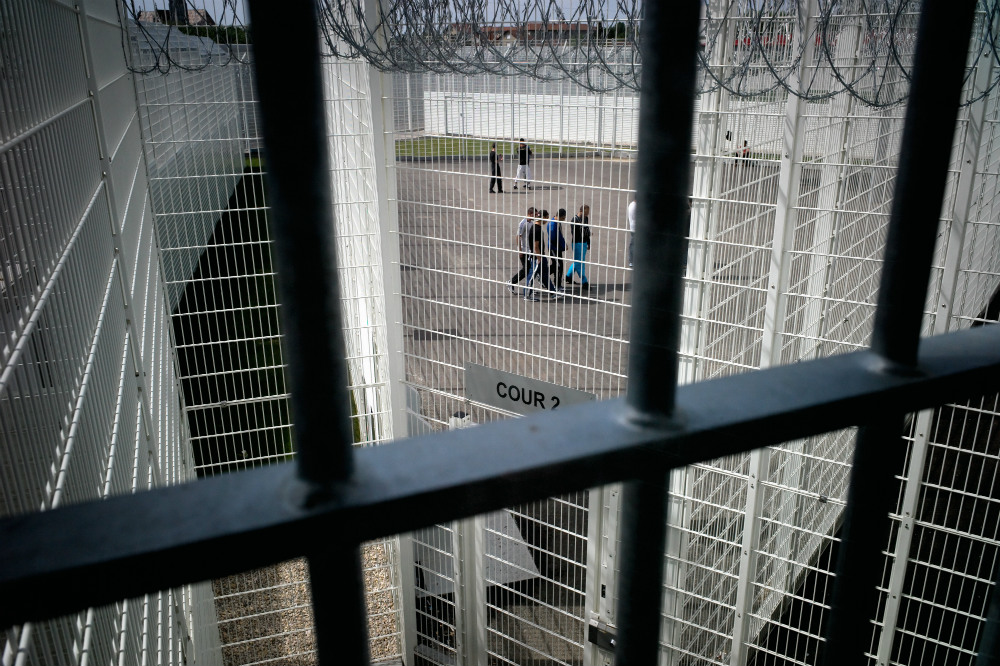 Франция, заключенные во дворе тюрьмы Фото: Jean-Philippe Ksiazek/AFP/East News
Мне кажется, они просто хотели похвастаться. То, что у них есть хорошего, произвело очень большое впечатление. То, что у них есть плохого, — не произвело. Что плохого: человек с пожизненным уже через два года может просить УДО. А мы категорически против. Вы же не хотите, чтобы битцевский маньяк вернулся к нам в общество? Например, одна женщина, убийца, которую мы тут встретили, получила пожизненное, а теперь, после 17 лет, она выходит в отпуск на неделю. Это очень странно выглядит для нас, что пожизненные могут вот так сходить в отпуск
Почему во Франции это делают? Дорого содержать людей пожизненно или это особый вид гуманизма, и они считают, что все люди исправляются?
Особый вид разгильдяйства. Здесь есть свободный доступ общества в тюрьмы: разных ассоциаций, НКО, общественного гражданского контроля и т. д. У них 60% осужденных людей не сидят в тюрьме, а проходят пробацию, т. е. ресоциализацию, получают помощь с работой, жильем, получают психологическую поддержку. But all this does not work. Уровень преступности не понижается.
Сейчас я думаю, что это происходит, потому что тюремное дело надо любить, надо быть вовлеченным в этот процесс. Например, мы с Машей любим это дело, скандинавские тюремщики — любят. Сам процесс наблюдения, исправления — очень правильный. Это то, чему можно жизнь посвятить. В Дании я встречала профессоров в красных штанах, которые бросали университет и шли работать в тюрьму. В одной строгой мужской тюрьме я встретила бабушку в вязаной кофте. Оказалось, что она — директор тюрьмы и выходец из известной и уважаемой датской династии, члены которой много лет, если не столетий, входят в парламент Дании. А она всегда хотела работать в тюрьме. Закончила юридический факультет, работала простым инспектором, инспектором по режиму и дослужилась до должности начальницы тюрьмы, потому что ей нравится сам процесс исправления человечества. И там уровень рецидивов близок к 10%. That is, no. Это чемпион.
«Этот вопрос мучил Жан-Жака Руссо, а теперь мучит меня»
Ведь это как с детьми: чем больше вкладываешь личного чувства, тем лучше результат.
Конечно, я думаю, дело в этом. Мне кажется, во Франции этим занимаются чиновники. То есть сама по себе система хороша, но я не знаю, как в инструкции прописать, что надо в это вкладывать что-то ещё, кроме времени. Поэтому мне очень интересна Германия, где я много-много раз была в тюрьмах. В понедельник я привожу туда всю «Русь сидящую» в полном составе. Мы должны посмотреть и обсудить, почему у них это работает по инструкции.
Наверное, потому что это народ такой.
 Ольга Романова Фото: Зураб Джавахадзе/ТАСС
Нет, это был совсем другой народ, потому что Россия и Германия сто лет шли — голова к голове — по концлагерям и ГУЛАГу. Тюрьма Штази, где мы будем начинать в понедельник нашу программу, скопирована с нашей «Матроски» один в один. Программа называется «Обед с заключенными». Я привожу в Германию наших бывших заключенных, программа начинается в тюрьме Штази, которая сейчас является музеем, — нас там встречают бывшие заключенные этой тюрьмы. Я это все уже видела, но мне интересно мнение наших: почему их пенитенциарная система работает без эмоциональной составляющей? Чего я не обнаружила в эмоциональной Франции. Это очень интересное и сложное дело. Я, конечно, постараюсь до конца жизни извлечь золото из свинца и найти ответ на этот вопрос, мучивший даже Жан-Жака Руссо. I'll try.
Допустим, вы наберетесь опыта и поймете, как это сделать лучше. Но ведь в России у нас другие люди — и их не заменишь . В зять того же Коршунова, например.
Его уже заменили. Он в Лефортово.
Поразительно, что те люди, которые должны исправлять заключенных, сами являются отпетыми бандитами.
Когда ты заходишь в русскую тюрьму, ты только по форме можешь отличить, кто есть кто, — такая маргинализация. Я буду думать про то, как поменять брак в работе общества: как исправить работников ФСИН и как исправить людей, которые совершили преступление. Можно ли это сделать и как? Этот вопрос мучил человечество многие поколения, а теперь мучит меня.
Do you want us to send the best texts of “such cases” to you by e -mail? Subscribe to our weekly newsletter!
борьба за права заключенные ольга романова тюрьма эмиграция