
Translated material
We killed, sir
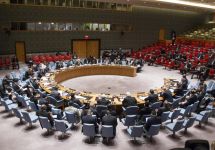
The UN Security Council did not adopt a resolution on the extension of the powers of the joint mechanism of the OPCHO-ON to investigate cases of the use of chemical weapons in Syria (SMR), reports Associated Press. The Russian and American options for the document were rejected.
Thus, the powers of the International Himakat investigation group will expire on Tuesday.
Russia imposed a veto on a draft resolution proposed by the United States. Bolivia and Kazakhstan also voted against him. The American version of the document was supported by 11 out of 15 members of the Security Council.
In turn, the Russian project of the resolution could not collect nine votes - a minimum necessary for approval. Only China, Bolivia and Kazakhstan acted in his support, while the seven states of the Council of People's Commissars voted against, representatives of four more countries abstained.
On Thursday evening, Japan introduced its version of the resolution on the extension of the mandate of the expert group for chemical weapons for 30 days, but the Security Council refused to consider it on Friday.
"Using a veto, Russia killed the Himatak investigation mechanism in Syria. Russia proved that it should not be trusted in work on a joint settlement in Syria," the US Permanent Representative to the United Nations, Nikki Haley, commented on the decisions of the Council of People's Commissars. According to Haley, the responsibility for Himakaki in the future will lie in Moscow.
The Russian representative, Vasily Nevanja, said that the United States introduced its draft resolution on the investigation of Himatak, in order to "cast doubt on the role of Russia in the political process of the Syrian settlement."
Russia blocked the extension of the Mandate of the International Himatak investigation group for the second time. On October 24, Moscow imposed a veto on the previous draft resolution proposed by the United States.
On November 8, the head of the SMR Edmond Mule said at a meeting of the UN Security Council that in April Himatak on Khan-Sheikhun, the Syria government was guilty.
The attack on Khan Sheikhun was committed on April 4 . Bombs with Zarin, as well as presumably chlorine, were thrown into the city. As a result of the raid, more than 80 people died, including children.
Damascus said that Assad’s aircraft did not use chemical weapons, but bombed the rebels for the production of chemical shells and a warehouse of ready -made weapons. At such an explanation of events in Khan-Sheikhun, they also insisted in Moscow. However, the international community is sure that Assada aircraft made a chemical attack.
On the night of April 7, the United States fired at the Ash-Shayrat base with winged missiles , destroying it almost completely. It was the most stringent US action in Syria for all six years of the war, continuing in the Middle Eastern country.
On April 12, Russia imposed a veto on the draft resolution of the UN Security Council condemning a raid on Khan-Sheikhun and the demand for Assad to promote an international investigation of this crime.