
Translated material
How to get money for modern transport in Novosibirsk: a manual for the city authorities
In the best case, 10% of deputies in Novosibirsk use public transport. Being motorists, they will still have a hand in chosen the selected lanes and tram tracks, and then they will begin to demand additional roads and denouement instead. Alexey Mazur about the prospects of the transport development program.
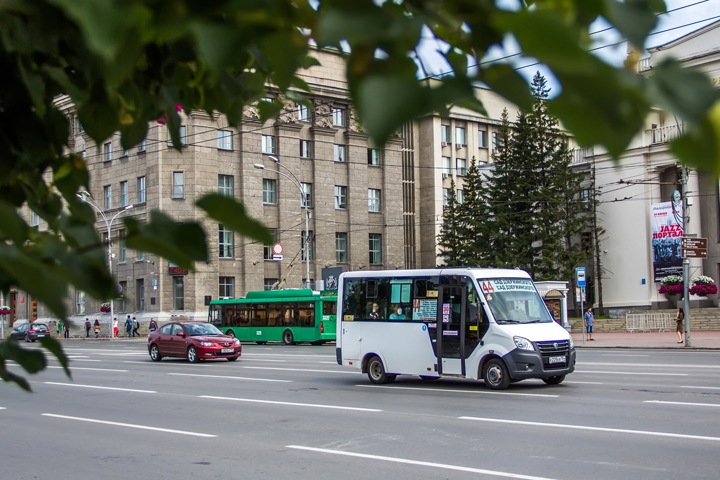
In Novosibirsk, the final phase includes the adoption of a program of integrated development of transport infrastructure (PCR TI). I got into the working group first on the development of technical assignment for this program, and then for its adoption.
Now the transport strategy of Novosibirsk does not exist. There is a general plan for which all planning documents must comply with. But in terms of transport, it has long been not consistent with either realities or common sense. In particular, by 2030, 54 metro stations, 150 multi -level interchanges and hundreds of kilometers of continuous traffic highways are expected. And the costs of road construction should already exceed the current revenues of the city budget.
That is, science fiction is drawn in the general plan, and the emphasis is on the “city for cars”. The surviving pedestrians and passengers of public transport is supposed to be driven under the ground so that they do not interfere with the buildings of the territory. The general plan is not only not realistic, the outdated transport ideology of the beginning and the middle of the 20th century prevails in it.
Unfortunately, the adherents of this ideology are still widely represented in the departments responsible for architecture, the construction and development of transport - both in Novosibirsk and in the regional government.
A slightly different ideology was introduced into the terms of reference for the RCC. The developers were invited to “cut” Novosibirsk with a network of separate transport corridors for the main public transport routes. It can be a metro, a tram moving separately from traffic jams, a city train, buses along the dedicated lines.
137315 "We will introduce a non -controlling system"
The presence of a network of such trunk routes will allow residents of agglomeration to cross Novosibirsk by public transport, bypassing traffic jams. That is, the route from the sleeping microdistrict to the metro station will take half an hour instead of the current one and a half.
In principle, the developers completed this task. It is assumed that by 2030 84% of residents of Novosibirsk will live in walking distance from the nearest stop of the main route. This, in particular, will lead to the fact that a fifth of motorists will transfer to public transport. Thus, roads will also be unloaded.
But then the approvals began. They happen like this - people gather (financiers, architects, lawyers) and begin to collectively discuss what we will realize from the program and what we will throw out. Most of them did not read the program, they do not understand its ideology, or even are the adherents of “Cities for cars”.
It looks like this: “But the allocation along such and such a road who needs it? There are also a lot of turns. We remove. " And this dedication, perhaps, is part of the main route. You will save it-and tens of thousands of inhabitants of some microdistrict will stand in traffic jams and will lose every day every day.
And so - with a gallop for events, in five seconds the "sages" decide what to realize and what is not necessary.
It is curious that at the stage of compiling the terms, when it was necessary to discuss how to develop Novosibirsk in terms of transport, these people were absent in discussions. The development of PCR TI began because its presence in the municipality was a condition for allocating money for the BKD program (“Safe and high -quality roads”). The competition was held in the spring, summer flew by unnoticed, and only at the end of October specific proposals appeared what to do.
Now I hear reproaches to Giprogora on the sidelines (this institute won a competition for the development of the program) that the work was performed "after sleeves." But still, I see that the developers understand what and what they do for, unlike most critics. And even if the project of the PCR is imperfect and contains flaws, it is much better than that mess in the transport planning that is present at the moment.
But the next stage is a connection to the discussion of the City Council. Among our deputies, public transport users are probably 10 percent. At best. They were not involved in the development and discussion of the PCR TI. There were not a single deputy at the working meetings. On the one hand, this indicator is unacceptable for the low -cost of the city hall with the deputy corps, and on the other, it is unacceptable to the low degree of control of deputies at the work of officials.
Further, approximately the following is expected. The deputies, as motorists, will still put their hands on the throwing out the selected strips and tram tracks from the program. They will also begin to require additional roads and interchanges instead. The most striking example, probably, is: what to pull to the springs is red avenue or a tram? From the point of view of transport logic, there is no question: the tram can take out from 10 to 30 thousand people per hour (depending on the availability and quality of rolling stock), and the red avenue in four -lane design is 2-3 thousand people per hour. In the case of a selected strip - up to 6-10 thousand people.
I will express my considerations in the hope that at least some of the deputies and officials of the city hall will listen to them.
- I am categorically against “throwing” from the PCR of the dedicated stripes and tram tracks. If such a “throwing out” is happening, it is necessary to clearly imagine what is proposed in return to the residents of those microdistricts who were supposed to travel along this transport corridor.
115652 "The tram is to blame because it is not lucky"
The main “Gesheft”, which each deputy receives, is not how many roads will be built precisely in his district, but in how much time the time is reduced to work (or to the center) for its voters. The developers of the PCR TI can provide this value to each deputy. And it depends not on the number of roads in the district, but on the "expanding" of narrow places on the way to the center.
Throwing out of the PCR of the separate lines and tram tracks doom the inhabitants of the corresponding microdistricts to further torment in traffic jams. The initiators of such editing should understand that these will be traffic jams of their name.
The amount that is required for the implementation of the PCR is estimated at 133 billion rubles (mainly). In the current state of the budget, this also seems fantastic. But if we summarize the funds that have been spent recently on road construction, on the Bugrinsky bridge, on the defect on South Square, as much as it is supposed to be spent on the fourth bridge, we will understand that the numbers are not so fantastic. And here is an important point - a significant share of financing can take on regional and federal budgets.
As for the federal budget. If Novosibirsk comes to ask for money for the next highway or denouement, he will stand in line with another 70 regions. If it is proposed to finance the modern system of public transport, which will quickly give a significant social effect, the probability of financing is sharply increased. So far, only Moscow makes such a system, the rest of the regions are swinging. And we understand that the federal trends are set by Moscow, not the general plan of Novosibirsk.
On the sidelines, again, they said that the transport diagram of the agglomeration “pulls” for 600 billion. I'm afraid that there is “General Plane-2”.
Alexey Mazur