
Translated material
Veto from the sample
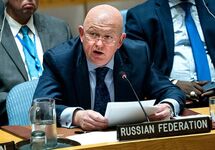
Russia again imposed a veto on the resolution of the Security Council on the extension of the mandate of the joint mechanism of the UN and the organization to prohibit chemical weapons and (SMR) to investigate the use of chemical weapons in Syria. This was reported by the UN News Center.
The mandate of the SMR expired at midnight on November 17. The new resolution was represented by Japan and provided for the "technical" extension of the mandate for only a month, provided that during this time more clear work parameters of experts will be developed. Russia and Bolivia voted against the draft document, China abstained.
The Permanent Representative of Russia at the UN Vasily Nebenzya called the SMR structure, which "for two years in a row, stamping unproven accusations against Syria." "Any extension of the SMR is possible for us only if the fundamental shortcomings are corrected in his work. It cannot be otherwise - after the leadership of the mechanism that covered itself with a shame with its fictitious investigation of the episode using Zarin in Khan -Sheikhun, it was signed under the unfounded accusations against Syria," the Russian diplomat said.
At the same time, Nebenae called “not dramatized” ”the situation. “Nothing prevents the security council members from continuing the issue of improving this tool with a possible resume of his work in the future,” he said. “Our draft resolution remains on the table.”
After voting, the regular representative of the United States Nikki Haley expressed her indignation at the voting results. She emphasized that the text of the new resolution was "almost identical to" the text of the Russian project. Haley noted that it included amendments, which Russia itself proposed when discussing the American version. As a representative of the United States noted, this means that Russia was never going to renew the mandate of experts. The British ambassador Michael Rairecroft said that Moscow thus seeking to protect its ally in the person of Bashar al -Assad regime.
The representative of Sweden proposed to immediately continue the consultations in order to find a mutually acceptable solution until midnight, when the term of office of the SMR expires. Members of the Security Council have begun consultations, however, the crowd has not yet been reported.
On Thursday, the Security Council of the UN also could not adopt a resolution on the extension of the powers of the SMR. Russia has imposed a veto on the draft resolution proposed by the United States. Bolivia and Kazakhstan also voted against him. The American version of the document was supported by 11 out of 15 members of the Security Council.
In turn, the Russian project of the resolution could not collect nine votes - a minimum necessary for approval. Only China, Bolivia and Kazakhstan acted in his support, while the seven countries of the Council of People's Commissars voted against, representatives of four more countries, including those possessed.
Russia does not respect the standards of international behavior regarding the use of chemical weapons, the White House said on Friday. "Having imposed a veto to extend the work of the SMR, Russia sent a clear signal that it did not appreciate the life of the victims of attacks with the use of chemical weapons or does not respect adequate standards for international approaches to the use of such weapons," the prize notes.
On October 24, Moscow imposed a veto on the previous draft resolution proposed by the United States.
On November 8, the head of the SMR Edmond Mule said at a meeting of the UN Security Council that in April Himatak on Khan-Sheikhun, the Syria government was guilty.
The attack on Khan Sheikhun was committed on April 4 . Bombs with Zarin, as well as presumably chlorine, were thrown into the city. As a result of the raid, more than 80 people died, including children.
Damascus said that Assad’s aircraft did not use chemical weapons, but bombed the rebels for the production of chemical shells and a warehouse of ready -made weapons. At such an explanation of events in Khan-Sheikhun, they also insisted in Moscow. However, the international community is sure that Assada aircraft made a chemical attack.
On the night of April 7, the United States fired at the Ash-Shayrat base with winged missiles , destroying it almost completely. It was the most stringent US action in Syria for all six years of the war, continuing in the Middle Eastern country.
On April 12, Russia imposed a veto on the draft resolution of the UN Security Council condemning a raid on Khan-Sheikhun and the demand for Assad to promote an international investigation of this crime.