Translated material
Corrected the Constitutional Court

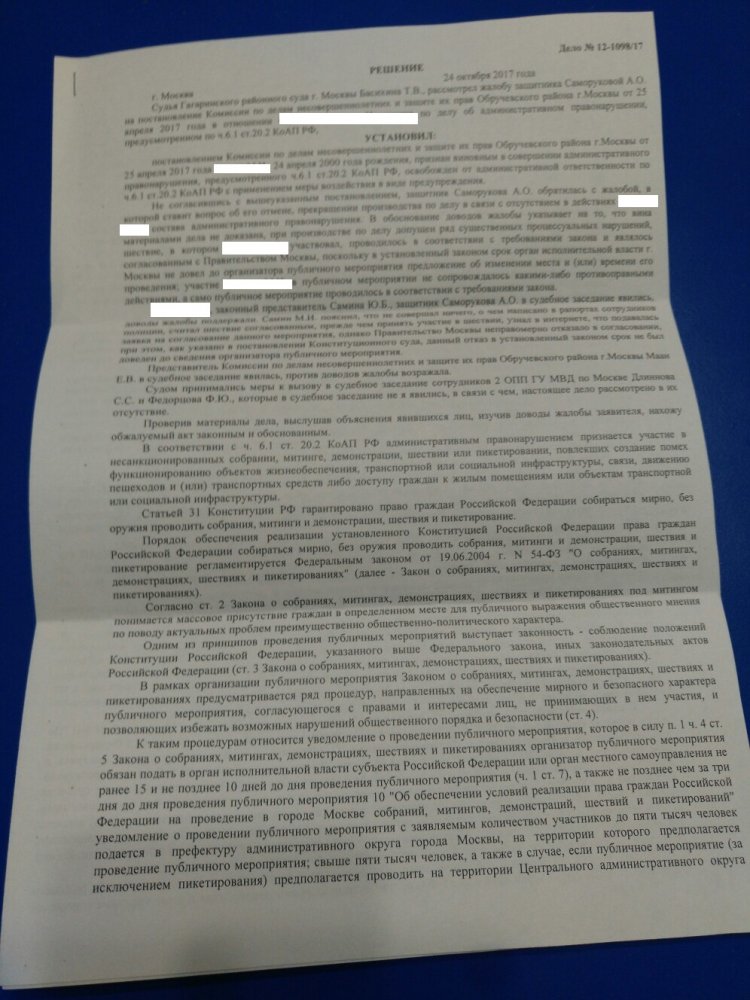
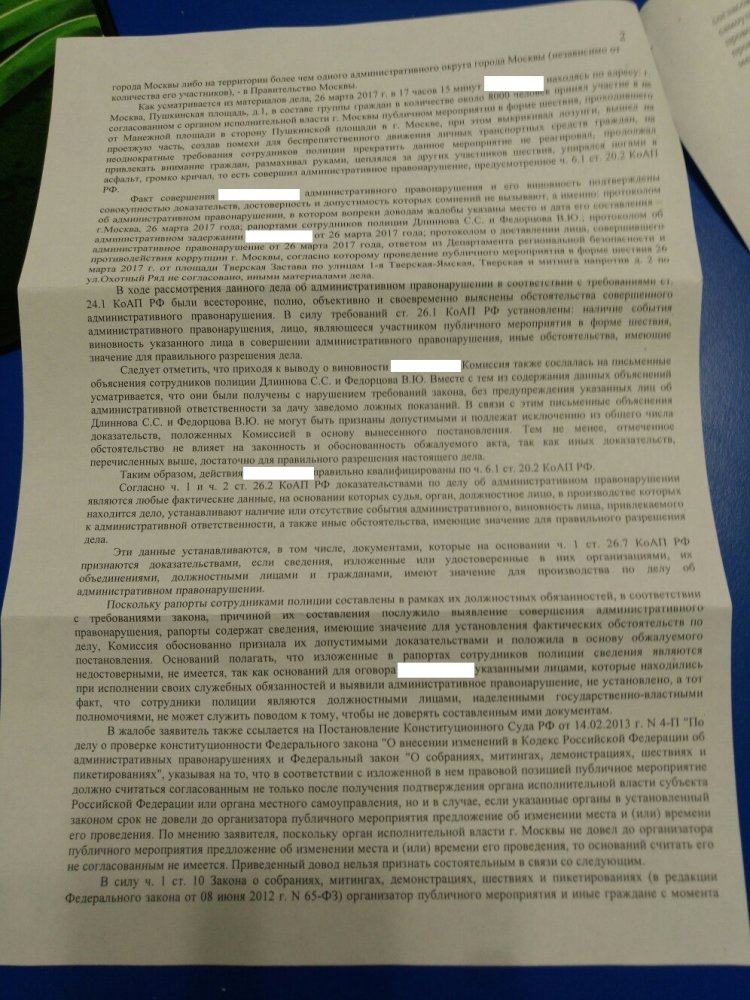
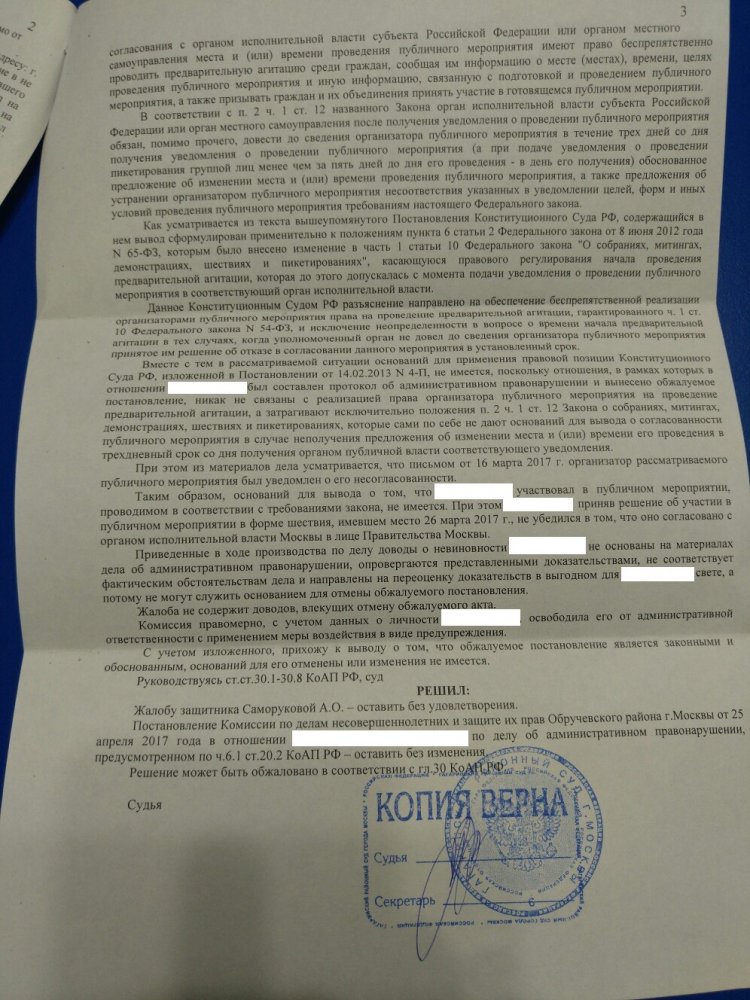
The Gagarinsky District Court of Moscow upheld the decision of the commission on minors in the case of one of the detainees on the rally on March 26. The commission considered that the detained teenager violated the procedure for conducting public events by creating interference with infrastructure (part 6.1 of article 20.2 of the Code of Administrative Offenses), but freed him from responsibility and limited himself to a warning. The court, supporting the commission, unexpectedly interpreted the situation of the Constitutional Court.
The court, as the overwhelming majority of similar cases, rely primarily on the detention protocol and police reports. However, in addition, the court reacted that the complaint against the decision of the commission mentioned the decision of the Constitutional Court of 2013, giving some explanations by legislative restrictions on freedom of assembly.
The complaint stated that in accordance with the position of the Constitutional Court, the event should be considered agreed not only after receiving confirmation from the authorities, but also if the authorities were not proposed on the deadline for the deadline for the time and/or time for the event. From this, according to the applicant, it follows that the event on March 26 should be considered agreed.
In response to this, the Gagarinsky district court represented by judge Tatyana Basikhina said that the decision of the Constitutional Court says only from what moment the organizers of the event can begin to notify people about when and where it will take place.
Indeed, the resolution with a direct text says that amendments to the Assembly Law “do not prevent the organizer of a public event until the consistent of the place and (or) the time of its implementation of possible participants in the public event about its alleged goals, form, place, time and other conditions of conduct”.
However, according to lawyer Anastasia Samorukova, who represented the interests of the teenager in court, there is no reason to share campaigning before the event and the actual event. “What can happen after agitation that people cannot come to the place that agitation is being conducted?” - The lawyer asks with a question. After all, if the organizers are allowed to notify people that the event will take place there and then, it is logical from this that it will take place there and then.
Samorukova noted that the decision of Judge Basikhina is an extremely rare example, when the courts generally react to the reference to the decision of the Constitutional Court in such cases, despite the fact that lawyers appeal to him constantly. In this case, Judge Basikhin, according to the lawyer, acted as expected, that is, she made an assessment of all the arguments given in the complaint (although quite peculiarly). Typically, the courts ignore the reference to the decision of the Constitutional Court on the consistency of the event - apparently, because they have nothing to answer.