
Translated material
"Lighthouse" shines again
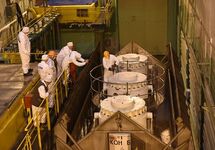
Atmospheric pollution by radioactive ruthenia-106 is not related to the activities of the Mayak production association in Ozersk, in the Chelyabinsk region. This was stated in the press service of the plant, RIA Novosti reports .
"On the FSUE" by Mayak "in 2017 sources from Ruthenenia-106 were not made, emissions into the atmosphere were in ordinary regulatory values. Radiation background is normal. Additionally, we report that the work on the release of ruthenium-106 from the exposed nuclear fuel (and manufacturing on its basis of sources of ionizing radiation) has not been carried out at our enterprise for many years, the report said. - Pollution of the atmosphere with an isotope of the Ruthenini-106, indicated in the Roshydromet report, is not related to the activities of the FSUE "PO" Mayak ".
From September 26 to October 1, it was recorded "extremely high pollution" of the air by particles of Rutheneniya-106 in the Ural monitoring stations, the Roshydromet reported . In particular, at the station in the village of Argayash, 30 kilometers from Mayak, excess compared to the background value was 986 times.
The source of the edition of Znak.com on the "Mayak", meanwhile, did not rule out the possibility of the appearance of ruthenium-106 in an atmosphere of nuclear waste, which are brought to the enterprise for processing. "The winds rose are coming from the industrial zone of the enterprise towards Argayash, so the news is not very positive," the source noted.
On Tuesday, Greenpeace turned to the Prosecutor General and Rosatom with a demand to investigate a possible incident that led to the atmosphere of the Ruthenius-106 radioactive isotope. "The emergency release of Rutheneniya-106 at the Mayak plant may be associated with the glazing of the worked out nuclear fuel. It is also possible to get a material containing rutheniya-106 into the furnace for remodeling metals," the Greenpeace notes.
In early October, European monitoring stations recorded the excess of the ruthenium-106 content in the air. Given the weather conditions, it was concluded that a cloud with radioactive isotopes could come from the Urals. The isotope did not represent the dangers to the environment and people in the discovered quantities.
Rosatom in response said that the situation in the area of Russian nuclear facilities is normal.
Mayak is one of the largest Russian centers for processing radioactive materials. The association serves the Kola, Novovoronezh and Beloyarsk nuclear power plants, and also processes nuclear fuel from atomic submarines.
On September 29, 1957, a large radiation accident occurred on the Mayak. In Soviet times, the accident was called Kyshtymskaya, in the nearest open city of Kyshtym. "Mayak" then was engaged in the development of weapons of plutonium. The explosion occurred in a container for radioactive waste. The cause of the accident was the failure of the cooling system.
About 6 thousand people were resettled from the radiation infection zone. At the same time, the evacuation of the population from the most affected villages began only 7-14 days after the accident. The radiation cloud of power was given out for the northern lights. The exact number of those who died and suffered from the consequences of the accident is unknown.
In 2001-2004, several tens of million cubic meters of liquid radioactive waste were dropped from the enterprise to the Techa River basin. In 2006, the General Director of Mayak Vitaly Sadovnikov in this regard was charged under Part 1 and 2 of Article 274 of the Criminal Code (violation of the rules for the appeal of environmentally hazardous substances and waste).
In 2007, at the "Mayak" during transportation from the chemical and metallurgical plant to the radiochemical plant on the territory of the enterprise industrial site , liquid radioactive waste leaks . As a result, there was a "formation of spot radioactive pollution in the site of the technological road above the established control levels." Presumably, the cause of the incident was a violation of the tightness of the tank valve with waste.