
Translated material
President Zimbabwe Mugabe resigned
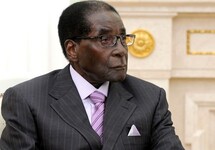
President Zimbabwe Robert Mugaba, last week, actually removed from the authorities as a result of a military coup and placed under house arrest, resigned. It is reported by AP.
In a statement by the 93-year-old Mugaba, who was read out by the speaker of the parliament Jacob Mududd, it was said that the president immediately leaves his post for the purpose of peaceful transfer of power.
As expected, the new president of the country will be 75-year-old Emmerson Mnngagva, known for the nickname Crocodile. It was the resignation of Mnngagva from the post of first vice president of the country on November 6 that became a direct reason for the military coup.
Earlier on Tuesday, Reuters informed Reuters that the muddel speaker launched the impeachment procedure for Mugaba. The Herald reported that the joint hearings of the Senate and the National Assembly will begin later on the same day at the international conference center of the Zimbabvian capital of Harara, since there are no halls in the parliament building where all 350 members of both chambers could fit.
Thousands of demonstrators rally from the parliament in support of the resignation of the president.
Meanwhile, Mugaba himself called a meeting of the Cabinet of Ministers in the morning, which traditionally held a week on Tuesdays. However, this time only five ministers and the Prosecutor General came to the meeting - the remaining 17 members of the government ignored the call, supporting the demand for the resignation of the head of state.
The coup in Zimbabwe took two days - November 14-15. By order of the army commander Zimbabwe Konstantino Chiveng, the soldiers advanced to Harara, and the next day, Mugaba was removed from power . There were no victims, as far as is known. There was no excesses outside the capital.
The president and his 52-year-old wife Grace Mugabe, who claimed to become his successor, were placed under house arrest. A number of officials were sent to a military prison.
The military called the cause of the coup "a worsening social and economic situation in the country." At the same time, the participants in the speech denied the intention to overthrow the president. "Our goal was the criminals surrounding Robert Mugaba, whose actions cause social and economic damage to the state," the military said. "We want to hold them accountable."
It was reported that on November 18 in the evening, Mugaba declared a hunger strike in protest against removal from the authorities, and also refused to accept the bath and did not talk with visits - representatives of the military.
On November 19, the ruling party of the country - the Zimbabvian African National Union - the Patriotic Front (Zanu -PF) - excluded the president and his wife, which headed the party’s youth organization, from its ranks. The new leader Zanu-Pf was Mnngagva.
Then Mugaba was presented with an ultimatum demanding to resign until noon on the 20th. It was expected that the president would make a corresponding statement on Sunday in a television appeal to fellow citizens.
However, Mugaba, speaking on television, called what was happening in the country "a challenge to his power as the head of state and government." He also promised to take part in the December Congress of Zanu-PF. At the same time, the president expressed consent to criticism of the ruling party.
Meanwhile, the media reported that in the pre -prepared text of the statement it was precisely about the resignation of Mugaba.
On Monday, information appeared that the president agreed with the military conditions of his resignation . It was claimed that he and his wife are guaranteed a complete immunity from the persecution and preserving all their property in the country.
Nevertheless, the application for the resignation of Mugaba sent to the speaker Mudende only after the launch of the impeachment procedure.
Mugaba headed Zimbabwe since the proclamation of the country's independence in 1980. Initially, he served as the Prime Minister, and since 1987, when the country was transformed from the Presidential Parliamentary Republic, he took up the post of head of state. The dictator has been repeatedly accused of violating human rights and suppressing the political opposition. Since 2003, it has been under US sanctions .
At the UN Zimbabwe, she repeatedly voted in jointly with Russia. In particular, this country did not support the resolution with condemning the annexation of Crimea .