
Translated material
"The Secret of Coco": Good death
A great cartoon from the Pixar studio is a musical guide to the Mexican Day of the Dead (and not only)
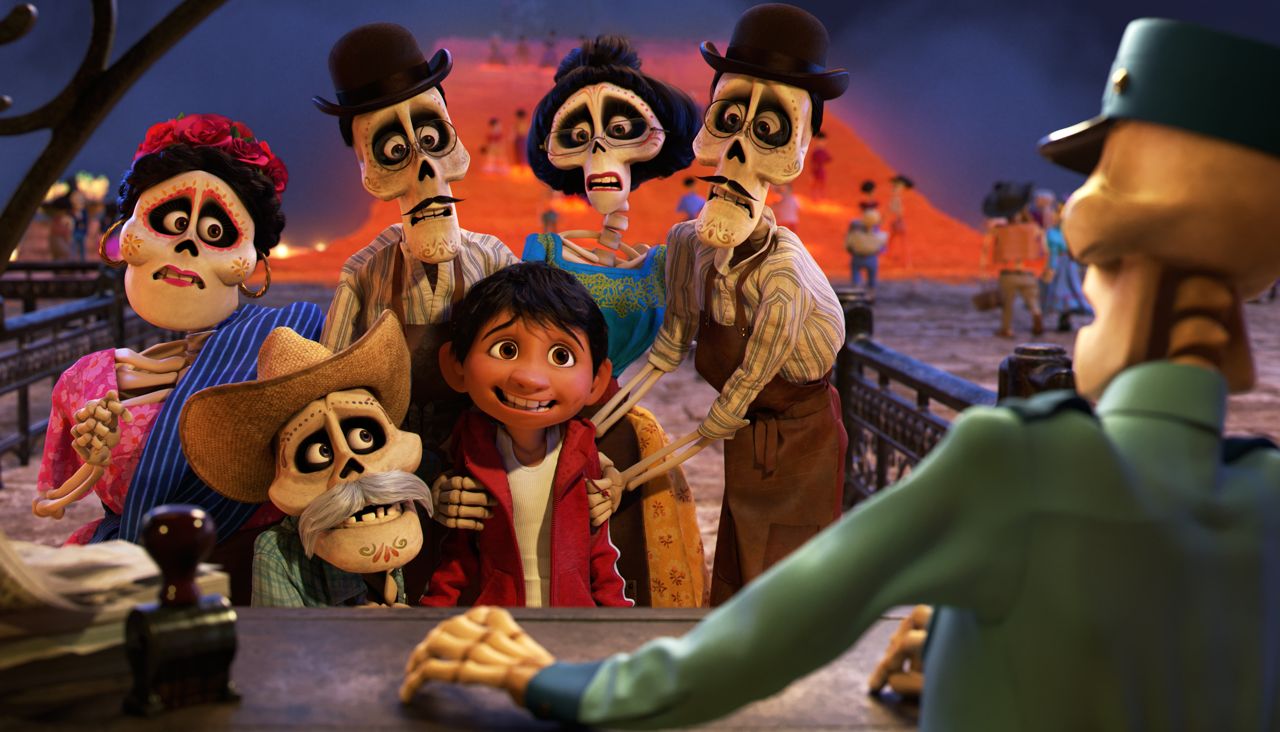
On November 23, the “Secret of Coco” is released - a musical cartoon of Pixar studio, shot by Ankrich (director of “Toy Stories 3” and one of the authors of “Monster Corporation” and “In Search of Nemo”) and Edriene Molina. The cartoon talks about a Mexican boy who dreams of becoming a musician - and for this goes in the kingdom of the dead. The “secret of Coco”, which turned out to be much more complicated and more interesting than it seemed at first, says film critic Anton Dolin.
In the cult film “Ghost”, the heroine Wupu Goldberg, saying goodbye to a couple of lovers (she is alive, he is already a ghost), pronounces the famous phrase: “A good life to you, good death to you.” Usually in this place the hall laughs. What is “good death”, if not Oxymoron? However, the day of the dead is a holiday for Mexico no less important than Christmas - the Pixar studio seen by the eyes of the animators, for the first time gives the phrase a distinct meaning. Such a afterlife, multi -colored, surrealist, free, surpassing even the crazy fantasies of Tim Berton from the “corpse of the bride”, is everyone's dream. Moreover, the child. The proof is the boy Miguel, who escaped from the stupid relatives to the welcoming dead and finally became happy there. This is what the “The Secret of Coco”, the full -length cartoon Lee Ankrich (“History of toys 3”) and Edrien Molina (debutant in directing, screenwriter of the “good dinosaur”).
However, at first it seems that Pixar is no longer the same - in recent years we have been used to this unpleasant thought. The times of revolutionary cartoons (“Monster Corporation”, “Ratatuy”, “Valley”, “Up”), every year there are more sequins and prequels every year, are exploited - in a word, everything for sale every year. The recent “Calls 3” convinced of the same. In the Secret of Coco, the alleged secondaryness was originally alarming in relation to another full -length cartoon produced by Guillermo del Toro - the “Book of Life”, also about the day of the dead. What is called, have come! Previously, they stole at the Pixar (“ants ants”, “Rio”, “The Secret Life of Pets”), Pixar himself is now stealing. And, of course, he does it at the highest technical level.
Yes, the technique of this studio is the best in the world, and involuntarily, you are amazed at the colorfulness and at the same time realism of landscapes, interiors, people and animals in the Secret of Coco. But the innovation of Pixar was never limited to the aspect of purely formal: the studio was taken for taboo topics and offered unexpected solutions to eternal problems. Are their plots ended now? As it turns out, by no means. And to the "Book of Life" "The Secret of Coco" has nothing to do. Only at first it seems that the message is too correct, almost already boring.
Miguel is growing in a large family and from childhood knows the legend of a great-great-manist, who threw a great-great-grandmother. She closed the doors and windows for any music in revenge, devoting herself to shoe craft. Following its covenant, the whole relative now bursts the shoes - and the music in the house remained prohibited. Miguel decides to break the taboo and follow the trail of the legend of the town, guitarist and singer Ernesto de la Cruz. True, this has long been no longer alive, but for Mexico it does not matter - with any dead man, you can meet in the kingdom of the dead; To celebrities and there it will be difficult to break into an appointment.
It seems that we have a standard plot - albeit told with non -standard humor and ingenuity, and also with the brilliant music of Michael Dzhakkino - about how to believe and follow the dream in order to fulfill the purpose and achieve success (this canon is customary to call an “American dream”). But the application is a virtuoso deception. Relaxing in anticipation of the predictable interchange, the viewer will receive more than once or twice a dusty bag on the head. As it turns out, the cinema is absolutely not about that - and success in the sublunar world is interested in the authors much less than those bizarre insights that are waiting for Miguel in a different world.
I really do not want to reveal the plot twist, so I will have to speak with offenses.
“The Secret of Coco” is a rare, if not unique, children's film about the acceptance of death, and not only its own, but also the death of loved ones and relatives. It is not only about the pretty skeletons in Sombrero, who dance and sing, cordially accept the travelers from the world of the living and are ready to sing with it in chorus (although each child and most adults adore the macabra, and the animation has been operating this fact since the Disney "dance of skeletons"). It is about how compensatory mechanisms of memory cancel death and time - with the help of fantasy, literally erasing the border between reality and fiction. From this point of view, “The Secret of Coco” is a logical continuation of the best Pixar cartoon in recent years, “puzzles”. And the image of the granny herself Coco (key, albeit formally episodic) develops the main themes of another Pixar masterpiece - “Up”, which was also dedicated to aging and death.
The dilemma “Choice / Predestination” in the “Secret of Coco” is also shown in an unexpected way. It turns out that the pursuit of a dream is a chimera: traditions, like genetics, have a huge power over a person, which it is pointless to resist. This gloomy determinism perfectly corresponds to the folklore background of the cartoon - in the end, all of it is devoted to traditions, their observance or violation. In general, with all the visual vigilant-grade, at times the “secret of Coco” gives the impression of properly uncomfortable. For example, a stage show set by a dead (and obviously crazy) Frida Kalo resembles a nightmare, and some Alebrich are fantastic animals, who were just loved by Kalo and her husband Diego Rivera - look frightening.
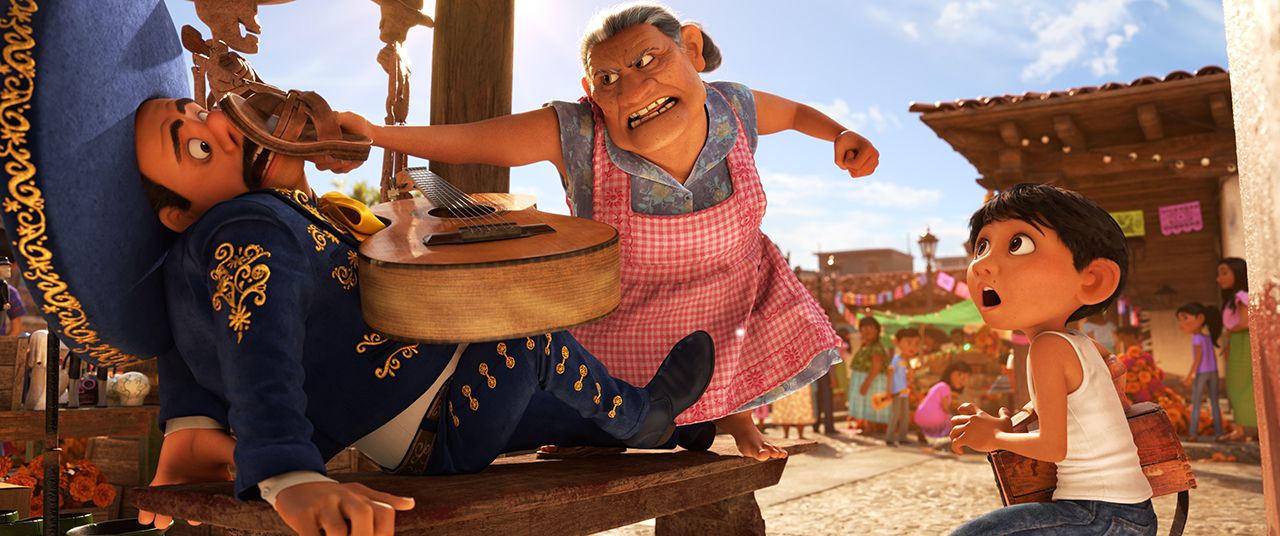
Finally, the most bizarre and deep parallel, hidden inside the film, is a “divine comedy”. Where you do not wait, the intrigue suddenly cuts off a romantic and tragic love story. In his search, Miguel finds not at all what he was looking for. True, a smart viewer will understand this by one name of Miguel’s dog - and, non -alternatively, the most charming character of the cartoon, a homeless dog with a torn ear and pathologically long tongue. The owner called him "Dante."
Attention, spoiler: from the gloomy forest, in which the namesake of a restless dog, and Miguel, and the audience of the film, have been lost as a result, will be able to get out. No matter how Pixar experimented, the light at the end of the tunnel is still an obligatory attribute of family animation.
Anton Dolin