
Translated material
"Jamaica" will not rule Germany
For Germany, there are three options for getting out of a political crisis - and all one is worse
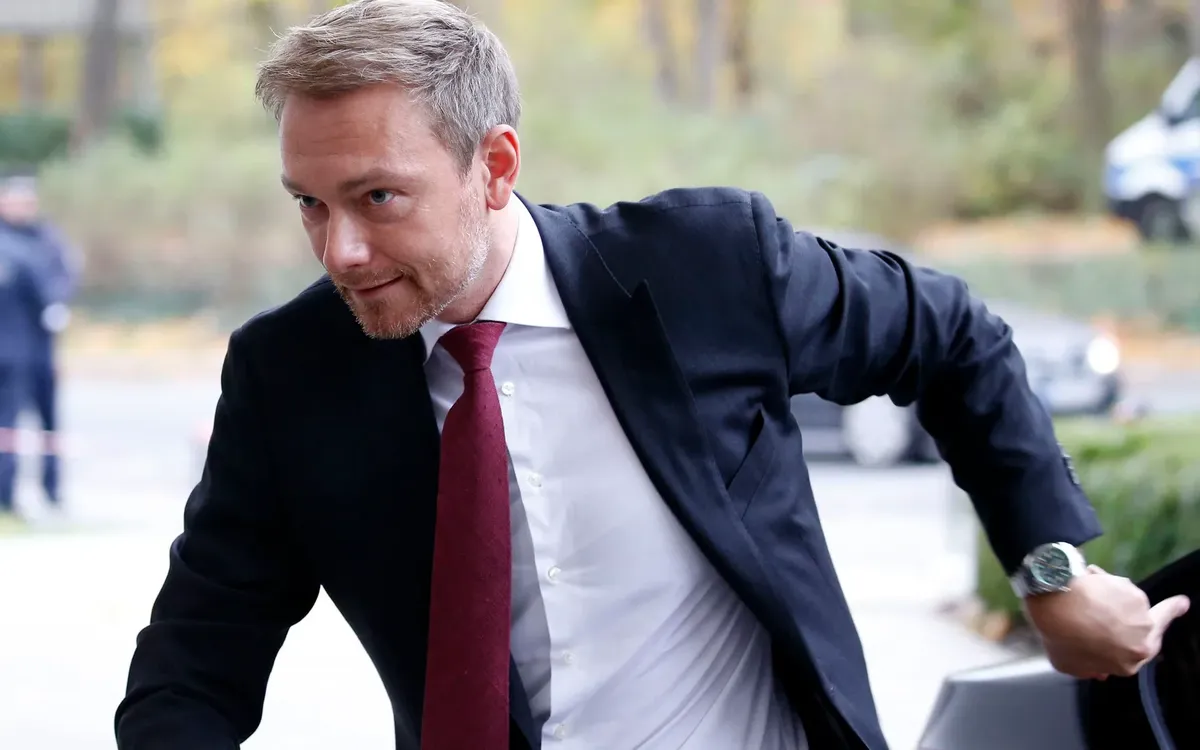
On Sunday exactly ten minutes before midnight in Berlin, an information bomb exploded. The leader of the free-democratic party Christian Lindner unexpectedly announced to the press that his party was leaving the negotiation process with the CDU/CSS and “green” in the formation of the ruling coalition, called “Yamaika” for the similarity of party flowers with the national flag of the island state. In Germany, a political crisis began, the consequences of which can not only negatively affect the country, but also significantly affect the situation on the European continent.
On the eve of the statement of the chairman of the SVDP, participants in the coalition negotiations from the CDU/CSS and the Green confidently believed that the Jamaica would take place. As a result of a four -week marathon, in their opinion, by mutual concessions, it was possible to achieve a consensus on the main issues, among which the most difficult were migration policy, energy, environmental protection and priority programs for financing from the federal budget.
And now - the thunder in the middle of the clear sky. According to Lindner, during the discussions, "it was not possible to develop joint ideas about the ways of modernizing the country and, above all, create an atmosphere of mutual trust." Based on this, free democrats do not want to take responsibility for the spirit and the maintenance of documents prepared during negotiations. “It is better not to rule than to rule a mistake,” the leader of the SVDP summed up.
For the first time in the history of modern Germany, its political elite was faced with a situation where the main parties could not agree on the ruling coalition.
The main problem, according to local observers, is that the latest elections, reflecting changes in the public mood, made serious adjustments to the political landscape.
Leading players - the so -called folk parties of the CDS/CSS and SDPG - did not recognize in time those pain points that excited voters. As a result, they had to bear significant electoral losses. They were especially sensitive to Christian democrats - almost 8% of the vote.
Immediately after summing up the results of the September elections and the refusal of the Social Democrats to participate in the government, some German political scientists have skeptically evaluated the prospects of the Cherno-Gelt-Green Coalition. Party platforms were too polar.
“Green”, for example, went to the elections under the slogans of the complete cessation of brown coal production (it accounts for about 40% in the energy supply of Germany), the widespread transition to 2030 to electric vehicles, the preservation of liberal migration policy and the cancellation of refugees for restrictions on the reunion of families.
Even in the party itself, the Angels Merkel before and after the elections did not stop the sharp disputes in migrants. And the leader of the Bavarian Christian socialists, which are part of the Blok with the CDS, Horst Zeehofer harshly insisted on the introduction of a fixed annual quota of 200 thousand people for refugees.
However, not these contradictions led Jamaica to failure. The three sides of the negotiation process showed readiness for compromises, which cannot be said about the position of the SVDP. Now, after loud clapping the door, experts, analyzing the behavior of free democrats, come to the conclusion that they did not initially plan to take on government responsibility.
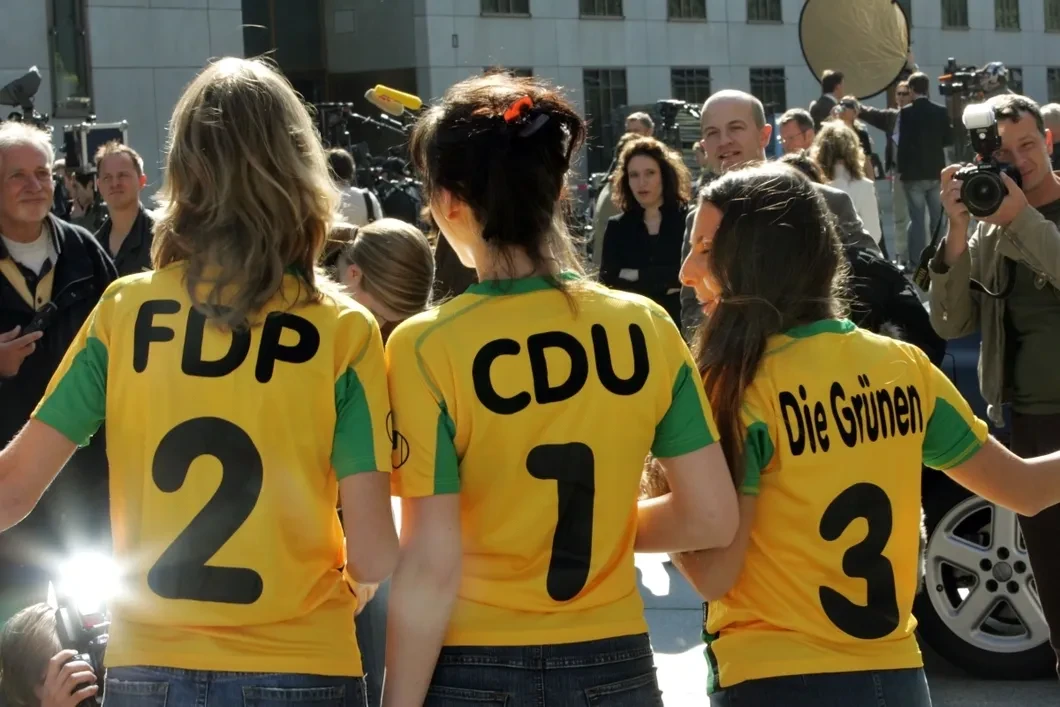
After failure in the 2013 elections, the SVDP was headed by a young politician Christian Lindner (at that time he was 34 years old) - a charismatic person, which, in fact, became the only person of the party. For four years, thanks to his energy, free democrats were able to not only recover from the crisis, but also convincingly returned to federal policy, having received 10.5% of the vote in September.
At the same time, Lindner, according to experts, intended, most likely, to continue his career in the Bundestag as an opposition, gaining points for the party and himself with oratory and criticism of opponents in order to accumulate enough strength to the next election and return the SVDP to the former role of the governor of governments. But these plans were upset by the Social Democrats.
Currently, Germany examines three possible options for getting out of the political crisis.
According to the first option, it is assumed that the largest faction of the Bundestag HDS/CSS creates a minority government in a coalition with SVDP or green. Such an opportunity is considered purely hypothetical. And the point is not that in German history there is no experience of such a government.
Chancellor Merkel, even before the start of coalition consultations, excluded the idea of a minority government. Last Monday, she confirmed the immutability of her position. In addition, after the Demarsh SVDP, only “green” remain potential partners, and they, in turn, also stated that this option was unacceptable to them.
The second option implies that the large coalition of the CDS/CSS and SDPG can be resumed. This is eager to discuss this in the press, emphasizing the importance of such a step to maintain stability in the country and in Europe. However, the Social Democrats are adamant in their decision-the results of the past elections did not give them a mandate to participate in the government. On Monday, an emergency meeting of the party’s board unanimously confirmed this.
And finally, the third option is early elections. “Green”, the party of the left and, of course, free democrats, have already spoke out for him.
The leading functionaries of the SDPG express their opinion with restraint, they say that the party is not afraid of the elections and is ready for them. Although in early December, the Social Democrats will have a congress that promises to be sharp. Even if Martin Schulz retains the post of chairman, criticism of him cannot be avoided, and not the fact that he was once again nominated by a candidate for chancellors.
Angel Merkel also considers new elections to the best way out of the crisis. At the same time, she is sure that the party will nominate its candidacy for the post of chancellor.
So far, President of Germany Frank-Walter Steinmeier is trying to save the situation. In his appeal, he called on the leaders of all parties to maintain contractual capacity and not exclude the possibility of creating a government. To this end, the president will hold meetings with all participants in coalition negotiations in the coming days.
Meanwhile, many German experts doubt that early elections will be able to significantly change the prevailing alignment of forces. Since September, the ratings of leading political parties have practically remained unchanged. Moreover, during the period of negotiations on Yamike, a tendency to further fall in the authority of Christian democrats has been outlined - they lost from 2 to 3 percentage points.
At the same time, the positions of right -wing populists from the Alternative for Germany were strengthened. Now, as observers are afraid, new elections can become another step for the AFD to expand their influence on voters disappointed in traditional parties.
It is noteworthy that the political crisis almost did not affect the economic situation. In the first half of Monday, a short -term fall in the Frankfurt Stock Exchange on the Frankfurt Exchange, but by noon, losses were already played out and even outlined. Nevertheless, the president of the German Chamber of Commerce and Industry, Eric Schweizer, expressed concern in that political uncertainty in the future would negatively affect the investment climate in the country.