Date
Author
«Новая газета», Юрий Сафронов, Вячеслав Половинко, Алиса Кустикова, Александра Копачева
Source

Preserved copy
Translated material
Ru leak
A radioactive cloud of an isotope of Ruthenenia came to Europe from Russia. Chronology of the incident and expert comments
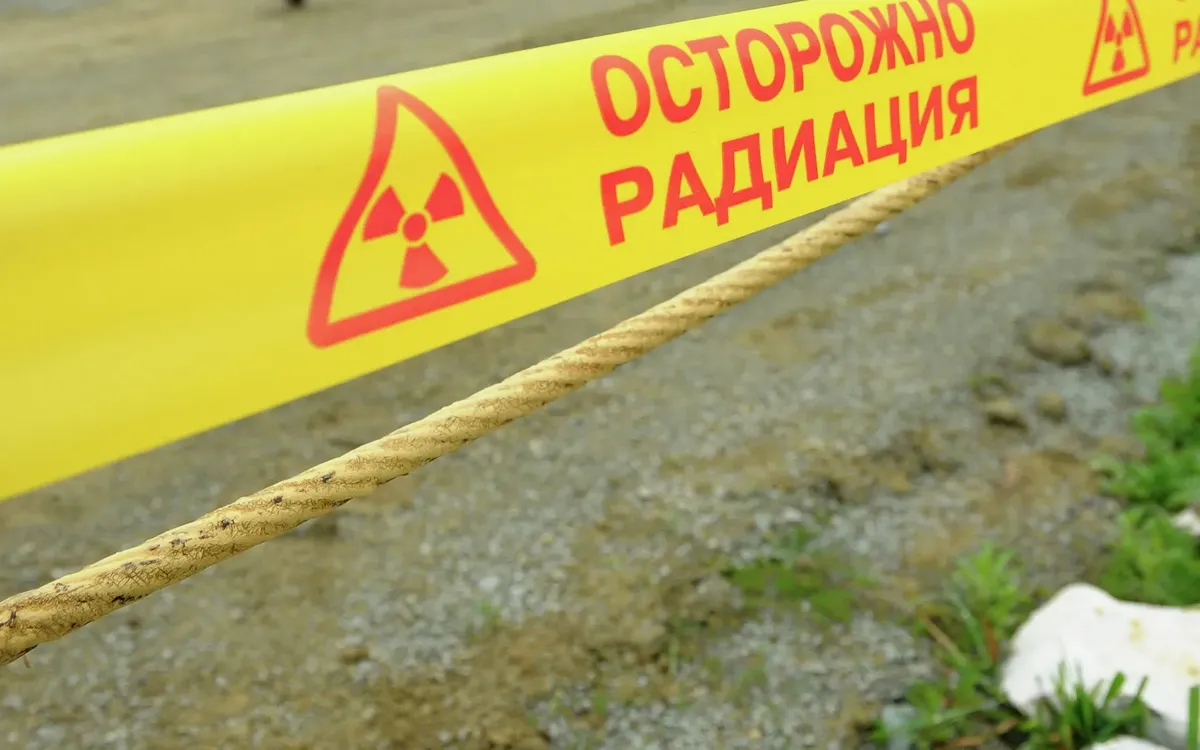
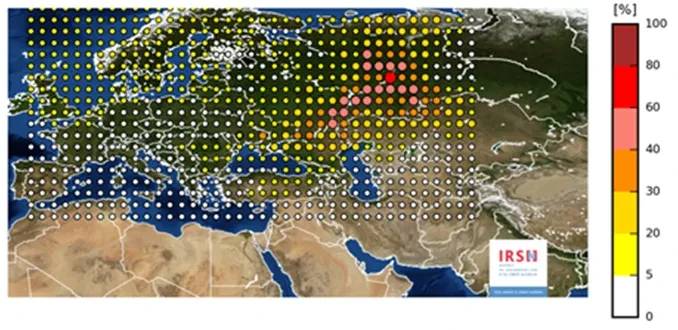
In early November, the France Nuclear and Radiation Security Institute announced a radioactive cloud over Europe, which could appear due to an accident at a nuclear facility in Russia or Kazakhstan. The leak, according to experts, occurred a month ago. And by the time of the announcement of the incident, the radiation background has almost come to naught. The authorities of the mentioned countries hastened to refute the accident at nuclear enterprises. Over the next two weeks, the source of the leak did not call, but tried to explain: there are no threats for health in the polluted regions (Ural, the Volga region, the Rostov region, the regions of Germany, France, Italy and Austria).
In Germany, Austria and Italy, on September 29, an increased radiation background of the Ruthenenii isotope (RU-106) was recorded during the test of nuclear weapons, nuclear technological accidents.
On October 8, the German Federal Department of Protection from Radiation and the Federal Ministry of Environmental Protection, Protection of Nature and Security of the reactors suggested that the source of ruthenia is located in the Southern Urals. At the same time, departments excluded an accident.
The Rosatom, who oversees the nuclear industry, said that "in the samples of aerosols in the period from September 25 to October 7 in the Russian Federation, including in the Southern Urals, RU-106 was not detected, except for the only measurement point in St. Petersburg." However, according to Rosatom, and there he was negligible.
In early October, Kommersant reported the reason for the increase in the radiation background, citing a human rights activist from Ozersk, Nadezhda Kutepov, who received political asylum in France.
In a commentary to Novaya Gazeta, Nadezhda Kutepova said that her attention was attracted by Rosatom’s response to reports about a radioactive cloud recorded in Germany.
“I found out that on September 25 and 26 at Mayak ( a plant for the production of nuclear weapons components in Ozersk, Chelyabinsk region - ed. ), A test of new equipment was carried out, and that these days in Ozersk were announced about the alarm signals,” Kutepova said, referring to sources at the enterprise. - The incident could occur on the stove during glazing highly active radioactive waste. It is there that ruthenes are formed, which can be thrown out in its purest form.
However, representatives of the plant said that they have "everything is fine."
After that, rumors appeared in Yekaterinburg that due to the accident at the Mayak factory, a radioactive cloud was moving towards the city. An anonymous message appeared in the social networks of the city, which was allegedly sent by an employee of the chemical and biological plant (spelling preserved).
“Today, in our scientific chemistry of the biological plant, the director made an announcement (a friend of a colleague works there). In general, in the Chelyabinsk region there was an accident on the lighthouse, as a result, the radiation cloud that goes to the ECB. Orinty will reach tomorrow. Recordication - close all the windows of the house and, if possible, do not go outside, also habitats with alcohol, ginseng root and eleutherocok (in a pharmacy), adults warm red wine or cognac in tea. In general, without panic, concentration is not so to cause radiation disease. But the cancer is very pronounced. ”
In response to this, the local Rospotrebnadzor said that the level of the radiation background on the border of the Sverdlovsk and Chelyabinsk regions does not exceed the permissible level.
On November 9, the France Nuclear and Radiation Security Institute issued a report in which he spoke about the appearance of a radioactive cloud over Europe in the last days of September.
According to experts, the accident could occur in the last week of September in the area between the Volga and the Urals, south of the Ural mountains, but it is impossible to establish an exact place. The hearth can be either in Russia or in Kazakhstan.
The report notes that from October 6, the content of hazardous substances has decreased, and at the moment they are not in the air.
REACTION
Why not Kazakhstan
In Kazakhstan, there are plenty of places that could be among the “suspects in the leak”: only the Semipalatinsk nuclear landfill is worth it. It is closed, but on its territory there is an institution of radiation safety and ecology - this is the city of Kurchatov in the east of the republic, it enters the zone marked by the French - inside of which there is an active reactor (another in Almaty). But the institute’s employees on the day of the speech of French researchers immediately officially stated that they had no leaks - neither from the first or the second reactor.
There is also an institution of nuclear physics in Almaty, where pharmaceuticals are carried out (ruthenes, if only it is recorded, it could “led” from pharmacological production), however, the local chiefs dismissed possible accusations with all hands and legs.
At the same time, the institute has another object - in the west of Kazakhstan, very close to the border of Russia, in the city of Aksai. But the director of the Ergazy Institute Kenzhin, in an interview with Azattyk radio, said that all charges against them were unfounded.
- This is an underground training ground, there are adits at a depth of one and a half kilometers and kilometers. These are the former training grounds of the USSR, there were underground nuclear explosions in the 1980s. This was called the "Program for the use of nuclear explosions for peaceful purposes, the creation of cavities for storing oil products." Everything is mothballed there, that is, some works related to the release of [radiation], there have been there for decades, 30–40 years. Therefore, there is absolutely no exit of radioactivity there, ”the scientist quotes Azattyk.
In general, Kazakhstan can be suspected of some leaks quite legitimate, since it is quite tightly connected with nuclear energy. In the west of Kazakhstan, in the Aktobe region, there is a military city of Emba-5, where, according to some reports, underground nuclear explosions were carried out. And what is now in the mines is a big question, since by the middle of this year the Russian military patronized the city (now there is a process of the output of Russians and the complete transfer of Emba-5 to the Kazakhstani leadership). In addition, a nuclear waste bank is being built in Kazakhstan - it is claimed that it will be safe for the environment.
And back in 2014, a container with radioactive cesium-137 was lost in the same West of Kazakhstan. He was searched for three days, and found a certain taxi driver in the neighboring region, who at night saw a small container in a truck passing by. The official version of the loss is the bottom of the body that failed to transport for transportation, and other drivers found it and thought that it was just a can - and took it to themselves.
On November 20, Roshydrome confirmed: at the end of September, the extreme air pollution by the radioactive isotope of Ruthenenii-106 was observed in the Urals, the high-in Tatarstan, Volga and Rostov-on-Don. In the samples of radioactive aerosols, the RU-106 radioisotope was found (half-life of 368.2 days).
On the same day, the Russian Greenpeace asked the prosecutor's office to check the Mayak plant. The organization refers to the data of Roshydromet. “The emergency release of Rutheneniya-106 at the Mayak plant may be associated with the glazing of the worked out nuclear fuel. It is also possible to get a material containing ruthenium-106 into the furnace for the remelting of metals, ”Greenpeace said.
On Tuesday, November 21, Rosatom said that the Mayak production association was not associated with pollution of the atmosphere. The department suggested that the leakage of the substance could occur due to a violation of the tightness of the “TVel” shell in a nuclear reactor or in the radio chemical processing of nuclear fuel.
REACTION
Greenpeace position and experts
“Roshydromet published the testimony of its stations, but to figure out where the ejection is not the function of this department,” said Rashid Alimov, head of the Greenpeace Russia Energy Program of the Greenpeace Energy Program. - Therefore, we write a request to the Prosecutor General of the Russian Federation, that, in turn, should attract Rostekhnadzor in order to understand the situation.
According to Alimov, the purpose of the request is to check whether the information about the accident was reported to the competent authorities, whether production was stopped and the protection measures were taken.
According to the ecologist, it is impossible to draw the final conclusions about what caused the release.
However, like other experts, the first in the list of potential sources of pollution, Rashid Alimov calls the Mayak production association. The state -owned enterprise produces components of nuclear weapons, is engaged in the storage and processing of the designed nuclear fuel. Located in the closed city of Ozersk, the Chelyabinsk region, the company is part of the Rosatom State Corporation.
Versions
According to Rashid Alimov, the conclusions made by French researchers, as well as the sources at the Mayak enterprise, indicate that the release could occur in the production of glazing a spent nuclear fuel.
The technology is used to completely eliminate side radioactive waste and was invented in France. At high temperatures and pressure, radioactive fluid and phosphate glass are mixed in the furnace. Radioactive transparent columns are obtained, which are packaged in protective pencil cases. According to Rashid Alimov, in 2001 in France the release of ruthenia was recorded just in such production.
Rashid Alimov voices other versions, however, believes that the probability of such a scenario is minimal. “Theoretically in Russia, ruthenes are produced for medical needs in Dimitrovgrad (in the Ulyanovsk region) and Obninsk (in the Kaluga region),” Alimov explains. - This can explain the pollution recorded in Volgograd and Tsimlyansk.
Other scenarios-however, are less likely-which experts call-the entry of the Rutheneniya-106 source into the melting stove along with scrap metal. “The story, when the radioactive source fell into the furnace, was recorded four years ago in Elektrostal,” the expert notes. - And the least probable options are the fall of the satellite and the accident at the nuclear power plant. But this would lead to the release of not only rooting-106, but also other radioactive substances.
Why was the radiation cloud recorded in Europe? Rashid Alimov draws attention to the message of Roshydromet - it follows from him that in Russia there are only 22 stations that could fix the emissions. “In our opinion, this is not enough,” the expert commented.
According to Rashid Alimov, it is not possible to evaluate the threat of health from the eruption.
“We do not know where the highest concentrations were recorded, the script of how the cloud moved is unknown to the end,” he remarks. - Therefore, we turned to the prosecutor's office.
About the danger of leakage
“Information about the level of pollution that appears in the media such that there should be no fear for health,” Anatoly Gubin commented on the situation, the head of the laboratory of mathematical analysis of the radiation influences of the scientific and technical center of radiation and technical safety and hygiene. - However, the fact of the detection of pollution suggests that there is not enough hope of installation, where the spent fuel is being treated.
“Those who were in the immediate vicinity of the emission place could get serious health damage,” physicist Oleg Bodrov , head of the Environmental Organization of the Southern Coast of the Gulf of Finland, commented on the situation. - It is not a fact that they are informed that they were influenced by the release, given the fact that we learned about the accident from French scientists, and not from authorized departments in Russia.
What was Europe frightened
The French magazine Le Novelobs calls the reasons why - despite the probable lack of consequences for Europe, the current emergency is extremely alarming. Firstly, “having evaluated the message about the incident of the meteorological service” (Roshydromet), the Russian nuclear men “went into denial” (as once after the Chernobyl disaster) and this cannot but worry their European partners. Since Rosatom denies its involvement in leaks, this may mean one of two: either the corporation does not control such incidents, “or the authorities of the country hide” information.
“Any of these circumstances causes concerns,” said Bruno Shareyron, director of the non -governmental commission for the search for independent information on radioactivity (CriIRAD), which was created in France after the Chernobyl disaster.
“It is important that the search for the origin of these emissions to be conducted ... From this point of view, the lack of information causes concern. If the origin of the emissions is not known, radiation protection measures cannot be taken, while the doses received by employees or local residents could be such that they could not be ignored. If we are talking about concealing information, then the situation is even more problematic, ”wrote Shoreron in the report of CriIrad, published on October 5.
In his last communique, published on November 21, Criirad analyzes the message of Roshydromet about the release.
“And without giving answers (to the questions that arise), the results (published by Rosgidromet) are raised by new questions:
Why is the concentration of a substance in the air (in Russia) - at the same level as it was discovered in Romania
Why is the level of release of ruthenium-106 to the soil, marked by stations located less than 40 km north and south of the “Mayak” reaches a maximum of 330 b/m2 (this level is recorded in Metlino)-because this is from 1000 times less than the modeling conducted by IRSN (the results of which are published on November 9) ”.
“To date, we are still in full unknown,” the Commission on the search for independent information about radioactivity reports.
The commission also emphasizes that she has already applied to the World Health Organization and the International Atomic Energy Agency with the requirement to “interrupt silence and intervene”, since “absolute transparency” is “necessary” in the investigation of the emergency - “both from the authorities, in particular the Russian Federation, and from expert institutions”.
It has already been
Accidents at Mayak in 1957 and 2007
In 1957, the Kyshtym accident occurred on the Mayak, which caused radiation pollution with an area of over 20 thousand square kilometers. It became the first in the USSR a radiation emergency of a technogenic nature: during the liquidation, 23 villages with a population of up to 12 thousand people, their houses, property and livestock were destroyed.
Ten years ago, in 2007, another emergency happened on the Mayak. At the factory No. 235, where the spent nuclear fuel is processed, the pipeline breaks through. Up to 8 people received maximum permissible irradiation doses. However, as the Ural media indicate this information, the enterprise hid for more than a month.
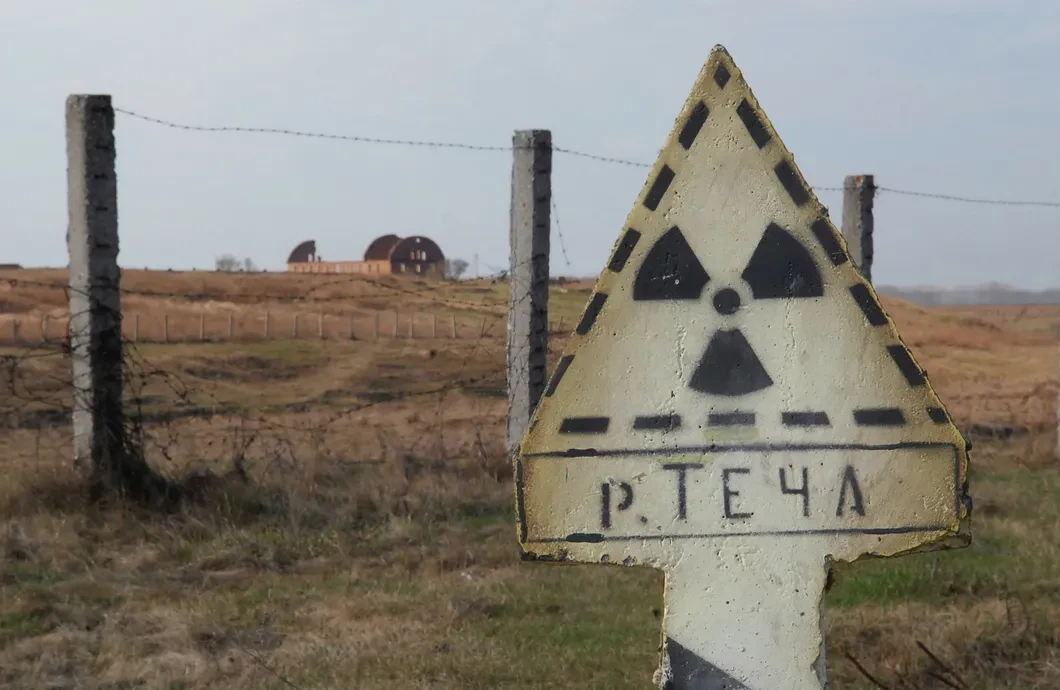
It is interesting that then the same Nadezhda Kutepova, the head of the “Planet of Hopes” organization, unveiled information about the reasons for the release. She was born in Ozersk, her father was the liquidator of the accident in 1957. In 2015, the organization of Kutepova “Planet of Hopes” was recognized as a foreign agent, she was accused of industrial espionage, Kutepova received political asylum abroad.
Chernobyl: the USSR admitted under the pressure of Europe
The largest nuclear accident occurred in Chernobyl on April 26, 1986. The first reports of the accident in the Soviet media appeared only on April 28, while they were made under pressure when worried Europeans demanded that the USSR explain the increase in the radiation background. The first in the world about pollution was reported by experts of the Swedish NPP "Forsmak". Soviet publications publish detailed information about the accident after the May holidays.
There were: Alisa Kustikova, Alexandra Kopachev, Vyacheslav Polovinko, Yuri Safronov.