
Translated material
Funnel
Optimistic tragedy
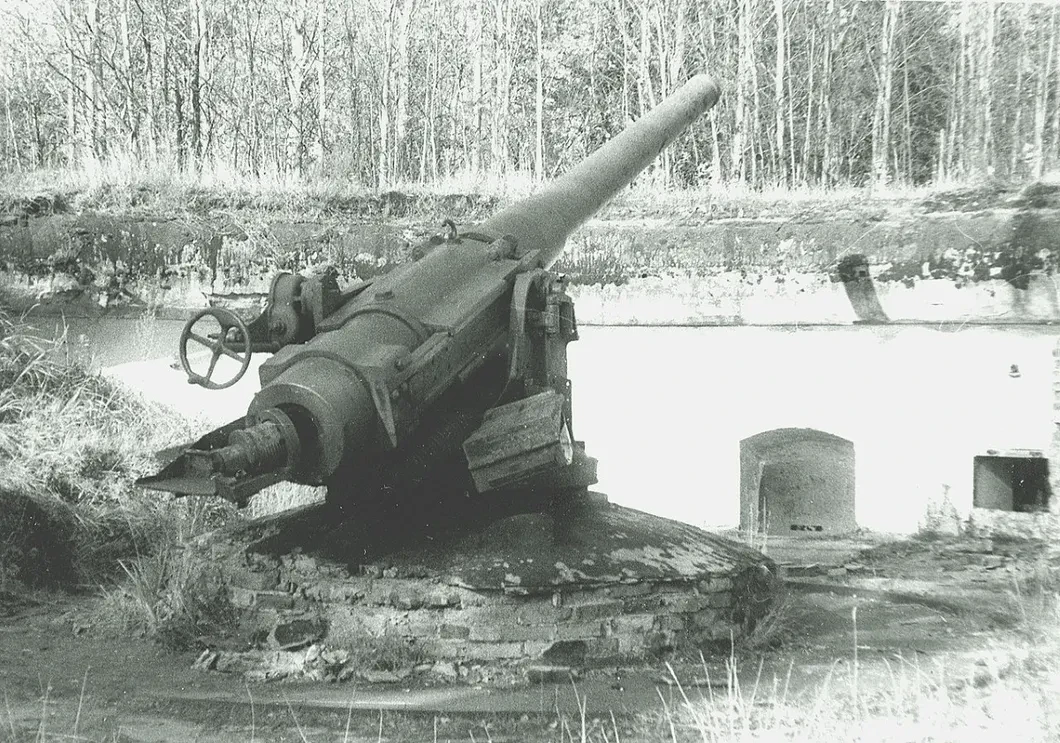
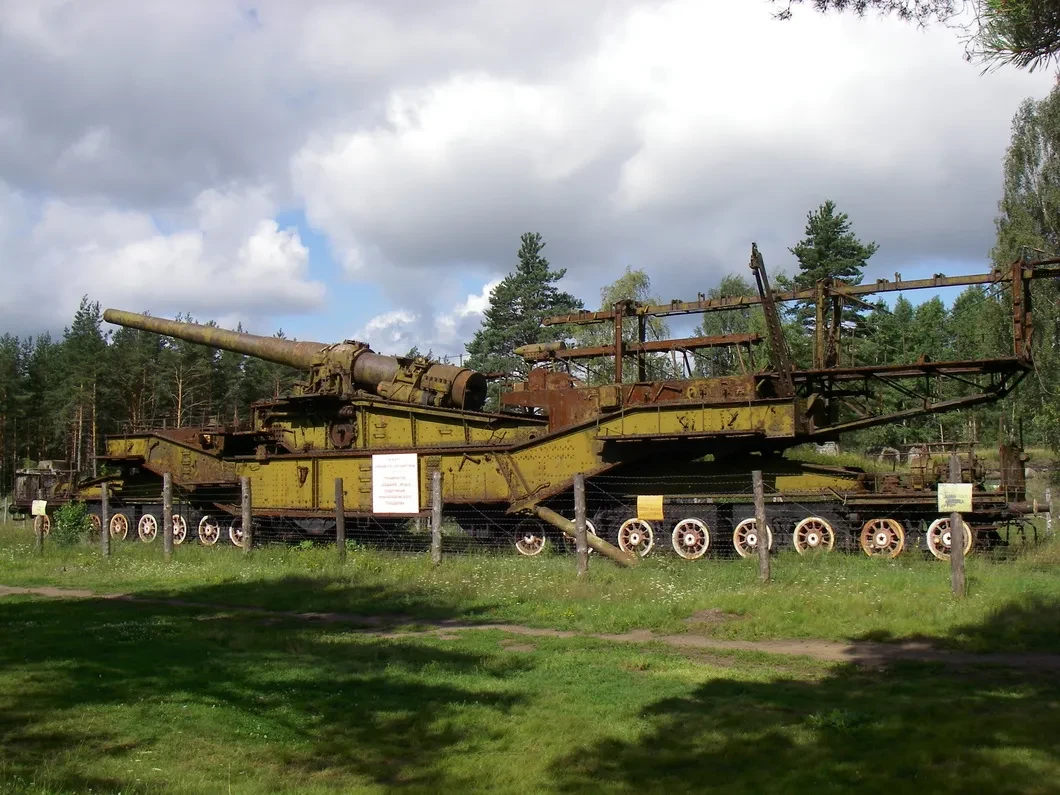
In 1909, the builder of the Kronstadt fortress, the headquarters and military engineer, the holder of the orders of the Saints Anna, Stanislav and Vladimir General Major Apollo Alekseevich Shishkin began construction on the opposite shores of the Gulf of Finland, opposite the island of Kotlin, two forts, which finished on the eve of the revolution. Nikolaevsky, North, later became the Forto Fort, became part of Finland and was blown up in 1921 under the Tartu treaty. South, Alekseevsky, became the fort “Red Gorka”, today there is a museum. The outstanding fortifier built a truly unique structure: after a quarter of a century, it largely determined the fate of the entire defense of Leningrad. The guns made by the Tsarskoye Obukhov plant, especially the 356-mm guns (were removed from weapons only in 1961), which fired at 40 km of shells almost half a ton, turned part of the coast into impassable for the Wehrmacht. The military called it the Oranienbaum bridgehead, and the locals were called the Lybizhinsky Republic, by the name of the village of Lebyazhye next to the fort
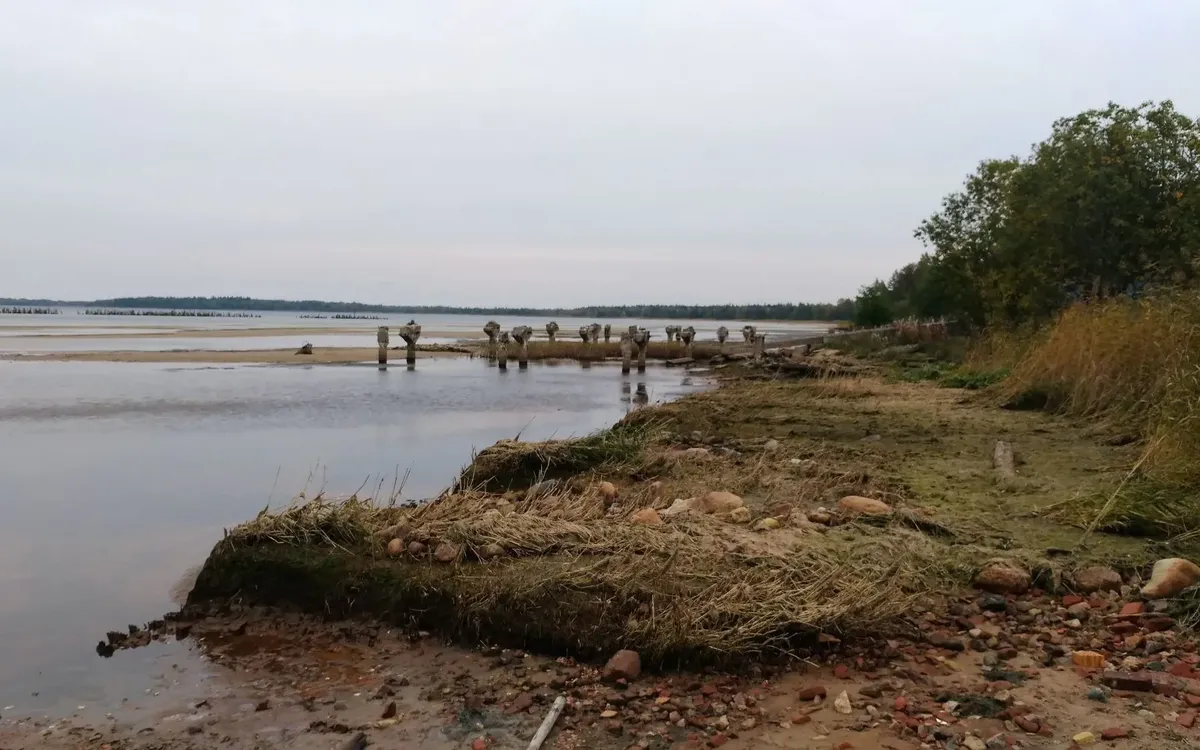
The mighty guns on the railway platforms were drawn with a giant circuit with a radius of effective shooting of 30 km of the bridgehead of a semicircle with a center in Red Gorka. Its western border, the river of the funnel, since September 1941 became the western point of our country, beyond which the Germans have not advanced. It was a rebellious area surrounded on all sides by 65 km in the rear of the North Leieba groups besieging Leningrad, whose works before the war were used to create the field charter of the Red Army. Our rifle divisions and marine infantry entrenched here until January 1944 did not give them life.
Since by the winter of 1944 from Kernovo to Peterhof there were practically no local residents, houses and cats, life here after the war began, as it were, from a clean sheet. In the history of other countries, the lands were so alleged after terrible natural disasters and ethnic purges. But, as I had to verify, almost everyone who lives here, remembers everything firmly, like the post -war population of Leningrad, almost entirely visiting.
City of comfortable residence
This memory is eternal, but the past is rapidly going down when they built the Leningrad NPP. Together with her since 1967, a pine forest, a science city stood in the center of the former bridgehead. The layout of the city was made in advance and with the back of the prospect, according to science. Schools and residential buildings designed by the Lithuanian contractor were inserted into a pine tree, not cutting down trees - a rare practice for those years.
The city has good prospects: LaES-2 is being built near the first station. Local activists who invited me proudly show me on a darted in a daze babies, alone and in pairs going through thick parks to school and home at any time-such a level of security rarely meet wherever you meet. The 70 thousand people have a biathlon section that has grown up many members of the national team, a team of the High League of Russia in volleyball, the largest developer of nuclear nuclear installations, 14 kindergartens with advanced training, 10 schools (one private), a swimming pool, an orphanage and a school for children with special needs. Even the residents erected the cathedral in the style of non-constructivism, akin to the corps of some laboratory. When I asked Nikolai, a local small businessman, builder of playgrounds, a desperate swear and a fan of drinking a middle -aged, what phrase he would describe pine forest, he answered quickly and clumsily: “a city of comfortable residence”.
Despite the high cultural level and scientific mindset, the pine forest takes a wary of the trends of the new era. On the day of the Navy, they also have their own parade. The last time before the townspeople was the neighboring military units and employees of the Ministry of Emergencies. They closed the column, asynchronously moving their feet, Cossacks. After the solemn march, they staggered around the city for a long time, which they began to get used to recently.
Half an hour later, Rock brought five Cossacks to a popular cafe, near whom there were two retired officers from the locals (I spent the night on one of them on a business trip) asked the origin of the Order of the Red Star on the coronet's chest. After brief bickering, two beat five and drove them to the police station. Then they publicly obeyed the purchase of an order in the market. In the morning, local veterans and chieftain concluded the world: the Cossacks had to wear any rewards again except personal ones.
The case came out loud. Although the science city is full of patriots, the Cossacks did not find the protection of his traditional audience - retirees, police and bandits. But it seemed that the Northern Polar Circle itself was not a barrier to these newest gypsies: Murmansk and Urengoy had long been inclined before them.
Edelweiss on the thief
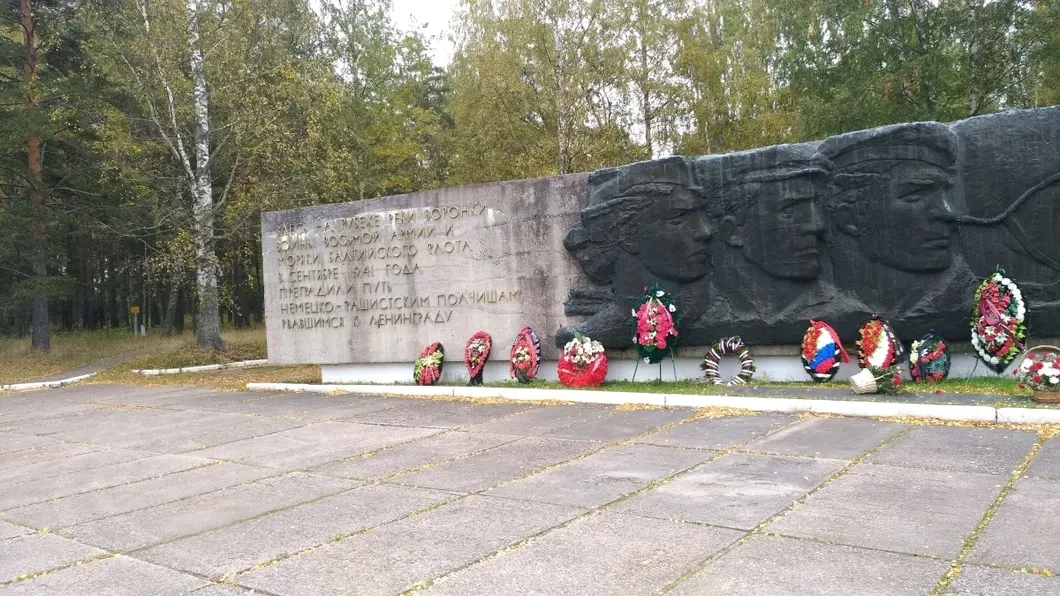
Igor Grigorievich Alepko, the local historian and the fleet historian from the icebreaker “Volynets”, for the first time stopped the Wehrmacht for the first time, brought me to the Wehrmacht. On the road, I listened to how our submarines came from here to drown neutral Swedish ships - they brought Nickel and iron ore to the Reich. In response, the Swedish sailors drowned our submarines, and quite successfully, as the submariners accompanying me professionally noted. Now, near the pine boron, a monument was erected to all submarines who died in the Baltic with numbers and losing lists.
On the shore of the river of the funnel in 1941 stood the village of Kernovo. Today the shore is empty. According to the memoirs of the local battery commander, the remnants of the corps with a loud name of the eighth army retreated from Libava and without strength. On the evening of September 3, a detachment from the 5th Marine Brigade for the first time took positions here, and the howitzer battery was on the mountain near the village of Dolgovo.
By evening, 300 young cadets of the coastal defense school stood on the shore of the funnels. The battery helped them with fire from closed positions, the Germans stopped. As it turned out later - until the end of the war. When the adjustor handed the Germans the coordinates, the battery commander Dmitriev barely managed to take people into shelter. The guns and equipment was smashed into smoke, but everyone remained alive. The positional war began.
“When I arrived in 1964, everything was a head here, the villages were demolished, the trees were destroyed or mutilated, not a single person from the inhabitants,” says Igor Grigoryevich. - For two years, the Spaniards stood in this place. Kernovo completely destroyed, all the buildings are modern here. ”
We moved along the shore to the country village, built on the site of battles 10 years ago. Initially, the idea to put on a funnel a cottage village dawned on local security forces, primarily the employees of the FSB and prosecutors. The money was from, they did not put it off.
At the end of August 1941, on all German maps, a bridge was marked through a funnel, because through it the Oranienbaum bridgehead was drawn, leaving the encirclement, retreating troops. The bridge was defended by three anti -aircraft batteries shooting direct fire at the Germans. Now here, on the bones, at the Gulf of Finland there were beautiful modern houses. Yes, and the name of the village was found the right - "Edelweiss". However, the scale of the local ruble was not calculated. Buyers with blue blood ran out, the plots began to sell to anyone, the village was renamed the plebeian "New Kernovo".
“At first, many were indignant, even in newspapers,” recalls Igor Grigoryevich. - And then my son was offered the earth here and he bought it. I became interested, and you know - nothing special, I turned out to be the most ordinary village.
“Is it true that we are massive burials under us?”
- Well, there was no such meat grinder as on the Nevsky Piglet. For some, and 20 people are a mass burial. Be careful with the term "massive".
The submariners silently lit a cigarette and, without turning around, went to the bay with straight backs. 39 submarines died in the Baltic, often immediately with the entire crew, which did not reach 40 people. Not mass burial, in general. There were only 1424 of them and on a circle. In the logic of Igor Grigoryevich, the figure was not impressive.
In farewell, Alepko recalled how in August 1941, when he was a preschooler, under the continuous raids of the Luftwaffe past these dull shores, ships of the fleet that were evacuating from Tallinn (from 225 pennants reached Kronstadt, more than 10,000 sailors died). Suddenly he says:
Contaminated with a Kalitaev bomb.
Lies in water, sore whiskey,
He was fortunately picked up
From the submarine sailors.
Did not expect fate of sad
Our captain yesterday,
But right from the bed of the hospital
The poor fellow took the opera.
After half a century, it became clear:
The public should find out
What did the tribunals do
On behalf of the leader.
The family was quietly informed
That, they say, fifty years ago
We overdo it a little
And he is not at all to blame.
Ah, how nice everything is! Spended
And as if there weren't those years
When all loved ones escaped,
And sometimes they spat after.
- Who is it about?
- About the hero of the Tallinn crossing, captain of the Kazakhstan transport Vyacheslav Kalitaev, a bomb dropped overboard.
- Whose poems?
“Yes, I wrote,” Alepko says melancholy, slamming the door of the SUV.
Football at the Teutonic Citadel
The next day, we advanced to the opposite line of defense, to the Koporye. The head of the small rural settlement Dmitry Kuchinsky turned out to be a valuable source. Tells the map moving on a smartphone:
- After the war, there was no one left in our district from the inhabitants, all visitors. At least a couple of houses have been preserved in Lebyazhye, and the Koporye is erased from the face of the earth. The pre -war population was not restored, settled by about 40% of the past. Of the most diverse places, people rode.
Under the USSR, there was a millionaire collective farm, one of the centers of dilution of the Romanovskoye sheep breed. Each family had 20-30 pieces of sheep. Gradually, the farm came to naught, in the 90s it was completely killed. Now there is a large private farm, but the scale, when compared, is small. Therefore, people go to work in Lomonosov and especially to nuclear power plants, to a pine forest: the road is good, a maximum of 25 minutes one way. They go against the stream, and live almost in a country area. In the pine forest, they often sell a one -room apartment, they buy two and three -rooms in the Koporye, they go to work for 10 minutes. And our kindergarten and school are excellent. A successful story.
From the problems you can indicate drug addiction, but it is common for the entire north-west with the center in St. Petersburg. Once every few years, dealers throw a particularly clean drug into the market, and most of the customers immediately die from an overdose. Thus, they get rid of old drug addicts who have already sold everything and pay unable, begin to look for new customers, expand the solvent base.
The 90s for all became a desperate bottom, from which the rise later began. Prices are now slightly lower than in St. Petersburg. Salaries in the settlement itself are up to 30 thousand, but who travels to other cities, much more earn - at a nuclear power plant from 70 to 100 thousand.
But our fortress is a pearl of history on the map, ancient, Teutonic, real European Middle Ages. There are two of them - we have in the new Ladoga. Huge crowds come to see her. There is no strength for restoration, not the task of our budget. And the governor of the region is ready to put it in order, only the Koporye requires to attach to the pine forest for this. Politics, in general, is the expansion of land.
But we are developing, as we can - within the budget. So much effort is spent! Take children's sport-a team of girls of the Koporye fourth in Russia in mini-football. Our schoolchildren are the champions of the region, the North-West District and the finalists of the Russian Championship, despite the fact that we have less than two and a half thousand residents. There are 14 people in teams, five ages play, and all champions. The youngest is 7 years old. The school has been 40 years old, because they made her renovation, the new stadium was built. We pick up quietly.
Stalin - the Savior of the Finns
Stalin's repressions and mass heroism of the blockade here coincided in time, which gave rise to some of the controversial complex of views. For example, in a living in Oleg Tarasov, who is living near the funnel. This is the owner of an impressive four -story building, the father of five children, a journalist, a businessman, a patriot, a Stalinist. Oleg the author of the collection on the battles at the Oranienbaum bridgehead, fights against the construction of a nuclear burial ground in his native land and participates in the work of the nationalist society “The Movement of Stalinists of Russia”.
The monologue in places causes a ramp:
-It is a pity that Brezhnev in 1941 was not here. He would write his “small land” about the Oranienbaum bridgehead, and everyone would understand its meaning, and what was happening here. Narva did not become a serious obstacle for the Germans. They decided to build a Luga line where the divisions of the People’s Militia were deployed.
Then in front of us, the guys in simple jackets and a coat with one rifle for two were flying right in front of us. On a special order, the nurse was punished for the fact that they carried the wounded from the battlefield without weapons. On September 7, German tanks began to force a funnel in the upper reaches. In those years, there were four villages, now only memorable signs from scratch: upper, middle, lower meadows, factory settlement. The Germans were opposed by the remains of the 125th Infantry Division. The tanks broke through our defense, but then the guns of the main caliber of the Fort Red Gorka were struck. The attacking parts were blocked in smoke - two huts were placed in a funnel from the main caliber projectile.
The losses during these fights and the Germans were approximately equal. Only liberal authors can attribute winning in the losses to German troops. If you walk along the shore of the funnel along the cemetery and to the local store, you can see, although more than 70 years have passed, continuous ditches, systems of moves in several rows and machine -gun nests. Civility without housing and supplies dug them for two months continuously. All of them stayed here and in the majority died of hunger and cold, they were buried in our cemetery with stacks.
The very correct order of Stalin was issued from here all the Finns ( in reality, deportation began in 1929-V. Sh . ), Mainly to the Krasnoyarsk Territory, like Germans from the Volga and all the others. It helped that there were a lot of communists among them, they collaborated with our counterintelligence and the NKVD. All Finnish communists were allowed to stay here, fight with the Germans, many orders received. Well, all their families, of course, were deported. They themselves were engaged in this deportation, exported their own to the Krasnoyarsk Territory. Then, from there, they wrote letters - we live, they say, very good, on chernozems.
Then I had to clarify:
- On the blacksems? You accidentally did not mix the Krasnoyarsk Territory with Krasnodar?
- Yes, I was in the Krasnoyarsk Territory on business trips, it stretches from the subtropics to the polar circle. At the origins of the Yenisei, the climate is chic.
- What happened to them later?
- Part returned, with restrictions, of course. The evicted peoples were not immediately forgiven. We have 20% of the names in the pine forest - Finnish .
Subsequently, the Finns saved this deportation. The rest of the locals all died of hunger or died of shelling. Real hunger began in December. There were huts where frozen families sat at the tables. Many mothers stood at the military registration and enlistment office, demanded that their children be taken out with the Finns. But they were all refused.
With such hunger, the fishermen began to go fishing as soon as the ice stood on the bay, to drill holes. The Finns flew up on aerials and even a hourach and fired at machine guns. Their reconnaissance groups already reached the ice, their disguise was excellent - the northern guys, what to say.
After the war, the line of villages in the funnel did not recover. I told our deputy, Valery Nekrasov: “We have a funnel, the line of defense and along it - the oldest villages demolished by the war. Why don't you beat, do not try to revive them? The places tested for centuries, inhabited, the wells on the dunes are standing, the water in them is wonderful, the air is healthy. ”
He nods everything to the regional authorities. But as a result, they settled a huge number of people in the swamps. Imagine, they have a bargaining ( removal of peat and the remnants of the swamp. - V. Sh. ) Two meters in deep need to do. All these villages - “energy”, “builder”, “sail” - built it: people gave their money and strength to swamps. And the water there is still bad. So it was under the Soviet regime, and today - write an application for the site and get in the swamp.
In old places, as in the dachas live, or rather in winter houses with areas of 15-20 acres. This is how I, for example. Then the hard worker will find his happiness, if only he would not drink. That's just the GAZ for many years they have not been given by the authorities, otherwise the people would pour here at all.
Saying goodbye, Oleg goes out onto the porch and gives me as a gift a steel piece of the ship hull. I looked at the stigma:
- Are you serious?
Tarasov was offended:
- Don't believe? This is the whole city. I can show documents for property.
This is how the Novaya Gazeta Museum was replenished with a marked piece of the genuine corps of the Aurora cruiser. It is worth clarifying that after the “reconstruction” in 1984, a full remake was returned to Leningrad, and the historical corps of the cruiser is rotting in the Luzhsky Bay. The businessman entrepreneur was issued to him and issued property rights. I left the house of the owner of the ship of the revolution with mixed feelings: having settled on the lands of deported Finns, the writer suffers without trunk gas-he was not lucky to live humanly on the Black-Zemes in the Krasnoyarsk Territory.
The fallen germinate apple trees
На земле, в которую легли морские пехотинцы, ополченцы, умершие от голода колхозники, преданные финскими коммунистами финские рыбаки, немецкие гренадеры и испанцы из «Голубой дивизии» Франко, теперь снова разводят яблоневые сады. Новые жители выращивают тут яблоки и делают сидр из того, что не смогли съесть, подарить и продать. Из сидра, который не смогли выпить, подарить и продать, они гонят кальвадос. И его уже никому не продают: нет лицензии на торговлю, да и жалко — на подарки не хватает.
Вокруг обожженных дубовых бочек по три года, а то и по пять терпеливо ждут выдержки те, кто отринул самогон ради кальвадоса. К чести Ломоносовского района и Соснового Бора, сообщу, что их очень много, есть и весьма высокопоставленные люди, выпускающие бутылки с собственными этикетками. (Не могу сообщить имена и адреса, потому что к Новому году нам обещали прислать канистру.) Пусть будут счастливы эти люди. После того что тут натворил Сталин, а после него Гитлер, в этой части славной Ингерманландии, где кальвадос постепенно вытесняет из жизни самогон, это было бы справедливо.