
Translated material
Mikhail Ryklin: "A very depolitized time has come in Russia"
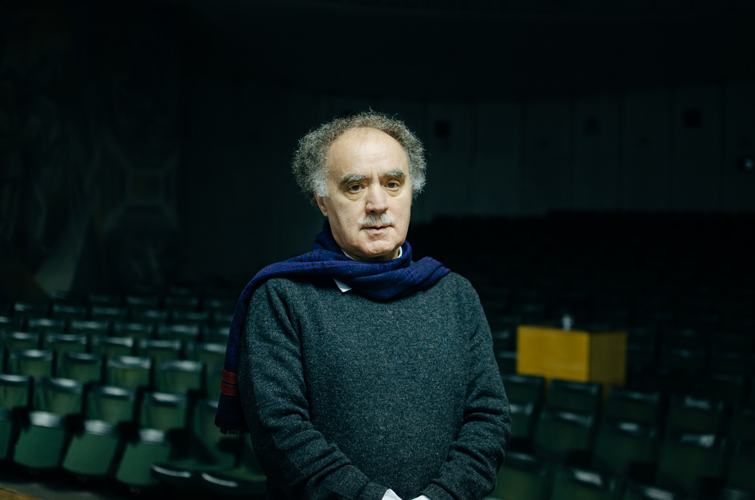
Within the framework of the “Kiev International - Kiev Biennale 2017”, philosopher Mikhail Ryklin made a lecture “Fiasco of the World Revolution”. Ukrainian critic Konstantin Doroshenko talked with him about the events and trends of the revolutionary era and today.
- International, internationalism - words are unpopular today. Europe proposed another term to refer to the interaction of nations - “multiculturalism”. What is the fundamental difference?
- By multiculturalism, it means that national minorities, immigrants have the right to continue to develop their traditional culture in communities and this is contrasted with assimilation. Now in Germany this approach causes criticism, although ten years ago multiculturalism was an official doctrine. Because fear of assimilation began to interfere with normal social integration. For example, many Turks live in Germany, in Berlin there are entire Turkish areas living in which there is practically no need to know German. There are shops, all infrastructure are oriented towards the Turkish population. It turned out that Turkish President Erdogan has great influence on the German Turks, and he used it during the election campaign and even tried to send his emissaries, but Germany does not allow foreign intervention in the domestic political situation. Multipulturalism assumes that if you are an Indian and live, for example, in London, you have the right to maintain your rituals, a way of life. If you graduated from Oxford at the same time, share the laws and values of British society, then there is no problem. But a completely different situation, if you live in the area where there are some Hindus and where you make these rites, and you are not interested in the surrounding culture at all. In this formation of new ghetto, divorced from the country's social life, they now see a danger. The internationalism, as it was understood after the revolution of 1917, is just a recognition that all national differences are imposed artificially, that there should be no non-rights between nations. In my family, this was implemented, I would say, even exaggerated. My great -grandfather was an Orthodox priest, my grandfather had four brothers. And all these sons of the Orthodox priest in the 1920s married Jews.
Among the active "builders of the New World" in Petrograd and Moscow were both Armenians and Latvians, there were many Ukrainians.
- For children, the priest of the Russian Empire is really revolutionary, given that the Orthodox Church and the official power under tsarism were Black Hundred, anti -Semitic almost officially. Nicholas II spoke of the organization who was engaged in the Jewish pogroms: “May the union of the Russian people be a reliable support for everyone and in all an example of legality and order.”
- The February Revolution canceled the Pale of Settlement, and Jewish girls began to come to the cities to study. Revolutionary changes have formed a completely new culture. I think that for these relatives it was not much important that their wives are Jews, they were also the bearers of this culture. We studied at the rabbal faces, actively participated in public life, believed in the world revolution. Among the active "builders of the New World" in Petrograd and Moscow were both Armenians and Latvians, there were many Ukrainians. This culture preached that national differences did not play a role at all.
- Your new book , Doomed Icarus. Red October in the family perspective ” is based on family experience, on the stories of the life of your relatives. For the second time you are allowing such a personal approach to analysis of the era. The Kommersant newspaper wrote about your confessional “pier of Dionysus”: “Actually, they don’t write such books, and if they write, they don’t show anyone.” How much, relying on your fate, the fate of your loved ones, you can go to the socio-philosophical generalizations, at the distant look?
- Yes, the story of my two relatives was the impulse to write a new book. Actually, this book consists of two chapters: one is dedicated to the uncle of my mother, and the other - to my grandfather, her father. But my mother’s uncle was a rather famous person. When a revolution occurred, he was 15 years old, he joined the party in 17 and became one of the leaders of the Komsomol in the 1920s, during the NEP. I believe that he was very lucky because it was a relatively calm period - from 1924 to 1928. The initial impulse was just this: to comprehend the era through views, impulses of specific living people. Of course, all those relatives that I write about were killed. My cousin was shot in 1938, his grandfather died in Kolyma in 1941-he was also shot. I tried to read other, not poster, sides of the revolution, based on this perspective. It must be admitted that theoretically some interference arises, since my cousin was friends with Krupskaya and Ordzhonikidze, with Kirov, with such iconic people. But thanks to this, it is easier to get into the living logic of the world revolution. This generation, these people who saw Lenin really believed in the world revolution. Lenin at the Third Congress of the Komsomol said that this generation of 16-17-year-old guys would live under communism. Lenin was an almost deified figure. I used to guess, but now, having written this book, I was even more convinced that the time from 1917 to the beginning of the 1930s is a very special period in Russian history. He does not fit into the national Russian history, somehow sticks out of it; This is especially applied to the period from 1921 to 1930, when the civil war ended, NEP was declared, and before the period of collectivization.
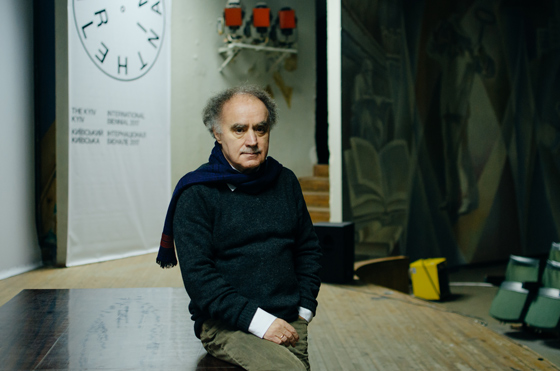 © Visual Culture Center / Alexander Kovalenko
- In one of the articles, you said that "the October Revolution turned the USSR into the original in relation to the Western copy." Apparently, we are talking about this short period, when all that European intellectuals thought about decades, suddenly began to be realized on the ruins of the Russian Empire - and even in a bold form than they could have suggested. During this period, the eyes of the whole world were indeed turned to this territory.
- Yes, it's true. Even such a new literary genre arose. We had a joint book with Jacques Derrida in the early 1990s-“The Deconstruction of the Travel”. Actually, it was his idea - about a separate genre of description of travel to the communist Mecca. Russell, Benjamin, dozens of thinking people of the West wanted to personally see a miracle, metamorphosis: suddenly, unexpectedly, the reactionary agrarian territory, before that, was opposed to despotically, becomes a beacon that countries, always considered significantly more advanced - Germany, France. Several generations of French intellectuals were inspired by the Soviet experiment.
- On the other hand, visiting the USSR, these people often left with completely different impressions, not as the Kremlin regime expected from them. Remember the ditties: “Faikhtwanger stands at the door with a sympathetic look. See how this Jew is not a Jew. ” Andre Jew, who visited Soviet Russia, being a convinced communist, wrote as a result a book by no means apologetic.
-Yes, yes, it happened. For example, Bertrand Russell came in 1920 and also wrote about this quite critically. But he said that this revolution is more important than the French revolution. It is significant here the name of the book of the French sociologist Raymon Aron "Opium of intellectuals." The October Revolution was such an opium. Surrealists, Pablo Picasso were in the Communist Party, Aragon, Leger ...
My cousin was shot in 1938, his grandfather died in Kolyma in 1941-he was also shot.
-The ideas of the October Revolution also sounded during the 1968 student revolution in France, posters with portraits of Lenin, Trotsky and Mao hung on the walls of the Sorbonne. But how did a turning point, which affected both your loved ones and the whole world, from the idea of a world revolution, faith in the inevitability of communism to revive the same Russian despotism under Stalin? He smashes the International and transfers the Soviet Union to the position of the imperialist power.
- My book is partly trying to answer this question. Lenin was a convinced supporter of the world revolution. When he died at the beginning of 1924, no one disputed this idea in the party. Trotsky was an even more fanatical supporter, and there is no need to be mistaken about Stalin: he was a man who always supported the general line. The idea of building socialism in one individual country arises in 1925 and is perceived first as heretical. They seriously returned to her only when collectivization began. I must say that Stalin of the 1920s and the early 1930s are two completely different figures. He turned into an absolute ruler in a very short period of time, literally in two years, which was a huge surprise for the revolutionary nomenclature. The idea of constructing socialism in one country, realized through brutal discharge, turned out to be a colossal problem for part of the Soviet elite. Not at all because of their humanism: these people during the civil war also committed crimes. On the side of the whites, 14 powers fought, supplying quite a few weapons. At some point, the Bolsheviks controlled only one fifth territory of the Russian Empire. And, of course, they brutally raised this situation. But I must say that these crimes were committed for the sake of a high idea. And when in the early 1930s they saw what was happening with the peasants, what impoverishment was coming, the old party members tried to confront. About three months ago I received the case of my cousin, which I was not given for a long time from the archive, where I read about the events of 1932, just before the Holodomor in Ukraine. Bukharin, Kamenev, Zinoviev, almost all Komsomol leaders united then to overthrow Stalin. They thought that peasant uprisings would lead to a situation where Stalin could not control the situation, and decided to speak. But something completely different happened: the defeat of the opposition in the party, the strengthening of the dictatorship.
-In his book “Century”, Alain Badya says that all the twentieth century passed in a hype-seeking at any cost to realize a global project of something new-a new society, a state, a new person. This was done by the Bolsheviks, Nazis, Nazis, red khmers. Nobody was considered victims. It would seem that the time of faith in great experiments for the embodiment of grandiose ideas about happiness and justice that can be imposed has gone. And what came for a replacement? Has this twentieth century ended? After all, today people are again offered to shed blood for overhuly ideas: God, national greatness, feelings of believers, Russian world ...
- We can say that in such a changed form the twentieth century continues. In Russia, this is especially striking. There is a regime that really inherits to Stalin. In addition to ideas, ideology, the revolution raised the question of the so -called operational power to protect the implementation of these ideas. Gradually, the operational power is becoming more powerful. And already in 1937, ideological Bolsheviks were killed by representatives of the operational power, that is, the NKVD. Reading the protocols of that time, I am convinced that, with the exception of Stalin, the top of the Bolshevik party had a very vague idea of the NKVD, this organization was not at all. In the lists of its employees published today - tens of thousands of names: Russians, Jewish, Ukrainian surnames, whatever. This is a huge organization that worked for which people were invisible until a certain point. One of the ideologists and leaders of the Revolution, Bukharin, at the February-Martovsky Plenum in 1937, from which he was taken in handcuffs, shouted to Stalin: "What is the NKVD and why he has such huge rights?" And Stalin answered: "You’ll get there - you yourself will find out." Party leaders who remembered Lenin did not imagine that their life would end so, or the scale of this operational power. Stalin was the only person sitting on the switching of the relay from ideological to the operational power and from operational to ideological. He did not let anyone in. Those whom he put on operational power, he moved from ideology, then to be able to pursue them for ideological reasons, as was the case with Yezhov and the "Ezhovshchina". Stalin was the genius of a political investigation. There are rare geniuses in this industry.
In Russia, this is especially striking. There is a regime that really inherits to Stalin.
- Today in Russia, Stalin is called an effective leader.
- That was he, just did not spare blood. And his opponents lived in a world of ideas, they all dreamed of a world revolution. They waited for China to become communist, when Germany could push to change. And in parallel, a huge institute was created, which destroyed them.
- Thus, the Soviet Union from the revolutionary state turned into one of the main world imperialist forces, ideology became decoration in it. In your article “The Postcommunist Condition” you noted that the philosophy in the USSR was torn from politics: after all, the only faithful political doctrine declared Marxism-Leninism, and there was no need to think more. Is it possible to say that in today's Russia similar processes occur, that philosophy there is possible only without politics? Cracks, the Russian path, the Russian world is not the same than before Marxism-Leninism? Is there any politics in Russia today?
- There are critically thinking people. Unfortunately, for most of them it is impossible to live in Russia. For example, I appreciate the political science of Andrei Piontkovsky, Igor Yakovenko. But Piontkovsky had to leave Russia, because he began to threaten Ramzan Kadyrov, and threats from Chechnya are perceived as very real. A very depolitized time has come in Russia. The operational authority runs in its purest form. She proclaims that we do not need any ideology at all. For her, do not give a damn who to manage: we will manage both liberals and nationalists. Everything that is controlled is good. This can be a person preaching some democratic ideas; The main thing is that it is inscribed in their system. Here the nationalist Dugin somehow fit into this system, even at some point her ideologist became at some point. He is such a nationalist. There are Prokhanov, endlessly embedded, plastic. And at the same time - part of the liberals. But the condition for any is controlled. After all, Stalin put forward this condition. Today the system has turned this controllability into a single goal.