
Translated material
Russia is in the ziperkalie
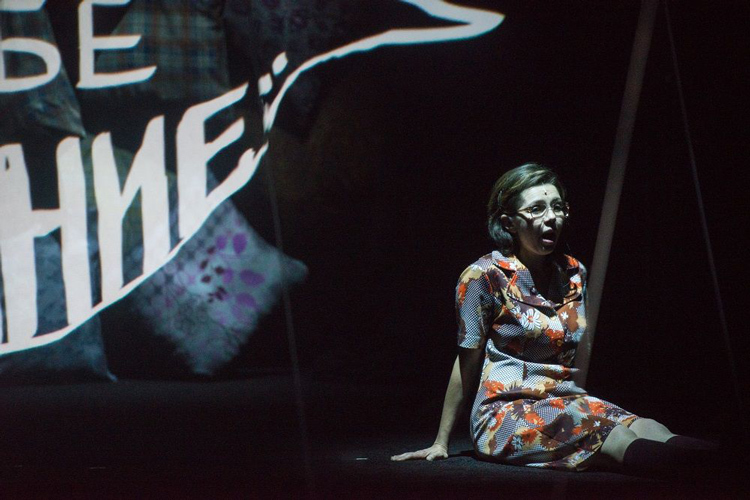
A miracle started up in the electric power engineer. Formally, it belongs to the category of "modern opera". The author is Vladimir Rannev . Contractors - four people of the ensemble N ' Cage (professional singers) and seven people of the theater choir (unprofessional singers). Musical director - Arina Zvereva. There are no instrumentalists. There is no conductor. There is no phonogram. There is a call. Which, however, explains the possibility of what is happening little. The appearance of this performance should be compared only with the landing of aliens.
In fairness, it should be noted that, contrary to the usual and cozy moans about the absence of the new prose of Rannev, written by order of the electric theater on our scene, was the third modern opera of the Moscow premiers of the last days I saw.
“Red Red Rand” by Georges Apergis was written in 2001, the first production was in Cologne. In Moscow, it is shown on the stage of the Meyerhold Center as part of the NET festival by the conservative “New Music Studio” and the young director Alexei Smirnov. Two pianists, two clarinetists, a violinist and a saxophonist, not forgetting to play their instruments, at the same time try on the roles of a red hat, a wolf, grandmother, and many times and in different combinations. No singers are supposed. This is an elegant French theater, dear and witty, designed for musicians without complexes (and the studios demonstrate that they are just like that). The vintage aroma of Hand - Made in no way contradicts the experimentality of the tasks, especially the noble due to the target audience 7+ (in fact, it was full of much more young public). Another opportunity to scare the child with a wolf, at the same time making him friends with modern music, will be only on December 9th.
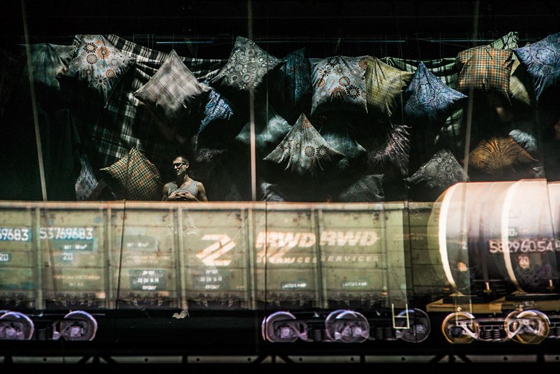 © Olympia Orlova / Stanislavsky Electrotheater
The opera "Frid and Diego" was dated 2014. The author - dear Finnish composer Kalevi Aho - presented the score of Gennady Rozhdestvensky, and he sent her to the Pokrovsky Theater, where the Estonian director Arne Mikk, artist Viktor Gerasimenko and conductor Dmitry Kryukov carried out. With the same success, the opera could be called Frida and Trotsky. In addition to Frida Kalo, Diego Rivera and Leo Trotsky and his wife among the characters, there is also David Sikeros, Andre Breton, Tina Modotti and, of course, Ramon Merkader with an ice ax. The opera falls on the current topic of the autumn television season. Hot Mexican history associated with the Russian revolution is intelligibly retold by the opera language, quite understandable to those who have already mastered, for example, with Weinberg's music. For local bohemian flavor in the orchestra, a Mexican lute was used, for a bloody blow to the ice ax - Termen. Fried themselves are two - as on the famous double portrait of the artist. For fidelity, the scene is decorated with paintings by Frida Kalo. The performance will organically replenish the repertoire of the theater specializing in rare, mostly non-named names, but does not question the possibility of a more or less traditional life of the genre.
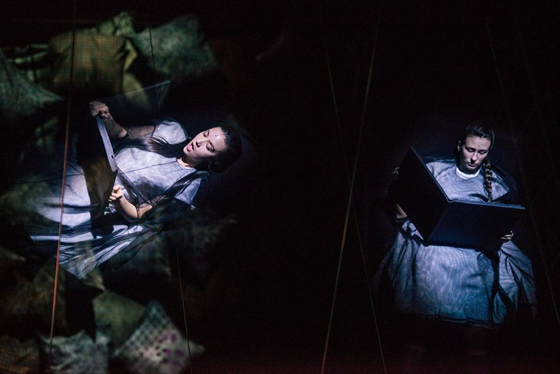 © Olympia Orlova / Stanislavsky Electrotheater
The electrheater, which also headed for a modern opera, goes the other way. “Prose” by Rannev, a completely fresh work written in the prose of Chekhov and Mamleev, is a completely new level of thinking, and not only musical. In addition to sounds, the composer also composed their stage existence (the first such experience of directing was his operates set five years ago in St. Petersburg on the Libretto Dmitry Prigov, nominated for a “mask”, but did not reach it for financial and technical reasons). Without the Wagnerian word "Gezamtkunstzerk" you can not do. Together with the St. Petersburg artist Marina Alekseeva (in the art world, who became famous at the Theater, the nanician nannevs made up a voluminous design of the streams of various information, which was difficult among the mirror deceptions of the scene. Information - sound, visual, symbolic, served with the help of real people, objects and digital media - collapses in a huge amount, you do not need to catch all the details and try. But gradually in this cloud, as in the tape of a social network, a message is built.
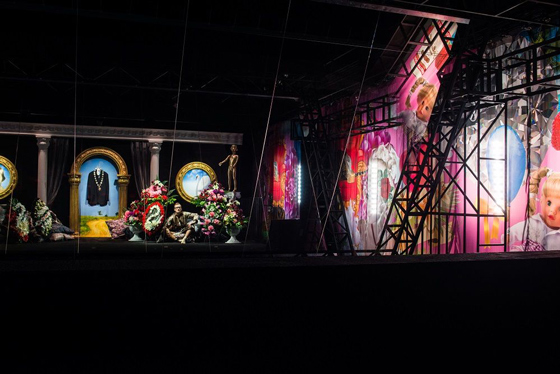 © Olympia Orlova / Stanislavsky Electrotheater
The main text is the story “Groom” by Yuri Mamleev, we do not hear him, but only see it. He goes to comic signatures, supplemented by kilometers of drawn comments and to pain of familiar artifacts of Russian life - from clubfoot to funeral wreaths.
A significantly larger volume of the Chekhov story “The steppe” sings, sings with eleven disciplined voices, and it is impossible to imagine which Adova the work of the vocal ensemble stands behind this unobvious and fragile beauty. The Chekhov text, in which almost nothing happens, we seem to hear, but in fact. He is such a large textured lining, he phonit, distracts, switches attention, creates a distance. And from this an inaudible Mamleevsky plot about the transformation of insignificance into a parasitic God in a paradoxically becomes very loud.