
Translated material
Andrea Weiss: “The vast majority of the Spaniards are not ready to discuss Franco's repressions. Nobody wants to start the wound "
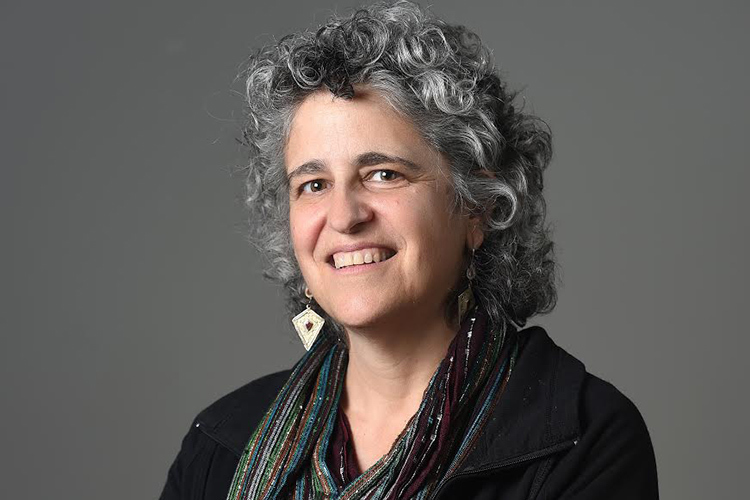
Andrea Weiss is a documentary director, historian, writer, in his works exploring the history of LGBT, a co-owner of one of the oldest female independent film companies Jezebel Productions, created together with the documentary director Greta Schiller in 1984. Among the documentary works by Weiss-“Escape to Life: the History of Erica and Klaus Mann”, presented at the Berlin and Rotterdam film festivals, “Women's Paris”, “The UN Factory”, etc.-the film-investigation of “Bones of Contence”-was just shown at the Bock Festival “Bok about Bok about side ". “Bones” is a dock about the Spanish society of the restoration of historical memory (something like our “memorial”) and the crimes of the Frankist regime against LGBT. One of the victims of these repressions was, in particular, Federico Garcia Lorca, whose remains have not yet been found.
- When did you first learn about the society to restore historical memory in Spain (Armh - Asociaciaciace Para la Recuperación de la Memoria Histórica ) ?
- In my life there were many random coincidences that, in one way or another, later led to important events. In 2011, I needed to change the situation, and I thought where to go for a year. I decided that I would go to Barcelona. For me, this is a very special city, there I immediately feel at home. Upon arrival, I instantly formed some new projects, friends appeared, I felt a connection with the city. But the fact that I became a witness to a small rally in defense of historical memory was an absolute accident. I stopped, became interested, and this led to a sudden immersion in an amazing story, about which I did not know anything before. As soon as I arrived in New York, I immediately began to look for the opportunity to make a documentary about all this. I applied to Grant Fulbright and in 2015 returned for the filming of the “bones of the discord”.
- I noticed that among these people there are absolutely no youth who protest in general not so many, basically these are middle -aged people and very elderly.
- Unfortunately, the movement for the restoration of historical memory in Spain is very small. Most left activists support the movement, but not enough to go to rallies with them. The fact is that a group of activists that I show in the film goes to a demonstration once a week. That is, literally every week for several years, these people have come out with their requirements and rally in government buildings. This is an unprecedented story. The government completely ignores them, but they continue to stubbornly go out onto the streets, since for them these are personal stories of their families, this is a trauma to several generations. Of course, there are young people who also support the movement, but the most active - it is this small group of people. It is important to understand that the vast majority of the population of Spain is still not ready to discuss the repressions of the francist regime. Even the left liberals for the most part still prefer to leave everything as it is, because the topic is too complicated, too painful, no one wants to take this wound. Many are afraid that the discussion of repressions can seriously share society.
Despite the fact that the movement for the restoration of historical memory is officially supported by the UN, the state completely ignores these protests. I managed to capture a rare case in the film when, during the next picket near the parliamentary building, one of the activists still allowed to transfer documents inside the building with the requirements of the protesters. But the official answer was never received.
- In your opinion, the reluctance of people to talk about repressions is a consequence of a collective injury or the result of decades of universal conscious silence?
-For the older people who, with their own eyes observing repression, this, of course, is, first of all, a fear that they are no longer able to ever overcome. This is an injury that they carry through their whole lives. But the "Pact of Silence" itself also played a role. For example, today there are a lot of ordinary people with whom I personally spoke, recalling Franco, talk about his greatness, that he was a paternal figure for the Spanish people. Many not only do not see the point of raising the topic of dictatorship after so many years, but often even incapable of evaluating those historical events. Someone in general still considers the story of repressions and crimes of the regime exaggerated.
- In addition, the amnesty law adopted in 1977, because he also did not imply any court and criminal prosecution of Franco supporters who gave orders and made mass executions of people?
- That's right. For any country, the recognition of crimes of the state regime is a prerequisite to move on. The victims of political repression should have the right to restore justice and the opportunity to be heard. But nothing of the kind happened in Spain. No trials. No justice of the transition period, no commissions to establish truth and reconciliation, nothing like that. The amnesty law freed political prisoners, but also ensured the inviolability and protection of state bodies responsible for repressive actions and the complete oblivion of the crimes of the dictatorial regime. Franco died in 1975, and the “Pact of Silence” was violated only in the late 90s.
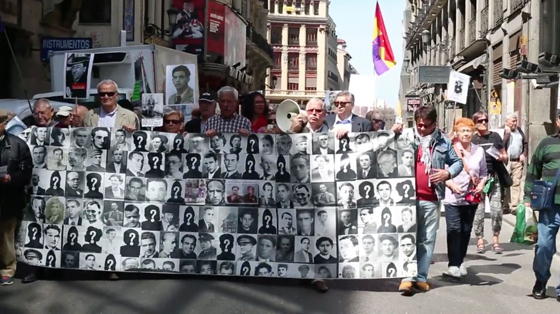 © Jezebel Productions Frame from the movie "Bones of Catravus"
- The struggle of the restoration of historical memory is only one of the several main topics of your film that seem completely independent, but nevertheless, with the development of the story, they are closely connected and harmoniously reveal each other ...
-Yes, from the very beginning I wanted to reduce several lines in the film: a modern movement for restoring historical memory, the history of Life’s life and death, a public dispute about the search for its remains in places of nameless mass grave and the history of the Spanish LGBT community. At first, I really was not sure whether it would be possible to unite these narratives in one documentary. Fortunately, intuition did not fail me. They were more interconnected than I expected at the beginning. It is worth noting that I started my research from scratch.
- How did you find the heroes of the film?
- I thought that each line of the narrative should have its own characters. To present the line of Garcia Lorca, I decided to invite Lara Garcia Lorca, Lorca's niece and Lorca head Foundation . But talking only with her would not be enough, so I found a young poet and follower of Lorca Fernando Valverde, as well as the writer Miguel Kaballero, the author of the book about the last hours of Lorca’s life.
I found a LGBT activist and the president of the society of former social prisoners of Anthony Ruis, studying newspaper archives. Anthony helped me a lot, it was he who introduced me to the rest of the heroes: Empar Pinede - a famous Spanish feminist and activist, whom I, unfortunately, did not know about, and Sylvia Reyes, an activist of the transsexual movement, who also survived the Franco regime. In general, thanks to Anthony, I met those people whom I definitely could not find on my own. But it was especially difficult for us to find lesbians who were ready to tell on a camera about their life under Franco.
- Are these women are still afraid to speak or are they not ready to return to heavy memories?
- I think the fact is that lesbians who have survived that era, silent for decades and who were trying to be invisible, simply cannot easily take and start telling their personal story to the camera for the whole world. Throughout their lives, they lived in fear, hid and subjected to gender violence. Their experience differs from the experience of the same Anthony, who did not hide his identity and left for the deadline for homosexuality, he does not have such a tough psychological barrier. The fact is that, unlike gays and transsexuals, lesbians were less visible at that time of history. They did not seem to exist for society and the authorities - at the same time, they also could not live openly. Therefore, it was most difficult to explore female lesbian history. But I still tried stubbornly (laughs) . I was lucky that I was familiar with the writer Isabelle Frank, who had already addressed the topic of repressions against LGBT during the dictatorship of Franco and began to conduct some research. It was she who shared with me unique information regarding the history of lesbians.
-In the film, you talk about the underground Madrid LGBT Subokulture with the code name "Book Traders." Was it a local story of Madrid? How common was this way to find like -minded people?
- Oh, this is a wonderful story. “Book Traders” existed throughout the country, it was a code that all representatives of the LGBT community understood. In the days of the dictatorship, it was impossible to get acquainted and openly ask a person about his orientation, so representatives of LGBT seemed to be “books traders”. This was understandable to everyone and amazingly remained safe, despite the fact that it happened everywhere, right under the nose of Franco. Then camping was very popular in nature, it was a cheap form of relaxation. Gays and lesbians gathered under the cover of the "Society of Book Trade Traders" and left for the weekend with tents far from the city. It was an island of Freedom, the only opportunity to be in a safe space, among his own.
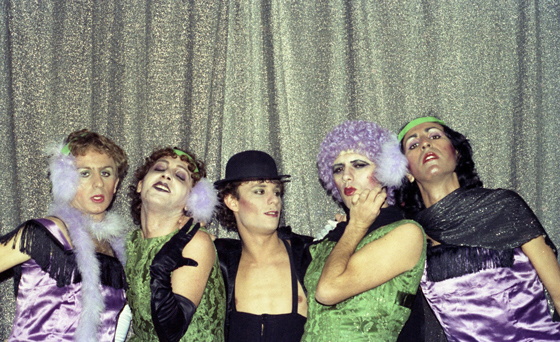 © Jezebel Productions Frame from the movie "Bones of Catravus"
-In addition to research, Isabelle Frank discovered any significant Spanish studies on the topic of Franco repression against LGBT? Maybe in cinema or literature?
- No, nothing like that. Moreover, it was very difficult to find even any visual evidence, without which it is almost impossible to make a full-fledged film. Several things helped me here: the first is again connected with Anthony, a unique archive dedicated to the arrested homo- and transsexuals was created in his society. There were photographs, prison records, documents - a minimum set of material, but it was he who became an important base for my further work. I also found two researchers who, three years ago, held a small conference in Madrid on the topic of memory and sexuality, where the female issue, the life of lesbians during the reign of Franco were also discussed. The conference was still a tiny exhibition with archival materials that also helped me. But, unfortunately, in addition to the aforementioned, the theme of the history of LGBT during the time of Franco was practically not discussed in Spain.
- The credits indicate that you also worked with several state archives in Madrid and Barcelona. It became interesting to me what you found there, because it is known that in connection with a long -term “pact about silence” archival documents on the repressions of the Franco regime cannot be found.
-This is true, but nevertheless, I was able to find images of famous people in these archives who were representatives of the Quire community, such as actress Margarita Shirgu, journalist and publicist Irene Polo. There is an animated block in the “bones of discord”, where I am listing the famous Quir-female women who lived in the era of the Spanish Republic, and I found all their photos in official archives, but only because these are the documents of the 20s created before Franco came to power. I also managed with great difficulty I managed to find a newsreel from Francoist prisons, which contained Republicans and political prisoners. Again, the many years of archival work experience helped me a lot here, because when requesting some photographs and documents, they stubbornly answered me that they did not exist, but in the end I found everything!
- How many years have you spent studying the topic and preparing the film?
-I started work in 2012, when I was preparing an application for a grant, and by 2015 I was already ready to start filming. The “bones of contention” became a natural continuation of many years of work - and before them I was engaged in the history of LGBT in various cultures, the history of the female movement, the history of other marginalized groups. I made films about the LGBT communities of South Africa, the USA (“before Stonevolla”), about Parisian lesbians, in particular, writers and artists of the 20s, who formed a Quirry community quite radical for that time, which existed before Hitler came to power ( Paris WAS a Woman ) . Therefore, I am especially glad that this film allowed me to combine two objects of my interest - the work of Garcia Lorca and my desire to enter the history of LGBT into the context of the global struggle for human rights.
- When you first discovered the poetry of Federico Garcia Lorca and did you know about his fate?
-In the early 1990s, I lived in London, in Albert Hall there was a large charitable event in support of the Stonewell movement. There were many celebrities, musicians, actors. Suddenly, a young Antonio Banderas appeared on the stage, who was then known only from Almodovar's films; He went out and read out Lorca's poems. It impressed me a lot, his sudden poetic performance stood out against the background of the rest. I read Lorca at school, but it was precisely this moment that I encouraged me to turn to his work again. I wanted to learn more about him. Today, Lorca is a real icon of the Spanish Quir-Culture, but then, in the early 90s, it was not widely known that he was gay. Although, having heard a rather erotic poem that Banderas read in the LGBT Merination Passing, it was not difficult to suspect that there was a homosexual context. At that moment, I did not know anything about the fate of Lorca, did not know that he disappeared during the Spanish Civil War and his remains were not yet found. In 2012, a great discussion was held in Spain about whether to look for Lorca's remains or not, whether to conduct exhumations. Thus, he also became a symbol of all those victims of the regime (more than 120,000 people), whose remains still lie in countless nameless common graves scattered throughout Spain.
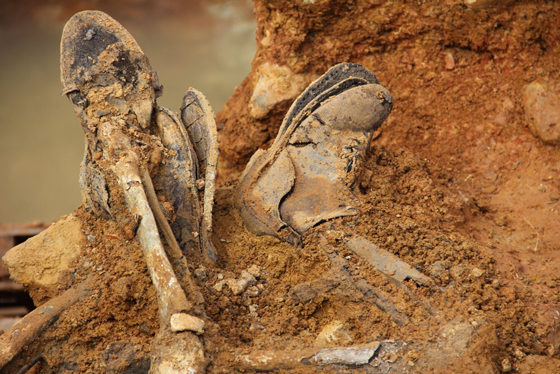 © Jezebel Productions Frame from the movie "Bones of Catravus"
- What is known about the fate of those prisoners - representatives of the LGBT who remained in prison after the death of Franco?
- Most of all I was struck by people convicted of homosexuality were not recognized by political prisoners. Gays and transsexuals remained in the status of social criminals. When negotiations on the release of political prisoners began to be held, people convicted of homosexuality simply did not fall into this category, no one mentioned them, and no one defended their rights. Thousands of people continued to rot in prisons for years. Unfortunately, I could not personally talk to any of these former prisoners. Many are no longer alive. Anthony was in prison after the death of Franco, Sylvia Reyes was in prison when Franco died, and even after she was again arrested according to the same laws. But still, they did not spend years in prison, like most people accused of homosexuality.
-In your film there is a theme of a story back, you return to the youth of Lorca, by the 1920s and times of the republic, when no one-in particular, the LGBT community-could have imagined that the dictatorship and repression were coming.
- I think people always want to believe in progress, think that history moves linear forward towards openness. I like to look back at the old, "bad", times and relief to think about today as the best. But the story does not work at all. That small chapter of the history of Spain before the coming to power Franco was a period of great freedom - primarily for women. But this door shut almost instantly. I think modern society has a great risk of a sharp return back. For example, in the USA we managed to get used to taking our freedoms for granted, but now gloomy times are coming, power is becoming more right, it is important to be on the alert and prevent a rollback. And this is not least appropriate for the LGBT community. Now Trump does not attack LGBT, but he attacks all the others - immigrants, poor, women. It is important for us to understand that we all must protect each other's rights, otherwise it may be too late. Trump came to power just when I ended the film (and the Government of Spain, as you know, is also right), and here I realized that my movie is not so much about the little -studied historical period as a warning for all of us. The film is that if we do not study our story, we will go back to the worst state of things. I hope that this film will become part of the resistance to what is happening not only in Spain, in Russia or in the USA, but throughout the world.
- How did the “bones of discord” were accepted in Spain?
- The film was shown at several festivals in Spain, unfortunately, I was not present at the shows. But I am insanely happy that he will still go to the Spanish rental in January and I will go to the premiere. When I first presented the film at the Berlin festival, there were many Spanish journalists at the show, the film caused a large number of publications in the Spanish press, since none of the Spanish filmmakers touched this topic. Благодаря шумихе в прессе нашелся испанский дистрибьютор. Я полагаю, это тот случай, когда иностранцу удается первому взглянуть на проблему со стороны. Я с нетерпением жду того, как отреагируют на фильм в маленьких городах, за пределами Мадрида и Барселоны. Я также думаю, что присутствие Лорки в моем фильме поможет расширить потенциальную аудиторию. Ведь не так много людей заинтересовано в фильме о движении за восстановление исторической памяти, а тем более в истории ЛГБТ, но огромное количество людей заинтересовано в Лорке. Лорка чрезвычайно популярен в Испании, его поэзия — национальное достояние.
— Как вы оцениваете отношение к ЛГБТ-сообществу в Испании сегодня?
— Я думаю, что в целом в мировом масштабе ситуация с правами ЛГБТ очень нестабильная. С одной стороны, мы наблюдаем небывалый прогресс: все больше стран, где лесбиянки и геи могут заключать браки, усыновлять детей. Но в то же время усиливается негативная реакция на ЛГБТ. Чем более видимыми мы становимся, тем более видимой становится агрессия против нас. В случае с Россией меня больше всего пугает то, что дискриминация ЛГБТ институционализирована. Это не просто какие-то отдельные акты насилия, это официальная государственная политика. И единственный верный способ борьбы — не бояться постоять за себя, не ждать разрешения.