
Translated material
The ghost wanders over Chegem
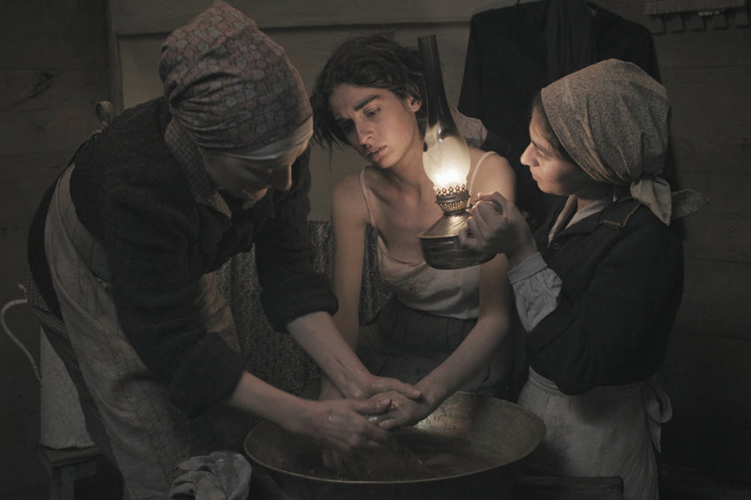
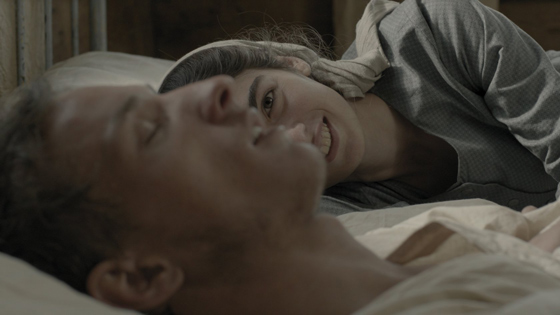
Pastel sky, Abkhaz mountains, Chegem in front of the Great Patriotic War. In the forest, the brother of the main character mosses an ax in her husband. The fate of the killer in the hands of the family, the local law is still - the law of adats, not Soviet decrees. The deceased is buried on a hill so that water does not reach the body. In this grave, the main character will tell the deceased husband - perhaps the only listener - the story of her life.
Sofichka exists on the screen as a restless ghost, as if coming from Klimt's “Three Starts of Women”. On the screen, she is a young rebellious Abkhazka, the best on the collective farm, and the 40-year-old, after Siberia, is ready to give all her earnings and even the house of a young and selfish relatives, striving to move from the world of nature to civilization, from village to city. But the main state of the storyteller is ghostly: everything that the viewer will see on the screen is her memories of an alarming and impenating past. Perhaps that is why such chopped and impenetrated scenes of the bloody murder of her husband seem (Iskander Sofichka changed several bandages, bandaging his throat) and often too fast, articulated mounting transitions between events. The screenwriter pretty much worked on Iskander's text, the story of which formed the picture of Kira Kovalenko. Heroes speak in the frame in Abkhazian, but in the Russian translation it is unbearable to hear the debugged dialogs at the body of the deceased husband of Sofichka:
- He was already cooling.
- Who did it? Who killed us?
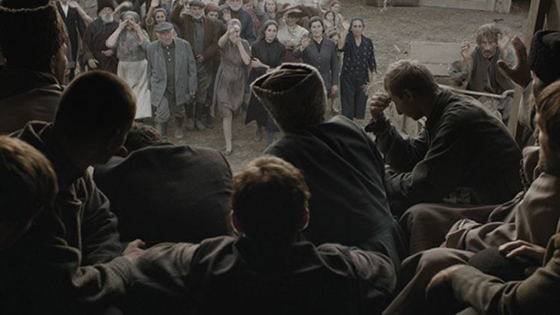
The processed, which has lost in the gap between the texts of the original and the script, the speech compensates for symbolism - everything here persistently indicates the connection of a person with nature, and indeed everything with everything. Abkhazovs sing over dry tea while the sky after the clan mourns the dead; In the barn surrounded by chains-as a sign of hopelessness and dependence-Sofichka fits away from the attacks of a hobel-brigadier, threatening to convey to the help of the fugitives from the front.
 © Lenfilm
However, not only a cursory, negligent scenario breaks the history of the Abkhaz world: a big story invades here - the Great Patriotic War takes men from their native villages. The authorities in the family society are received by new owners of life - NKVD employees, Soviet foremen who follow the work of peasants, who are now correctly called collective farmers. Sofichka involuntarily recognizes the inconsistent, hidden by the Soviet authorities to lead from the front. The brother of the late husband of the heroine, who runs from malnutrition to his native land and brings the threat of reference, torture and reprisal to the entire relatives, brings to the fertile areas of the Chegham. The main thing in the film is not at all an act of murder or the life of exotic "others." The picture of Kira Kovalenko is the history of colonial relations within the USSR, told by a woman from the traditional patriarchal society - doubly dependent and marginalized face. Surprisingly, Sofichka, even in memoirs, only describes what is happening to her, without taking out assessments to anyone.
 © Lenfilm
As a witness, she is experiencing a revolution within the genus - the young generation is no longer looking at the hills and fields, but at the windows of city apartments. The main function of the witness is to convey the story what he saw further, thereby continuing the history of the genus. At the end of the film, a fire burns in the courtyard of an already sold house. Georgio Agamben wrote about the role of a fire as a place where the storytellers gather in memorial culture. But the flame in the film Kira Kovalenko does not connect the memory of generations, but shares. Now in it the past should be burned, the laws of which no longer act. About this, in fact, almost all films of students of the Kabardino-Balkarian workshop Sokurov.